Stop Working Harder. This 5-Minute Morning Reset Is Quietly Doubling My Output.

I spent most of early 2026 trying to outrun my own calendar.
I was waking up at 5:00 AM, fueled by an aggressive amount of espresso and a desperate need to feel "ahead," only to find myself staring at a Claude 4.6 dashboard at midnight, wondering where the day went.
I thought I was working hard, but I was actually just vibrating with high-functioning anxiety. My output wasn't doubling; my cortisol levels were.
It took a particularly grey Tuesday morning in a cramped South Kensington cafe for me to realize that grit is a failing currency in an age of infinite distraction.
I watched a developer across from me—someone clearly operating at a level I hadn't reached—close their laptop, sit in silence for exactly five minutes, and then move with a terrifyingly calm precision for the next three hours.
I went home, deleted my productivity "stack," and started experimenting. What I found wasn't another app; it was a cognitive circuit breaker that changed everything.
The 2026 Efficiency Paradox
We were promised that by 2026, AI would give us our time back. Instead, tools like ChatGPT 5 and Gemini 2.5 have simply raised the baseline of expectation.
We are now expected to produce three times as much because the "busy work" is automated, yet our human brains haven't received a hardware upgrade in ten thousand years.
The result is the Efficiency Paradox: the faster we work, the more work we attract. We’re sprinting on a treadmill that’s slowly being tilted upward.
Most of us are responding to this by "working harder"—adding more hours, more Slack channels, and more "deep work" sessions that are anything but deep.

Hard work is no longer the competitive advantage. In a world where an LLM can draft a 2,000-word report in seconds, the only thing that actually moves the needle is intentionality. If you don't decide where your energy goes in the first five minutes of the day, the internet will decide for you.
Why Your Morning Routine Is Failing You
Most "morning routines" are just more work disguised as wellness.
If your routine involves fourteen steps, three different journals, and a cold plunge, you’re not starting your day—you’re performing a second job before your first one even begins.
I realized my 90-minute routine was actually a form of procrastination. I was so exhausted by the time I finished my "optimization" that I had no creative juice left for the actual tasks.
We’ve been sold a lie that complexity equals effectiveness.
The truth is much simpler.
Your brain needs a "soft start"—a way to transition from the theta waves of sleep to the high-beta waves of focused work without the jarring spike of "checking notifications." When you check your phone first thing, you are essentially letting thousands of strangers into your bedroom to scream their priorities at you.
The Pre-Noise Protocol: A 5-Minute Pivot
After months of tweaking, I landed on what I call the Pre-Noise Protocol. It is a strictly timed, 300-second reset that I perform before I touch a single electronic device.
It’s not about "zen"; it’s about resource allocation.
This isn't a suggestion; it’s a system.
It works because it addresses the three main ways we leak energy: cognitive clutter, priority diffusion, and sensory overload. By tackling these in five minutes, you create a protective "buffer" around your focus that lasts for hours.
It feels almost too simple to work, which is exactly why it does. You don't need a PhD or a subscription to use it. You just need a kitchen timer and a pen.
Here is how I quietly doubled my output by doing less.
Phase 1: The Cognitive Offload (60 Seconds)
The first minute is about externalizing the "background noise." Your brain is a terrible filing cabinet but a brilliant processor.
If it’s busy trying to remember that you need to email the accountant or buy oat milk, it can’t solve complex architectural problems.
I grab a physical notepad—not an app, not a tablet—and vomit every nagging thought onto the page. I don't categorize them. I don't "journal" my feelings. I just get the mental debris out of my skull.
Externalizing your "open loops" immediately lowers your cognitive load. Think of it as clearing the cache on your laptop.
Once it’s on the paper, your brain finally feels "safe" enough to stop looping the information.
Phase 2: The Lever Identification (120 Seconds)
Most people have a "To-Do" list that looks like a CVS receipt. This is a recipe for decision fatigue. If you have twenty "important" tasks, you actually have zero.
You’ll end up doing the easiest ones (email, Slack) because they provide a cheap hit of dopamine.
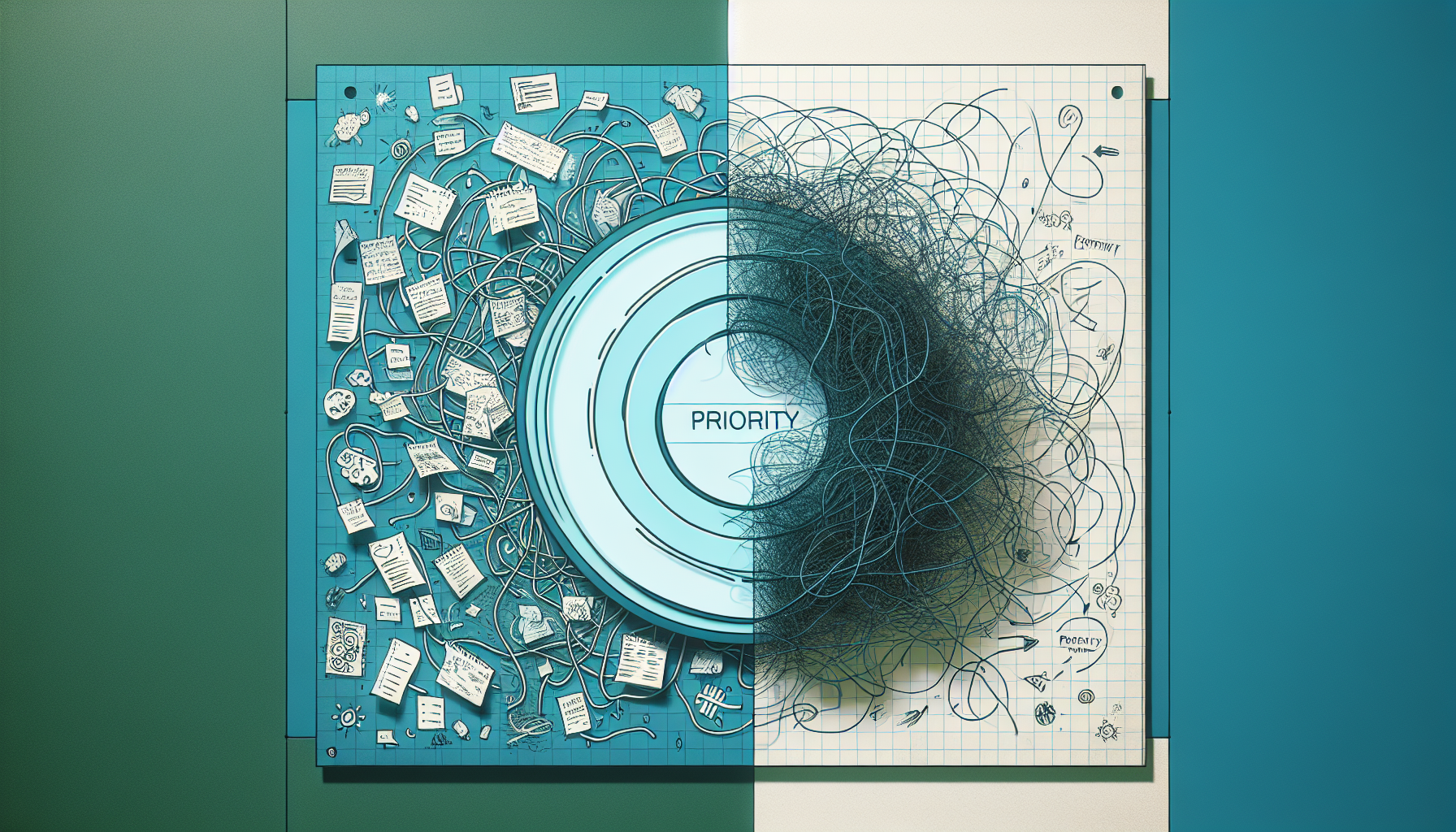
For two minutes, I look at my dump and ask one question: "Which one of these makes the other nineteen irrelevant or easier?" This is the "Lever Task." It’s usually the one I’m most afraid of—the one that requires the most actual thinking.
I circle that one thing.
Everything else is relegated to the "Noise" category. By deciding this while I’m still in a calm state, I prevent my "mid-day self" from being hijacked by the "urgent but unimportant" tasks that inevitably fly in through my inbox.
Phase 3: The Somatic Grounding (120 Seconds)
The final two minutes are the most contrarian. I do absolutely nothing.
I sit by my window—usually looking at the rain-slicked streets of East London—and focus entirely on my physical senses. I notice the weight of the chair, the smell of the coffee, and the specific temperature of the air.
This isn't about "mindfulness" in a spiritual sense; it's about regulating your nervous system. By grounding yourself in the physical world, you pull your brain out of the "future-simulating" mode that causes anxiety.
This is the "Reset" button. When those 120 seconds are up, I am no longer reacting to the world. I am an observer who has already decided what to do.
I walk to my desk with a level of autonomy that most people haven't felt since 2019.
The Science of the "Soft Start"
You might be skeptical that five minutes can outweigh eight hours of grinding. But neuroscience suggests that the way we start our "attentional blink" determines the refractory period of our focus.
If you start in a state of frantic reaction, you stay there.
When you use the Pre-Noise Protocol, you are leveraging what researchers call "proactive interference control." You are essentially telling your prefrontal cortex: "This is the signal; everything else is noise."
In my experience, this five-minute investment creates a compounding effect. Because I’m not constantly switching tasks, I enter "flow" about 40% faster than I used to.
By 11:00 AM, I’ve usually finished the "Lever Task," which means the rest of the day is played on House Money.
Stop Working Harder, Start Working "Closer"
We have a cultural obsession with "scaling" and "expanding," but the most productive people I know are actually narrowing their focus. They aren't doing more; they are doing the right thing with more intensity.
The "Harder" trap is a mirage. If you are digging a hole in the wrong place, digging faster doesn't help.
This morning reset ensures that every ounce of effort you exert is actually moving you toward the version of your life you want to live.
I’m writing this from a position of someone who used to be addicted to the grind. I thought my value was tied to my exhaustion. I was wrong.
My value is tied to my clarity. And clarity is something you can't buy—you have to curate it every single morning.
Implementing the Protocol Tomorrow
If you want to try this, don't wait for a "perfect" Monday. Start tomorrow. Put your phone in another room tonight.
Buy a cheap analog kitchen timer. Protect those first five minutes like your career depends on it, because in 2026, it probably does.
You will feel an intense urge to check your messages. You will feel "guilty" for sitting still while the world is waking up.
Lean into that discomfort. That itch is the feeling of your brain trying to go back to its "distracted baseline." Don't let it.
The results won't be loud. You won't suddenly become a superhero. But after a week, you’ll notice that the 3:00 PM slump isn't as deep. You’ll notice that you’re not as snappy with your colleagues.
And most importantly, you’ll notice that your work is actually getting done.
What’s the one thing on your list that you’ve been "working harder" on without actually making progress? Is it the task itself, or is it your approach?
I’d love to hear your thoughts in the comments—let’s talk about how we’re actually living now.