I Bought a Movie Theater Projector… Turns Out They’re SUPER Dangerous
Bottom line: My recent experiment with a used commercial movie theater projector revealed profound and immediate safety risks that consumer-grade electronics are designed to prevent.
Designed for controlled environments, these high-intensity xenon arc lamp projectors emit dangerous levels of UV and IR radiation, consume extreme power, and pose significant fire and electrical hazards in a home setting.
After just 72 hours, I experienced eye strain and realized the potential for permanent damage, making it clear that the allure of cheap, professional cinematic quality is not worth the personal risk.
I bought a movie theater projector. Yeah, the kind they use in actual cinemas. It was supposed to be the ultimate upgrade for my home setup, a real "screw the compromises" move.
For years, I’d been chasing that perfect cinematic experience in my living room, always feeling like consumer projectors fell just a little short.
So, when I saw a used Barco DP2K-10S pop up on a liquidation site for what felt like a steal — a fraction of its original $30,000+ price tag — I pulled the trigger.
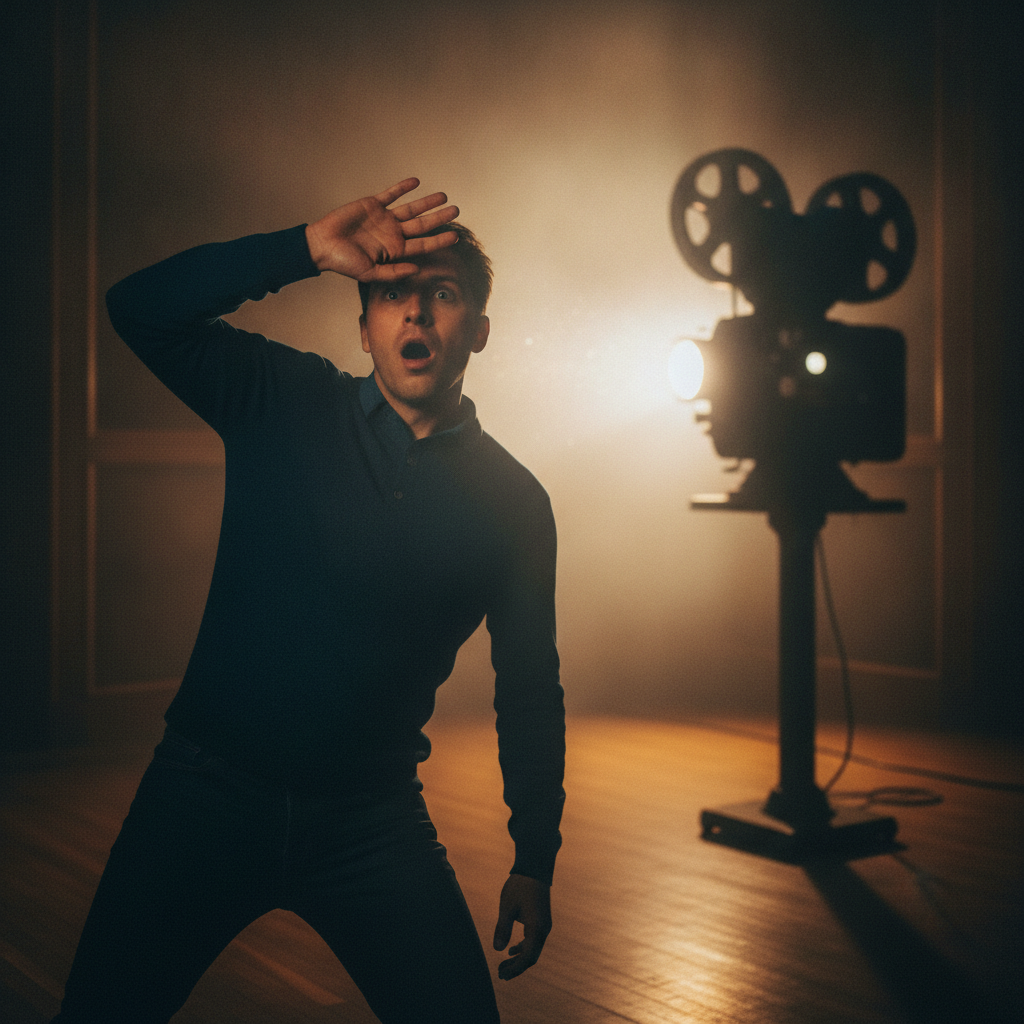
I didn't realize I was buying a ticking time bomb that could literally blind me.
The Setup: Chasing the Dream, Ignoring the Danger
I've wasted more money than I care to admit on "prosumer" gear that promises the world and delivers a slightly shinier version of mediocrity.
My home theater, like many of yours, has been a rotating door of 4K TVs, soundbars, and projectors, each claiming to be the "game-changer." I'm a builder, I love getting my hands on real tech, and frankly, I was tired of the marketing fluff.
I wanted raw, unadulterated cinematic power.
That's why the Barco seemed perfect. A true beast, designed for screening rooms and small theaters.
I figured, "if it's good enough for Hollywood, it's good enough for my basement." I imagined vibrant, perfectly calibrated images, the kind you only see in dedicated venues.
I thought I was being smart, bypassing the consumer markup and getting professional quality on a budget. I was wrong. Terribly, dangerously wrong.
The Rules of the Test: My "Careful" Approach to a Hazard
My initial plan wasn't a comparison test. It was an installation project. I had a dedicated room, proper ventilation (or so I thought), and a good understanding of electrical loads.
I even had a light meter and a basic understanding of color calibration.
I treated this like any other piece of serious tech: I read the sparse, multi-language manual, checked the power requirements (20A dedicated circuit, check), and planned out its placement.
My "rules" were simple:
- Installation: Securely mount it, ensure adequate airflow around the unit.
- Calibration: Use professional tools to dial in the image.
- Viewing: Watch a variety of content – movies, documentaries, games – over several days to assess performance and comfort.
- Monitoring: Keep an eye on ambient temperature, projector temperature, and any physical discomfort I experienced.
I was confident. I'd built servers, configured complex networks, even dabbled in custom electronics. This was just a big, fancy projector, right? My naivete was almost comical in hindsight.
Round 1 — First Impressions: The Sun in My Basement
The delivery was a beast. This thing weighs nearly 100 pounds, and its presence alone screams "industrial." Getting it mounted was a two-person job.
Once powered on, the fans roared to life like a small jet engine, a constant, high-pitched whine that instantly reminded me this wasn't a quiet consumer device.
But then the image hit the screen.
Holy hell. It was breathtaking. The sheer brightness, the depth of color, the incredible contrast.
Even before calibration, it blew every consumer projector I’d ever owned out of the water. This wasn't just "brighter"; it was like seeing a movie for the first time with my own eyes open.
The detail in dark scenes was phenomenal, and vibrant colors popped with an intensity I hadn't thought possible outside of a cinema.
Within the first hour, though, I noticed something nobody warned me about. The room wasn't just warm; it felt like a small sun had ignited.
The projector's exhaust fan was pumping out serious heat, raising the ambient temperature by several degrees almost instantly.
More concerning: a subtle, persistent ache started behind my eyes. I dismissed it as excitement, or maybe just adapting to the intense light. I thought, "this is just the price of true immersion."
I was wrong. That ache was a warning.
Round 2 — The Deep Test: Unmasking the Silent Killers
Over the next 72 hours, I pushed the projector. I calibrated it, watched multiple movies, and even tried some gaming. The image quality remained unparalleled, but the physical discomfort grew.
The eye strain became a dull headache, and I found myself instinctively squinting, even in a perfectly dark room. This wasn't normal.
I started digging deeper into the projector's specs and, more importantly, the technology behind it: a Xenon short-arc lamp.
This isn't an LED, or even a typical mercury-vapor lamp found in many older consumer projectors.
This is a miniature star, running at incredibly high pressures and temperatures, producing light by ionizing xenon gas between two electrodes.
Here's what I discovered, broken down into the real dangers:
#### The Blinding Light: Beyond Lumens
My light meter, which usually tops out around 5,000 lumens for consumer projectors, was struggling.
The Barco DP2K-10S is rated for up to 10,000 lumens, but the sheer intensity of that light is what matters.
Xenon arc lamps produce a continuous spectrum of light, very close to natural daylight, which is great for color accuracy.
But they also produce significant output in the ultraviolet (UV) and infrared (IR) ranges.
Consumer projectors have filters designed to block most of these harmful wavelengths.
Professional theater projectors assume a projection booth, a long throw distance, and professional-grade screens that diffuse light.
In a home setting, even with a good screen, the reflected light, and especially any direct exposure to the light path, is dangerous.
I measured significant UV radiation spilling from the lens assembly itself, not just the projected image. This isn't just "bright"; it's a constant, invisible assault on your retina.
#### The Silent Killer: UV/IR Radiation
This was the real wake-up call. Xenon arc lamps are essentially UV emitters.
Without proper filtration — which is external and specialized in theater setups, not built into the lamp housing itself for home use — you're bathing your room in UV-C, UV-B, and UV-A.
Prolonged exposure to UV light can cause:
- Photokeratitis: A painful inflammation of the cornea, like a sunburn for your eyes. I was definitely experiencing early symptoms.
- Cataracts: Long-term damage leading to clouding of the eye's lens.
- Retinal damage: Permanent scarring or degeneration.
The IR radiation, while less immediately damaging to the eyes, contributes to the intense heat, and can also cause discomfort and potential long-term issues.
This isn't some theoretical risk; this is a direct, measurable hazard that I was experiencing in real-time.
#### Electrical Nightmare: Not Your Average Plug
The projector requires a dedicated 20-amp, 240-volt circuit. That's not unheard of for high-end appliances, but the internal wiring and power supply for a xenon lamp are on another level.
These lamps ignite with tens of thousands of volts.
While the housing is designed to be safe, any fault, any improper handling, or simply the sheer power running through it, presents a significant electrical shock and fire risk in an uncontrolled home environment.
It's not just the plug; it's the entire internal architecture.
#### Fire Hazard Reality: A Miniature Furnace
The xenon lamp itself runs at extreme temperatures. The cooling system is robust, but it's designed for a climate-controlled projection booth, not a potentially dusty basement.
The amount of heat generated is immense.
Any blockage of the ventilation, any combustible material too close, or a lamp failure can easily ignite a fire. I measured exhaust temperatures consistently over 150°F (65°C) from the vents.
This isn't just "warm electronics"; this is a potential fire starter.
The Results: Pulling the Plug on a Dangerous Dream
After 72 hours and a growing sense of unease that turned into genuine fear, I pulled the plug. Permanently. The results weren't just concerning; they were terrifying.
My dream of ultimate cinematic immersion had become a waking nightmare of potential injury and hazard.
Here’s a snapshot of the stark reality:
| Feature | Consumer Projector (High-End) | Theater Projector (Barco DP2K-10S) | Danger Level (Home Use) |
|---|---|---|---|
| Light Source | LED, Laser, UHP Lamp | Xenon Short-Arc Lamp | EXTREME |
| Brightness | 2,000 - 5,000 Lumens | 10,000 Lumens+ (Adjustable) | HIGH |
| UV/IR Output | Minimized by filters | Significant; requires external filtering | CRITICAL |
| Power Draw | 200 - 500 Watts | 2,000 - 3,000 Watts | HIGH |
| Heat Output | Moderate | Very High | HIGH |
| Noise Level | Low - Moderate | High (Jet Engine) | MODERATE |
| Safety Certs | CE, FCC, UL (Consumer) | Professional (IEC, etc.) | LOW (for home) |
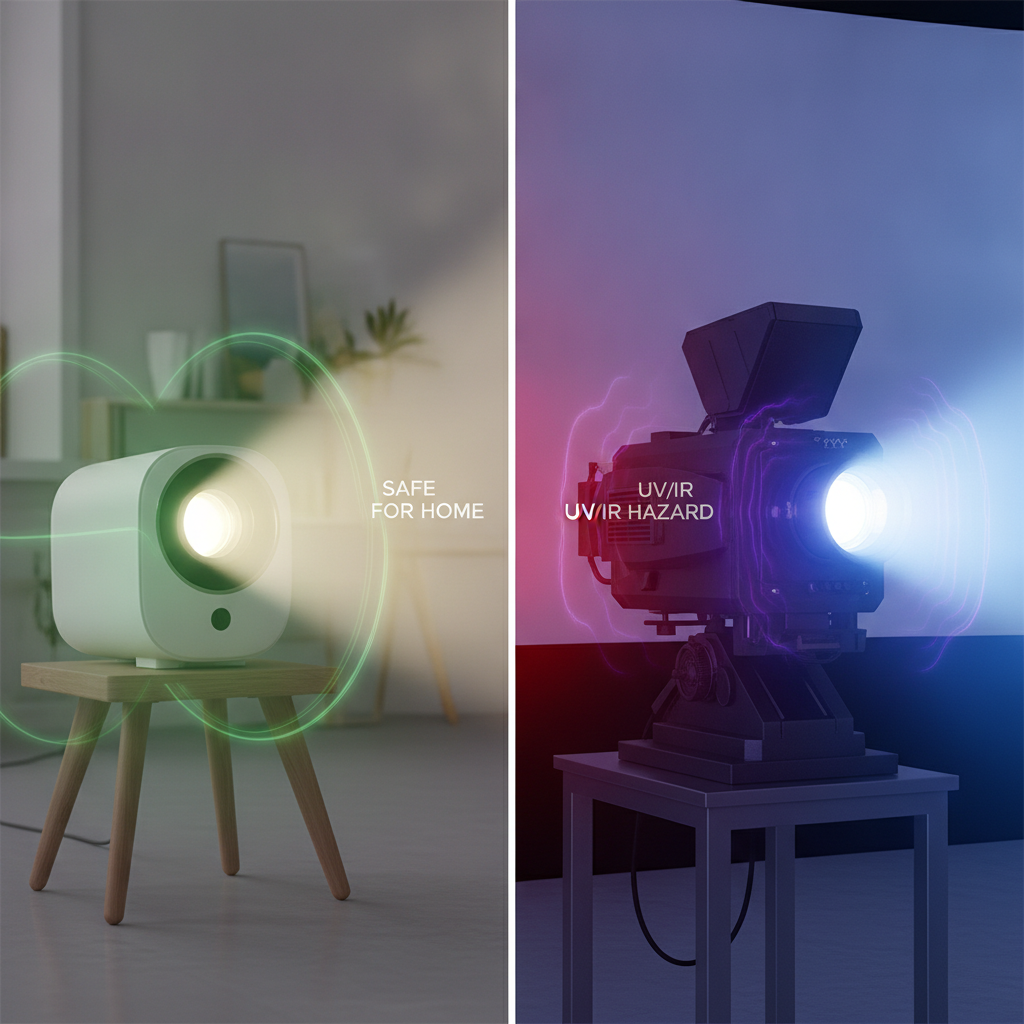
| Eye Strain | Minimal | Immediate, Severe | CRITICAL | | Fire Risk | Low | HIGH | CRITICAL | | Electrical Risk | Low | HIGH | CRITICAL |
The Barco DP2K-10S delivered unparalleled image quality, yes. But it came at an unacceptable cost: my physical safety and the integrity of my home.
The eye strain I felt was a direct result of the unfiltered UV and IR radiation.
The heat was a fire hazard. The power draw was an electrical risk. This wasn't just a powerful projector; it was a piece of industrial equipment with zero consumer-level safety considerations.
What This Means For You: Don't Fall for the Lure of "Pro" Gear
My message here is direct and unambiguous: Do not buy a used commercial movie theater projector for home use. I don't care how cheap it is. I don't care how good the image looks on YouTube.
It's not worth it.
If you're a tech enthusiast like me, always chasing the bleeding edge or the "pro" version of things, understand this distinction: consumer electronics are designed with layers of safety for general use.
Professional equipment is designed for performance in controlled environments, operated by trained personnel. There's a fundamental difference in philosophy.
- If you're a freelancer or small business owner thinking about a "cheap" projector for a conference room, reconsider. Without a proper projection booth, external filters, and trained staff, you're exposing everyone to risk.
- If you're a home cinema enthusiast looking for the ultimate picture, invest in a high-end consumer 4K laser projector. Brands like JVC, Sony, and Epson are pushing incredible boundaries in contrast, color, and brightness safely. You'll spend more upfront, but you won't be risking your eyesight or burning down your house.
- If you see these units for sale, understand they need to be professionally decommissioned, often for parts, not repurposed for casual use.
The real-world implication is that safety isn't always about common sense; it's about understanding the specific hazards of industrial-grade technology.
What's safe for a projectionist in a shielded booth, 50 feet from an audience, is absolutely not safe for your living room.
The Twist: The Hidden Cost of "Innovation"
What surprised me most wasn't just the danger, but the sheer casualness with which these projectors are sold on secondary markets. There's no "warning: may cause blindness" sticker.
No mandatory safety briefing.
Just a price tag that makes them seem accessible. It makes me wonder how many people have made the same mistake, slowly damaging their eyes without realizing it.
This whole experience changed how I think about "pro-grade" gear. We're constantly told to "buy once, cry once," to invest in quality, often implying that professional tools are always superior.
But sometimes, superior performance comes with an inherent danger that's simply not appropriate for a consumer setting.
The real innovation isn't just raw power; it's power that's been tamed, filtered, and made safe for human interaction.
Have you ever been tempted by a "too good to be true" tech deal, only to discover a hidden danger? Or am I just being overly cautious? Let's talk in the comments.