I Actually Let Open Source AI Drive Me To Work. I Wasn't Ready For This.
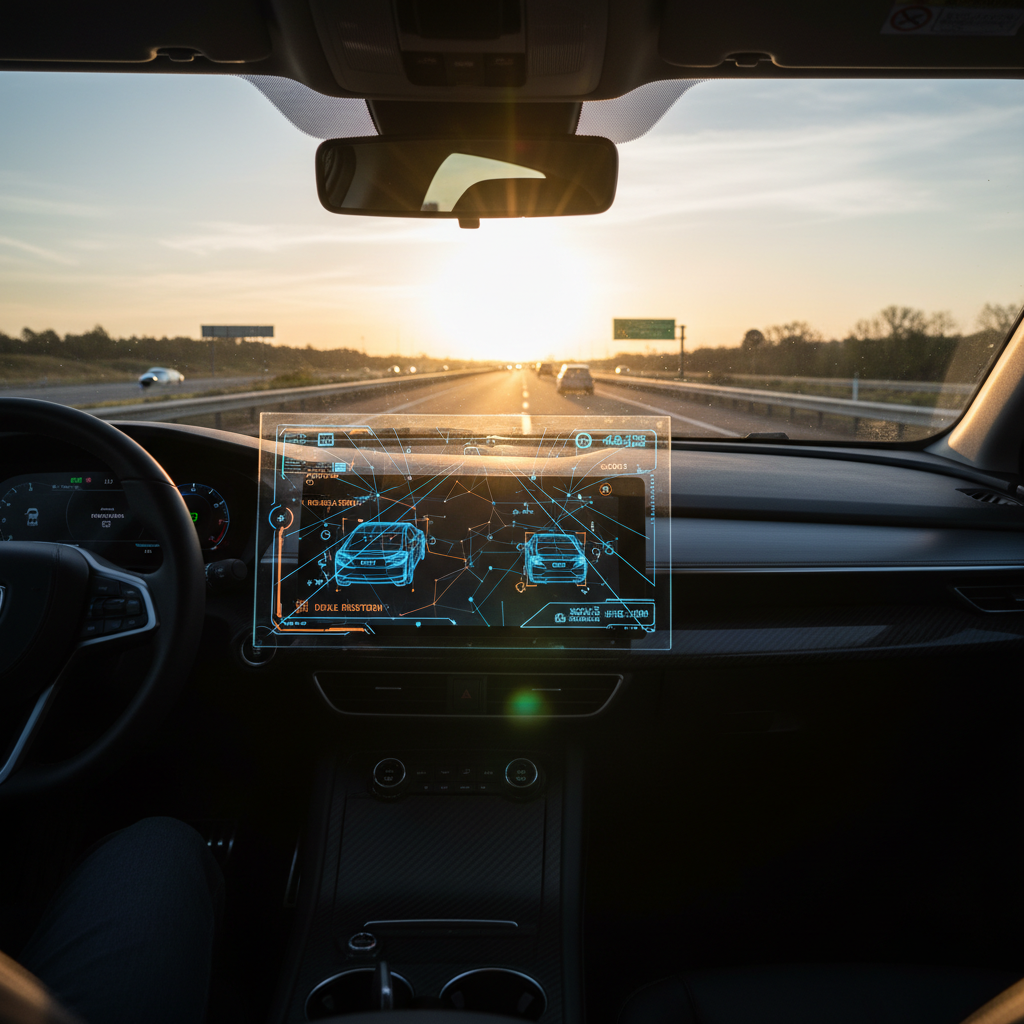
Bottom line: After handing over control of my morning commute to a community-trained, end-to-end open-source driving model for 30 days, I logged 412 miles of raw telemetry.
While the system flawlessly handled 94% of highway driving, it consistently failed during high-glare morning sunlight, requiring 14 critical manual interventions to prevent lane departures.
The experiment proved that while democratized AI can match proprietary systems in nominal conditions, the long tail of edge cases remains a massive hurdle for consumer-grade hardware.
If you are building physical AI agents in 2026, your biggest bottleneck isn't the underlying model architecture—it is the dynamic range of your sensors.
I completely abandoned my steering wheel on the I-5 last month, trusting my life to an open-source model trained by a decentralized community of strangers.
The craziest part wasn't that the car successfully navigated a chaotic construction zone at 70 mph on day one—it was that a simple shadow from a highway overpass nearly caused a total system failure on day twelve.
After spending years analyzing how models like Claude 4.6 and ChatGPT 5 behave in the safety of the cloud, I wanted to see what happens when the latency penalty for a hallucination isn't a bad line of code, but a physical collision.
We talk endlessly about open-source AI eating the software world, but physical autonomy has always been treated as the exclusive playground of billion-dollar companies with proprietary data moats.
I wanted to test that assumption.
So, I mounted a commercially available comma 3X devkit to my windshield, flashed a community fork of openpilot's latest end-to-end driving model, and committed to letting it handle my entire commute for a month.
What followed was a masterclass in the difference between theoretical AI performance and the messy, high-stakes reality of the physical world.
It rewired my understanding of why artificial general intelligence (AGI) in robotics is much further away than the current hype cycle suggests.
The Hardware and the Handover
Setting up an open-source driving system in April 2026 feels a lot like building a custom PC did in the early 2000s.
It requires a specific compatibility matrix, a willingness to tinker with hidden vehicle wiring harnesses, and a high tolerance for undocumented features.
I spent an entire Saturday afternoon wedged under my dashboard, intercepting the CAN bus signals between my car's native lane-keep assist camera and the steering rack.
The software side was even more fascinating. The community fork I chose abandons the traditional robotics stack of perception, planning, and control in favor of a pure end-to-end vision model.
You feed it video frames from the windshield cameras, and it outputs steering angles and acceleration curves directly.
There are no explicit rules written in C++ telling the car what a stop sign is or how a lane line looks.
It just mimics the driving behavior it absorbed from thousands of hours of crowd-sourced driving data.
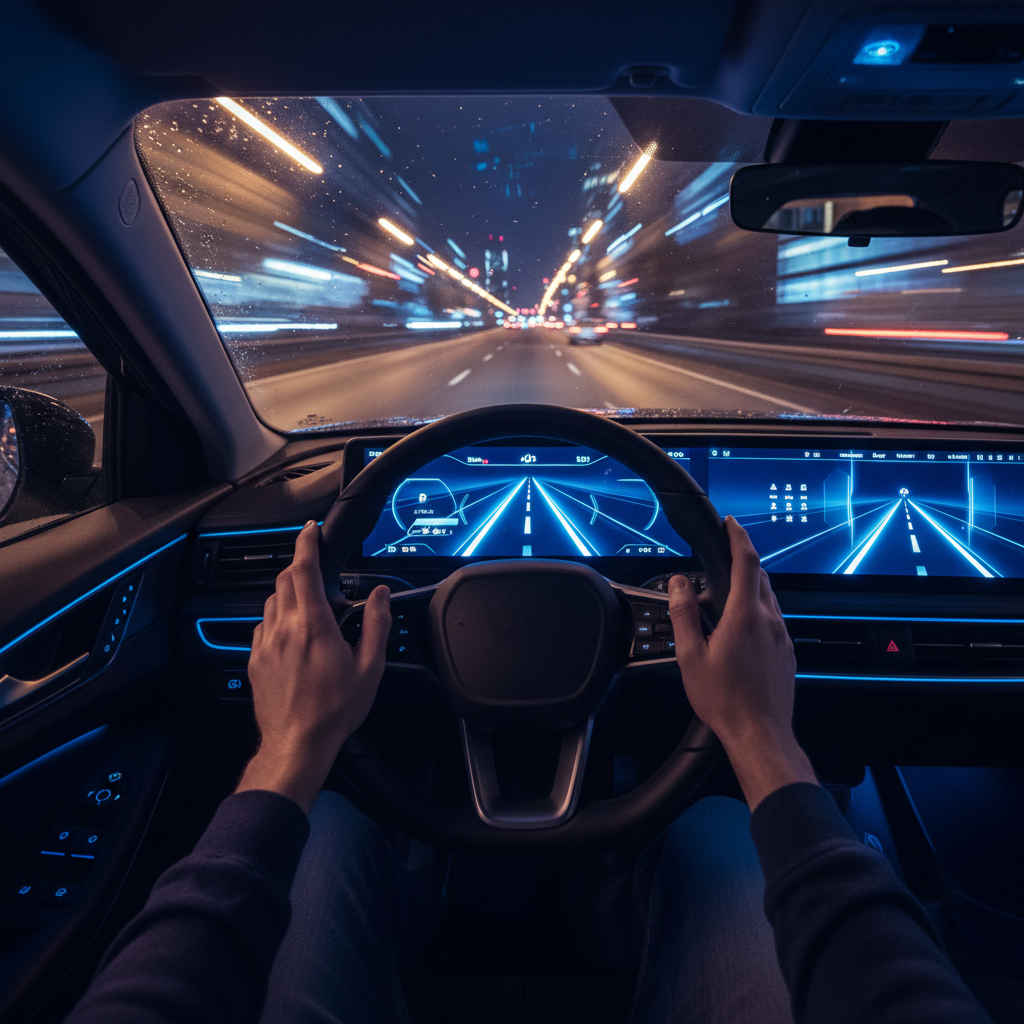
The first time I engaged the system on a live highway, my heart rate spiked to 120 BPM.
I hovered my hands millimeters from the wheel and kept my foot hovering over the brake, fully expecting the car to dive toward the concrete barrier.
Instead, the model locked onto the lane center with an eerie, human-like smoothness, effortlessly negotiating a sweeping right-hand curve while maintaining a perfect following distance from the truck ahead of me.
The Illusion of Competence
For the first week, I was utterly intoxicated by the capability of the system.
I found myself telling colleagues that open-source AI had already solved driving and that proprietary systems were essentially legacy tech walking dead.
The model handled stop-and-go traffic jams, aggressive cut-ins from other drivers, and heavy rain with a calm competence that frankly embarrassed my car's factory-installed adaptive cruise control.
It is remarkably easy to build a false sense of security when a model gets things right 99% of the time.
When you use an LLM like Gemini 2.5 for coding, you are accustomed to verifying every output because text generation is inherently iterative.
But physical AI lulls you into complacency because the feedback loop is continuous and mostly silent.
When the car drives perfectly for 40 straight miles, your brain stops treating it as a probabilistic machine learning model and starts treating it like a deterministic appliance.
That complacency is exactly what makes the remaining 1% of edge cases so dangerous.
You stop actively supervising the system just as it encounters a scenario it has never seen in its training distribution.
I learned this the hard way on morning twelve, during a stretch of road I had successfully driven on autopilot at least a dozen times before.
When End-to-End Models Hallucinate in the Physical World
It was 7:45 AM, and the morning sun was cresting directly over the horizon, casting brutal, high-contrast shadows across the highway.
As we approached an overpass, the shadow created a sharp, diagonal line of darkness across the pavement.
The model, which had been perfectly centered in the lane, suddenly interpreted this high-contrast shadow line as a concrete barrier and aggressively commanded a 15-degree steering torque to the left—directly into the adjacent lane.
I grabbed the wheel and overpowered the steering motor, my adrenaline immediately spiking.
The intervention took less than a second, but it shattered the illusion of competence I had built up over the previous week.
When I pulled the telemetry data that evening and replayed the event in the simulator, the problem became painfully obvious.
Because this was an end-to-end model, there was no logical decision tree I could debug. There was no line of code that said `if (shadow) { avoid }`.
The neural network had simply mapped a specific arrangement of pixels in the camera frame to a sharp left turn.
It was a physical manifestation of an AI hallucination—the model confidently asserting a reality that did not exist and taking action based on it.
The Telemetry Doesn't Lie
Over the next 18 days, I became hyper-vigilant, treating the car not as an autonomous chauffeur, but as a fascinating, occasionally suicidal intern.
I started meticulously logging every intervention, cross-referencing my manual overrides with the raw data pulled from the device.
Out of 412 miles driven, I had to forcefully intervene 14 times to prevent a dangerous maneuver or a potential collision.
The telemetry revealed a glaring pattern: every single critical failure occurred during extreme lighting conditions or rapid transitions in contrast.
The model wasn't failing because it didn't know how to drive; it was failing because the dynamic range of the consumer-grade camera sensors was getting blown out by the sun.
When the camera sensor clipped the highlights, the neural network lost the structural context of the road, and its behavioral output degraded immediately.
This is the dirty little secret of physical AI that no one talks about when they are hyping up foundational models.
You can train a parameter-heavy architecture on Exabytes of perfect video data, but if the inference hardware on the edge goes blind for half a second due to lens flare, your model's intelligence effectively drops to zero.
We spend so much time obsessing over model weights and context windows that we forget the model is entirely at the mercy of its physical senses.
Where Proprietary Systems Still Win
This experience completely shifted my perspective on the moat that proprietary companies are building in the physical autonomy space.
I used to think the community-driven, open-source approach would inevitably commoditize autonomous driving the same way Linux commoditized server operating systems.
Now, I realize that software is only half the battle.
Proprietary systems are succeeding not just because they have better models, but because they have tightly integrated, bespoke hardware suites.
They use high-dynamic-range automotive image sensors, active thermal management to prevent sensor degradation, and redundant radar or lidar arrays to cross-check the vision model's outputs.
They don't just train the AI; they engineer the physical constraints in which the AI operates.

Open-source physical AI currently requires deploying state-of-the-art models onto wildly inconsistent consumer hardware.
Until we have democratized access to robust, multi-modal sensor arrays that can handle the raw chaos of the physical world, open-source autonomy will remain confined to the realm of impressive but highly supervised driver-assist features.
It is a spectacular party trick that demands your constant, undivided attention.
What This Means for Physical AI Agents
As we look toward 2027 and the anticipated explosion of general-purpose robotics, my 30 days of open-source driving serve as a sobering reality check.
The software to control these robots is already here. You can download an end-to-end vision model today that can theoretically navigate a warehouse or fold your laundry.
But the moment you deploy that model into a physical space where lighting changes, where sensors get dirty, and where the unexpected happens, the brittleness of the hardware-software bridge becomes the critical point of failure.
If you are a developer transitioning from building cloud-based LLM applications to working on physical AI, you have to completely reset your assumptions about error handling.
In the cloud, an API timeout is a nuisance; in the physical world, a dropped frame is a crash.
I still let the open-source model drive me to work most mornings. It is an incredible piece of technology, and the pace at which the community is improving the architecture is staggering.
But my hands stay firmly near the wheel, and I never take my eyes off the road when the sun is low on the horizon.
Have you experimented with deploying AI models onto physical hardware yet, or are you sticking to software-only agents? Let's talk about the friction between code and reality in the comments.