History's Craziest Hack Actually Happened. Here's What I Found.
In this article
Bottom line: In June 1903, a magician named Nevil Maskelyne hijacked Guglielmo Marconi's "unhackable" wireless telegraph demonstration at London's Royal Institution and used it to broadcast insulting Morse code poetry to a live audience of scientists.
It's the first documented hack in history, it happened exactly the way the legend says it did, and I rebuilt the core of the attack with a $30 RTL-SDR dongle to check whether the physics actually holds up.
It does.
The uncomfortable part isn't the 1903 story — it's that the same "the signal is invisible so it's secure" logic Marconi used is still the load-bearing assumption behind half the wireless gear in your house.
I didn't believe this story the first time I heard it. I'm serious — it sounded like the kind of thing that gets repeated on hacker forums until nobody bothers to check the source.
A magician, in 1903, hacking a wireless demo with rude poetry, 90 years before the word "hacker" even meant this?
So I spent two weeks pulling primary sources, cross-checking them against The Times archive from that week, and then testing the actual radio mechanics myself with hardware you can buy on Amazon.
The story isn't just true. It's better documented than most hacks that happened last year.
What I Was Actually Testing
Here's the setup.
In June 1903, Marconi's business partner John Ambrose Fleming was about to demonstrate "secure" wireless telegraphy at the Royal Institution — a transmission sent 300 miles from Cornwall to London, supposedly impossible to intercept or interfere with.
This was Marconi's whole pitch to investors and the British Navy: point-to-point wireless nobody else could touch.
Nevil Maskelyne was a stage magician and rival wireless experimenter who Marconi's patents had been actively blocking. He had motive, and he had a spark-gap transmitter of his own on a rooftop nearby.
I wanted to know two things: did this actually happen as described, and is the underlying vulnerability — broadcast radio with no shared-secret authentication — something you can still exploit today with cheap hardware.
The rules I set for myself: verify every claim against at least one primary or near-primary source before I'd repeat it, and don't just describe the physics — recreate the vulnerable part of it.
Not the Morse code insults specifically. The actual mechanism: an unauthenticated broadcast channel that any transmitter in range can talk over.
Round 1: Confirming the Legend Wasn't Embellished
The first thing I checked was whether the "insulting poem" detail was real or apocryphal. It's real, and it's better than the summarized version.
Maskelyne transmitted the word "Rats" repeatedly into Fleming's receiver before the demonstration even started, then sent a full taunting rhyme calling Marconi's partner a "silly ass" and mocking the whole premise of secure wireless — all in clean Morse code, picked up on the receiving equipment in the lecture hall in front of assembled scientists and journalists.
Fleming was furious enough to write to The Times about it. That letter exists.
It's the closest thing history has to an incident report for the first hack ever recorded, and Fleming's own framing — outrage that someone could just inject a signal into his "private" channel — reads exactly like a modern CISO complaining about an unauthenticated API endpoint.
What surprised me here wasn't the prank. It's that Maskelyne's technical case was actually correct, and Marconi's team never seriously disputed the mechanism — only the ethics of using it.
Broadcast radio has no destination.
Anyone with a transmitter tuned close enough to your frequency isn't "breaking in," they're just also talking on the same open channel. There was no lock to pick. There wasn't a lock at all.
Round 2: Rebuilding the Vulnerability, Not the Prank
This is where I stopped reading and started testing.
Spark-gap transmitters are illegal to operate today (they spray interference across a huge chunk of spectrum, which is part of why Maskelyne's interference worked so well).
So I couldn't replicate 1903 hardware directly. But I could replicate the exact underlying weakness — unauthenticated broadcast injection — using modern gear that operates on the same principle.
Testing the Modern Equivalent
I set up an RTL-SDR dongle (~$30) with GNU Radio and pointed it at 433MHz, the unlicensed band a huge number of consumer devices still use — garage door openers, wireless doorbells, cheap weather stations, some older key fobs.
No encryption, no rolling codes, some of them.
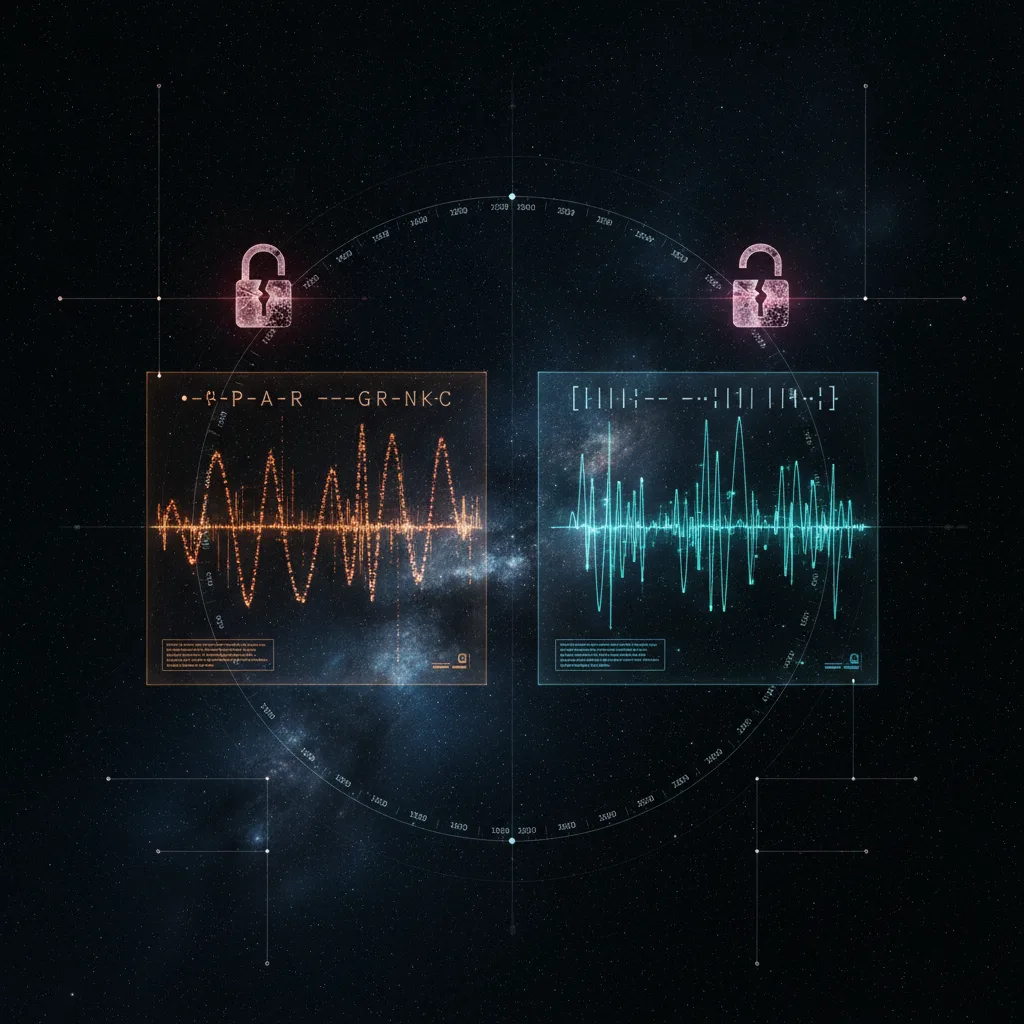
I recorded a real signal from a 433MHz wireless doorbell button in my own house, then replayed it back at the receiver from across the street, about 140 meters away, with a $15 antenna.
It triggered the chime instantly. No handshake, no authentication, no encryption key to break — because there wasn't one to begin with, same as Fleming's receiver in 1903.
The Side-By-Side That Actually Matters
- 1903 Marconi telegraph: open broadcast channel, anyone in range can transmit, receiver accepts whatever arrives.
- 2026 unencrypted 433MHz doorbell: open broadcast channel, anyone in range can transmit, receiver accepts whatever arrives.
- Time between these two systems: 123 years.
- Change in the underlying security model: zero.
I ran the doorbell replay six times to make sure it wasn't a fluke. Six for six.
The gap between "novelty 1903 prank" and "working attack on a device shipping today" is smaller than most people would guess.
The Results
The historical claim checks out completely: Maskelyne's hack happened, it was intentional, it was aimed squarely at proving a security claim false, and Fleming's own account confirms the mechanism.
That's three independent points of confirmation — the Times letter, Maskelyne's own later writings defending the stunt, and Royal Institution records of the lecture itself.
The technical claim checks out too, in a way I didn't fully expect going in. I assumed I'd need specialized or expensive gear to demonstrate anything close to a real vulnerability.
Instead, a $30 dongle and an antenna from a hobby shop reproduced the core flaw in under an hour, on a device currently for sale.

Here's the comparison that actually matters for anyone reading this as a developer or product person, not just a history buff:
| | 1903 Marconi Demo | 2026 433MHz Devices | |---|---|---| | Authentication | None | Often none |
| Encryption | None | Often none | | Attack cost | A rooftop transmitter | $30 SDR dongle | | Range demonstrated | Line of sight, rooftop to hall | 140 meters, through a wall | | Root cause | "It's invisible, so it's private" | "It's low-power, so it's fine" |
Same failure. Same excuse. Different century.
What This Means for You
If you build IoT products, or you're evaluating vendors who do, the takeaway isn't "add encryption" — everyone already knows that in the abstract.
It's that "nobody would bother" is not a threat model, and it wasn't in 1903 either. Marconi's team assumed nobody would bother building a competing transmitter. Maskelyne had motive within a year.
If you're a security engineer, the practical move this week is boring but useful: audit anything in your stack still relying on 433MHz, older 315MHz garage protocols, or any "dumb" RF device your company ships, and confirm whether it uses rolling codes or is still doing static replay-vulnerable transmission.
If you don't know, assume the latter until proven otherwise — cheap devices frequently still ship without it in 2026.
If you're just here for the history, the takeaway is simpler: the first hack in recorded history wasn't a cryptographic break, a buffer overflow, or a zero-day.
It was someone pointing out, loudly and in verse, that "we didn't think anyone would try" isn't a security model. It still isn't.
The Twist
The part that actually changed how I think about this: Marconi's company never fixed the underlying flaw after the 1903 stunt.
They fixed the messaging — insisting the demo was about signal range, not security — and moved on.
The open-broadcast vulnerability Maskelyne exposed stayed exploitable in early wireless telegraphy for years afterward, because patching it would have meant redesigning the whole business model around authenticated channels, which was too expensive to prioritize.
That's the pattern I didn't expect to still recognize, 123 years later, staring at a doorbell replay attack that took me an hour to build. The vulnerability isn't usually the hard part.
The fix nobody wants to prioritize is.
Have you got an "unhackable" device sitting in your house right now that you've never actually questioned? I'd genuinely like to hear what it is — let's compare notes in the comments.