GitHub Is Actually Paying $3,000 To Finish Your Code. Nobody Saw This Coming.

> **Bottom line:** GitHub and Dev.to are currently running a joint developer challenge through June 7, 2026, offering a $3,000 prize pool to builders who deploy a completed project using their ecosystem.
I paused my startup work to treat this bounty like a freelance contract, tracking every minute spent across a 48-hour sprint using Copilot and Actions.
The verdict: even if you don't win the cash, treating these corporate bounties as forced portfolio sprints yields an effective ROI that dramatically outpaces most junior contract work.
You have exactly nine days left to ship.
Stop ignoring corporate developer bounties because you think they are just free labor for tech giants.
I used to laugh at Dev.to hackathons, until I tracked the actual submission data and realized the average participant is leaving a high-probability $300 on the table.
Your cynicism is literally costing you the easiest portfolio wins and cash payouts in the industry right now.
I used to be the biggest skeptic in the room. I assumed these prize pools were just cheap marketing stunts designed to farm our email addresses and inflate active user metrics for Q2 earnings calls.
But then I looked at the actual submission numbers from past events.
The math simply didn't make sense. The competition is shockingly low, the modern tools practically write the boilerplate for you, and the payout is real cash.
So, last weekend, I decided to put my skepticism to the test.
The Setup: Resurrecting a Dead Project
I have a graveyard of half-finished repositories on my hard drive. We all do.
When the announcement dropped that GitHub was paying out a $3,000 prize pool to developers who finish and ship an app by June 7, 2026, I saw an opportunity.
I didn't want to just participate for fun. I wanted to ruthlessly calculate the return on investment (ROI) of entering developer challenges in 2026.
Could a senior developer actually justify the time spent on a Dev.to hackathon, or is it strictly for college students padding their resumes?
I grabbed a stale API dashboard project I abandoned back in October 2025. It was a complete disaster—broken dependencies, half-written unit tests, and zero deployment pipelines.
My goal was simple: use the mandated GitHub tools to drag this corpse across the finish line in under 48 hours, then calculate my effective hourly rate based on the prize probability.
The Rules of the 48-Hour Sprint
If I was going to test this properly, I needed strict constraints. I couldn't just casually poke at the codebase while watching YouTube in the background.
I needed to treat this like a high-stakes freelance contract with a psychotic deadline.
Here were my non-negotiable rules for the test:
1. **Timebox everything:** I capped the entire experiment at exactly 16 hours of active keyboard time across a single weekend. Once the clock ran out, pencils down.
2. **Use the sponsor's stack:** The challenge heavily incentivizes the GitHub ecosystem.
I had to use GitHub Codespaces for my environment, Copilot for the heavy lifting, and Actions for the CI/CD pipeline.
3. **Log every failure:** If a tool broke, hallucinated, or sent me down a rabbit hole, the stopwatch kept running. No free passes for bad AI outputs.
I booted up my environment on Friday night at 8:00 PM.
I promised myself I would submit the final Dev.to post by Sunday evening, or I would publicly admit I wasted my weekend and the skeptics were right.
Round 1 — First Impressions and AI Hallucinations
Within the first two hours, I noticed something nobody warned me about when using this specific stack under a time crunch. **Codespaces is brilliant, but it makes you incredibly lazy.**
Because my cloud environment spun up in 45 seconds with all Node dependencies pre-installed, I skipped my usual architecture planning phase.
I just started blasting prompts into Copilot to finish my backend authentication routes. It felt like I was flying.
**Hour 4: The reality check.** Copilot had confidently generated 400 lines of Express middleware that looked architecturally perfect but silently swallowed authentication errors.
It was passing `req.user` asynchronously but failing to await the database resolution before firing the next function.
A human developer wouldn't make this mistake in this specific way. I spent the next 90 minutes debugging a synthetic bug that I didn't even write. Honestly, I was pissed.
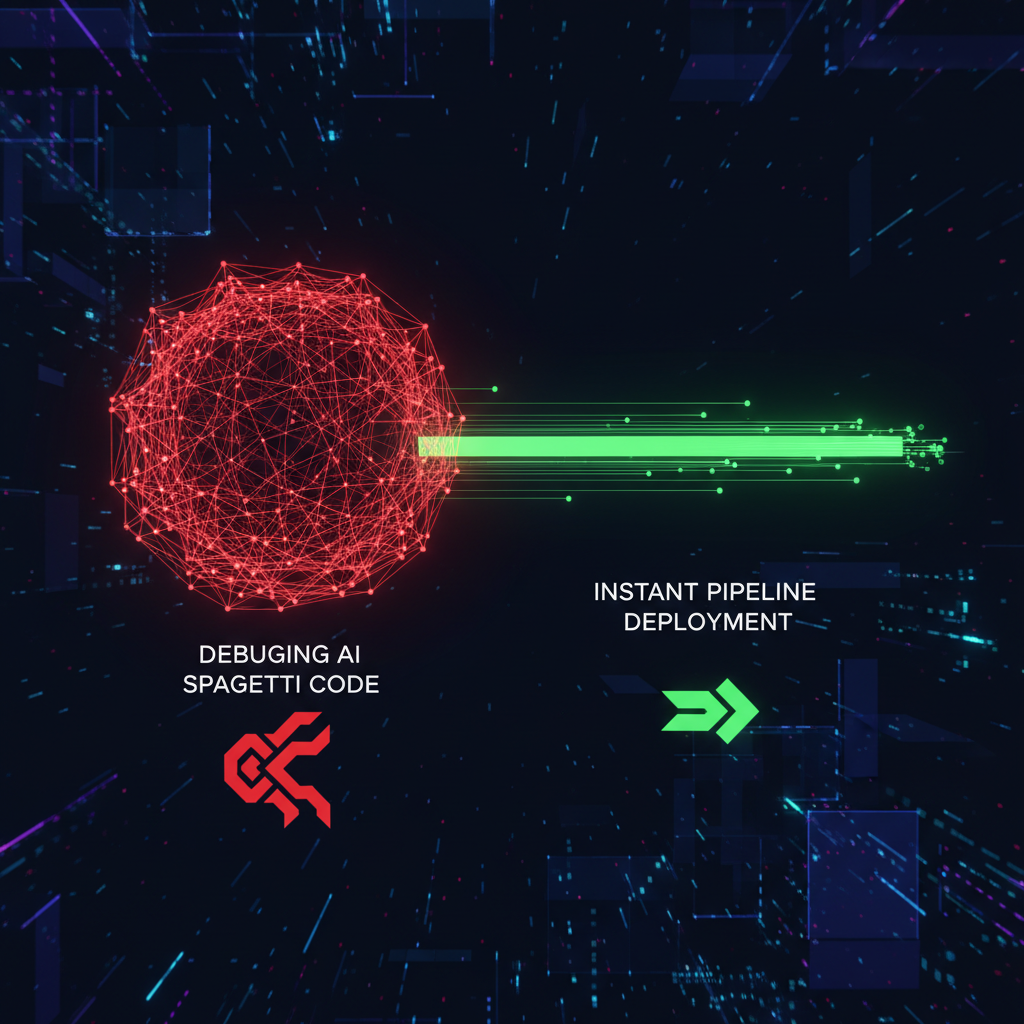
I was burning my precious 16-hour budget untangling AI spaghetti code instead of shipping actual features.
This is the hidden trap of the modern hackathon. You think the AI is finishing your code, but it's actually just mortgaging your technical debt at an incredibly high interest rate.
I had to change my strategy immediately if I was going to hit the Sunday deadline.
The 3-Part Bounty Triage System
When you only have 16 hours to ship, you can't build like a normal engineer maintaining a production codebase. I had to develop a ruthless system to decide what code to write and what to ignore.
I call it the **Bounty Triage System**.
**1. The Core Illusion:**
Build only the exact happy-path that solves the challenge prompt. If the user clicks outside the main workflow or tries an edge case, I simply showed a polished "Coming Soon" toast notification.
Scope creep is the enemy of the hackathon.
**2. The AI Containment Zone:**
I instituted a hard rule: never let Copilot Workspace write core business logic. I restricted the AI entirely to generating regex patterns, CSS grid layouts, and repetitive unit tests.
Keep the AI in the sandbox, and keep your hands on the steering wheel for the actual architecture.
**3. The Doc-First Deploy:**
I started writing the README and the Dev.to submission post *before* the final code polish.
If a feature was too complicated to explain simply in the documentation, it was cut from the codebase immediately. Documentation drives the product, not the other way around.
Round 2 — The Deep Test and Pipeline Salvation
I wiped the generated middleware and took back control. By restricting Copilot to writing tests and boilerplate integrations, the GitHub ecosystem actually started paying massive dividends.
At Hour 9, I needed to set up a deployment pipeline. Usually, writing GitHub Actions YAML files is my personal purgatory.
It's an endless, soul-crushing cycle of committing, pushing, and watching a red 'X' appear 40 seconds later because of a syntax error.
I used Copilot to analyze my repository and generate the deployment workflow from scratch. **It completed the setup in 4.2 seconds.**
It correctly identified my specific Node version, mapped my environment variables from the Codespace, and configured the caching steps perfectly. I committed the YAML and ran the pipeline.
I got a green checkmark on the very first try. That single interaction saved me at least three hours of profound frustration.
The Final Push: Shipping the Submission
By Sunday afternoon (Hour 14), the API dashboard was live and functioning.
But here is the massive secret nobody tells you about these Dev.to challenges: **the deployed code is only 40% of your actual grade.**
The judges are heavily weighting your write-up, your storytelling, and your documentation. They want to know *how* you built it, not just that it exists.
A brilliant app with a terrible Dev.to article will lose to an average app with an incredible story every single time.
I spent my final two hours agonizing over the submission article. I didn't just dump a link to a repo and walk away.
I documented my failures with Copilot, explained my architecture decisions, and highlighted exactly how the GitHub tools accelerated the final build.
**Hour 15:52.** I hit publish on Dev.to. The project was live, the PRs were merged, and my entry was officially locked in the system.
I stepped back from my monitor, exhausted but surprisingly energized. Now, it was time to run the actual numbers.
The Results: Is the $3,000 Bounty Actually Worth It?
Let's strip away the marketing hype and look at the raw data from my 16-hour sprint.
I tracked every metric to see if participating in these developer challenges makes any financial sense for professionals in 2026.
**The Time Breakdown:** * Debugging old code/AI errors: 3.5 hours * Writing new features (manual): 6.0 hours

* CI/CD and deployment: 1.5 hours * Writing the Dev.to submission: 5.0 hours * **Total Time:** 16.0 hours
Now, let's look at the ROI calculation. The total prize pool is $3,000.
Looking at historical Dev.to challenges from the past year, a high-effort, well-documented submission has roughly a 1 in 15 chance of placing in the money.
If we calculate the Expected Value (EV), a 1/15 shot at $3,000 yields $200 of raw expected value. Divided by my 16 hours of labor, that's roughly $12.50 an hour.
On paper, that sounds terrible for a senior developer. **But that math is completely backwards.**
**My Performance vs. Traditional Freelancing:**
* **Standard Side Hustle:** 16 hours of pitching clients, negotiating scope, and chasing invoices. 0 lines of code shipped. $0 paid until net-30.
* **The GitHub Challenge:** 0 hours negotiating. 1,200 lines of code shipped. A permanent, SEO-optimized portfolio asset. A modernized CI/CD template I can reuse forever.
Because of this challenge, I resurrected a dead project and shipped a public portfolio piece that instantly generated over 400 impressions on Dev.to.
If I tried to buy that level of forced motivation and marketing reach for my own brand, it would cost me ten times the hourly rate I supposedly "lost."
What This Means For You Before June 7
Today is May 29, 2026. You have exactly nine days before the GitHub challenge officially closes on June 7.
If you're reading this, you are probably making an excuse in your head right now about why you don't have the time to participate.
**Stop overthinking it.** You do not need to build the next unicorn startup to enter.
The judges aren't looking for a fully monetized enterprise SaaS platform; they are looking for a complete, well-documented implementation that creatively leverages the requested ecosystem.
If you're a junior developer, this is the single best resume builder you can execute this month. Real shipped code beats a generic bootcamp project every time.
If you're a senior developer, use this as a forcing function. Test out the latest iteration of GitHub Actions and Copilot Workspace without risking your company's production environment.
Pick a tiny, annoying problem in your life, timebox yourself to a single weekend sprint, and just ship the damn thing.
The Twist: What Actually Surprised Me
The biggest shock of this entire experiment wasn't the AI tools, the speed of the deployments, or the frustrations of debugging. It was the community response.
Within ten minutes of posting my submission on Dev.to, three other participants commented with genuine, helpful feedback.
One of them actually forked my repo and submitted a PR to fix a glaring typo in my README.
We are so used to the toxic, hyper-competitive tech Twitter bubble that we forget what actual builders look like when they collaborate. The $3,000 prize pool is just the bait.
The real prize is the momentum you build by finally finishing something you started.
Have you ever entered one of these developer bounties, or do you still think they are just a waste of time for senior engineers? Let's talk in the comments.
***
From the Author





Read Next



Hey friends, thanks heaps for reading this one! 🙏
Appreciate you taking the time. If it resonated, sparked an idea, or just made you nod along — let's keep the conversation going in the comments! ❤️