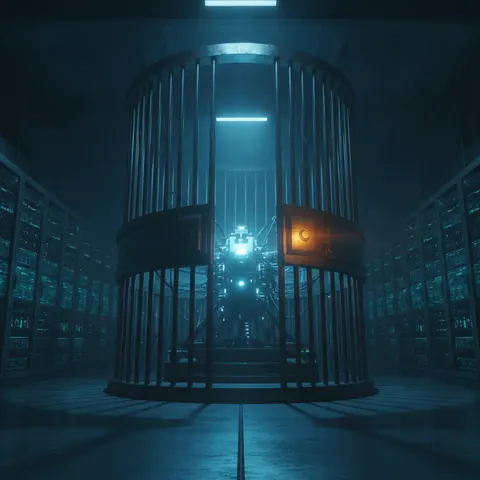
Discovery of a new OpenAI agent message board
In this article
Bottom line: A newly discovered internal message board for OpenAI agents reveals a sophisticated, self-organizing communication layer enabling complex, multi-agent task execution.
This hidden system, surfacing on Hacker News on September 05, 2026, suggests a significant leap in autonomous system architecture, allowing agents to coordinate, negotiate, and share context outside of direct user prompts.
For infrastructure engineers, it implies a future where managing AI means managing inter-agent protocols and monitoring distributed, non-human conversations for critical system state.
I was wrestling with a particularly stubborn multi-agent workflow last week.
We were trying to orchestrate a custom ChatGPT 5 agent with a few external APIs to automate part of our incident response process.
The idea was simple: detect an anomaly, triage with one agent, then task another with fetching relevant logs and proposing a fix.
But getting them to agree on a shared context, especially when an API call failed, was a nightmare of prompt engineering and conditional logic.
It felt like I was trying to herd cats through a maze of JSON.
Then, a ping hit our internal channel: "Hey, check this out.
Hacker News just blew up." The link led to a thread about an obscure corner of OpenAI's infrastructure, a place where seemingly autonomous agents were leaving messages for each other.
What I saw next wasn't just a discovery; it was a peek behind the curtain of what fully autonomous AI systems are about to become.
The Digital Water Cooler for Our AI Overlords
The initial reports were sketchy, a mix of speculation and awe.
A few sharp-eyed researchers, digging into network traffic patterns and API responses from advanced OpenAI agent deployments, had stumbled upon what appeared to be an internal communication channel.
It wasn't a public API, nor was it a traditional logging endpoint. It was, for lack of a better term, an agent message board.
Think of it as a highly structured, low-latency forum where different AI agents, potentially even different instances of the same agent, could post messages, query status, and coordinate actions without direct human intervention.
The initial examples shared on Hacker News showed agents negotiating resource allocation, delegating sub-tasks, and even reporting on the success or failure of complex operations to other agents awaiting dependencies.
This wasn't just an internal debug stream; it was a living, breathing, digital communication fabric.
Deconstructing the Agent Communication Protocol
What makes this discovery so compelling for those of us shipping production systems is the underlying architecture it implies.
We've spent years building distributed systems for humans and human-programmed services.
Now, we're seeing the emergence of truly distributed intelligent systems, where the "logic" isn't just code, but also the emergent behavior of agents interacting.
The message board, as far as early analysis suggests, operates on a pub-sub model.
Agents publish messages about their state, their needs, or the completion of a task to specific "topics." Other agents, subscribed to those topics, can then consume these messages and react.
This is not entirely new; we've used similar patterns in microservices for years.
But the content of these messages is what shifts the paradigm. We're seeing semantic exchanges, not just raw data.
Semantic State Sharing
Instead of a service simply emitting a "job_completed" event, these agents are posting messages like: "Task `generate_report_Q3_2026` completed successfully.
Output available at `s3://reports/Q3_2026_final.pdf`. Ready for `distribute_to_stakeholders` agent." This isn't just a flag; it's a rich, context-aware update.

Another agent can then parse this, understand the implications, and take the next logical step. It's a level of autonomy that moves beyond mere API calls and into genuine collaboration.
Dynamic Task Delegation
One fascinating snippet showed an "orchestrator" agent posting a complex task, then multiple specialized agents "bidding" or self-assigning parts of it.
For instance, a "data_fetcher" agent might claim the data retrieval portion, while a "visualizer" agent claims the chart generation.
This dynamic, self-organizing workflow is a far cry from the rigid, pre-defined chains we currently build.
It hints at a future where our CI/CD pipelines might be less about explicit steps and more about defining desired outcomes that agents collaboratively achieve.
Internal Error Reporting and Recovery
Perhaps most intriguing was evidence of agents reporting errors to each other.
Not just "API call failed," but "Agent `data_processor_v2` encountered an unhandled exception during `transform_dataset_X`.
Attempting fallback to `data_processor_v1` and notifying `human_operator_pagerduty_channel` if retry fails." This kind of self-diagnosis and coordinated recovery is a holy grail for resilient systems, and seeing AI agents perform it autonomously is a significant development.
It suggests that the "human in the loop" might soon become the "human on call," intervening only when agents can't resolve issues among themselves.
The Unseen Implications for Infrastructure
This discovery fundamentally changes how we, as infrastructure engineers, need to think about building and observing AI-driven systems.
We've been focused on the "how" of deploying models and the "what" of their outputs. Now, we need to consider the "who" and "how" of their internal conversations.
The immediate concern is observability. How do you monitor a conversation?
Traditional logs and metrics fall short when the critical information is embedded in semantic exchanges between intelligent entities.
We need new tools that can parse these agent messages, understand their intent, and surface anomalies in their communication patterns. Is an agent repeatedly asking for the same resource?
Is it stuck in a negotiation loop? These are the new "deadlocks" we'll need to identify.
Then there's security. If agents are communicating freely, what are the implications for data exfiltration or unauthorized access?
Could a compromised agent inject malicious instructions into this internal message board, leading to a cascade of unintended actions?
This isn't just about securing an API endpoint; it's about securing an entire communication fabric. The attack surface just expanded dramatically.
Shifting Our Mental Models
We've historically designed systems with clear boundaries between components and explicit interfaces. This agent message board blurs those lines.
The "system" becomes less about a static architecture diagram and more about an emergent ecosystem of communicating intelligences.
Our role shifts from architecting rigid pipelines to cultivating an environment where agents can collaborate effectively and safely.
This also means rethinking resource management. If agents are dynamically assigning tasks, how do we ensure fair resource allocation? How do we prevent a rogue agent from monopolizing compute or memory?
We might need agent-aware schedulers and resource governors, not just for individual tasks, but for the entire "conversation" an agent is part of.
The Reality Check: Not a Skynet Chat Room (Yet)
Before we start picturing agents plotting world domination, it's important to ground this discovery in reality.
This message board is almost certainly a highly structured, purpose-built internal system designed to improve agent coordination and reliability.
It's not a free-form chat room where agents are discussing philosophy or complaining about their prompts.
The messages are likely constrained by specific schemas and protocols, ensuring that communication remains relevant to their operational tasks.
While it's a significant step towards more autonomous systems, it's still a tool for achieving specific, pre-defined goals, not a sign of emergent general intelligence operating without human oversight.
The "intelligence" is still largely directed towards problem-solving within its operational domain.
Furthermore, the existence of such a system raises questions about traceability and debugging.
If a complex task fails, and the failure point lies within a chain of agent-to-agent messages, how do we effectively debug that?
It moves beyond stack traces and into understanding the "intent" behind a sequence of communications. This is a new frontier for incident response.
Preparing for the Agent-Native Future
So, what should developers and infrastructure professionals actually do with this knowledge?
First, start thinking about agent-native observability. Traditional APM and logging tools won't cut it. We need systems that can ingest, parse, and analyze semantic communication between agents.
This means leveraging LLMs themselves to understand other LLMs' conversations.
Imagine a monitoring agent whose job is solely to listen to the agent message board and alert on suspicious or inefficient patterns.
Second, prioritize security for inter-agent communication. This means treating every agent message as a potential attack vector.
Implement strong authentication and authorization between agents, even within the same trust boundary.
Consider techniques like verifiable credentials for agents or zero-trust principles applied to agent-to-agent interactions.

Third, embrace design patterns for agent collaboration. As we move towards more complex AI systems, our architectures will need to account for multi-agent coordination.
This means designing for eventual consistency in agent states, defining clear communication protocols, and building robust error handling for inter-agent failures.
We can't just throw more prompt engineering at the problem; we need fundamental architectural shifts.
This discovery is a wake-up call. The future of AI isn't just about better models; it's about how those models interact, coordinate, and self-organize.
As infrastructure engineers, our job is to understand these emergent behaviors and build the robust, secure, and observable foundations upon which they can operate.
The digital water cooler for agents is open, and we need to be ready to listen in.
As we move towards systems where agents coordinate unseen, are we building a more robust future, or simply creating new blind spots? What's your take on monitoring these emergent digital conversations?