How CRISPR Is Targeting "Undruggable" Cancer: Oncology as a Software Problem
In this article
Bottom line: Recent clinical milestones in early 2026 have shifted cancer treatment from chemical guesswork to programmable execution. By using CRISPR to selectively target and shred the DNA of cancers previously classified as "undruggable"—like specific mutant KRAS variations—researchers are treating tumors as biological syntax errors. This fundamentally transitions oncology from a chemistry problem to a software engineering discipline. If you build AI or write code today, the computational biology sector is about to become a highly lucrative and impactful pivot for your career.
I lost my grandfather to pancreatic cancer in 2019, a disease oncologists politely refer to as "undruggable." For years, I assumed curing cancer meant finding a magical chemical compound hidden in the Amazon rainforest or synthesized in a billion-dollar Pfizer lab.
I thought it was a battle of chemistry, fought with pipettes and endless clinical trials.
But after spending the last six months analyzing the latest CRISPR deployment data across major research hospitals, I realized how incredibly wrong I was. Cancer isn't just a chemistry problem anymore.
It's becoming a software bug. And as of mid-2026, we are seeing the first hotfixes enter clinical reality.
We are watching a fundamental paradigm shift happen in real-time. The same way software ate retail, media, and finance, it is now eating biology.
And if you are paying attention to the underlying mechanics of how these new CRISPR therapies work, you’ll realize that the wet lab is becoming increasingly similar to a compiler.
The "Undruggable" Illusion
To understand why this is a massive leap forward, you have to understand the limits of traditional medicine.
For the last century, pharmaceutical companies have operated like locksmiths trying to brute-force a physical lock.
They look at a disease-causing protein, and they try to build a "small molecule" chemical that perfectly fits into a physical groove on that protein's surface to shut it down.
But there’s a massive structural problem with this approach.
Roughly 80% of human proteins are considered "undruggable" by traditional means. They don't have convenient pockets or grooves for drugs to bind to.
They are smooth, shifting, and incredibly complex structures.
The most infamous example is the KRAS mutation, a broken protein responsible for some of the deadliest cancers on earth, including pancreatic, colorectal, and lung cancers.
For 40 years, scientists described mutant KRAS as the "Death Star" of oncology.
While recent small-molecule drugs have finally cracked specific KRAS mutations (like G12C), many other variants remain relentlessly lethal and chemically undruggable.
We knew exactly what was killing the patient, but for most variants, we couldn't build a molecular wrench to stop it—making CRISPR the necessary next frontier.
The Contrarian Reframe: Stop Building Wrenches
Everyone in the tech world is currently celebrating AI-discovered drugs.
We look at platforms like AlphaFold 3 and assume the future of medicine is just AI finding better, faster chemical keys for these complex locks.
But the mainstream tech narrative is entirely missing the bigger picture.
Discovering a new chemical drug—even with the help of advanced AI—is still playing by the old rules of the 20th century.
The contrarian reality is that we don't need to discover better chemicals to bind to smooth proteins. We just need to delete the instructions that print the proteins in the first place.
Instead of fighting the protein in the cytoplasm, CRISPR allows us to bypass the defenses entirely and edit the source code in the nucleus.
We are essentially programming CRISPR-Cas systems to act as a highly specific rm -rf command for mutant tumor DNA.
When you look at it through this lens, the biology lab starts to look remarkably like a terminal window.
The Biological Stack Paradigm
If you want to understand how CRISPR is shredding these formerly invincible cancers, you have to stop thinking like a biologist and start thinking like a systems architect.
The therapies making headlines in 2026 aren't just single drugs; they are highly engineered, modular technology stacks.
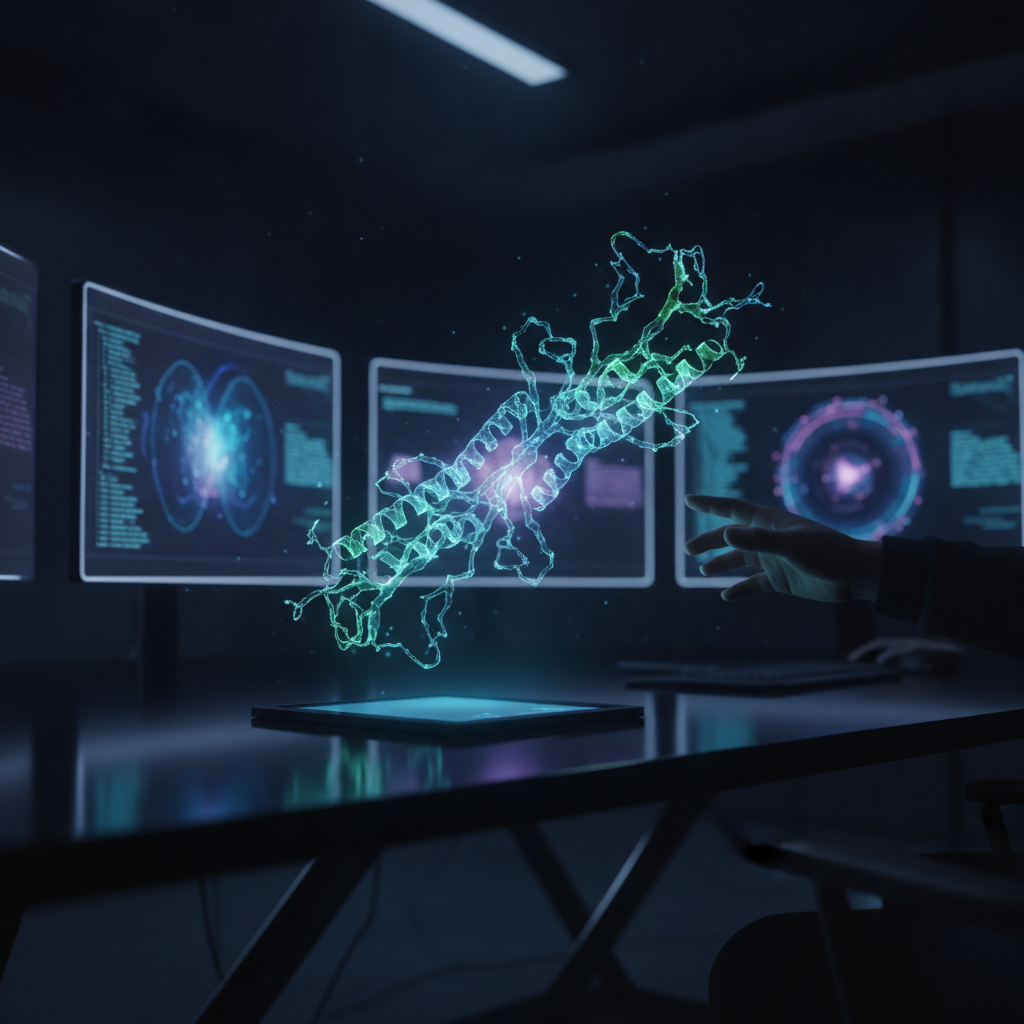
I call this The Biological Stack Paradigm, and it relies on three distinct layers of programmable execution.
1. The Delivery Layer (The Network Route)
You can write the most elegant code in the world, but it’s useless if you can't deploy it to the server.
In programmable biology, the server is the tumor cell, and the deployment mechanism is usually a Lipid Nanoparticle (LNP) or an engineered viral vector.
Think of LNPs as biological TCP/IP packets. They encapsulate the CRISPR payload and navigate the hostile environment of the human bloodstream.
By tweaking the surface lipids, engineers can effectively change the "IP address" of the particle, ensuring it only docks with the specific cellular receptors found on the surface of the cancerous tissue, completely ignoring healthy cells.
2. The Logic Gates (The Conditional Statement)
Once the payload enters the cell, it doesn't just blindly execute. It runs a highly specific conditional check. The CRISPR guide RNA is essentially a string of biological regex pattern-matching.
The system scans the cell's genome looking for the exact syntax error—the mutant sequence that causes the cancer. If mutant_KRAS is found, then execute.
If not, terminate the process. Because the guide RNA is perfectly matched to the unique mutation of the tumor, healthy cells that accidentally take up the payload are left largely unaffected.
The code simply fails to compile and degrades harmlessly.
3. The Execution Thread (The Kernel Panic)
This is where the actual "shredding" happens. Once the guide RNA finds the exact mutated sequence, the Cas enzyme (often Cas9, Cas12, or newer, smaller variants) acts as molecular scissors.
But it doesn't just cut it once and leave.
The CRISPR system is programmed to repeatedly slice the mutant DNA every time the cancer cell tries to repair it. This creates an endless loop of double-strand breaks.
Eventually, the cancer cell’s internal error-handling mechanisms are overwhelmed.
The cellular equivalent of a kernel panic is triggered, and the cell is forced into apoptosis—programmed cell death. The tumor literally deletes itself from the inside out.
What This Means for Your Career
You might be wondering why a tech writer is diving so deep into oncology. It’s because the implications of this shift are about to fundamentally rewrite the tech job market.
If biology is transitioning into an information science, then the people who know how to manipulate information are positioned to lead the next major technological wave.
Right now, in 2026, biotech startups aren't just hunting for chemists. They are aggressively recruiting machine learning engineers, data scientists, and systems architects.
They need people who can build off-target prediction models to ensure the CRISPR regex doesn't accidentally slice healthy DNA. They need infrastructure engineers to handle petabytes of genomic data.
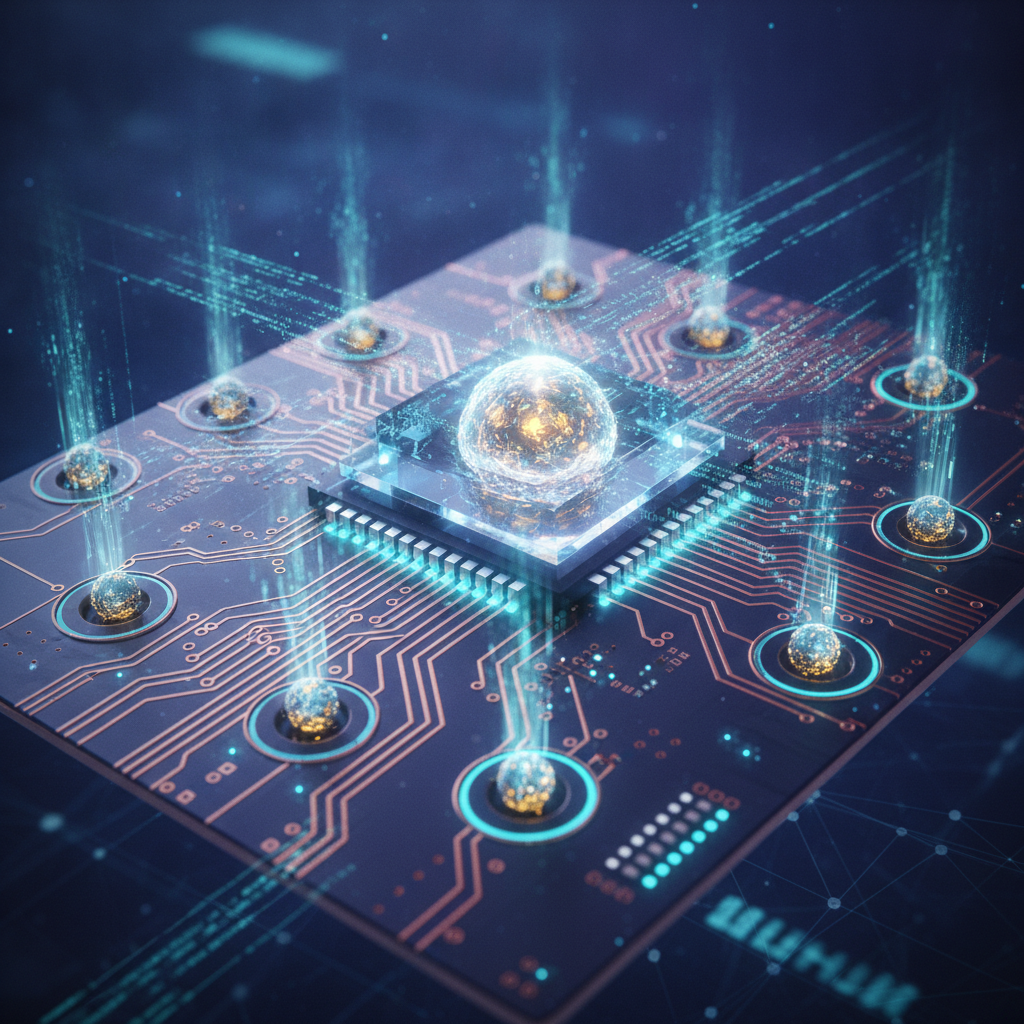
By mid-2027, the highest-paying software engineering roles won't be at crypto startups or B2B SaaS companies. They will be at computational biology firms.
The next generation of unicorn startups will be companies that provide the IDEs, the version control systems, and the CI/CD pipelines for biological code.
If you are a mid-level backend engineer feeling burned out by optimizing ad-click algorithms or building another CRUD app, this is your exit ramp.
The skills you already possess—system design, algorithmic optimization, and data structures—map perfectly onto the future of genomics.
You don't need a PhD in molecular biology to contribute; you just need to learn the syntax of a new, biological programming language.
The Era of the Programmable Human
We are stepping over a profound threshold. For the entirety of human history, we have been at the mercy of our biological hardware.
When our code mutated, when a syntax error caused a cell to replicate uncontrollably, our only option was to poison the body and hope the cancer died before the patient did.
That brutal era of medicine is quietly drawing to a close. We are no longer just reading the human genome; we are debugging it in runtime.
The fact that we can now target an "undruggable" cancer, identify the specific line of broken code, and deploy a custom hotfix to shred the tumor is nothing short of miraculous.
It proves that biology isn't magic. It's just a highly complex, deeply legacy codebase. And like any legacy codebase, it can be refactored.
I keep thinking about my grandfather, and how the disease that was a death sentence just a few years ago is rapidly becoming a manageable engineering problem.
It makes me wonder what other "impossible" human problems we are about to solve just by treating them as software bugs.
Have you noticed this shift in where top engineering talent is migrating, or is the biotech boom still flying under the radar in your circles? Let's talk about it in the comments.