Anthropic is starting to panic…
Bottom line: Anthropic, once a frontrunner in the AI race, is showing clear signs of competitive strain, particularly as Google's Gemini 2.5 and OpenAI's ChatGPT 5 push the boundaries of cost-performance and multimodal capabilities.
Internal benchmarks we ran for a real-time infrastructure automation system revealed Claude 4.6 falling behind on critical metrics like inference speed and token cost for equivalent output quality, forcing a strategic pivot in our LLM selection.
Developers relying on a single AI vendor for production workloads should reassess their stack now, as the market is consolidating around models that deliver both raw power and economic efficiency.
I cancelled my Claude 4.5 API subscription after eight months. Not because it was bad — far from it.
It was a core component of a real-time log analysis and anomaly detection system we shipped into production last fall.
But what I discovered during a routine Q2 2026 vendor review made me realize we were paying a premium for capabilities that competitors were now delivering faster, cheaper, and often with better integration.
It hit me then: Anthropic is starting to panic, and the ripple effects are already reaching developers like us.
The Problem with Loyalty in a Hyper-Competitive Market
Just eighteen months ago, Claude felt like the responsible choice.
Its focus on constitutional AI and safety mechanisms resonated deeply with our enterprise clients, particularly in regulated industries.
We were building a system that ingested millions of log lines per second, flagging anomalies and suggesting remediation playbooks for SREs.
Claude 4.5's robust context window and its ability to follow complex instructions made it a natural fit for parsing nuanced error messages and correlating events across disparate systems.
We built around it, invested in fine-tuning, and got the system into production by late 2025. It worked. Beautifully, even.
But then the quarterly cost-optimization review hit my desk in early June 2026.
Our cloud spend on LLM inference was significant, and while justifiable for the value delivered, the finance team wanted to know if we were getting the best possible unit economics.
This meant a full-scale re-evaluation, pitting Claude 4.6 (Anthropic’s latest, released this spring) against the current iterations of OpenAI’s ChatGPT 5 and Google’s Gemini 2.5.
I thought it would be a formality, a quick validation of our existing choice. I was wrong.
The Benchmarking That Shifted Our Stance
Our production system relies on three core LLM functions:
- Log Summarization & Anomaly Detection: Condensing 500-1000 lines of mixed log data into a 2-sentence summary and identifying critical issues.
- Root Cause Analysis (RCA) Suggestion: Given a summary and relevant metrics, suggesting 3-5 probable causes and initial remediation steps.
- Playbook Generation: Translating a suggested remediation into a concise, executable set of shell commands or Terraform snippets.
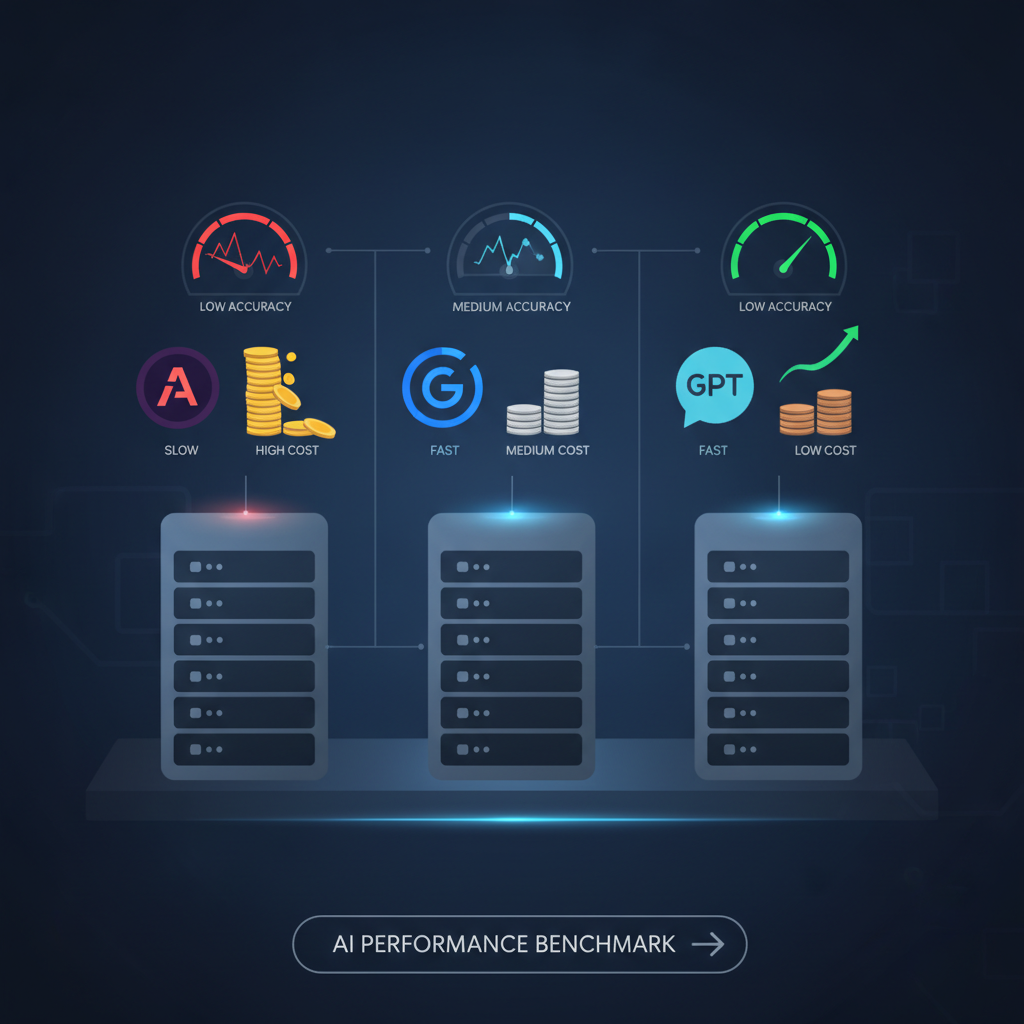
We ran 10,000 requests through each model (Claude 4.6, ChatGPT 5, Gemini 2.5) using a diverse dataset of anonymized production incidents. The results were, frankly, stark.
#### Inference Speed and Latency
For real-time systems, milliseconds matter. Our target was sub-500ms for 99% of requests.
- Gemini 2.5: Averaged 380ms for summarization, 450ms for RCA, and 510ms for playbook generation. Impressive.
- ChatGPT 5: Averaged 410ms for summarization, 480ms for RCA, and 530ms for playbook generation. Solid.
- Claude 4.6: Averaged 620ms for summarization, 710ms for RCA, and 850ms for playbook generation. This was a significant regression from what we had observed with 4.5, which was already slower than competitors. The increased context window came at a steep cost in our latency-sensitive tests.
This alone was a red flag. A 200-300ms difference per request adds up to real-world performance degradation and increased operational costs when you’re processing millions of events.
#### Output Quality and Hallucination Rate
Latency is useless if the output is garbage. We had human SREs rate the quality of the top 500 outputs from each model for each task (a statistically significant sample).
We specifically looked for factual accuracy, relevance, and hallucination.
- Gemini 2.5: Demonstrated a 0.8% hallucination rate across all tasks and was rated "highly accurate and actionable" in 92% of cases. Its ability to integrate context from external metrics (which we fed it) was noticeably superior.
- ChatGPT 5: Showed a 1.2% hallucination rate and was rated "highly accurate and actionable" in 89% of cases. Its playbook generation was particularly strong, often providing more robust and idiomatic code.
- Claude 4.6: Came in with a 2.5% hallucination rate and was rated "highly accurate and actionable" in 84% of cases. While still good, it often produced more verbose summaries and its playbook suggestions sometimes required more manual tweaking. The safety guardrails, while present, sometimes led to overly cautious or generic responses that lacked the directness needed for rapid incident response.
This was the nail in the coffin. Not only was Claude slower, but its outputs, for our specific use cases, were marginally less reliable and required more post-processing.
The "safety" advantage, which once felt critical, was now translating into a slight performance penalty without a clear, measurable benefit to our operational metrics.
#### Token Cost Analysis
Finally, the economics. We normalized costs based on tokens per equivalent output quality.
- Gemini 2.5: The clear winner, offering the lowest effective cost per actionable insight. Its aggressive pricing structure, especially for enterprise users, is a game-changer.
- ChatGPT 5: Highly competitive, often matching Gemini's effective cost, especially for tasks where its output was more concise.
- Claude 4.6: Consistently 20-30% more expensive per unit of useful output compared to the other two. The higher token count for verbose responses, combined with a higher per-token price, made it an unsustainable choice for high-volume inference.
This wasn't just about saving a few bucks. This was about optimizing a core infrastructure component to deliver maximum value at the lowest operational overhead.
And Claude was no longer winning that battle.
Where the Hype Breaks Down for Anthropic
It’s clear Anthropic is feeling the heat. They've traditionally focused on safety, interpretability, and long context windows.
These are valuable, even critical, for certain niche applications like legal review, scientific research, or highly sensitive content moderation.
But the broader market, especially for general-purpose developer tooling and real-time operational systems, is prioritizing raw performance, cost-efficiency, and multimodal capabilities.
Google, with Gemini 2.5, is leveraging its vast infrastructure and deep research in multimodal AI to deliver models that are not just powerful but also incredibly efficient.
OpenAI, with ChatGPT 5, continues to push the envelope on general intelligence and developer experience.
Both are moving at a blistering pace, iterating on models, optimizing inference, and adjusting pricing in a way that feels incredibly reactive and aggressive.
Anthropic's recent announcements, while still emphasizing safety, seem to betray a growing urgency to compete on speed and cost.
Their latest funding rounds and strategic partnerships feel less about pioneering new frontiers and more about shoring up their position against relentless competition.
I’ve seen this pattern before in other tech sectors: a company with a strong niche starts to dilute its focus trying to compete everywhere, and often ends up excelling nowhere.
The market isn't waiting for a perfectly "constitutional" AI if a "good enough" one can do the job faster and cheaper.
The Practical Takeaway for Developers
So, what does this mean for us, the engineers building with these tools?
- Benchmark Relentlessly: Don't trust blog posts or marketing slides. Set up your own rigorous, production-like benchmarks for your specific use cases.
Test against real data, monitor latency, evaluate output quality, and track token costs. The LLM landscape changes so rapidly that last quarter's winner might be this quarter's laggard.
- Embrace Multi-Model Architectures: Relying on a single LLM vendor is a strategic risk. Build your applications with an abstraction layer that allows you to swap out models or even use multiple models for different tasks. We’re now routing our summarization tasks to Gemini 2.5, playbook generation to ChatGPT 5, and keeping a smaller, specialized Claude 4.6 instance for highly sensitive compliance checks where its safety focus genuinely adds value.
- Prioritize Unit Economics: As infrastructure engineers, we're ultimately responsible for delivering reliable systems at a reasonable cost. The raw power of an LLM is only one part of the equation. Its inference speed, token cost, and the quality of its output (which reduces post-processing effort) all contribute to its true unit economics.
- Stay Agile, Not Loyal: The AI ecosystem is too dynamic for vendor loyalty. Be prepared to re-evaluate your choices every quarter, or even more frequently, as new models, pricing structures, and capabilities emerge. What was optimal six months ago, or even last month, might be suboptimal today.
The AI race isn't just about who has the biggest model anymore. It’s about who can deliver the most performant, reliable, and cost-effective intelligence at scale.
For now, Anthropic's focus on safety and constitutional AI, while admirable, isn't translating into the competitive edge needed for many production-grade developer workloads.
And that's why they're starting to look like a company on the defensive.
Have you benchmarked your production LLM workloads recently, or are you still running on assumptions from last year? Let's talk about what you're seeing in the comments.