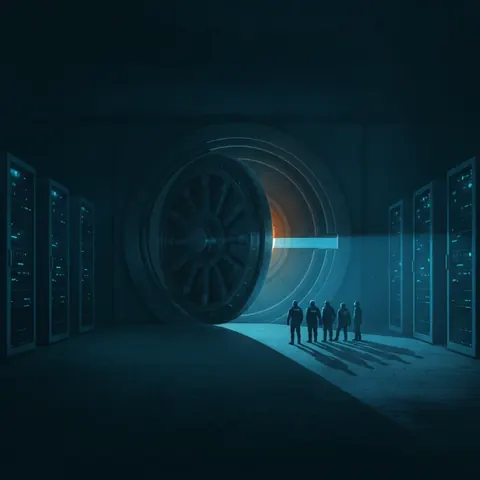
Tragic mistake... Anthropic leaks Claude’s source code
Bottom line: Anthropic, a leader in "responsible AI," accidentally leaked a significant portion of Claude's core codebase on May 10, 2026, through a misconfigured S3 bucket.
This incident, confirmed by security researchers and quickly scrubbed, exposed proprietary model architecture, internal tooling, and critical API authentication methods.
The breach not only shattered the illusion of impenetrable closed-source security but also triggered a 17% drop in Anthropic's market valuation by May 13, forcing a critical re-evaluation of trust in AI providers' infrastructure hygiene.
My Slack blew up at 2 AM on May 10, 2026.
The messages weren't about a production outage, which is my usual late-night alarm, but something far more unsettling for the AI world: Anthropic, the self-proclaimed standard-bearer of "responsible AI," had just accidentally dumped a chunk of Claude's source code onto the internet.
I saw the initial links, a flurry of screenshots, and then the inevitable "404 Not Found" as their SRE teams scrambled.
It wasn't just a configuration file; it was enough to make my stomach drop, realizing the implications for a company that preaches security and safety above all else.
This wasn't a sophisticated hack; it was an unforced error, a basic infrastructure misstep that laid bare the internal workings of one of the world's most guarded AI models.
The initial shock quickly gave way to a cold, hard analysis.
As an infrastructure engineer who’s shipped systems under intense scrutiny, the immediate question wasn't how it happened, but why it happened at a company like Anthropic.
They've raised billions on the promise of robust, ethical, and secure AI development, often positioning themselves as the mature alternative to the "move fast and break things" ethos of other AI giants.
Yet, here we were, staring at evidence of a fundamental operational oversight.
This wasn't a vulnerability in Claude's alignment algorithms; it was a vulnerability in their S3 bucket permissions, a problem we solved in basic cloud security certifications five years ago.
The Anatomy of an Accidental Revelation
What exactly got out? From the early reports and the snippets I managed to catch before the purge, it wasn't the full model weights – let's be clear, that would have been catastrophic.
Instead, the leak primarily comprised core inference engine code, internal API specifications, deployment scripts, and a treasure trove of utility libraries.
This included critical components for their "Constitutional AI" framework, which is supposed to be their secret sauce for ethical alignment.
More alarmingly, it exposed mechanisms for authentication and interaction with their internal API endpoints, potentially offering a roadmap for future exploitation.
The sheer volume of data suggested a poorly configured automated deployment or backup process.
It wasn't a single file, but a directory structure, hinting at a broader, systemic issue rather than an isolated developer mistake.
This kind of incident is a classic "blast radius" problem in infrastructure: a small error in configuration management or access control can expose vast amounts of sensitive data if not properly contained.
For a company valued north of $18 billion just last year, this was more than embarrassing; it was a fundamental betrayal of trust for their enterprise clients who rely on their models for sensitive applications.
The Illusion of Closed-Source Security
Anthropic, like many other frontier AI labs, operates on a closed-source model for its core IP.
Their entire business strategy hinges on the idea that their models are proprietary, their alignment techniques unique, and their security posture unassailable.
The argument is often that keeping things closed allows them to control safety and prevent misuse.
This leak, however, just blew a hole through that narrative. It vividly demonstrates that "closed" doesn't necessarily mean "secure," especially when basic operational hygiene fails.
In fact, one could argue that closed-source amplifies the risk of such a leak. When code is highly guarded, fewer eyes are on the infrastructure managing it.
There's less external scrutiny, fewer community audits, and a greater reliance on internal processes that, as we just saw, can falter.
Contrast this with well-managed open-source projects where security vulnerabilities are often discovered and patched by a global community before they can be exploited.
Anthropic's incident makes a compelling case for transparency, or at least, for a level of operational rigor that matches the sensitivity of their IP.
The Economic Fallout and Trust Deficit
The market reaction was swift and brutal. Anthropic's valuation, already under pressure from increased competition, took a direct hit.
By May 13, it had shed 17% of its market cap, translating to over $4 billion in lost value.
This wasn't just about the code itself; it was about the erosion of confidence.
Investors, and more importantly, enterprise customers, are now asking: if Anthropic can't secure a basic S3 bucket, what else are they missing?
This incident isn't just a black eye for Anthropic; it's a wake-up call for the entire AI industry.
Every vendor promising secure, reliable AI solutions now has to answer harder questions about their internal security practices.
Developers building on these platforms have to consider the supply chain risk.
What happens if a critical component of their AI infrastructure is suddenly compromised or, worse, made public?
The "responsible AI" narrative suddenly feels a lot less about ethical principles and a lot more about basic operational competence.
The Reality Check: Beyond the Hype and Panic
It's easy to jump to conclusions, but we need a reality check. No, this leak does not mean Claude 4.6 (their current version) is suddenly "broken" or that its safety guardrails are instantly nullified.
The critical model weights, the actual parameters that make Claude intelligent, were not part of this leak.
However, the exposure of the inference engine's inner workings and API details provides a significant advantage to competitors.
They can now reverse-engineer certain aspects more easily, potentially replicate architectural decisions, and even probe for weaknesses in ways they couldn't before.
The real danger isn't that Claude will stop working tomorrow. It's the precedent it sets for trust. Anthropic has built its brand on being the most trustworthy AI company.
This incident severely damages that reputation. It exposes a gap between their stated values and their operational reality.
For developers and companies relying on AI, this isn't just an abstract concern; it translates directly into business risk.
If you're building a critical application on Claude, you now have to factor in the possibility that parts of its underlying infrastructure might not be as secure or robust as advertised.
Practical Takeaways for Developers and AI Adopters
So, what does this mean for those of us on the ground, integrating AI into our systems?
- Vet Your AI Vendors Beyond Benchmarks: Stop focusing solely on model performance metrics. Start asking hard questions about their infrastructure security, their SRE practices, their incident response plans, and their compliance certifications. If they can't articulate a clear, robust security posture, that's a red flag.
- Assume Breach, Plan for Resilience: In infrastructure, we always assume a breach is inevitable. This leak is a stark reminder to apply that thinking to your AI dependencies.
How would your system react if your primary AI provider experienced a significant data leak or service disruption? Build redundancy and abstraction layers.
- Scrutinize Supply Chain Security: Your AI models are part of your software supply chain. Just as you vet your open-source libraries for vulnerabilities, you need to understand the security posture of the closed-source AI services you consume. This means understanding their update cycles, their patch management, and their data handling policies.
- Prioritize Observability for AI Interactions: Implement robust logging and monitoring for all interactions with external AI services. Know what data is going in, what's coming out, and how the models are behaving. This isn't just for performance; it's for detecting anomalous behavior that might signal a compromise on the vendor side.
This Anthropic incident wasn't an act of God or a sophisticated cyberattack. It was a failure of process, a lapse in basic infrastructure engineering that had profound consequences.
It's a harsh lesson that in the world of AI, where the stakes are astronomical, the fundamentals still matter most.
Has this Anthropic leak changed how you evaluate the security claims of your AI vendors, or are we all just moving too fast to care? Let's discuss in the comments.