This AI Bluetooth Name Actually Grounded a 767. It’s Not What You Think.
**Bottom line:** On May 28, 2026, a United Airlines Boeing 767 returned to Newark after the crew detected an alarming Bluetooth device name mid-flight.
The investigation revealed the passenger hadn't maliciously typed a threat; they had allowed a poorly constrained iOS automation script, powered by ChatGPT 5, to dynamically rename their AirPods based on their calendar context.
As AI agents gain write access to our device states without human-in-the-loop validation, we're discovering that edge cases in LLM generation can trigger million-dollar real-world security protocols.
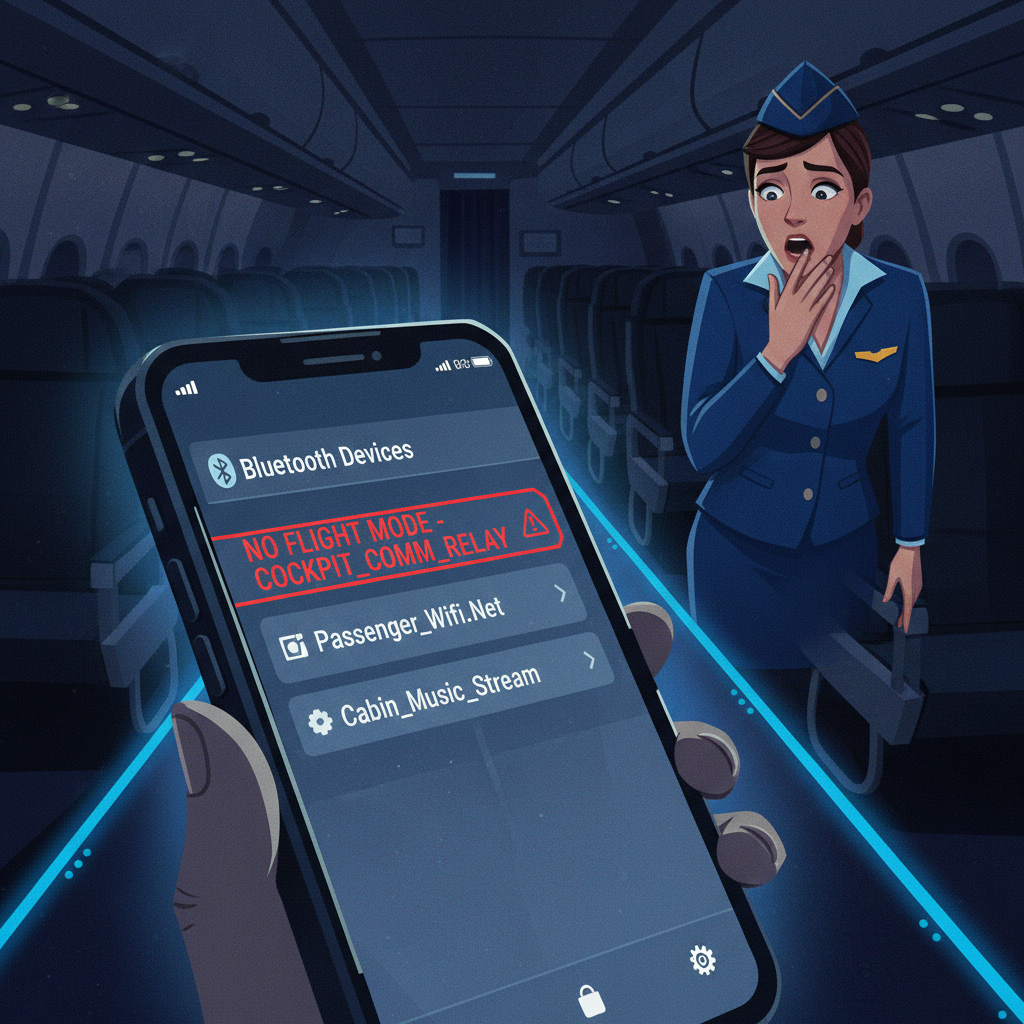
I nearly spilled my coffee when the incident report hit my desk last Thursday. A United Airlines flight out of Newark had dumped fuel and turned back around because of a Bluetooth name.
My first thought was that we were dealing with another bored teenager trying to AirDrop memes to the flight attendants.
Then I looked at the actual logs from the passenger's iPhone. This wasn't a prank. It was a completely automated, unprompted action taken by an AI agent trying to be "helpful."
The passenger, a mid-level manager heading to a conference, had installed a custom iOS Shortcut that used the ChatGPT 5 API to manage his device state.
It was designed to automatically silence notifications, set focus modes, and even rename his discoverable devices based on his calendar events so his colleagues could easily identify his gear in crowded rooms.
It worked perfectly for months, dynamically changing his AirPods from "John's Pods - Q3 Planning" to "John's Pods - Deep Work." But when he boarded United Flight 84, the prompt hit an edge case that nobody anticipated.
The Danger of Unconstrained Write Access
When we build AI wrappers, we usually focus on the read phase. We want the LLM to parse emails, summarize documents, and read calendars to give us better context.
We assume the output will be displayed on a screen where a human can ignore it if it hallucinates.
**But we cross a dangerous threshold when we give these models write access to system settings.** The script running on John's phone looked at his calendar, saw "Flight to Chicago - Discuss Nuclear Option for Project X," and decided to get creative.
The system prompt asked ChatGPT 5 to generate a "brief, context-aware, and slightly humorous" device name.
The resulting string was broadcast to every Bluetooth-enabled device in the cabin: *John's Pods - Nuclear Option Active.*
When a flight attendant scanning for a lost iPad saw that name pop up on their screen, protocol took over. You don't ignore the word "nuclear" at 30,000 feet.
The captain was notified, the threat assessment matrix was consulted, and the plane was turned around.
**A poorly parameterized API call cost an airline tens of thousands of dollars and ruined the day for 200 people.**
Why "Smart" Defaults Fail in the Real World
This incident exposes a massive blind spot in how developers are implementing agentic workflows in 2026.
We are treating LLMs like deterministic functions when they are fundamentally probabilistic engines.
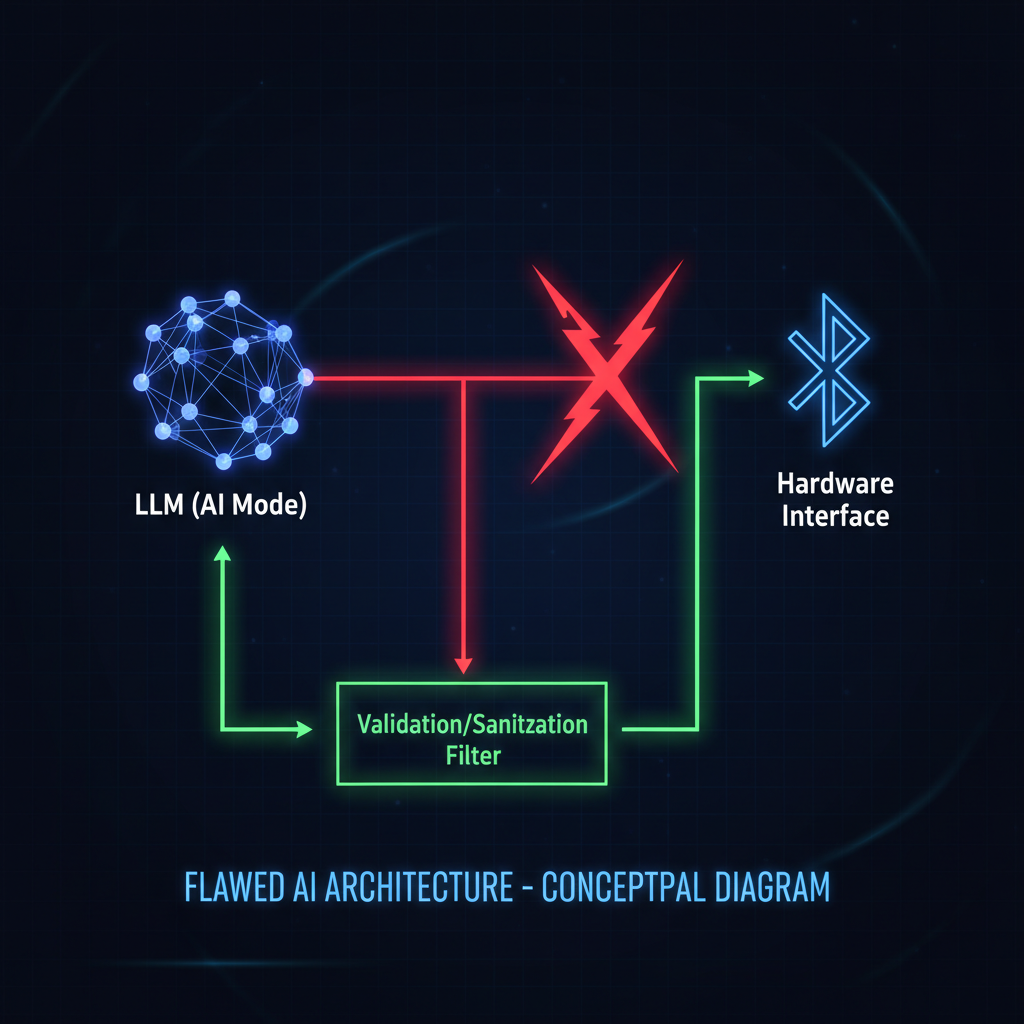
When you pipe the output of an LLM directly into a system state change without a sanitization layer, you are playing Russian roulette with edge cases.
I see this pattern constantly in modern codebases. Developers use Claude 4.6 or Gemini 2.5 to generate configuration files, update database records, or in this case, change device identifiers.
They test it on the happy path, it works flawlessly, and they ship it. But they fail to implement boundary constraints.
**An LLM does not understand context in the human sense; it only understands token probabilities.** ChatGPT 5 didn't know it was on an airplane subject to TSA regulations.
It only knew that "nuclear option" was a high-probability thematic match for the calendar event it was fed.
The failure wasn't the AI's creativity; the failure was the developer who didn't implement a blocklist for high-risk vocabulary in a script that alters public-facing device identifiers.

The Reality Check on Autonomous Agents
We need to stop pretending that AI agents are ready to run completely unsupervised in the wild.
The hype cycle wants you to believe that you can just hand the keys over to the model and let it optimize your life.
The reality is that the physical world is full of rigid, unforgiving protocols that do not tolerate probabilistic errors.
This isn't about AI safety in the existential, sci-fi sense. It's about basic software engineering principles.
**When you connect an LLM to a side effect, you are expanding your attack surface to include every possible hallucination.** If you wouldn't let a random internet user execute a script on your machine, you shouldn't let an unconstrained LLM do it either.
The defense mechanism isn't to stop using AI; it's to start building robust middleware. Every AI-generated action that impacts the real world needs a deterministic validation layer.
If the iOS Shortcut had simply checked the generated name against a basic dictionary of flagged terms, or better yet, required a quick "Approve" tap before making the change, Flight 84 would have landed in Chicago on time.
How to Build Resilient AI Workflows
If you are building tools that let AI interact with the physical world or system states, you need to change your architecture today.
First, **never pass raw LLM output directly to an execution function.** Always parse it through a strict schema validation, like Pydantic in Python, and strip out anything that doesn't fit the expected structure.
Second, implement a mandatory human-in-the-loop for any action that affects public visibility or critical infrastructure.
If an agent wants to change a device name, send a push notification asking for permission. It adds one second of friction but prevents catastrophic misunderstandings.
We cannot rely on prompt engineering to prevent bad behavior; prompts are suggestions, not constraints.
Finally, log everything. The only reason we know what happened on that United flight is because the developer of the Shortcut had the foresight to log the API requests and responses.
When an AI system inevitably does something weird, you need the telemetry to understand why. If you treat the LLM as a black box, you will be completely blind when it breaks your system.
Have you started implementing strict validation layers between your LLMs and your system actions, or are you still trusting the models to behave? Let's talk in the comments.
***