This $370 Million Bug Was One Missing Hyphen
In this article
This $370 Million Bug Was One Missing Hyphen ===============================================
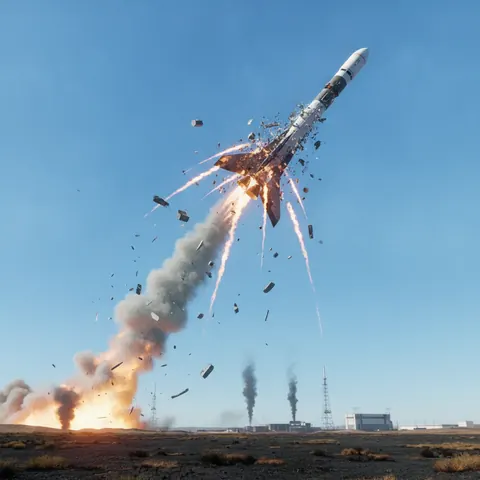
Bottom line: In 1962, NASA's Mariner 1 rocket was destroyed 293 seconds after launch because a guidance equation was transcribed without a bar over one symbol — a mistake popularized as "the most expensive hyphen in history." The mission's cost, roughly $35 million in 1962 dollars, runs close to $370 million adjusted for inflation today.
The popular version of this story blames a typo.
The real story is a verification failure that shows up in nearly every catastrophic software bug since — from Knight Capital's $460 million in 45 minutes to the 2024 CrowdStrike outage.
If you think code review is what saves you from this, you've already missed the point.
Everyone loves the hyphen story.
I get why — it's clean, it's dramatic, and it lets engineers everywhere feel a delicious little shiver of "that could've been me." A single character, one keystroke, $370 million gone in less than five minutes.
It's the software engineering equivalent of a horror movie jump scare.
It's also mostly a comforting lie.
I've spent years watching engineering teams retell this story in onboarding decks and conference talks, always landing on the same moral: be careful, double-check your syntax, code review would have caught it. That's a nice lesson.
It's also almost completely beside the point of what actually happened — and believing it is why we keep building million-dollar versions of the same failure, sixty years later.

The Story Everyone Tells
Here's the version you've probably heard. NASA launches Mariner 1, America's first attempt at an interplanetary probe, on July 22, 1962. Less than five minutes in, the rocket veers off course.
Range safety has to destroy it before it endangers shipping lanes in the Atlantic.
Investigators trace the failure to the guidance software: a mathematical smoothing equation for radar tracking data was missing a small mark — an overbar denoting an averaged value — that had been dropped somewhere between the handwritten specification and the coded instructions.
Arthur C.
Clarke supposedly called it "the most expensive hyphen in history," and the phrase stuck so well that most retellings since have flattened the missing overbar into a literal missing hyphen key.
Close enough, apparently, for sixty years of tech folklore.
And I understand the appeal. It's a satisfying story because it has a villain you can defeat with vigilance: just be more careful. Lint your code.
Review your pull requests. Don't let a stray character slip through. If that's all it takes, the fix is cheap and the moral is tidy.
The problem is that "be more careful" has been the industry's answer for sixty years, and we keep paying for the same category of mistake anyway — just with more zeros.
What Actually Happened Wasn't a Typo
The guidance equation for Mariner 1 wasn't typed by a programmer glancing at a whiteboard and fat-fingering a key.
It moved through a chain: a mathematician wrote the smoothing formula by hand, using an overbar to denote a running average of tracking data.
That formula got transcribed into a written specification. The specification got translated into instructions for the guidance computer.
Somewhere in that chain — not at a keyboard, but in a handoff between people working from paper — the bar disappeared.
What should have told the system "smooth this data before reacting to it" instead told the system "react directly to raw, noisy radar readings."
Nobody re-derived the math independently
That's the part everyone skips. The equation passed through multiple people and multiple formats — handwriting, prose, code — and at no point did anyone re-derive it from first principles and compare.
It was copied, not verified.
Nobody simulated the failure mode
Normal radar noise, the kind every tracking system has to tolerate, got treated by the guidance computer as evidence the rocket was dangerously off course.
It started issuing steering corrections to fix a problem that didn't exist.
A simulation run against realistic radar noise — not a perfect one, just a realistic one — would have shown the system oversteering long before launch day.
The failure was structural, not characterological
This is the part that matters: the transcription error wasn't caused by carelessness in the way we usually mean it.
It was caused by a process with no independent verification step anywhere in a chain of manual handoffs carrying life-and-death precision requirements.
The hyphen — or bar, or whatever you want to call it — was just the specific place the missing verification happened to bite.
Blaming the character is blaming the symptom. The disease was a process that trusted transcription over verification.
We Never Fixed the Disease, Just the Symptom's Name
If the industry had actually learned "verify independently, don't just copy carefully," you'd expect this category of failure to fade out. It hasn't.
It's just gotten bigger and more expensive, because the software runs more of the world now.
In August 2012, Knight Capital deployed new trading code to eight servers — except one server still had old, dormant test code re-activated by a repurposed flag, and nobody ran an independent check to confirm all eight servers matched.
Forty-five minutes later, Knight Capital had lost $460 million and effectively ceased to exist as an independent firm.
Same root cause: a change moved through the pipeline without anyone independently verifying the actual state matched the intended state.
In 2017, an AWS engineer debugging the S3 billing system in the US-EAST-1 region typed a command intended to take a small number of servers offline.
A typo in the input took down far more capacity than intended, and a large chunk of the internet went dark for several hours — Slack, Trello, Quora, plus countless S3-dependent backends.
Estimates of the damage to S&P 500 companies alone ran past $150 million for that afternoon.
This one actually was a fat-fingered command. It still traces back to the same gap: no independent guardrail that would catch a command whose blast radius didn't match its intent.
In July 2019, Cloudflare pushed a new WAF rule containing a single catastrophic regular expression.
It caused CPU usage to spike to 100% across their global network, taking down a meaningful fraction of the web for half an hour. One bad regex.
No independent review step that would have caught a regex with runaway backtracking before it hit production traffic.
And in July 2024, a faulty content update from CrowdStrike — pushed to production without adequate staged verification — crashed roughly 8.5 million Windows machines worldwide, grounding flights and knocking hospitals offline, with damage estimates running into the billions.
Notice the pattern. Every one of these stories gets told, in the moment, as "one small thing caused a huge disaster." And every single time, the actual postmortem reveals the same underlying gap: nobody independently verified that what was about to ship matched what was intended to ship.
The "small thing" is never the real cause. It's just the specific location where an absent safety net happened to be tested.
The Real Problem Nobody Wants to Say Out Loud
Here's the uncomfortable part: independent verification is slow, boring, and expensive, and every incentive in a deadline-driven engineering culture pushes against it.
Code review catches style issues and obvious logic errors.
It does not, in practice, catch "does this match the original specification when re-derived from scratch," because that would mean redoing the work, not skimming it.
We tell the hyphen story because it's a horror story with a cheap moral, and cheap morals are what get repeated in onboarding decks.
The actual moral — "your organization needs to budget real time and real money for independent verification of anything with irreversible consequences, and that will slow you down" — doesn't fit on a slide.
Nobody wants to be the engineer who says "we need to slow the launch down to re-derive the guidance math from scratch," especially when the schedule's already public and the money's already spent.
This gets sharper, not softer, as more code gets written by AI assistants that nobody fully re-derives by hand.
The temptation to treat AI-generated code the way NASA's engineers treated that handwritten equation — as a trusted artifact to be transcribed and shipped rather than independently checked — is exactly the failure mode this story is actually about, and it's why the discipline behind vibe coding matters more, not less, as the volume of unreviewed code explodes.
What Actually Works, If You Want It To
Stop treating "one tiny mistake" bugs as freak accidents and start treating them as evidence your verification layer has a hole in it. Three things actually move the needle:

- Independent re-derivation, not just review. For anything with irreversible or catastrophic consequences — a launch sequence, a trading algorithm, a production deploy to critical infrastructure — have a second person or system derive the expected outcome from scratch and diff it against what's about to ship, rather than reading the change and nodding along.
- Simulate against realistic noise, not just happy paths. Mariner 1's guidance software was never tested against normal radar jitter. Knight Capital never tested the actual deployed state of all eight servers together. Test your systems against the boring, realistic mess they'll actually encounter, not the clean scenario in the design doc.
- Make "blast radius mismatch" a hard stop, not a warning. The S3 outage happened because a command's actual scope didn't match its intended scope, and nothing stopped it. Build systems that refuse to execute when scope and intent diverge by an order of magnitude, rather than trusting the human to have typed the right number.
The Question Worth Sitting With
Every one of these disasters got its own tidy, shareable one-liner — the expensive hyphen, the reused flag, the fat-fingered command, the bad regex — and every one of those one-liners let an organization avoid saying the harder sentence: we didn't build in a way to independently verify this before it mattered.
So here's what I'd actually ask you: the last time something you shipped broke in production, did the postmortem name a specific line of code — or did it name the missing process that would have caught it before that line ever became a headline?