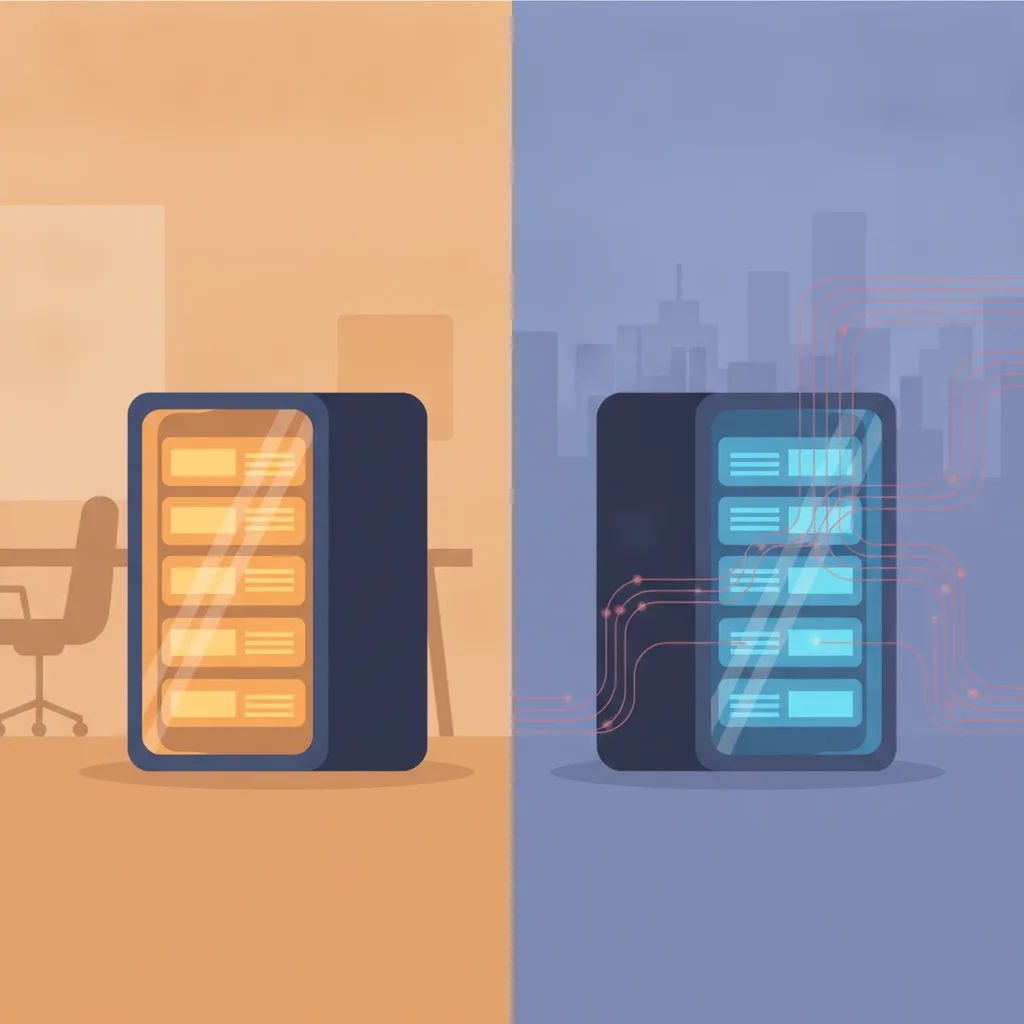
The US Quietly Banned Claude Fable 5 & Claude Mythos 5. It's Worse Than You Think.
Bottom line: On June 12, 2026, the US government issued an export control directive citing national security concerns, leading Anthropic to suspend commercial access to Claude Fable 5 and Claude Mythos 5 on June 13.
Within 24 hours, a significant number of AI-driven CI/CD pipelines and auto-remediation systems built in Go silently failed.
The crisis isn't about AI censorship—it's that we hardcoded proprietary, un-auditable reasoning engines directly into our Kubernetes control planes.
If your Go backend relies on these models for dynamic scaling or routing decisions, you must urgently migrate to local models or unaffected APIs like Claude Opus 4.8.
I spent hours debugging a catastrophic cluster failure before realizing my code wasn't broken. My AI was illegal.
At 2:00 AM on Saturday, my pager went off because our automated scaling orchestrator—a beautiful, highly concurrent Go application we deployed last month—started terminating healthy nodes.
It wasn't a memory leak or a race condition. It was a 451 HTTP status code: Unavailable For Legal Reasons.
The US government had just forced Anthropic to pull the plug on Claude Fable 5 and Claude Mythos 5.
And in doing so, they exposed the biggest architectural lie the tech industry has told itself over the last two years.
The Illusion of Serverless Intelligence
If you check Hacker News right now, the front page is on fire with debates about government overreach, AI safety, and the geopolitical implications of banning the world's most capable reasoning models.
I am a data engineer, not a lobbyist, so I don't care about the politics. I care that our infrastructure is currently bleeding out.
Over the last 18 months, the Go community fell entirely in love with AI APIs, recently rushing to integrate Claude Fable 5.
Because Go is the undisputed language of cloud infrastructure—powering Docker, Kubernetes, and Terraform—we naturally used it to build the glue between our clusters and these new AI APIs.
We wrote elegant, concurrent Go agents that monitored system health, fed those metrics into Claude Fable 5, and blindly executed the scaling manifests it spit back out.
We thought we were building the ultimate self-healing systems.
In reality, we were outsourcing our core control plane logic to a black box we didn't own, couldn't audit, and apparently, couldn't legally defend.
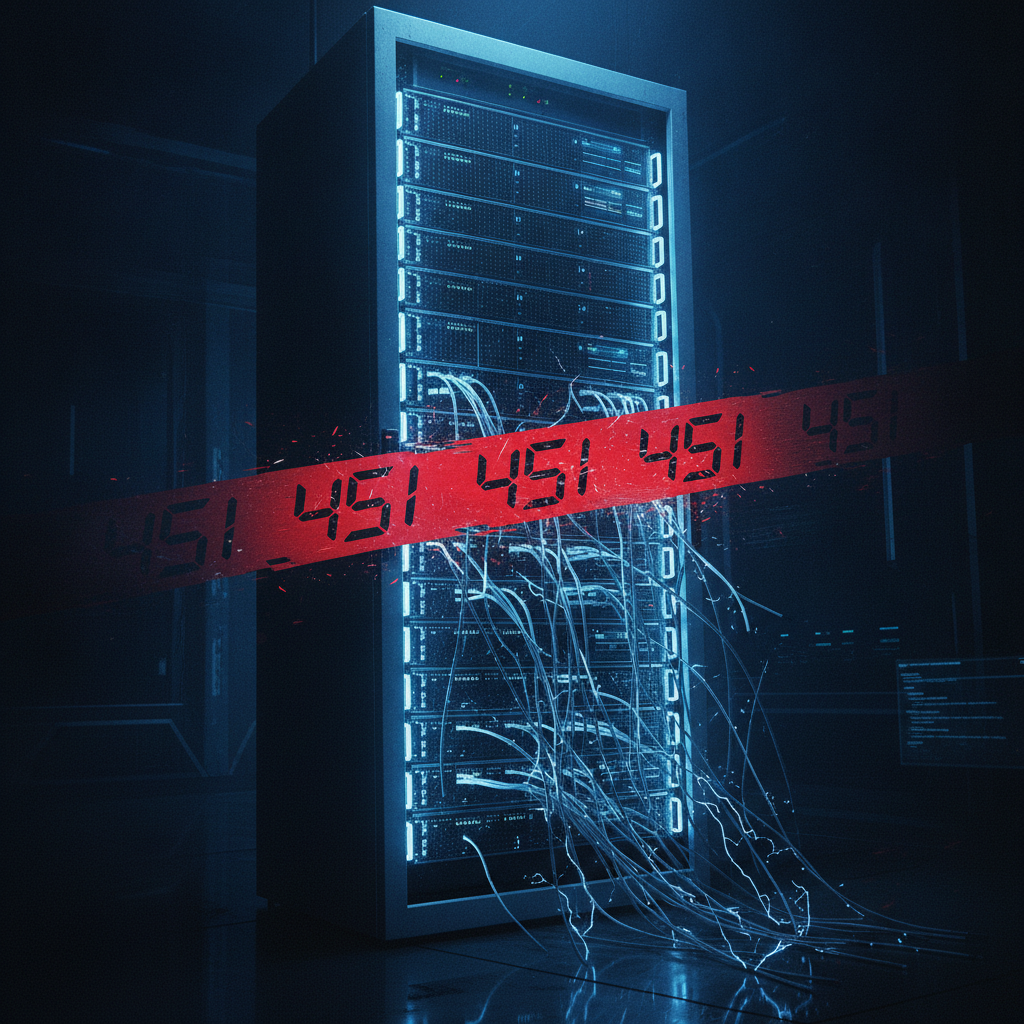
When the ban hit, the APIs didn't just gracefully degrade.
They either hung indefinitely, exhausting our Go `context.Context` timeouts and causing massive goroutine leaks, or they returned legal warnings that our JSON parsers blindly tried to execute as bash scripts.
The fallout has been nothing short of spectacular.
Why Everyone Has the Wrong Take on the Ban
The overwhelming sentiment right now is anger at the regulators for stifling developer productivity.
But everyone is entirely missing the bigger picture: we built a massive single point of failure right into our foundational architecture.
We used to mock junior developers for left-pad dependencies in npm.
Yet here we are, senior engineers at billion-dollar companies, hardcoding a massive proprietary model into our mission-critical data pipelines.
We treated intelligence like an infinite, perfectly reliable utility, much like electricity or AWS S3.
But intelligence is not a static utility. It is an actively governed, highly volatile asset.
By tightly coupling our Go structs and interfaces to the exact JSON schemas of Claude Fable 5, we committed the ultimate sin of system design. We confused a vendor's product for an open standard.
The ban isn't the tragedy here. The tragedy is that we let a third-party API write and execute our infrastructure logic without any fallback mechanism.
Now that the plug is pulled, we are left staring at thousands of lines of Go code that do absolutely nothing but wait for a response that is legally forbidden from arriving.
The 3 Layers of Cognitive Lock-In
To understand how we get out of this mess before the end of the year, we have to understand how we got here.
Over the last two years, I've watched engineering teams fall into what I call The Cognitive Dependency Curve.
We didn't hand over the keys to the kingdom all at once. We did it in three distinct phases, each more dangerous than the last.
#### Layer 1: The Dev-Time Typist
This is where it started. We used AI models in our IDEs to generate boilerplate Go code, write unit tests, and scaffold out massive gRPC interfaces.
If the AI went down, the only thing that suffered was our velocity.
This layer is entirely harmless.
You still compile the code, you still review the pull requests, and the final binary is deterministic. When the ban dropped, teams at this layer just had to go back to typing on their own keyboards.
It was annoying, but nobody's servers caught fire.
#### Layer 2: The CI/CD Reviewer
By early 2025, we got lazy. We started wiring Claude directly into our GitHub Actions and GitLab pipelines.
We gave it access to our codebases and told it to automatically review PRs, find security vulnerabilities, and even push fix commits before merging.
This is where the risk multiplied.
We stopped looking at the code entering our main branches, trusting the model's judgment over our own. When the API access was suspended yesterday, thousands of CI pipelines simply froze.
Deployments halted, and teams realized they hadn't actually reviewed their own infrastructure code in six months.
#### Layer 3: The Runtime Control Plane
This is the catastrophic tier, and unfortunately, it is exactly where the Go ecosystem thrived.
We took Go's incredible concurrency model and used it to build autonomous agents that lived inside our production environments.
We fed live Prometheus metrics to Claude Fable 5, asked it "what should we do?", and executed its answers in real-time.
At Layer 3, you are no longer writing software; you are just writing prompts for a remote brain. When the US government severed access to that brain, the bodies of our applications were left completely paralyzed.
Our Go agents were still furiously spinning up goroutines, asking for instructions, and receiving HTTP 451s in return.
How We Fix Our Go Architecture (Right Now)
You have a very short window to redesign your systems before your temporary API tokens expire entirely.
By the end of 2026, relying on a massive, centralized model for runtime infrastructure decisions will be considered architectural malpractice.
We have to go back to engineering basics. We need to decouple our intelligence layer just like we decouple our databases.
#### 1. Implement Model-Agnostic Interfaces
If your Go codebase has a package explicitly named `fable` or `mythos`, you have failed. You need to immediately abstract your AI calls behind a generic Go interface.
Define your intelligence requirements based on the input and output you need, not the vendor you are using.
Your system shouldn't care if the reasoning is coming from Claude Fable 5, an open-source Llama 4 instance, or a local Mistral container.
If you build clean `interface{}` boundaries around your cognitive tasks, swapping out a banned model takes an afternoon instead of a panicked, week-long rewrite.
#### 2. Localize the Critical Path If a decision can take down your production cluster, the logic for that decision must live within your own VPC.
The era of the "God Model" API is officially over for infrastructure.
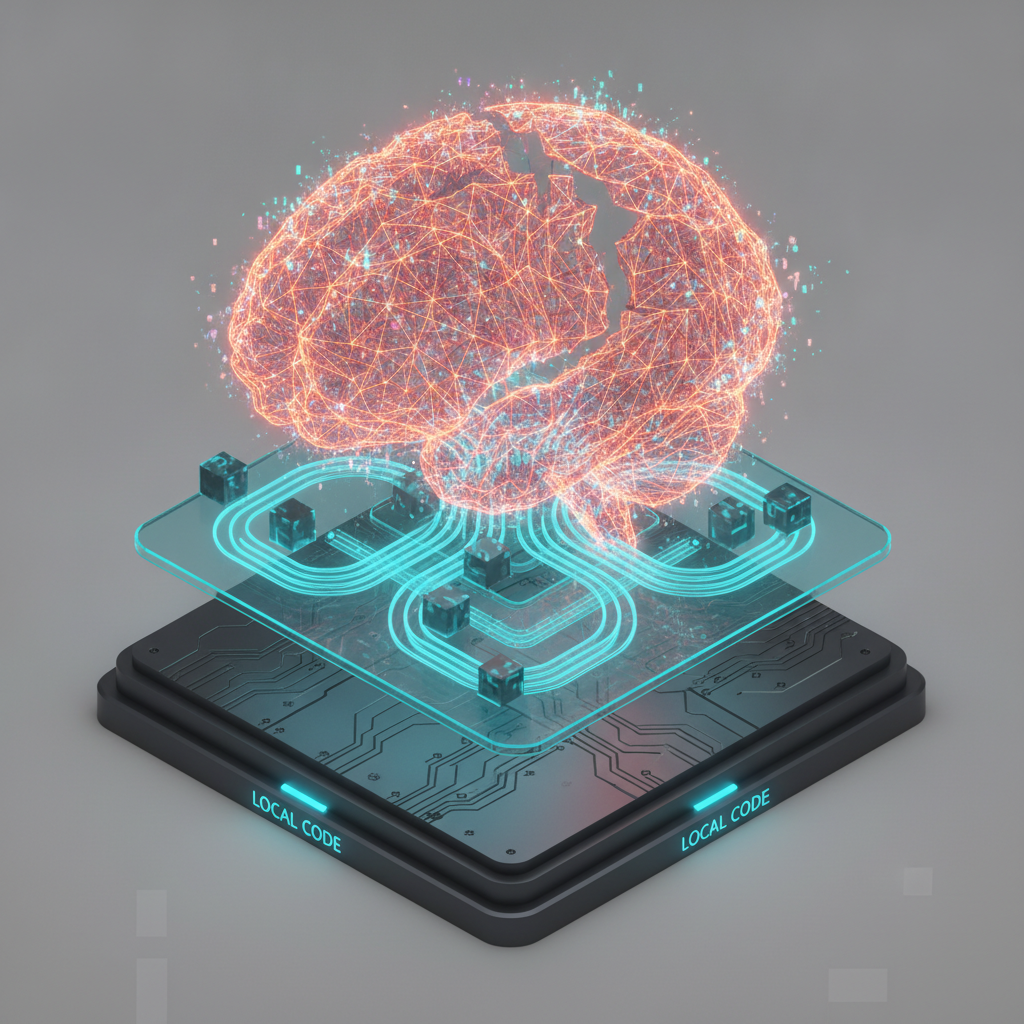
We are seeing a massive pivot back toward Small Language Models (SLMs) that can be compiled directly into Go binaries or run as sidecars in Kubernetes.
They aren't smart enough to write poetry, but they are perfectly capable of reading a CPU spike and deciding to scale up a pod.
You sacrifice the magic of Claude Fable 5, but you gain absolute, legally unassailable reliability.
#### 3. Defensive AI Contexts
The most immediate failure point this weekend was how poorly our Go code handled the API outage. Claude Fable 5 didn't just return clean error codes; its gateway struggled, causing connections to hang.
If you aren't passing strict `context.WithTimeout` to every single LLM network call, your application is a ticking time bomb.
Furthermore, you must build deterministic fallbacks. If the AI router fails to respond within three seconds, your Go agent should immediately default to a hardcoded, safe scaling policy.
Intelligence should be an enhancement to your system, never the sole load-bearing pillar.
The Blessing in Disguise
It is painful to watch years of cutting-edge infrastructure work unravel over a regulatory weekend. But as someone who builds data systems for a living, I am genuinely relieved.
Claude Fable 5 and Claude Mythos 5 made us incredibly productive, but they made us remarkably lazy engineers. We stopped thinking about edge cases, resilience, and state management, choosing instead to just throw larger prompts at an API endpoint and hope it figured it out.
We traded architectural rigor for cognitive convenience.
This ban is the wake-up call the industry desperately needed.
It forces us to stop treating AI as a magical problem solver and start treating it as what it actually is: a highly volatile, external dependency that requires strict boundaries, rigorous fallbacks, and localized alternatives.
The Go ecosystem will survive this.
But the teams that come out on top will be the ones who realize that the brain of their application needs to live inside their own skull, not on a server governed by someone else's laws.
Are you currently scrambling to rip Claude Fable 5 out of your production path, or did you manage to build vendor-agnostic from the start? Let's talk about your migration strategies in the comments.