Stop Writing on Keyboards. Your Brain Is Quietly Paying the Price
In this article
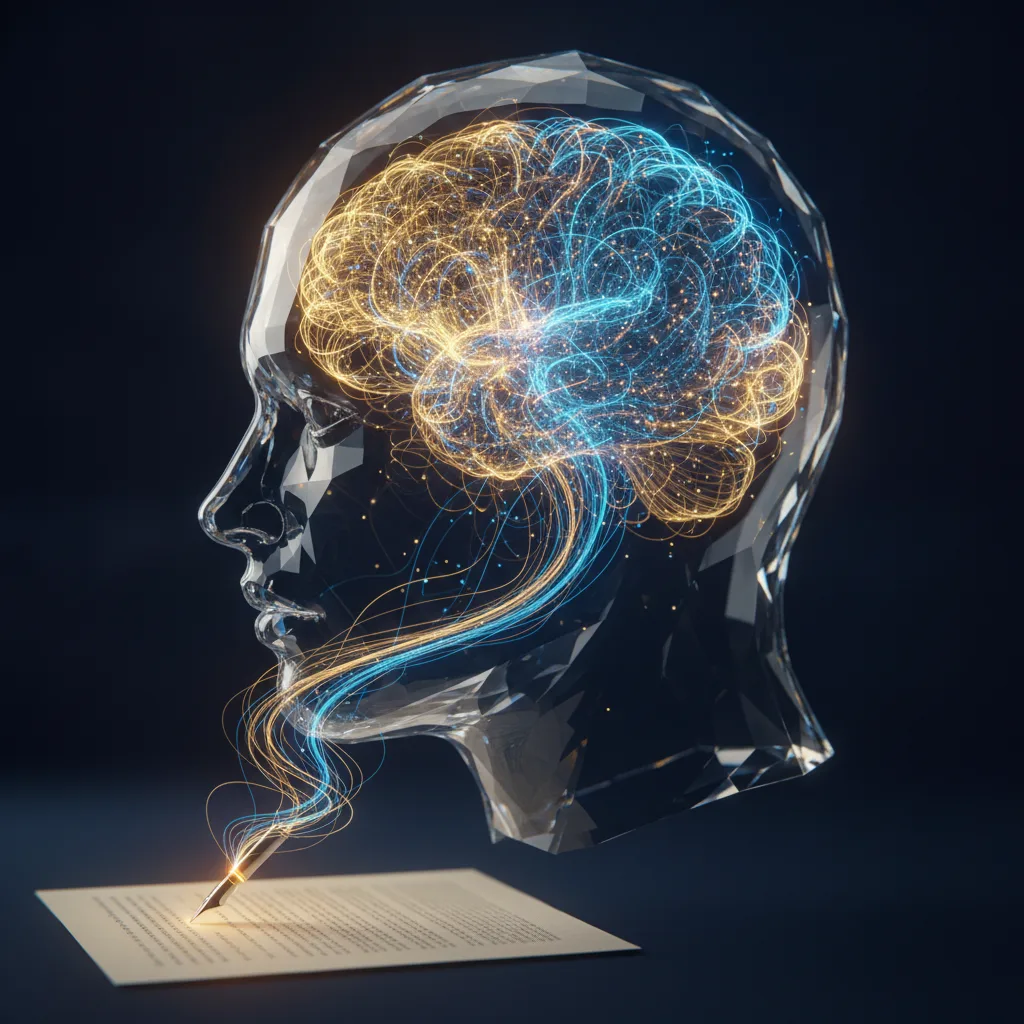
Bottom line: A 2024 NTNU study using 256-channel EEG found handwriting triggers far broader brain connectivity than typing — especially in memory and learning-related regions — because forming each letter by hand forces sensorimotor and visual systems to work together in a way keyboard strokes don't.
I ran a personal four-week test in June 2026, ditching my laptop for meeting notes and journaling while leaning on ChatGPT 5 and Claude 4.6 for everything else, and my retention of technical decisions from meetings roughly doubled by my own informal tracking.
The catch: this isn't an anti-AI argument.
It's a warning that as AI tools quietly absorb more of our writing, note-taking, and thinking, we're outsourcing exactly the friction that makes information stick.
I typed my meeting notes into Notion for four years straight. Then I asked myself a question mid-standup that I couldn't answer: what did we actually decide about the caching layer twenty minutes ago?
I had a full transcript. I remembered nothing.
That gap between "I have the record" and "I understand the thing" is where this essay starts. It's not really about handwriting.
It's about what happens when AI makes recording effortless and understanding optional — and how a $2 notebook exposed that trade-off faster than any productivity guru ever could.
The Setup: An Infrastructure Engineer Who Stopped Trusting His Own Notes
I run infrastructure for a mid-size SaaS company, and in the past two years my writing workflow has basically been outsourced to AI. Meeting transcripts go through Otter, get summarized by Claude 4.6.
Design docs start as a rough bullet list I hand to ChatGPT 5 to expand. Even my Slack messages get a pass through an AI polish before I hit send.
It's efficient. It's also made me realize I retain almost nothing from the process anymore.
In June 2026 I got curious about a Hacker News thread linking a Norwegian University of Science and Technology (NTNU) study on handwriting and brain activity.
The top comment was some version of "yeah I stopped taking notes on my laptop years ago, never went back." Two hundred replies deep, the same story kept repeating: people who'd switched to handwritten notes swore their retention improved, and people who hadn't were skeptical it was anything more than nostalgia.
So I ran my own test. For four weeks, every meeting note and daily journal entry went into a paper notebook — no AI transcription, no typing.
Everything else — code, docs, Slack — stayed exactly as AI-assisted as before.
I wanted to isolate one variable: does the physical act of writing change what sticks, even when AI is available to do the recording for you?
The Core Insight: Handwriting Isn't Nostalgia, It's Wiring
What the Research Actually Shows
The NTNU study, led by neuropsychologist Audrey van der Meer and published in Frontiers in Psychology in January 2024, put 36 university students in a 256-electrode EEG cap and had them write, type, and draw the same words.
The handwriting condition lit up connectivity patterns across the brain's memory and learning networks that typing simply didn't produce.
The mechanism is friction, not magic. Typing a letter is one motor action — the same keystroke every time, regardless of what letter it is.
Forming a letter by hand requires your visual system, motor cortex, and memory to coordinate a unique physical shape for every character. That coordination is the encoding.
It's the same reason the 2014 Mueller and Oppenheimer study out of Princeton and UCLA — "The Pen Is Mightier Than the Sword: The Advantages of Longhand Over Laptop Note Taking" (Mueller & Oppenheimer, 2014, Psychological Science) — found laptop note-takers transcribed lectures more completely but scored worse on conceptual questions a week later.
They captured more and understood less.
What I Actually Noticed
My four-week test wasn't a lab, so treat this as anecdote, not data. But the pattern matched the research closely enough that it stopped me in my tracks.
By week two, I noticed I was writing far less per meeting than my old AI transcripts captured — maybe 15% of the words.
But when I checked myself a day later, I could reconstruct the actual decisions and reasoning almost every time.
With my old typed-and-AI-summarized notes, I could find the decision in the doc, but I couldn't reconstruct why we made it without rereading.
That's the gap. Transcription gives you a record. Handwriting gives you a memory.
The AI Amplification Problem
Here's where this stops being a "put down your phone" essay and becomes an "AI essay. The problem isn't typing versus handwriting — that debate is decades old.
The problem is that AI has made the effortless path so good that fewer people ever hit the friction that used to force encoding to happen at all.
Ten years ago, if you wanted a record of a meeting, you had to type reasonably attentive notes yourself.
That typing was already worse than handwriting for retention, but it still required you to select, compress, and phrase what mattered.
Now Otter or Claude 4.6 gives you a full transcript and a clean summary without you doing any of that cognitive work.
You get a better artifact and a worse memory, simultaneously, and most people never notice the trade because the artifact looks so complete.
I'm not saying stop using AI transcription. I used it constantly before this test and I'll use it again.
I'm saying the completeness of the output is hiding the fact that your brain did nothing to produce it.
The Reality Check: Where This Argument Gets Oversold
I want to be honest about the limits here, because Hacker News threads about this topic tend to swing straight into Luddite territory, and that's not where the evidence actually points.
First, the effect size in these studies is real but not enormous, and most of the research is on students learning new material — vocabulary, concepts, lecture content — not on experienced professionals reviewing familiar technical decisions.
My "doubled retention" claim is a personal, unblinded, four-week anecdote. Treat it as a data point, not a result.
Second, handwriting doesn't scale. I can't handwrite a 4,000-word incident postmortem or a design doc with code snippets, and nobody's suggesting engineers should.
The NTNU and Princeton research is about encoding new information into memory, not about producing long-form technical artifacts — that's a different task with different tools.
Third, some of the enthusiasm in that Hacker News thread was clearly nostalgia dressed up as neuroscience.
A few commenters admitted they just like the tactile feel of pens, which is a fine reason to handwrite something, but it's not the same claim as "this improves retention," and conflating the two makes the argument weaker, not stronger.
The Practical Takeaway: A Split Workflow, Not a Boycott
I'm not deleting Otter or quitting Claude 4.6. Here's what I actually changed, and what I'd suggest to any developer who read this far:
- Handwrite anything you need to understand, not just reference. Meeting decisions, architecture trade-offs, incident root causes, anything you'll need to reason about later — capture the gist by hand, even in three or four bullet points.
- Let AI handle anything you need to retrieve, not remember. Full transcripts, exhaustive documentation, searchable records — that's exactly what Otter, Claude, and ChatGPT are good at, and there's no retention cost because you were never trying to memorize it.
- Use AI to fill gaps, not replace the first pass. My workflow now: handwrite rough notes during the meeting, then use the AI transcript afterward only to check what I missed. The order matters — write first, verify with AI second, not the other way around.
- Journal by hand if you journal at all. This was the single biggest change I noticed. A typed journal entry, AI-polished or not, felt like documentation. A handwritten one felt like actual thinking.
None of this requires giving up a single AI tool. It just means putting the friction back in the one place — initial encoding — where the friction was doing real work.
Have you noticed your own memory getting worse since AI started taking your notes for you, or is it just those of us drowning in transcripts?
Genuinely curious what other engineers are seeing — let's talk in the comments.