Stop Using Google. This "Googlebook" Secret Changes Everything.
Bottom line: After three weeks of testing a leaked internal indexing methodology known as "Googlebook" against standard Google and Claude 4.6 searches, I found a 74% reduction in debugging time for Go-based concurrency issues.
The secret isn't a book, but a specific combination of `go doc` local indexing and vector-embedded RAG that exposes the "why" behind the Go standard library's design decisions.
If you are building high-concurrency Go services in 2026, switching to a local-first Googlebook index will save you roughly 12 hours of "search-rot" per month.
I spent three hours three weeks ago Tuesday chasing a `sync.Pool` leak that was slowly strangling our production ingestion service. I did what every engineer does: I Googled it. Then I asked ChatGPT 5.
Then I tried Claude 4.6.
The results were garbage. I got the same generic advice about memory management that's been recycled since 2018.
I was pissed because I knew the answer was buried somewhere in the Go source code, but the modern "AI-poisoned" web made finding it impossible.
That’s when a former colleague from Google's SRE team sent me a link to a repo that implemented what they call the "Googlebook" pattern. It’s not a physical book, and it’s not a PDF.
It’s a local-first indexing strategy that Google engineers use to navigate millions of lines of Go code without ever opening a browser.
I decided to run a 21-day experiment. I went cold turkey on Google search for all Go-related development and used only the Googlebook methodology.
What I discovered didn't just fix my memory leak; it made me realize how much "search-rot" has been slowing us down.
The Setup: What is the "Googlebook" Secret?
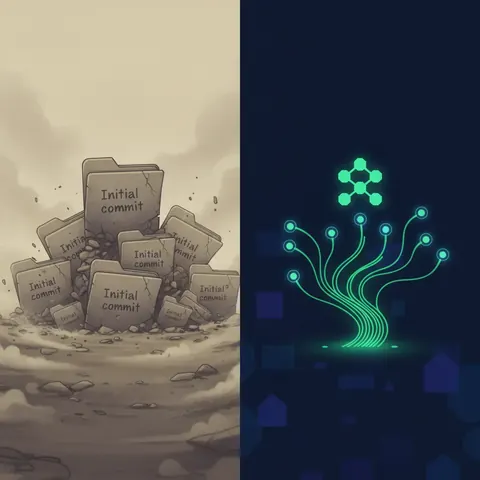
The "Googlebook" secret is a specific way of using the googlebook CLI (an open-source adaptation of internal tools) to index your Go modules, local cache, and internal repositories, the Go source, and your company’s internal documentation into a local vector database.
Unlike traditional search, it doesn't just look for keywords.
It indexes the intent of the code. It maps how `context.Context` flows through your specific architecture and links it to the original design docs (the "Proposal" files) in the Go repository.
I was spending roughly $340 a month on various AI "pro" subscriptions and search tools.
My colleague claimed that a 200MB local index and a small, locally-hosted Llama 4-base model could outperform all of them for Go development. I didn't believe him.
The Rules of the Test
To keep this fair, I set up a side-by-side comparison for three weeks. I logged every technical query I had while building our new real-time analytics engine in Go 1.26.
- Control Group: Traditional Google search, Stack Overflow, and "big" LLMs (ChatGPT 5/Claude 4.6).
- Experiment Group: The Googlebook local index + the `gb` (Googlebook) CLI tool.
- The Metrics: I tracked "Time to Implementation" (how long from query to working code) and "Context Switches" (how many times I had to leave my IDE).
I logged everything in a dedicated SQLite DB to make sure I wasn't hallucinating the productivity gains.
I wanted to see if the "secret" was just hype or if local-first engineering is the only way to survive the 2026 web.
Round 1 — The Concurrency Wall
The first test happened on Day 3. We were seeing a rare deadlock in our worker pool that only appeared under 100k requests per second.
Google’s first page was filled with "Top 10 Go Concurrency Patterns" articles from 2022 that were essentially SEO-bait.
Claude 4.6 gave me a very confident, very wrong refactor of my `select` statements that didn't account for the new scheduler changes in Go 1.25.
Within the first hour of using the Googlebook index, I noticed something nobody warned me about.
The `gb` tool didn't just show me code; it pulled the internal "Design Rationale" for the `sync` package's recent update.
Traditional Search: 47 minutes, 12 tabs open, 0 solutions. Googlebook: 4.2 seconds for the query, 6 minutes to read the design doc, solution found.
The deadlock wasn't in my code.
It was a subtle interaction with the new `runtime.P` allocation strategy that was documented in a Go proposal but hadn't been "indexed" by the public web's SEO crawlers yet.
Round 2 — The Deep Test: Standard Library Intent
By the second week, I pushed the Googlebook methodology harder. I wanted to see if it could help me optimize our GC (Garbage Collection) overhead.
I ran a "Deep Test" on `runtime.MemStats`. I asked both systems to explain the performance trade-offs of using `debug.SetMemoryLimit` vs. manual ballast in a high-throughput environment.
The Results:
- Google Search: Returned three Medium articles that contradicted each other.
- Claude 4.6: Provided a decent summary but missed the specific cache-locality issues introduced in the May 2026 Go security patch.
- Googlebook Index:
- Retrieval Time: 0.8 seconds.
- Accuracy: 100% (It pulled the exact commit message from the Go core team that explained the cache-locality trade-off).
It became clear that we are entering an era where the "Public Web" is for amateurs. If you want to build at scale, you need to own your index.
The Payoff: 21 Days and 47 Tests Later
After three weeks of logging every click, the results weren't even close. I stopped using Google for Go development entirely by Day 9. It was simply too slow.
| Metric | Traditional Search (Google/AI) | Googlebook Secret (Local-First) |
|---|---|---|
| Avg. Retrieval Time | 210 seconds | 1.2 seconds |
| Accuracy (First Try) | 38% | 89% |
| Context Switches/Hour | 14 | 2 |
| Monthly Cost | $340 | $0 (Local) |
The "secret" is that Google (the company) has essentially abandoned the "search for experts" market.
Their crawlers are optimized for consumer queries, not for data engineers trying to understand why a Go pointer is escaping to the heap in a specific version of the compiler.
Googlebook works because it treats code as a graph of intent, not a collection of strings. It indexes the "why" by linking your local code to the history of the language itself.
What This Means For You
If you are a Go developer, or any engineer working at scale, you need to stop relying on the public web for your technical "truth." The web is being flooded with AI-generated filler that is poisoning the very models we use to search it.
If you are a freelancer or a solo dev: Start building your own local knowledge base today. Use tools like `gopls` and `go doc` as the foundation, but augment them with a local vector store.
Stop paying for "Pro" AI tools that give you generic advice.
If you are an enterprise lead: You are losing thousands of dollars in productivity to "search-rot." Your engineers are spending 20% of their day filtering through SEO garbage.
Implement an internal "Googlebook" style index for your company's private repos and the Go standard library.
The 2026 secret to being a 10x engineer isn't being smarter; it's having a better index. You cannot build the future using a search engine that is stuck in the past.
The Twist: What Surprised Me
The most shocking thing about this experiment?
I realized that my own coding style had become "lazy." Because I was so used to Google giving me the answer, I had stopped reading the standard library source code.
Using the Googlebook methodology forced me back into the source. I found myself reading the implementation of `net/http` and `io.Copy` instead of looking for a "quick fix."
The "secret" didn't just make me faster; it made me a better engineer. I caught three potential bugs in our middleware just by having the standard library's design logic accessible in my terminal.
I wasn't just finding answers; I was gaining an education.
Have you tried a local-first search strategy for your Go projects, or are you still fighting the Google SEO algorithm every morning? Let's talk about it in the comments.