Stop Buying Vision Pro for Movies. This Is the Real Reason to Own One
In this article
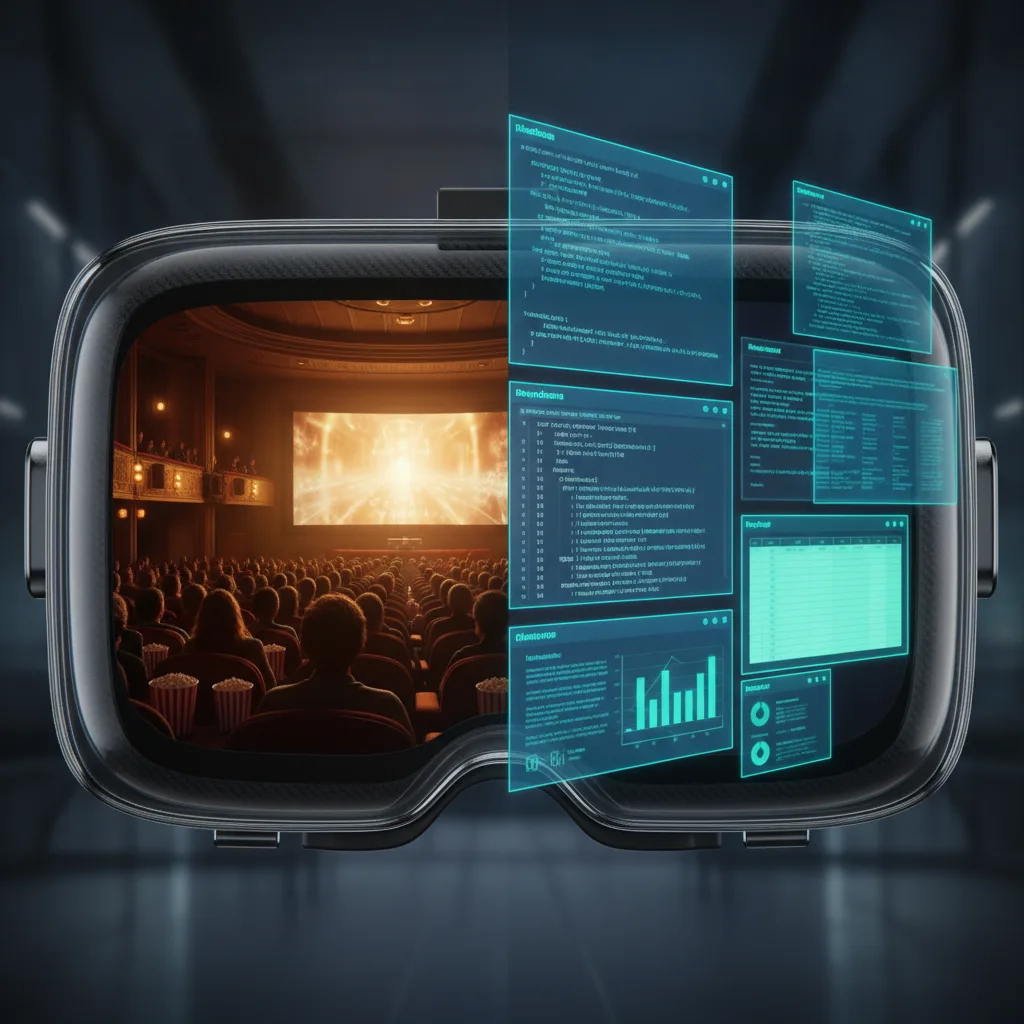
Bottom line: The Vision Pro's most valuable use case isn't watching movies in a virtual IMAX — it's replacing a multi-monitor desk setup for developers and remote workers.
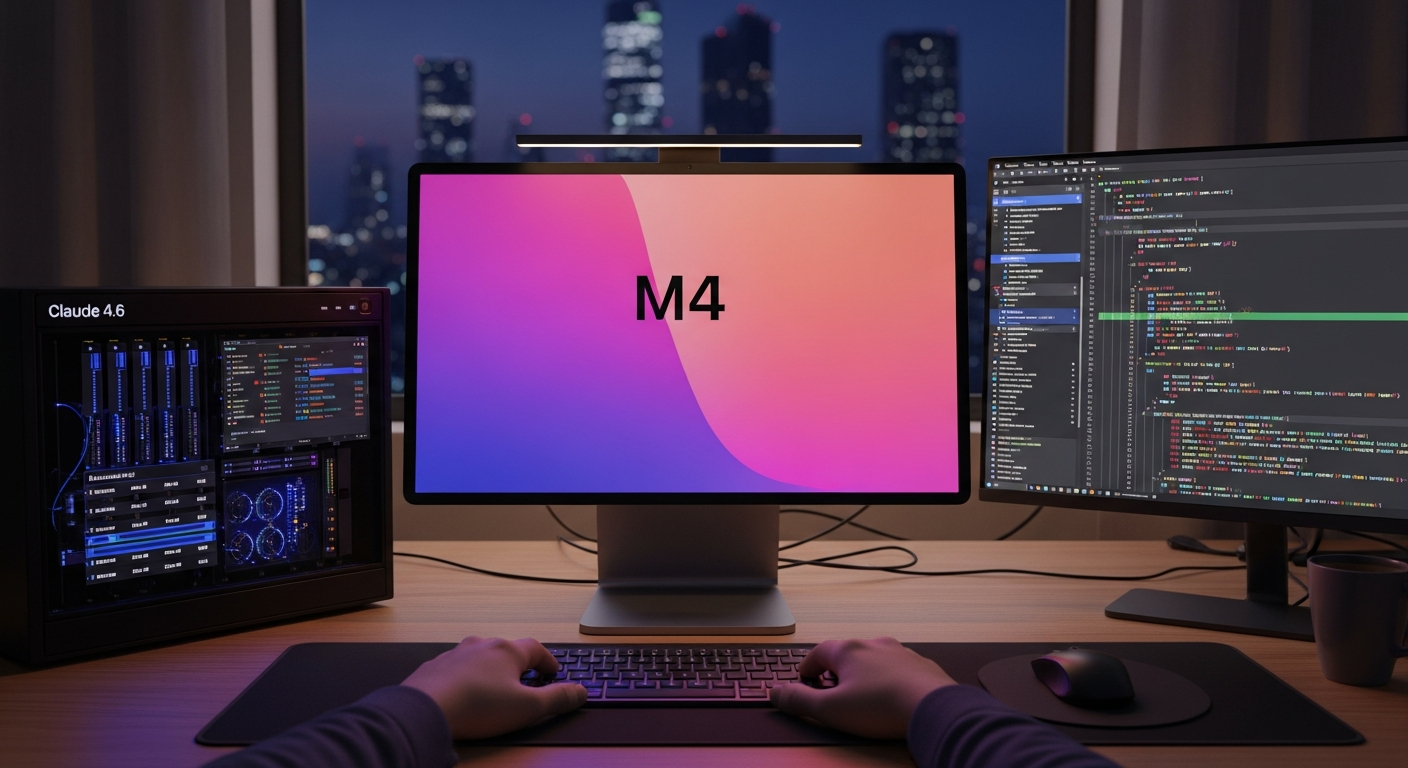
VisionOS 2's support for multiple virtual displays lets engineers run Xcode, Slack, and a terminal across a wraparound workspace that fits in a backpack, a trend that's been quietly building on Hacker News and developer forums since early 2026.
Apple hasn't published adoption numbers, but secondhand listings and community threads suggest a meaningful slice of buyers use it almost exclusively as a portable monitor replacement, not a media device.
If you work from cramped apartments, co-working spaces, or planes, this is the actual pitch — the movie theater demo is just what sells it in the Apple Store.
I was on a call with a backend engineer at a Series B fintech startup last week when she paused, put on a headset sitting next to her keyboard, and kept typing without missing a beat.
"I haven't opened my laptop lid in four months," she told me. "I just prop it up closed and work through this thing." She wasn't talking about a monitor arm or an ultrawide.
She was talking about her Vision Pro — the same $3,500 device Apple sold you on for watching Severance in 3D.
The Subject, and Why This Is Suddenly a Thing
Apple's Vision Pro launched in February 2024 to a wave of reviews built almost entirely around media consumption — spatial video, Avatar re-releases, immersive Apple TV+ content.
Two and a half years later, that framing has mostly collapsed.
Resale listings on eBay and Swappa in mid-2026 routinely cite "barely used for movies, used daily for work" in their descriptions, and threads on Hacker News about "Vision Pro as a monitor" now regularly cross 400-plus comments.
The shift tracks with a specific software change.
VisionOS 2, and the refinements that followed through 2025 and into 2026, expanded Mac Virtual Display support so users could run more than one resizable virtual screen simultaneously, with sharper text rendering and lower latency than the original launch software.
For developers — a group that lives inside terminal windows, IDEs, and documentation panes — that turned a novelty headset into something closer to an infinite desk.
The timing matters, too.
Return-to-office mandates have pushed harder through 2026 than at any point since the pandemic, and a lot of the resistance has come from people who built serious home setups they don't want to abandon.
A headset that recreates a six-monitor array anywhere you can sit down is a very specific answer to a very current problem.
The First Voice: "It's the Only Thing That's Fixed My Setup Anxiety"
The engineer I mentioned — she asked to be described rather than named, since her company hasn't cleared media conversations — works remotely from a one-bedroom apartment in Chicago.
Before the Vision Pro, her setup was a 27-inch monitor she couldn't fit comfortably next to her desk, so she alternated between hunching over a 14-inch laptop screen and borrowing her partner's home office when she needed real screen real estate.
"I tried the whole portable-monitor thing, the fold-out ones, the ones that clip onto your laptop," she said. "They're all compromises.
This is the first setup where I get my actual full workspace — Xcode on one side, Figma in the middle, Slack and a terminal stacked on the right — and it folds down into a case the size of a large sandwich."
She's not an outlier in describing it that way.
In developer-focused Discord servers and the r/VisionPro subreddit, a recurring thread is people building multi-window "cockpits" — a code editor, a browser with documentation, a terminal, and a chat app, arranged in a curve around their field of view, then saving that exact layout so it reopens identically every time they put the headset on.
One systems engineer described it to me as "the only setup I've ever had that survives a move, a vacation, and a coffee shop without me touching a single cable."
The pitch that's actually landing with this crowd isn't cinematic — it's spatial permanence. Your windows stay exactly where you left them, at whatever size you set, regardless of where you physically are.
The Complication: This Isn't Actually Comfortable for Most People
Here's where the story gets less tidy.
For every developer telling me the Vision Pro replaced their desk, there's someone who bought it for exactly that reason and returned it within Apple's 14-day window.
A DevOps engineer at a mid-size logistics company in Austin — who tried the monitor-replacement workflow for about three weeks before sending his back — put it bluntly: "The screen is genuinely great.
My neck is not built for two kilograms strapped to my face for eight hours." He also cited heat buildup during long sessions and the awkwardness of taking video calls while wearing it, since colleagues can see only a synthetic rendering of his eyes through the front display, which he said "still reads as slightly uncanny to literally everyone in the meeting."
That tension is the real story here, not a footnote to it.
The Vision Pro is being adopted by a specific slice of developers — often people with flexible, heads-down, meeting-light schedules, working solo for long stretches — while it's being rejected by people whose jobs involve more video calls, more physical movement between spaces, or simply less tolerance for a device that gets warm and heavy by hour three.
It's not a universal monitor replacement. It's a very good one for a narrower job description than Apple's marketing suggests.
What the Data and Track Record Actually Show
Apple doesn't break out Vision Pro sales or use-case data, and it never has — the device is folded into "Other Products" in earnings calls, alongside AirPods and the Watch.
That silence is itself informative: analysts have read it, consistently, as a signal that unit volumes remain modest compared to the iPhone or even the iPad line, several hundred thousand units a year rather than tens of millions.
What is visible is secondhand-market behavior and community sentiment, and both have shifted since 2024.
Resale platforms show a steady stream of units listed specifically because buyers "didn't use it for movies as much as expected," alongside a smaller, more vocal cohort listing theirs because they're upgrading to a newer model to keep the work setup going.
Developer surveys run informally on Hacker News and in engineering Slack communities through 2025 and 2026 have repeatedly surfaced the same split: a minority of respondents report daily productivity use, a much larger group tried it once or twice for work and went back to physical monitors, and almost nobody reports using it primarily for the media experience it launched on.
Competing devices tell a similar story from the other direction.
Meta's Quest 3 and XREAL's lightweight AR glasses have leaned hard into productivity-adjacent marketing over the same period — virtual desktop features, "portable monitor" positioning — because that's where the actual demand signal has been, even though those products launched with gaming and media framing of their own.
What This Means If You're Considering One
If you're weighing a Vision Pro purchase in mid-2026, the decision-relevant question isn't "will I watch great movies on this" — you will, and it's genuinely impressive.
The question is whether your work is heads-down enough, and your space cramped enough, that a portable infinite monitor is worth the weight, the heat, and the $3,500.
A few concrete signals from the people I talked to, worth checking against your own routine:
- Meeting load matters. If your day is mostly solo coding, writing, or design work, the headset workflow holds up. If you're in back-to-back video calls, the persona rendering and physical fatigue make it a worse trade than your current setup.
- Session length matters. Most of the positive accounts describe two-to-four-hour blocks with breaks, not eight-hour marathons. Plan around that rather than expecting it to fully replace a workday's worth of screen time.
- Space constraints are the real driver. Almost everyone who's genuinely happy with this setup mentioned a small apartment, frequent travel, or a desk situation that couldn't otherwise fit their ideal monitor array. If you already have room for a great physical setup, the headset solves a problem you don't have.
The version of this story that gets pitched in an Apple Store — big-screen movies, floating in your living room — is real, but it's not why the device is earning repeat, daily use among the people actually keeping it past the return window.
This practical evaluation of Apple products is earning that from developers doing something much less cinematic: quietly building a workstation that fits in a bag.
Back on that call, the engineer in Chicago took her headset off before we hung up. "Honestly, I've probably watched three things on it total," she said. "I bought it thinking about the movies.
I kept it because of the windows."
Have you tried working in a headset for a full day, or does the idea alone sound miserable? I'd genuinely like to know where the line is for you — tell me in the comments.