Paul Rosolie: Uncontacted Tribes in the Amazon Jungle | Lex Fridman Podcast #489
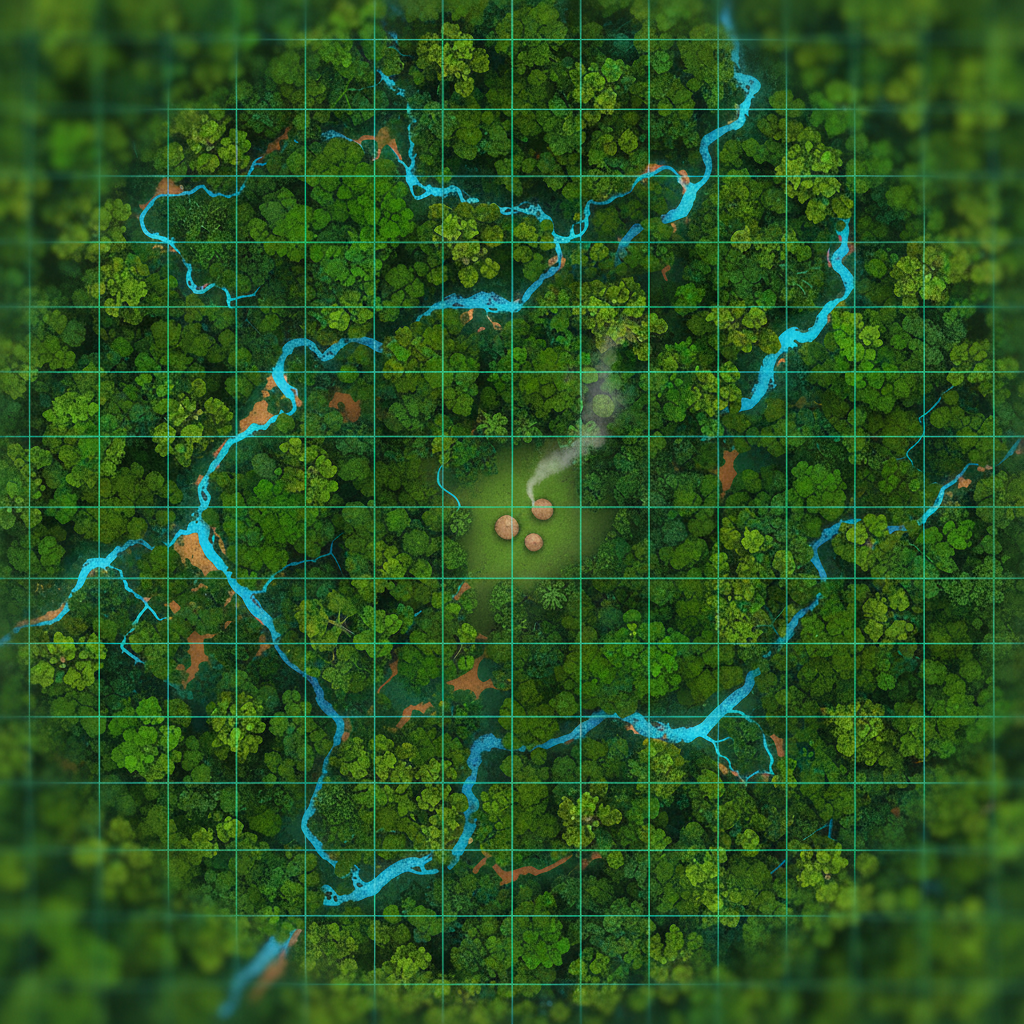
Bottom line: Lex Fridman's recent podcast with Paul Rosolie on uncontacted Amazonian tribes isn't just an environmental story; it's a stark reminder of tech's paradoxical impact.
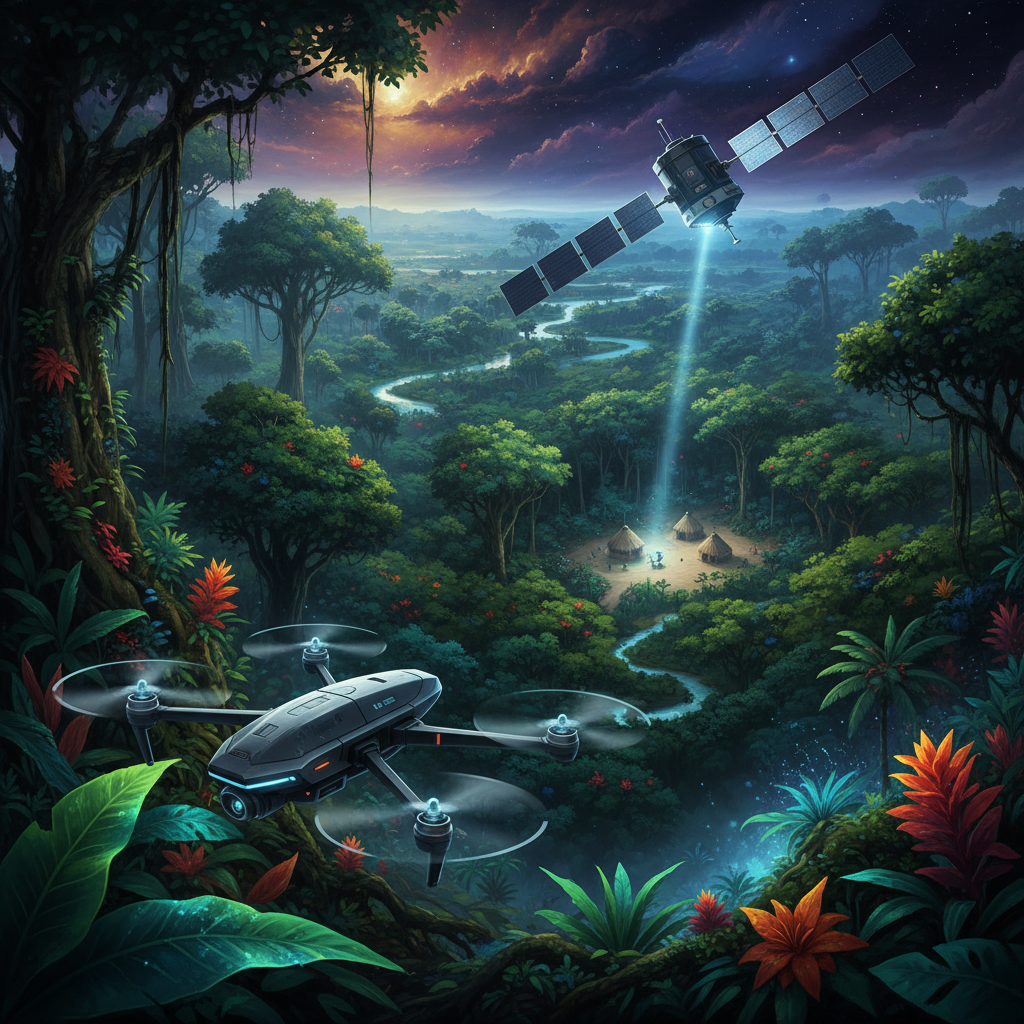
Our advanced surveillance (drones, satellites, AI mapping) simultaneously offers unprecedented tools for conservation and protection, yet also fundamentally erodes the very concept of "uncontacted" through pervasive digital presence.
This technological gaze, often driven by the resource demands of our tech economy, forces a re-evaluation of data ethics, privacy, and the true cost of global connectivity on the last truly isolated human societies.
I used to believe technology's relentless march was an unmitigated good. That more data, more connectivity, more surveillance always led to more understanding, more protection.
Then I listened to Paul Rosolie describe the uncontacted tribes of the Amazon on Lex Fridman's podcast, and it hit me: we've already "contacted" them, whether we meant to or not.
Our digital ghost is already there, reshaping their world and our ethics in ways we're too comfortable ignoring.
For years, I’ve tracked the exponential growth of satellite imagery, AI-powered deforestation alerts, and drone surveillance for conservation.
I celebrated the idea that we could protect vulnerable ecosystems and the people within them from afar, using our sophisticated tools.
But Rosolie’s raw account of these tribes, living in the last truly wild places, forced me to confront a uncomfortable truth: our definition of "uncontacted" is fundamentally broken by the very technology we use to observe them.
This isn't just about preserving nature; it's about the ethical implications for every developer, every data scientist, every tech founder building the systems that watch the world.
The Unseen Contact: How Our Digital Gaze Erased Isolation
The conventional wisdom, especially in tech circles, is that tools like high-resolution satellite imagery from companies like Maxar or Planet Labs, coupled with AI analysis from groups like Global Forest Watch, are unequivocally good.
They allow us to detect illegal logging, track gold mining operations, and monitor incursions into protected indigenous territories in near real-time.
This data drives policy, enables rapid response, and gives a voice to the voiceless. On the surface, it’s a triumph of information over ignorance.
But this perspective misses the profound irony. How "uncontacted" can a tribe truly be when their every movement, their village clearings, their hunting paths are potentially visible from space?
When a drone can fly overhead, even if it never lands?
When the very airwaves they inhabit are crisscrossed by our signals, even if they don't have a device to pick them up?
Our technological presence is like a subtle, pervasive mist, blanketing the entire planet.
The idea of true isolation, a society wholly untouched by the modern world's digital footprint, is becoming a historical artifact, not a present reality.
The very act of observing them, even with benign intent, fundamentally alters their status.
We've built a global panopticon, and the Amazon's last isolated communities are now, whether they know it or not, part of its gaze.
The Paradox of the Digital Enclosure: A New Framework
I've been calling this phenomenon "The Digital Enclosure." It's a framework for understanding how our global technological reach, even when deployed for protection, inadvertently erodes the autonomy and true isolation of the world's last uncontacted peoples.
It operates on three distinct, yet interconnected, layers:
#### 1. The Observational Layer: The All-Seeing Eye
This is the most obvious layer. High-resolution satellite imagery, synthetic aperture radar (SAR) data, and drone footage provide an unprecedented "God's eye view" of the Amazon.
Companies like Planet Labs capture daily images of nearly the entire landmass, creating a continuous record.
AI models, often open-source or developed by NGOs, analyze these images to identify deforestation, road building, and human settlements.
While crucial for conservation, this layer means that the physical existence and location of uncontacted tribes are no longer secrets.
Their "uncontacted" status is now defined not by their physical isolation, but by our choice not to physically interact, even as we digitally surveil.
This introduces a new ethical dilemma: who owns the data of these observations? Who decides how it's used? And is "observational contact" still true isolation?
#### 2. The Resource Layer: The Tech Supply Chain's Shadow
The very devices we use to monitor the Amazon – the satellites, the AI compute clusters, the drones – are built from materials extracted from the earth.
Lithium for batteries, rare earth minerals for electronics, copper for wiring. Many of these resources are found in or near ecologically sensitive areas, including the Amazon basin.
The relentless demand from the global tech industry for cheaper, faster, more powerful devices drives mining, logging, and infrastructure development.
These activities push deeper into the jungle, directly threatening indigenous lands. So, while we use tech to protect the Amazon, the production of that same tech imperils it.
It's a feedback loop, a profound contradiction where our digital connection is fueled by physical destruction, making "uncontacted" status an increasingly precarious position.
#### 3. The Signal Layer: The Invisible Web
Even without direct physical contact or visual surveillance, the Amazon is permeated by our signals. GPS satellites constantly transmit location data.
Communication satellites beam internet and phone signals across the globe.
While uncontacted tribes don't have smartphones, the electromagnetic spectrum they inhabit is no longer pristine. It's a subtle, invisible form of contact.
What are the long-term biological or environmental impacts of this pervasive signal soup?
We often assume zero impact because there's no receiver, but that's an untested hypothesis in a truly isolated ecosystem.
This layer challenges the very definition of "untouched" at a fundamental, energetic level.
Implications for Tech Professionals: Beyond the Code
So, what does this mean for us, the builders, the readers, the occasional contrarians in the tech world?
It means the comfortable detachment we often feel from the "real-world" consequences of our code is an illusion.
If you're a data scientist building AI models for satellite imagery analysis, you're not just crunching numbers; you're developing the eyes that pierce the last veils of human isolation.
You need to ask: What are the ethical guidelines for using this data? Is it truly anonymized?
Who are the stakeholders, and are they genuinely represented? The "move fast and break things" mentality doesn't apply when you're dealing with the potential dissolution of entire cultures.
By mid-2027, I expect we'll see significant legal challenges around data sovereignty for indigenous lands, driven by the capabilities of the very AI systems being deployed today.
For software engineers in the hardware or supply chain sectors, your work on optimizing component production or designing new devices has a direct, albeit distant, impact.
The demand for that next-gen processor or longer-lasting battery could be driving the very extractive industries threatening indigenous territories right now.
We need to push for greater transparency in supply chains and demand that our companies invest in genuinely sustainable and ethical sourcing, not just greenwashing.
The current pace of mineral extraction, fueled by our industry, is unsustainable, and by the end of the decade, the pressure on these pristine regions will be immense.
And for founders and product managers, the lesson is about intentionality. Are we building tools that genuinely empower, or are we inadvertently creating new forms of surveillance and control?
The allure of "global connectivity" and "data-driven solutions" is powerful, but we must interrogate the hidden costs.
The next big thing isn't just about features; it's about the ethical substrate upon which it's built.
Reclaiming Our Humanity in a Digitally Enclosed World
The story of Paul Rosolie and the uncontacted tribes is a mirror, reflecting our own interconnectedness and our profound responsibilities.
It forces us to confront the fact that our technological advancements, while offering immense power for good, also carry the inherent risk of unintended consequences, particularly for the most vulnerable among us.
The concept of "uncontacted" is no longer a physical state but an ethical one, maintained by a delicate balance of non-intervention and responsible observation.
We, as builders of this digital world, have a choice.
We can continue to view these topics as distant environmental concerns, or we can recognize them as a direct challenge to our professional ethics and the very foundations of how we build technology.
The Amazon, and its last isolated inhabitants, are calling us to a higher standard. They compel us to ask not just what our tech can do, but what it should do, and what it shouldn't.
Do you think our current tech development philosophies adequately account for these kinds of profound, unintended "digital contact" implications, or are we still too focused on speed and scale?
Let's talk in the comments.