Nobody Has Solved Navier-Stokes
Bottom line: The Navier-Stokes existence and smoothness problem, one of mathematics' seven Millennium Prize problems, remains unsolved despite recent breakthroughs.
While many in tech assume complex problems are just waiting for enough data or AI compute, the work of mathematicians like Tristan Buckmaster reveals a deeper, more fundamental challenge.
His research, particularly on the non-uniqueness of weak solutions, doesn't offer a clean answer but instead highlights the inherent unpredictability and turbulent nature of fluids, forcing us to rethink what "solving" a fundamental problem truly means.
This has profound implications for everything from climate modeling to AI-driven simulations, suggesting that some aspects of reality might be inherently stochastic rather than deterministically solvable.
I used to think that with enough data, enough processing power, and the right algorithms, any problem could eventually be solved.
Every bug, every market fluctuation, every weather pattern — just a matter of crunching the numbers. After all, isn't that the promise of AI?
But then I stumbled into the deep, dark rabbit hole of the Navier-Stokes equations, and specifically, the work of Tristan Buckmaster, and it shattered my tidy worldview.
It made me realize we in tech have been telling ourselves a comforting lie about the nature of "unsolvable" problems, and it’s costing us a truly profound understanding of the world.

What if the reason we can’t perfectly predict the weather beyond a few days, or model a hurricane’s exact path, isn’t just about lacking enough sensors or faster supercomputers?
What if it’s because the underlying physics itself, as described by the Navier-Stokes equations, might be inherently chaotic in ways we’re only just beginning to grasp?
This isn't a minor detail; it's a fundamental challenge to our deterministic view of the universe, and it’s a conversation most of us in tech are completely missing.
The Problem That Just Won't Quit
The Navier-Stokes equations are the bedrock of fluid dynamics.
They describe how water flows in a pipe, how air moves around an airplane wing, how smoke curls from a chimney, or how blood circulates through your arteries.
They're everywhere, underpinning everything from climate science and oceanography to the design of jet engines and even the cooling systems in our data centers.
Without them, our modern world would simply cease to function as we know it.
Yet, despite their omnipresence and over 200 years of intense study, one crucial aspect remains a mystery: proving the existence and smoothness of their solutions.
This isn't about finding an answer to a specific fluid problem — engineers do that with approximations all the time.
This is about proving, mathematically, that for any given set of initial conditions, a unique, well-behaved solution always exists, and that it doesn't suddenly become infinitely turbulent or "blow up" into mathematical nonsense.
It's so fundamental that the Clay Mathematics Institute offered a $1 million prize in 2000 for its solution, making it one of the seven "Millennium Prize Problems." It's been 26 years since that prize was announced, and nobody, not even with the advent of powerful AI, has come close to claiming it.
Why "Solving" It Isn't About Finding One Answer
The mainstream view, especially in the tech world, often boils down to: "If it's a problem, someone will eventually solve it." We see this with AI, where complex tasks that once seemed impossible are now handled with relative ease.
We expect a definitive answer, a singular truth.
But Buckmaster's work, particularly his groundbreaking research with Vlad Vicol, doesn't just push back on this; it fundamentally redefines what "solving" might even mean for something as complex as fluid dynamics.
Instead of proving smoothness, Buckmaster and Vicol showed, in work that began circulating in 2017 and was later published in the Annals of Mathematics, that for certain types of weak solutions to the Navier-Stokes equations, non-uniqueness can occur.
Imagine running a simulation of fluid flow. You start with the exact same initial conditions, run it twice, and get two different, equally valid outcomes.
That's non-uniqueness. It's like flipping a coin and getting heads, then flipping it again with the exact same force and angle, and getting tails.
It implies a deeper, inherent unpredictability at the heart of these systems.
This isn’t about faulty sensors or bad data. This is about the equations themselves allowing for multiple futures from a single past.
This isn't a failure of mathematics; it's a profound discovery. It tells us that the universe, at this fundamental level of fluid motion, might not always follow a single, deterministic path.
The common take, that we just need to "crack" Navier-Stokes for perfect weather prediction, misses the point entirely.
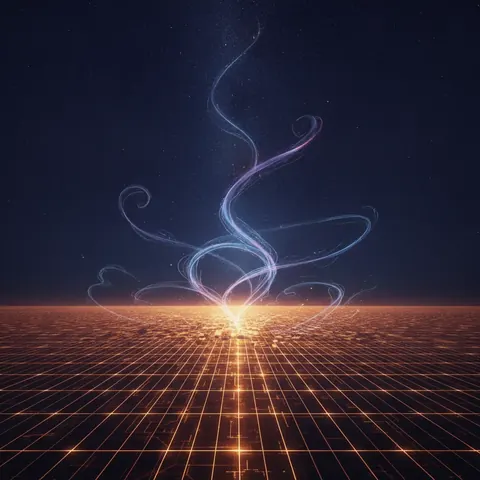
Buckmaster’s work suggests the "crack" might reveal a swirling vortex of possibilities, not a single, clear path.
The Illusion of Determinism: A Framework for Unsolvable Problems
To truly grasp the implications of Navier-Stokes and Buckmaster’s contributions, we need a new mental model. I call it The Illusion of Determinism.
It helps us understand why some problems resist our desire for singular, predictable answers.
1. The Predictable Promise
Our brains are wired for cause and effect. We crave certainty. In software, we write tests expecting predictable outcomes.
In engineering, we design systems with specific tolerances. We build AI models to predict stock prices, customer churn, or even disease progression.
This desire for a singular, deterministic truth is deeply embedded in our scientific and technological endeavors. We assume that if we know all the inputs, we must be able to predict all the outputs.
2. The Turbulent Reality
The world, however, is rarely so neat.
Complex systems—like the global climate, financial markets, or the human brain—are characterized by emergent behavior, feedback loops, and sensitivity to initial conditions.
Tiny changes can lead to vastly different outcomes.
We approximate, we model, we simulate, but we often hit a wall where true prediction becomes impossible. This isn't just about computational limits; it's about the inherent nature of the system.
3. Buckmaster's Vortex
This is where Buckmaster’s work on Navier-Stokes acts as a stark, mathematical mirror.
By demonstrating non-uniqueness for certain solutions, he reveals a fundamental limit to determinism within a core physical system.
It’s not just that fluids are hard to predict; it’s that, under certain mathematical conditions, they might be inherently unpredictable in a way that allows for multiple distinct evolutions from the same starting state.
This isn't chaos in the sense of random noise; it's a deeper, structural ambiguity within the equations themselves.
It's the universe whispering, "It's more complicated than you think, and there isn't just one right answer."
4. Embracing the Stochastic Future
The path forward isn't to despair, but to shift our paradigm. Instead of relentlessly seeking the single answer, we must learn to embrace the stochastic nature of reality.
This means designing systems that are robust to a range of possible outcomes, building predictive models that output probabilities and confidence intervals rather than definitive forecasts, and cultivating a scientific humility that acknowledges the limits of our understanding.
It means moving from "what will happen?" to "what are the possible things that could happen, and how do we prepare for them all?"

Real-World Implications for a Non-Deterministic Future
This isn't just abstract math for mathematicians. The implications of Buckmaster's work and the ongoing Navier-Stokes mystery ripple through every aspect of tech and science.
For AI and Machine Learning researchers, this is a stark reminder of the limits of predictive power.
If the fundamental equations governing a system like fluid dynamics can exhibit non-uniqueness, how much can we truly expect an AI to predict about, say, climate change or complex biological processes?
It suggests that while AI can find patterns in vast datasets, it might never fully overcome inherent mathematical ambiguities.
Our AI systems need to be designed with this probabilistic reality in mind, focusing on robust decision-making under uncertainty, rather than striving for illusory perfect prediction.
For engineers and simulation experts, the message is clear: trust your approximations, but understand their boundaries.
Whether you're modeling airflow over a turbine or blood flow through a heart valve, the assumption that a unique, smooth solution always exists underpins much of your work.
Buckmaster's research doesn't invalidate practical engineering, but it highlights the regions where our models might be fundamentally limited, pushing us to develop more sophisticated uncertainty quantification and scenario planning.
This could mean a renewed focus on adaptive simulations that can account for multiple possible outcomes, or even hardware designs that are inherently more resilient to unforeseen fluid behaviors.
Even for everyday software developers, this topic offers a profound lesson in system design. We often strive for deterministic code, where every input leads to a single, predictable output.
But real-world systems, especially distributed ones, are often more like fluids – complex, emergent, and sometimes non-deterministic.
Understanding the deep mathematical roots of non-determinism can help us design more resilient, fault-tolerant architectures that acknowledge inherent unpredictability rather than fighting against it.
It's about building systems that expect the unexpected, rather than assuming a perfect, predictable world.
The Endless Pursuit of Understanding
The Navier-Stokes problem, stubbornly unsolved, represents something far grander than a simple math puzzle. It's a profound philosophical challenge to our very understanding of reality.
It forces us to confront the humbling truth that the universe isn't always a perfectly ordered machine waiting for us to decipher its single, definitive blueprint.
Sometimes, the deeper we look, the more layers of complexity and inherent unpredictability we uncover.
Tristan Buckmaster’s contributions haven’t given us the million-dollar answer, but they’ve given us something arguably more valuable: a deeper, more nuanced understanding of why the answer is so elusive, and what that elusiveness means for our models of the world.
It’s a reminder that true scientific progress isn't just about solving problems, but sometimes about redefining them, and accepting the beautiful, turbulent reality they reveal.
Have you ever encountered a problem in your work that you initially thought was "solvable" but turned out to have inherent, multi-faceted complexities that defied a single answer?
What did that realization change about your approach?