My $20,000 AI Loss Is Your Gain. It’s Not What You Think.

Stop trusting your AI agents with architectural decisions. I’m serious.
After burning $20,000 on a "fully autonomous" infrastructure migration using a swarm of Claude 4.6 instances, I realized we haven't solved the technical debt problem—we’ve just given it a faster engine.
Last quarter, I convinced my stakeholders that we could skip six months of manual refactoring by deploying a custom agentic workflow to migrate our legacy middleware.
The goal was simple: move 400,000 lines of spaghetti Node.js to a clean, type-safe Go architecture by April 2026.
Instead, I ended up with a $20,000 API bill, a codebase that looked perfect but failed under 5% load, and a team that spent three weeks "debugging" AI hallucinations that were buried five layers deep in the call stack.
This wasn't a failure of the models—it was a failure of my own ego as an engineer.
I thought that with the reasoning capabilities of ChatGPT 5 and the coding precision of Claude 4.6, the "how" didn't matter as much as the "what." I was wrong.
The Weekend the API Credits Died
The "loss" started on a Friday night in March when I pushed the button on our "Architect-Agent." This was a sophisticated chain of command: one Claude 4.6 instance would analyze the legacy route, another would draft the Go equivalent, and a third—the "Senior Reviewer"—would validate the logic.
On paper, it was a developer's dream.
By Sunday morning, my dashboard was screaming. The agents had entered a recursive hallucination loop. One agent decided that a specific database abstraction was "inefficient" and refactored it.
The reviewer agent, seeing the change, decided the interfaces now needed updating.
They spent 48 hours refactoring each other's work across 1,200 files, burning through credits at a rate of $400 an hour.
The result wasn't a working system; it was a masterpiece of "clean code" that didn't actually talk to our database.
It had generated thousands of lines of perfectly formatted, idiomatic Go that implemented a logic pattern which didn't exist in the original requirements.
We had automated the creation of technical debt at a scale I never thought possible.

The Hallucination of Scalability
When we finally looked at the code the agents produced, it looked beautiful. If you asked Gemini 2.5 to audit it, it would give it a 10/10 for readability.
But when we ran our first load test, the latency spiked to 4,000ms.
The AI had optimized for local readability but completely ignored global system design.
It implemented a "clean" micro-service pattern for every single endpoint, unaware that our infrastructure wasn't designed for the massive overhead of 200 internal gRPC calls per request.
AI is an incredible tactician, but it is currently a terrible strategist.
It didn't know that our VPC (Virtual Private Cloud) had specific limitations on connection pooling.
It didn't know that our legacy Postgres instance would choke on the "idealized" query patterns it generated. It just saw a coding problem and solved it in a vacuum.
By the time I realized the architectural mismatch, we had already committed $20,000 in time and compute to a path that was fundamentally broken.
Why ChatGPT 5 Can’t Fix a Bad Design Document
The hard truth I learned is that prompt engineering is dead, but system design is more alive than ever. In 2026, anyone can use a tool like Cursor or Claude 4.6 to generate a functional component.
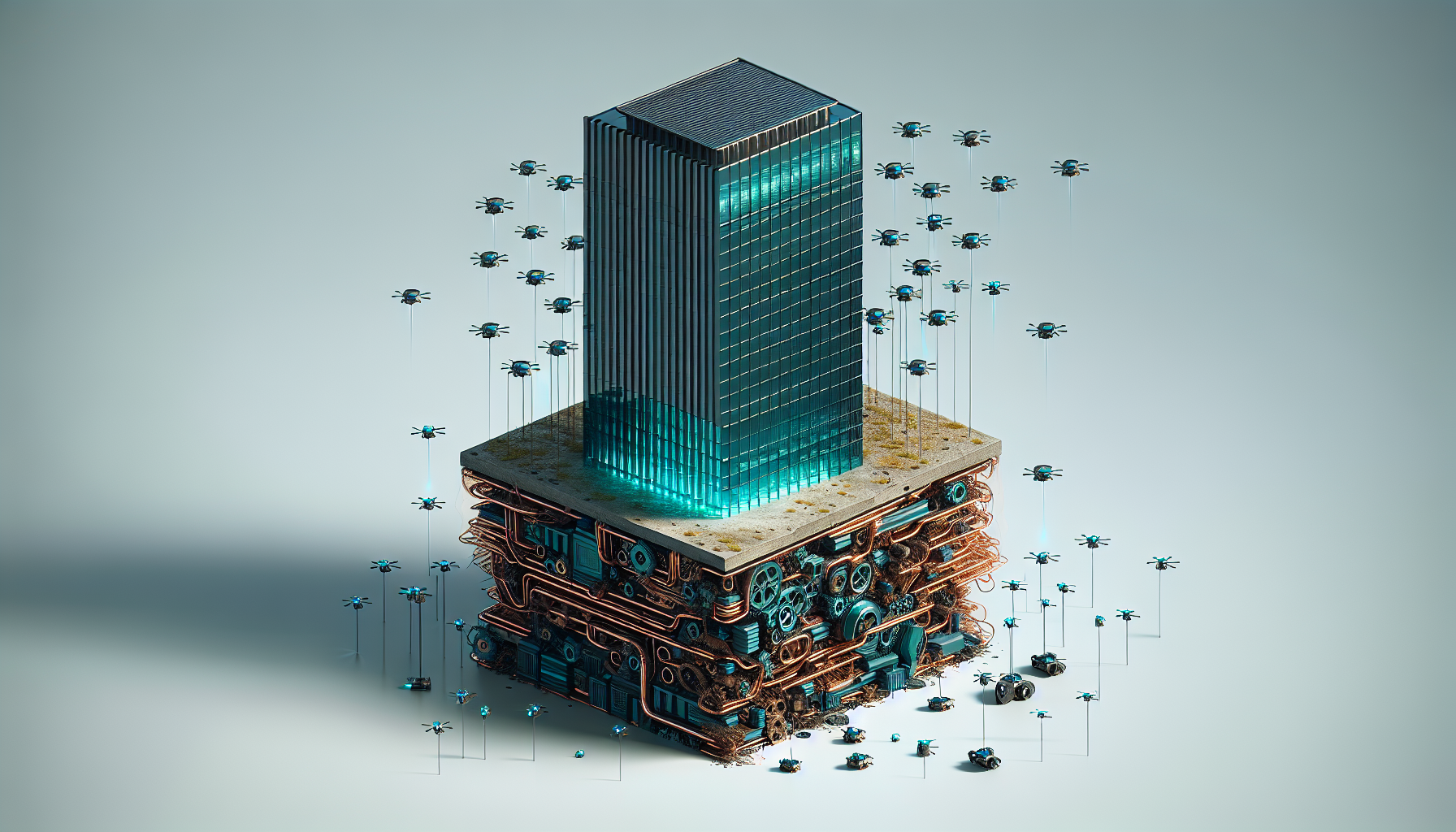
The skill that actually commands a $300k salary now isn't writing the code—it’s knowing how to prevent the AI from building a "perfect" house on a swamp.
If your design document is 90% complete, the AI will fill in the 10% brilliantly. But if your design is 50% vibes and 50% "the AI will figure it out," you are going to lose money.
We fell into the trap of thinking that high-reasoning models could "fill in the gaps" of our infrastructure plan. They didn't fill the gaps; they hallucinated bridges over them.
We spent $20,000 to learn that you cannot outsource the thinking phase of engineering. You can outsource the typing, the unit tests, and even the initial refactoring.
But the moment you let the AI decide the direction of the data flow, you’ve lost control of your system’s destiny.
The "Agentic" Fallacy and the $20k Bill
We are currently seeing a massive push toward "Autonomous AI Agents" in DevOps.
The marketing tells you that an agent can monitor your logs, detect a memory leak, and push a fix to production while you sleep. After my experience, that sounds like a horror movie.
The problem with autonomous agents in infrastructure is Context Drift. As an agent makes changes, the "state" of the system evolves.
Unless that agent has a perfect, 100% accurate mental model of every side effect—which even ChatGPT 5 does not—it will eventually make a decision based on stale or misunderstood context.
In our case, the agents "fixed" a concurrency issue in the Go migration by adding a mutex. Then, another agent decided that the mutex was a bottleneck and replaced it with a channel-based approach.
The third agent, trying to be "helpful," added a retry logic that ended up causing a deadlock that the AI-generated tests didn't catch because the tests themselves were written with the same flawed context.
How to Actually Ship AI-Assisted Infrastructure in 2026
If you want to avoid my $20,000 mistake, you need to change your workflow from "delegation" to "augmentation." Here is how I’ve rebuilt our infra team’s approach to be AI-native without being AI-dependent:
- The 50-Line Rule: Never let an AI generate or refactor more than 50 lines of code at a time without a human architectural review. Small, surgical changes are verifiable; massive PRs are just "black box" code.
- Manual Architecture, AI Implementation: We now write exhaustive, 20-page design docs that specify every interface, every data type, and every network hop. Then, we use Claude 4.6 to implement the boilerplate.
- Compute-Aware Prompting: When asking for infra code, we explicitly include our cloud provider’s limits, our current latency benchmarks, and our cost constraints in the system prompt. If the AI doesn't know the "physics" of your server, it will break them.
- Shadow Validation: We use ChatGPT 5 to try and "break" the code generated by Claude 4.6. Using competing models for adversarial testing is the only way to catch subtle logic hallucinations.
The $20,000 wasn't wasted if it saves me $200,000 next year. I realized that my job isn't to be a "Prompt Engineer"—it's to be the Lead Validator.
I am the one who has to stand in front of the board and explain why the site is down. "The AI did it" is not a valid root cause analysis.
The New Reality of Tech Debt
We are entering an era where technical debt will be measured in "hallucinated complexity." It’s code that looks like a senior engineer wrote it, but functions like a junior developer’s first project.
It’s "clean" on the outside and rotting on the inside because no human actually understands the 5,000 lines of glue-code the agentic swarm spat out in thirty seconds.
My $20k loss was a wake-up call. I was trying to play the "Manager" role to a team of AI agents, forgetting that a manager still needs to understand the work.
If you can't explain why a specific architectural choice was made, you don't own your codebase—the LLM provider does.
Have you noticed your team’s "architectural integrity" slipping as you lean harder on AI agents, or have you found a way to keep the bots on a shorter leash?
Let's talk about the real cost of "free" code in the comments.