Hetzner Quietly Changed Prices. It's Worse Than You Think.
In this article
Bottom line: Hetzner’s June 2026 pricing update increased dedicated root server and cloud instance costs by an average of 22%, citing European energy grid constraints and severe IPv4 scarcity.
For bootstrapped startups and indie developers, this erodes the historic "anti-AWS" discount that made Hetzner the default choice for bare-metal hosting.
If your infrastructure relies heavily on their older AX or PX lines, expect your next billing cycle to jump significantly—prompting a serious re-evaluation of whether the migration to a mid-tier provider like OVH or Netcup is now justified.
Last Thursday morning, I was on a Discord call with the CTO of a Series A video processing startup.
He abruptly stopped our conversation, shared his screen, and pointed to an email that had just landed in his inbox.
Hetzner, the German hosting provider famous for its rock-bottom bare-metal pricing, was announcing an immediate price adjustment across its entire fleet of servers.
"My infrastructure bill just went up by $1,400 a month," he told me, rubbing his temples. "We built our entire unit economics around their unmetered bandwidth and cheap AMD boxes."
By Friday afternoon, the news had hit Hacker News like a sledgehammer, racking up over a thousand comments in a matter of hours.
For years, Hetzner has been the industry’s worst-kept secret, serving as the financial backbone for thousands of solo founders, side projects, and bootstrapped agencies.
They offered a simple promise: you manage the server yourself, and in exchange, you pay a fraction of what Jeff Bezos charges.
Now, that social contract is fracturing, and the fallout is forcing a lot of engineering teams to rethink their entire approach to cloud architecture.
The Email That Ruined the Weekend
To understand why a seemingly standard corporate price hike triggered such an intense reaction, you have to understand Hetzner’s unique place in the tech ecosystem.
They aren't just a vendor; they are the patron saint of the bootstrapped developer. When you decide to skip the managed services of AWS or Google Cloud, you usually land in Hetzner's data centers in Falkenstein or Helsinki.
According to the developers I spoke with this week, the price adjustments are much steeper than the standard inflation adjustments we saw back in 2023 and 2024.
The popular AX41-NVMe instances, a staple for small database clusters, saw base prices jump significantly, while IPv4 address costs nearly doubled.
Furthermore, setup fees—which had been widely waived or reduced for years—have quietly crept back onto the pricing page for high-demand models.
"It feels like a bait-and-switch, even though I know logically it’s just business," said Elena, a solo founder running a popular web-scraping API.
She migrated from DigitalOcean to Hetzner eighteen months ago specifically to escape rising bandwidth costs.
"I spent three weeks rewriting my deployment pipelines to work without managed databases, just to secure this pricing."
Elena is currently running six dedicated servers, and her margins are thin by design.
This 22% average increase doesn't just cut into her profits; it fundamentally changes the viability of her lower-tier subscription plans.
She spent her weekend asking Claude 4.6 to draft migration scripts for OVH, only to realize the engineering time required would cost more than just eating the Hetzner price bump for the rest of 2026.
The Economics of "Cheap" Compute

But not everyone in the engineering community is sympathetic to the outrage. In fact, a vocal contingent of systems administrators argues that this reckoning was entirely inevitable.
Hetzner hasn't been quietly gouging customers; they've been artificially absorbing massive macroeconomic shocks for the last three years.
"People are acting like Hetzner betrayed them, but they’ve been selling compute at razor-thin margins in a market where hardware and energy costs have skyrocketed," said Marcus, a DevOps consultant who manages infrastructure for a dozen mid-sized SaaS companies.
I spoke with him on Monday to get a reality check on the underlying numbers.
He pointed out that Europe's energy grid, combined with the global scarcity of IPv4 blocks, made the old pricing model completely unsustainable.
Marcus pulled up a spreadsheet comparing Hetzner's new pricing against AWS EC2 reserved instances and Google Cloud's compute engine. The reality is undeniable.
Even with a 22% hike, Hetzner is still roughly 50% to 60% cheaper than the equivalent compute power on AWS.
"If a 20-euro monthly increase on a bare-metal server bankrupts your startup, you don't have an infrastructure problem," Marcus told me bluntly. "You have a business model problem."
He's technically right, but that argument misses the psychological impact of the change.
Developers don't choose Hetzner just to save a few dollars; they choose it to lock in a predictable, flat-rate burn rate.
When that predictability vanishes, the entire appeal of managing your own bare-metal servers begins to dissolve.
The Open-Source AI Casualties
There is one specific segment of the tech community where this price adjustment hurts more than anywhere else: open-source AI researchers.
Over the past two years, as the AI boom created a massive shortage of high-end GPUs, Hetzner became a crucial lifeline.
Their servers equipped with consumer-grade NVIDIA RTX 4090s or mid-tier Ada generation cards offered a scrappy alternative to the eye-watering costs of AWS P4 instances.
"We train our 8-billion parameter models entirely on Hetzner's GPU instances because we literally couldn't afford to do it anywhere else," a machine learning researcher at a European university told me over email.
He noted that the new pricing tiers specifically target these power-hungry machines.
The energy surcharge applied to GPU servers makes it incredibly difficult for independent researchers to run long, multi-week training jobs.
This creates a chilling effect on grassroots AI development.
If you want to fine-tune a model in 2026, you either need significant venture capital backing to afford Tier-1 cloud providers, or you need to build a server rack in your garage.
The middle ground is rapidly disappearing.
When the infrastructure required to participate in the AI ecosystem becomes too expensive for hobbyists and students, innovation naturally consolidates back into the hands of the massive tech conglomerates.
The Migration Fallacy
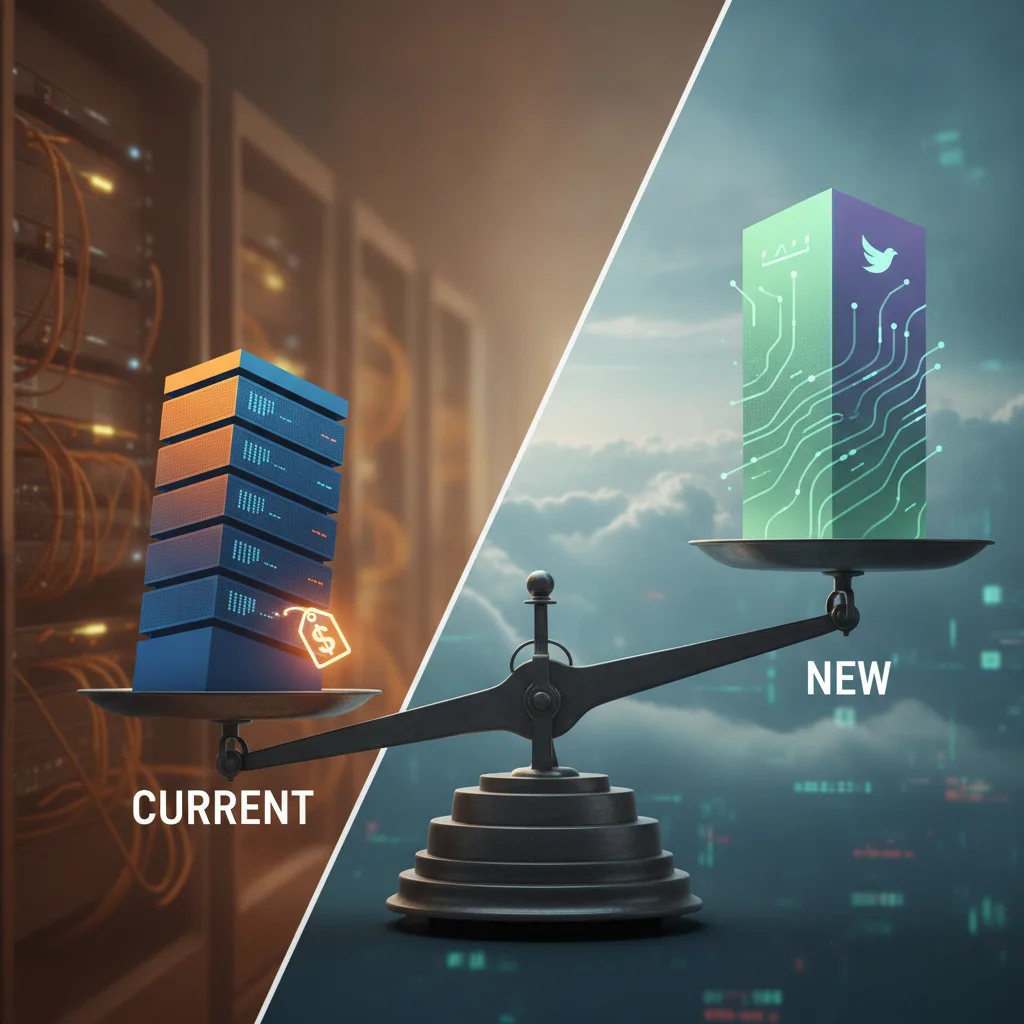
Whenever a hosting provider raises prices, tech forums immediately flood with threats of mass exodus.
Users confidently declare they are moving their entire stack to Netcup, OVH, Leaseweb, or even back to on-premise hardware.
But when I checked back in with the developers I interviewed, a very different reality emerged.
Migration is a brutal, unforgiving process.
Moving a complex, self-managed infrastructure isn't just about spinning up new virtual machines.
You have to migrate terabytes of active database state, reconfigure virtual private networks, update DNS records, and pray you don't suffer catastrophic downtime.
The dirty secret of bare-metal hosting is that vendor lock-in exists, even without proprietary APIs. It’s just measured in engineering sweat rather than technical contracts.
"I looked at Netcup, and their pricing is incredibly attractive right now," the video processing CTO told me on our follow-up call.
"But when I sat down and calculated the labor hours required for my team to execute a zero-downtime migration, it equaled about two years' worth of the Hetzner price increase."
They ultimately decided to stay. They will eat the cost, adjust their own customer pricing by early 2027, and optimize their codebase to squeeze more performance out of their existing servers.
What to Do Before Your Next Billing Cycle
If you are currently hosting infrastructure on Hetzner, panic-migrating is the worst decision you can make this week. Instead, you need to conduct a ruthless audit of your current utilization.
The days of spinning up an overpowered AX-line server "just in case" you need the headroom are officially over.
First, look at your IPv4 footprint.
With IPv4 costs driving a significant portion of this price hike, 2026 is the year you finally need to take IPv6 seriously. Several engineers I spoke with managed to offset the entire price increase simply by dropping unnecessary legacy IPs and routing their internal cluster traffic entirely over IPv6.
Second, evaluate whether you actually need bare metal. If you are only utilizing 15% of your dedicated server's CPU, the cost-benefit analysis has completely shifted.
You might actually save money by moving to Hetzner's shared vCPU cloud instances, or even returning to a managed PaaS provider where you only pay for the exact compute time you consume.
Finally, recognize that the era of artificially deflated compute prices is ending.
The combination of AI power demands, hardware supply chain shifts, and energy market volatility means infrastructure is going to command a larger percentage of your startup's budget moving forward.
The free lunch in European data centers didn't just get more expensive. The restaurant changed ownership, and the new menu is permanent.
Have you noticed your infrastructure costs creeping up across the board this year, or are you still finding reliable budget alternatives? Let's talk in the comments.