Google's New AI Just Gave Robots a Whole Body. This Isn't a Drill.
In this article
Bottom line: Google DeepMind's Gemini Robotics 2 replaces the stitched-together perception-planning-control stack that's run robots for a decade with a single model that reasons about an entire body at once — arms, torso, legs, gait, grip, all in one inference pass.
Early deployments on Apptronik's Apollo humanoid show the same model transferring across different robot chassis with minimal retraining, something the field has chased and mostly failed at since 2015.
If you build anything adjacent to robotics, warehouse automation, or physical AI, the architecture shift matters more than the demo reel — it's the same monolith-to-model consolidation that happened to your NLP stack in 2023, now happening to bodies.
I spent three years maintaining a Kubernetes cluster that ran twelve separate microservices just to make a warehouse picking arm decide whether to grab a box from the left or the right.
Perception service. Pose estimation.
Path planner. Grip force controller. A coordination layer to stop them from fighting each other.
It worked, mostly, the way anything held together with retries and circuit breakers works — until it didn't, usually at 2 a.m., usually because two services disagreed about where the arm's wrist actually was.
That memory is why Gemini Robotics 2 stopped me mid-scroll on Hacker News this week. Not because "whole body intelligence" sounds impressive in a keynote.
Because I know exactly how much orchestration debt it's proposing to delete.
What Google Actually Shipped
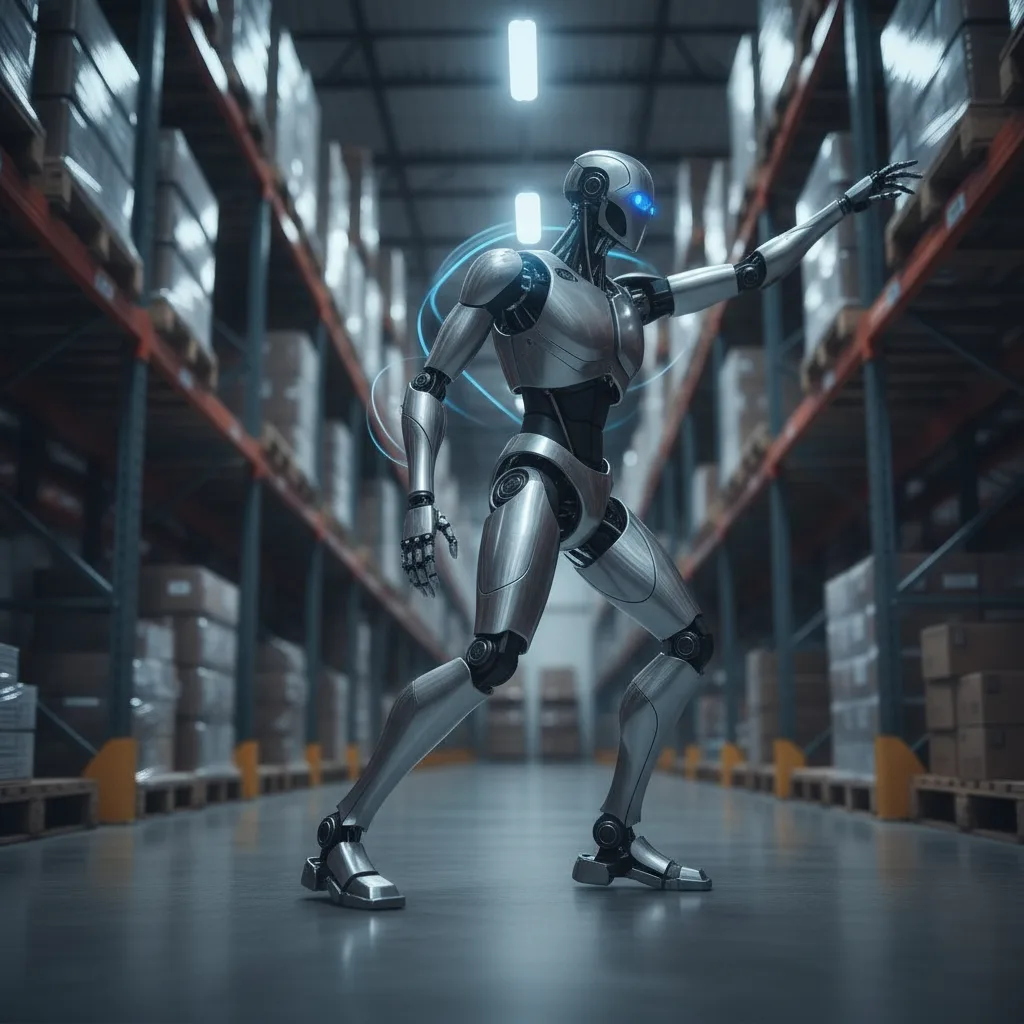
Gemini Robotics 2, announced by Google DeepMind, is a vision-language-action (VLA) model that controls a robot's entire physical system from one policy — not a pipeline of specialized modules passing messages to each other.
The distinction sounds academic until you've debugged the pipeline version.
The old architecture, which is still what most commercial robots run today, looks like a microservices diagram: a perception model identifies objects, a separate planner sequences the task, a separate controller translates that plan into joint torques, and a separate safety layer vetoes anything that looks like it'll clip a shelf.
Each of those is trained, versioned, and deployed independently. Each one is a potential point of disagreement.
Gemini Robotics 2 collapses that into a single model that takes in camera frames and a natural-language instruction — "clear the table, but leave the mug" — and outputs coordinated whole-body motion directly.
Google's early partner, Apptronik, is running it on the Apollo humanoid, and DeepMind has published transfer results showing the same base model adapting to different robot embodiments — different arm lengths, different degrees of freedom, different actuators — with a fraction of the fine-tuning data earlier systems needed.
That last part is the actual headline, even if it's not the flashy one.
Why Cross-Embodiment Transfer Is the Real Story
Robotics has had a portability problem for as long as I've been paying attention to it.
A policy trained on one robot arm historically didn't transfer to a different arm, let alone a different robot entirely.
Every new chassis meant a new data collection campaign and a new training run — the robotics equivalent of rewriting your backend every time you switched cloud providers.
If Gemini Robotics 2's cross-embodiment claims hold up under independent testing (and Hacker News's comment section is doing exactly that scrutiny right now), it means:
- A warehouse operator running Boston Dynamics' Atlas and a separate line of Agility Robotics' Digit units could plausibly share a policy base instead of maintaining two divergent ML pipelines. - Fine-tuning for a new robot becomes closer to fine-tuning an LLM on a new domain — hours to days, not months of teleoperation data collection. - The model provider (Google) becomes the layer robotics companies build on top of, the same way most AI apps today build on top of a foundation model instead of training one from scratch.
That third point is where this stops being a robotics story and starts being an infrastructure story.
The Infra Lens: This Is 2023's LLM Consolidation, Replayed on Hardware
I've watched this exact pattern before.
In 2022, most production NLP systems were pipelines too — an intent classifier, a named-entity recognizer, a slot-filler, a response generator, each a separate model with its own training loop and its own failure modes.
Then general-purpose LLMs got good enough to do all of that in one prompt, and the pipeline architectures mostly died within eighteen months.
Not because the pipelines were wrong, but because maintaining four brittle handoffs stopped being worth it once one model could do the job end to end.
Whole-body robot control is the same trade, applied to actuators instead of API calls.
The failure modes shift, they don't disappear. A pipeline fails at the seams — perception says one thing, the planner assumes another.
A monolithic policy fails differently: it's a black box making thousands of joint-torque decisions per second, and when it's wrong, you don't get a clean stack trace pointing at "the grip controller." You get a robot doing something subtly off, and your debugging tool is behavior logs and simulation replay, not `kubectl logs`.
That's a real cost.
Anyone who's debugged a single 70B-parameter model's weird output versus a five-service pipeline's weird output knows the monolith is often harder to introspect, even when it's easier to build and deploy.
Robotics is about to inherit that same observability gap — except now the "weird output" can knock over a shelf.

What Changes for the People Building on Top
If you work anywhere near warehouse automation, last-mile delivery robots, or manufacturing, three things are worth tracking over the next two quarters:
- Latency architecture matters more than model size. Whole-body control needs inference fast enough to keep a robot from falling over — that's a hard real-time constraint LLM serving infra was never built for. Watch whether Gemini Robotics 2 runs on-device, at the edge, or leans on a cloud round-trip, because that answer determines your entire deployment topology.
- The safety layer needs to survive the consolidation. Pipeline architectures made it easy to bolt a hard-coded safety veto onto the output of the planner. A single end-to-end policy makes that harder — you either train safety constraints into the model or wrap the whole thing in an external monitor, and DeepMind hasn't fully detailed which approach ships in production.
- Cross-embodiment transfer is a vendor lock-in question in disguise. If one foundation model can drive multiple robot chassis, the company that owns that model owns the switching cost for the entire robotics stack underneath it — the same dynamic OpenAI and Anthropic created for chat products, now applied to physical hardware fleets.
The Reality Check
Here's where I put the brakes on, because Hacker News's 536-comment thread on this is doing the same thing, and they're right to.
"Whole body intelligence" is a research milestone, not a shipped, warehouse-grade product. Apptronik's Apollo demos are controlled environments.
Nobody outside Google and its partners has run this model against the actual chaos of a real fulfillment center — inconsistent lighting, human workers moving unpredictably, boxes that don't match the training distribution.
Every VLA model announcement for the last three years has looked spectacular in a demo video and gotten noticeably less impressive once it left the lab.
The cross-embodiment claims also need scrutiny most tech coverage isn't giving them.
"Transfers with less fine-tuning data" is doing a lot of work in that sentence — less than what baseline, on which tasks, measured how.
I'd want to see an independent lab reproduce it on hardware Google didn't hand-pick before I'd bet infrastructure decisions on it.
And the elephant in the room: none of this addresses cost.
Running whole-body inference at the frequency real-time control requires is not cheap, and nobody's published what that looks like at fleet scale yet.
What to Actually Do About It
If you're evaluating this for real work, don't wait for the marketing site to settle. Do this instead:
- Read the technical report, not the blog post. DeepMind published benchmark numbers on specific manipulation and locomotion tasks — go find the tasks where it underperforms, not just where it wins.
- Ask your robotics vendor about the safety architecture specifically, not the capability demo. "How does this model get overridden when it's about to do something dangerous" is the question that matters for a production deployment.
- If you're building the surrounding infrastructure — fleet monitoring, logging, deployment tooling — start designing for black-box behavioral observability now. The pipeline-era tooling you have won't map cleanly onto a monolithic control policy, the same way your microservice tracing tools didn't map cleanly onto debugging a single large model.
- Treat cross-embodiment portability as unproven until you've tested it on your own hardware. Vendor benchmarks on vendor-chosen robots are a demo, not a guarantee.
I killed that twelve-service picking-arm pipeline back in 2023 and replaced half of it with a single model, and I remember exactly how good that felt — and exactly how much new debugging pain I hadn't budgeted for until three months in.
Whole-body robot control is about to teach the entire robotics industry that same lesson, just with higher stakes than a mispicked box.
Are we about to watch robotics collapse into a foundation-model economy the same way NLP did — one or two providers everyone builds on top of — or does the hardware diversity in this space make that consolidation impossible?
I'd genuinely like to know what people closer to the hardware side are seeing.