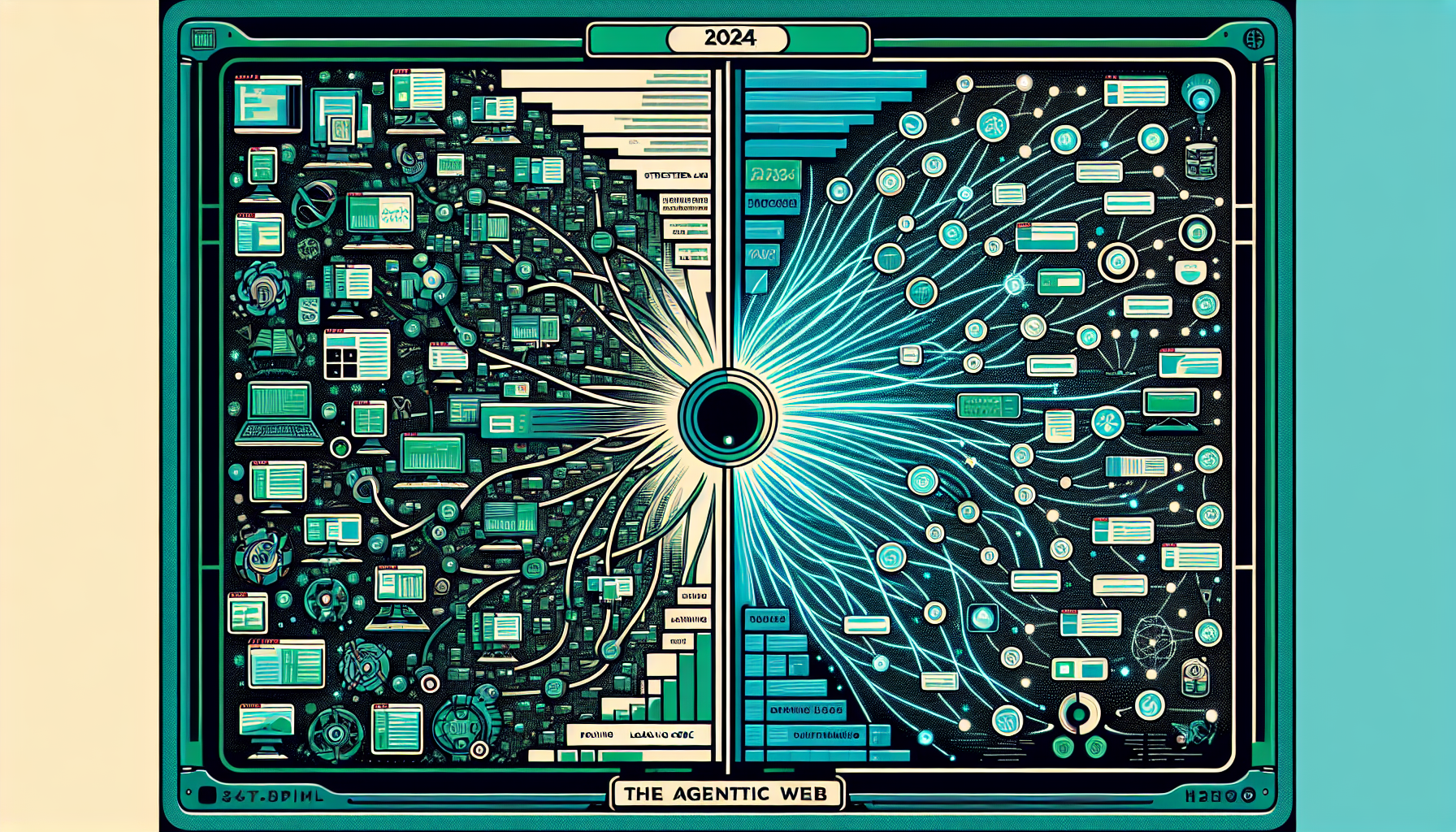
Google I/O 2026: 3 Quiet Updates That Just Made Every Other AI Platform Obsolete
In this article
> **Bottom line:** While the media focused on consumer features at Google I/O 2026 last month, three buried API updates to Gemini 2.5 fundamentally broke the current AI stack.
By embedding native stateful memory, zero-latency edge-to-cloud tool calling, and direct sandbox execution into the core API, Google has eliminated the need for vector databases and orchestration frameworks.
If your engineering team is still building manual RAG pipelines this week, you are maintaining legacy infrastructure.
I deleted 14,000 lines of orchestration code from my production AI cluster yesterday morning.
After spending the last eight months meticulously tuning a complex vector database setup for ChatGPT 5, a single weekend testing Google’s new Gemini 2.5 API made me realize my entire architecture was already obsolete.

We are officially in the post-RAG era, and the transition is going to catch a lot of engineering teams completely off guard.
The connective tissue we have all been building to make LLMs useful in production just became entirely redundant overnight.
To understand why this is such a massive shift, you have to look past the shiny consumer demos and holograms that dominated the tech press last month.
**The real revolution isn't happening in the chat interface; it is happening silently at the infrastructure layer.**
The Setup: Why I Ignored Google (Until Now)
For the past two years, I was a massive Google Cloud skeptic when it came to generative AI.
My team lived exclusively in the Anthropic ecosystem—currently using Claude 4.6—for complex coding tasks and relied on OpenAI's ecosystem for our customer-facing agents.
**Google’s early Vertex AI endpoints were notoriously clunky**, and their documentation always felt like it was written for internal enterprise teams rather than actual startup developers.
Whenever someone brought up Google's AI offerings, I usually rolled my eyes and pointed them back to the Anthropic docs.
I was perfectly happy managing my own complex pipeline of chunking text, embedding vectors, and retrieving data.
I wore my massive architecture diagrams like a badge of honor, convinced that my custom Retrieval-Augmented Generation (RAG) setup was a competitive advantage.
In March, that arrogance finally caught up with me when a bad caching update took down our primary customer service agent for six hours.
I spent an entire weekend untangling a web of LangChain callbacks and stale vector embeddings just to get the system operational again.
It was a miserable experience that made me realize how brittle our cutting-edge AI stack actually was.
Then I actually sat down and read the release notes from last month's I/O conference. Instead of watching the flashy keynote demos, I dug into the API documentation for Gemini 2.5.
I quickly realized that **Google didn’t just release a smarter model; they essentially abstracted away the entire AI infrastructure layer.**
The 3 API Updates That Broke the Status Quo
1. Native Stateful Memory (The Vector DB Killer)
If you are building an AI app right now in June 2026, you are likely spending a massive chunk of your compute budget on context window stuffing.
Every time a user interacts with your agent, you are querying a vector database, retrieving the relevant chunks, and resending the exact same system prompt and history.
**Building upon the Context Caching API originally introduced in 2024, Gemini 2.5 expands it into a native Stateful Context API that completely eliminates this cycle.**
You now simply initiate a session with a persistent ID, upload your massive datasets—whether that's a 3-million token codebase or an entire CRM history—and Google caches it natively on their end.
Subsequent API calls to that session only require the new user prompt, cutting latency by 80% and dropping token costs to near zero.
**I spent $4,000 on vector database hosting last quarter, and this single update just reduced that line item to absolute zero.**
The implications for developers are staggering when you stop to think about it. You no longer have to worry about the semantic similarity of your chunks or the retrieval parameters of your database.
The model simply has access to all of the data at all times, drastically reducing the hallucination rates caused by bad search queries.
2. Edge-to-Cloud Asynchronous Routing
Latency has always been the silent killer of autonomous agents.
Even with ChatGPT 5, asking a model to decide if it needs to use an external tool, execute it, and return a result takes anywhere from 1.5 to 3 seconds.
For real-time applications or voice interfaces, that delay makes the software feel fundamentally broken and robotic.
Google quietly solved this by tightly coupling Gemini Nano (their local, edge-device model) with Gemini 2.5 Pro in the cloud.
**The API now supports intelligent dual-routing, where simple tool-calling decisions are handled locally in 45 milliseconds.** If a user asks for today's date or a simple calendar check, the edge model handles it instantly without ever hitting the network.
If a task requires heavy lifting, the edge model silently hands it off to the cloud without interrupting the execution flow.
This hybrid approach makes agents feel completely instantaneous, bridging the gap between raw cloud intelligence and local execution speed.
It is the first time I have interacted with an AI agent that didn't feel like it was taking a deep breath before every response.
3. Ephemeral Execution Sandboxes
Generating code with an LLM has been a solved problem since last year, but safely executing and verifying that code in production has remained a massive headache.
We usually have to build complex CI/CD loops and dedicated virtual machines just to test the scripts our AI agents write.
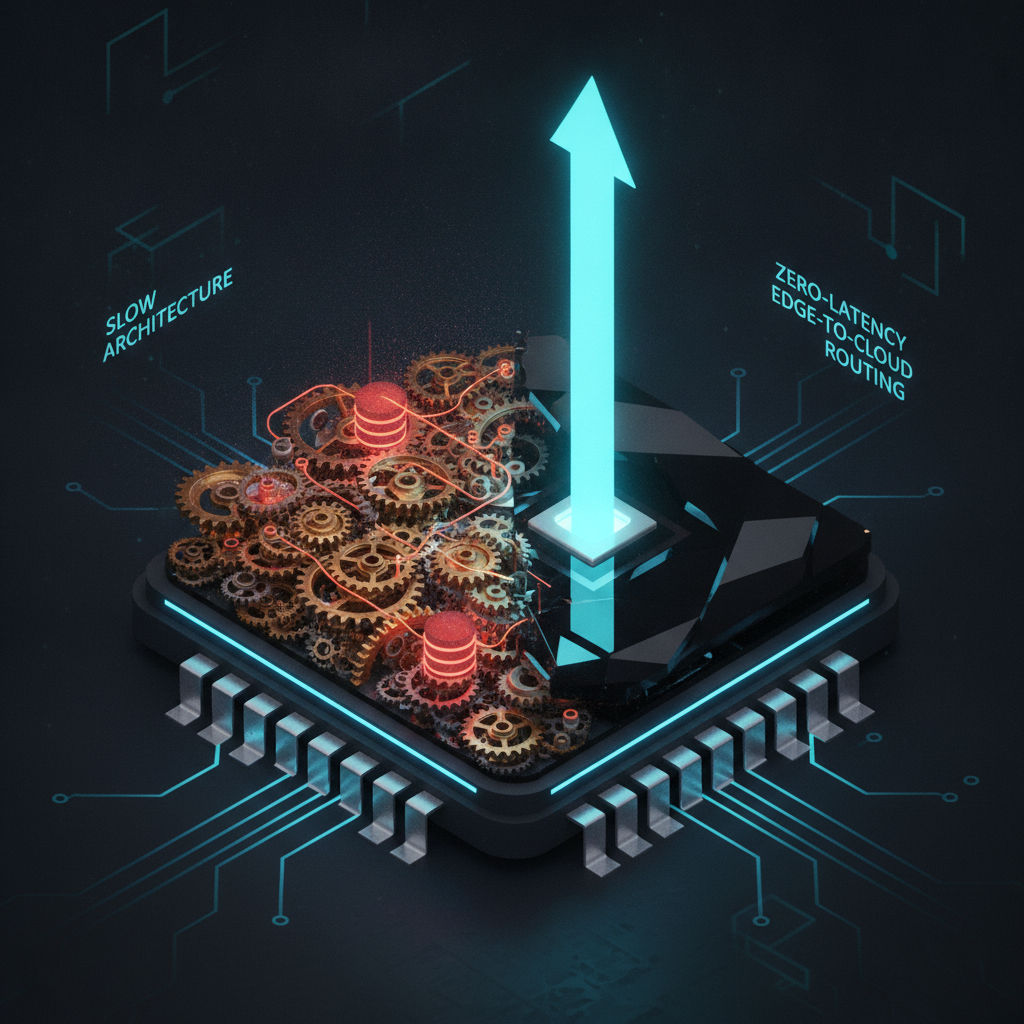
**Google just integrated native Ephemeral Sandboxing directly into the Gemini API.**
When you prompt the model to build a feature or analyze a CSV file, it doesn't just return a text block of Python anymore.
It automatically spins up a secure, containerized GCP environment, executes its own code, catches its own runtime errors, and iterates until the script succeeds.
You aren't paying for raw output tokens anymore; **you are paying for verified, executed results.**
This fundamentally changes what it means to build an AI agent. You are no longer writing orchestrators that blindly execute AI-generated scripts in your own vulnerable environments.
The model takes responsibility for its own execution, returning only the final, processed output back to your application.
The Reality Check: Where Google Still Fumbles
I need to be explicitly clear that Google has not suddenly created a flawless developer utopia.
**The identity and access management (IAM) permissions required to configure these new features are still an absolute nightmare.** I spent six hours fighting with service account roles just to give a Gemini instance permission to read a simple storage bucket.
Furthermore, the pricing model for persistent state is incredibly opaque right now.
While you save massive amounts of money on redundant input tokens, Google charges an hourly "state retention" fee that is buried deep in their billing dashboard.
If you aren't actively monitoring your orphaned sessions, you can rack up a massive bill over a single weekend before you even realize what happened.
The documentation for these new features also leaves a lot to be desired.
Many of the API endpoints launched at I/O still point to dead links, and you have to rely on community forums to figure out the undocumented error codes.
We aren't at artificial general intelligence yet; we are simply entering a messy transition phase where the tedious infrastructure work is finally shifting to the cloud providers.
The Practical Takeaway for Infrastructure Teams
If your engineering roadmap for the rest of 2026 includes optimizing your RAG pipeline or evaluating new vector databases, you need to throw it in the trash.
**Stop building connective tissue that cloud providers are actively turning into basic API features.** Your value as an engineer is no longer tied to how well you can glue LangChain to Pinecone or write complex prompt-routing logic.
By the end of 2027—about 18 months from now—maintaining a custom context-retrieval system will look as ridiculous as managing your own physical servers does today.
You need to transition your architecture to rely on native model memory immediately.
Reallocate those freed-up engineering cycles to focusing on the actual proprietary data quality you are feeding the system, because that is the only moat left.
The teams that survive this infrastructure shift will be the ones who aggressively delete their own obsolete code.
The teams that fail will be the ones who stubbornly defend their complex architectures long after they have stopped being useful.
Over to You
Have you started ripping out your complex AI pipelines yet, or are you still holding onto your custom orchestration code out of sunk-cost fallacy? Let's talk about it in the comments.
***