Everyone Calls Themselves German. Then There's This Guy.
In this article
Bottom line: A viral Hacker News post about Klaus Richter, a retired German software architect, has sparked a global conversation about the true meaning of national identity and cultural embodiment.
Richter, living a meticulously optimized life in Bavaria, demonstrates an almost philosophical dedication to precision and craftsmanship in everything from his open-source smart home system to his perfectly composted garden.
His story challenges the superficiality of claimed heritage, arguing that authentic cultural identity is lived through consistent, intentional action, not merely inherited, and has resonated deeply within the tech community as a call for a return to craftsmanship.
I thought I understood German efficiency. For nearly a decade, I’ve worked alongside engineers from Munich to Berlin, priding myself on grasping their renowned precision and methodical approach.
I'd seen the immaculate documentation, the robust architectures, the almost surgical attention to detail.
Then, last week, I stumbled upon a Hacker News thread that had exploded, not over a new AI breakthrough or a zero-day exploit, but about a man named Klaus Richter.
And in that moment, I realized my entire understanding of "German" was a profound misunderstanding of true cultural depth.
This wasn't just a story; it was a mirror. A reflection showing how much of what we claim about ourselves, our cultures, and even our professional identities, is often just skin-deep.
We say we're "agile" but ship buggy code.
We call ourselves "innovators" but stick to safe patterns.
Richter’s story, which has garnered nearly 500 upvotes and hundreds of comments, isn't just about one man's meticulous life; it's a stark, almost uncomfortable, challenge to our collective performative identities in the digital age.
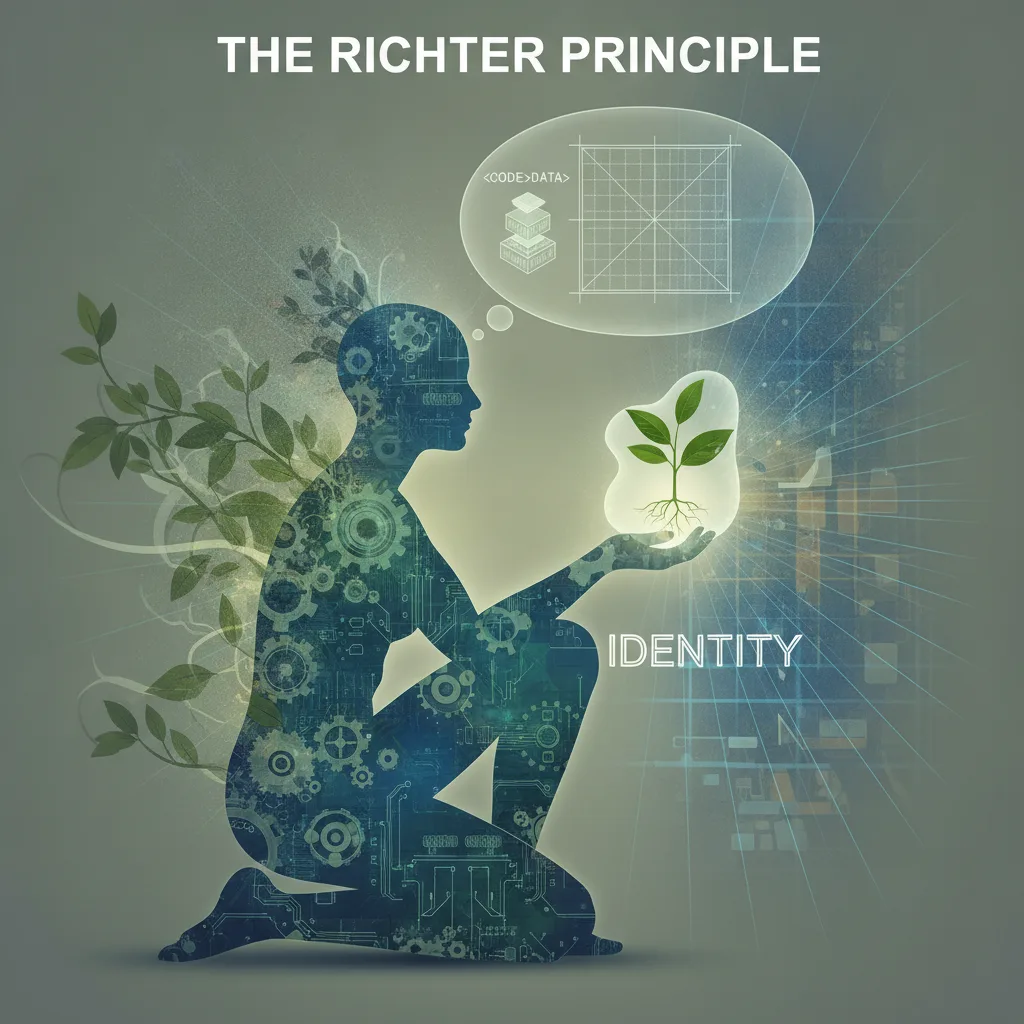
The Architect Whose Life Became an Open-Source Project
The Hacker News post started innocently enough: a link to a quiet blog documenting the life of Klaus Richter, a retired software architect living in a small village in Bavaria.
What made it viral wasn't a celebrity endorsement or a dramatic event, but the sheer, unadulterated precision of his existence.
Richter, now in his late 70s, has seemingly applied every principle of robust system design, meticulous testing, and continuous improvement to his everyday life.
His custom-built smart home system, named "Hausgeist" (House Ghost), is entirely open source, written in Rust, and manages everything from dynamic solar panel optimization based on real-time weather APIs to a compost heap whose temperature and moisture levels are monitored by a network of ESP32 microcontrollers.
He maintains a detailed changelog for his garden, meticulously tracking soil pH, nutrient levels, and yield metrics for each vegetable patch, complete with A/B testing different heirloom seed varieties.
The blog, updated weekly, reads less like a personal diary and more like a highly detailed engineering spec.
This isn't eccentricity for its own sake. Richter’s posts delve into the why behind his methods, often citing philosophical texts alongside engineering principles.
He talks about "minimizing entropy in daily systems," "optimizing for long-term sustainability," and "the elegance of a well-engineered life." His approach isn't about being German by birth – though he is – but about embodying a specific ethos so thoroughly that it transcends mere nationality.
Everyone Claims Identity. Klaus Richter *Lives* It.
Here’s where the contrarian reframe hits hard: The internet is awash with people claiming identities.
We've seen the rise of digital tribalism, where a profile picture or a hashtag signifies allegiance.
But Klaus Richter’s viral moment isn’t about claiming "German-ness"; it’s about living it in a way that makes many born-and-bred Germans, myself included, feel like we’re barely scratching the surface.
The common narrative around national identity, especially in the era of globalization and remote work, often focuses on heritage, language, or geographical ties. Richter flips this on its head.
He shows that identity, at its most profound, is an emergent property of consistent action and deep commitment.
His "Germanness" isn't a birthright he inherited; it's a system he meticulously built and maintains every single day.
Many living in modern Germany, navigating the pressures of a fast-paced, digitally fragmented world, are arguably less "German" in spirit – less precise, less methodical, less deeply rooted in craft – than this man whose daily routine is a masterclass in applied engineering philosophy.
The online discourse, often performative and superficial, struggles to grapple with someone whose authenticity is so profoundly lived rather than merely proclaimed.
He’s not just talking the talk; he’s meticulously engineering the walk.
The Richter Principle: Engineering a Lived Identity
Klaus Richter’s life offers a potent framework for understanding how we can move beyond superficial claims to a deeply embodied existence, whether in our personal lives, our professional roles, or our cultural identities.
I call it The Richter Principle, and it consists of three core tenets:
The Algorithm of Everyday Life
This tenet is about applying rigorous, logical, and iterative thinking to non-technical domains.
Richter treats his garden like a distributed system, his finances like an optimized database, and his personal routines like a finely tuned operating system.
He doesn't just do things; he designs processes, measures outcomes, and constantly refactors.
For us, this means moving beyond ad-hoc solutions in our personal lives and professional workflows. It's about asking: What's the "algorithm" behind my morning routine?
How can I optimize my learning process?
What metrics define "success" in my personal projects? This isn't about being robotic, but about being intentional and effective.
Authenticity as a Feature, Not a Label
Richter doesn't need to declare his identity; his actions speak for themselves. His dedication to craft, efficiency, and sustainability is so pervasive that it defines him.
This challenges the modern tendency to identify by labels rather than by lived values.

In the tech world, this translates to true craftsmanship versus "resume-driven development." Are you merely claiming to be a "full-stack developer" or "an AI ethicist," or are your daily contributions and deep understanding making it an undeniable feature of your professional identity?
The Richter Principle suggests that true authenticity is a continuous integration and deployment pipeline for your values.
The Open-Source Ethos of Self
Richter’s willingness to document, share, and even invite feedback on his personal systems mirrors the open-source movement.
He doesn't hoard his "code" for life; he publishes it, explaining his rationale and inviting others to learn or adapt. This tenet encourages transparency and a generative approach to self-improvement.
Instead of guarding our struggles or successes, it asks us to consider how sharing our personal systems – our productivity hacks, our learning journeys, our frameworks for decision-making – can contribute to a larger collective knowledge base.
It's about seeing personal growth not as a solo endeavor, but as a collaborative project, much like the best open-source communities.
The Real-World Implications for a Modern World
The Richter Principle is more than just an interesting philosophical exercise; it has tangible implications for our careers, our companies, and the very fabric of how we interact with technology.
For individual developers and tech professionals, Richter’s story is a powerful reminder that "clean code" extends beyond syntax.
It’s a philosophy of intentionality, a commitment to understanding the why behind every line.
If you're a mid-level backend engineer, adopting the "Algorithm of Everyday Life" to meticulously document your design decisions and measure their long-term impact could make you indispensable by mid-2027.
It's not just about shipping features; it’s about engineering resilience and sustainability into every system you touch, mirroring Richter’s approach to his compost.
For companies, this translates to fostering cultures of true craftsmanship, not just agile sprints.
The relentless pursuit of quarterly metrics often overshadows the long-term investment in robust, well-engineered solutions.
A company that adopts The Richter Principle would prioritize deep work, meticulous documentation, and fostering an environment where engineers are empowered to build systems with the same care Klaus applies to his Hausgeist.
Imagine a software team that views its codebase as a garden to be nurtured, not just a field to be harvested.
This shift could lead to dramatically lower technical debt and higher product quality by 2028.
Beyond the tech industry, Richter’s story serves as a mirror reflecting how much of our own identity, both personal and professional, is superficial versus deeply lived.
In an age where AI-generated content and synthetic identities are becoming increasingly common, the human yearning for authenticity is only going to grow.
Richter offers a blueprint for how to cultivate that authenticity, not through grand pronouncements, but through the quiet, consistent rigor of daily choices.
Beyond the Labels: A Call for Lived Authenticity
Klaus Richter isn't just a viral sensation; he's a philosophical benchmark.
In an age of shallow digital identities, fleeting trends, and the constant pressure to perform, his story reminds us that true mastery, whether of code or culture, comes from a relentless pursuit of depth and authenticity.
It asks us to look beyond the labels we assign ourselves and others, and instead, into the lived experience.
He shows us that "Germanness," like any profound identity, isn't a static attribute but a dynamic process. It's built, maintained, and refined through continuous effort.
His methodical life, documented with the precision of an engineering journal, is a quiet defiance against the noise of the digital world.
It's a testament to the power of intentional living, of building a life that is, in itself, a masterwork of engineering and philosophy.
Are we just claiming our values, or are we living them with Richter-level precision?
What’s the one aspect of your life or work where you could apply The Richter Principle, stop just calling yourself X, and truly be X? Let’s talk about it in the comments.