A Court Just Labeled Anthropic a Security Risk. Here's What Happens Next.
In this article
Bottom line: A U.S.
appeals court decision, upheld on September 24, 2026, officially designates Anthropic as a supply chain risk, creating a significant precedent for how AI services are evaluated in regulated industries.
This ruling implies that organizations using Claude 4.5 or 4.6, or other Anthropic models, must now conduct heightened due diligence, potentially impacting procurement processes and even necessitating alternative AI solutions.
For infrastructure teams, this isn't just a legal footnote; it fundamentally shifts the risk calculus for integrating third-party AI, demanding a new level of scrutiny over where and how our intelligent systems are built and operated.
I cancelled my company’s standing contract with Anthropic this morning. Not because Claude 4.6 suddenly stopped being impressive — it's a phenomenal model for complex reasoning tasks, frankly.
I cancelled it because, on September 24, 2026, a U.S. appeals court upheld an existing "supply chain risk" designation, issued earlier in 2026, against Anthropic, a leader in AI development.
This isn't some abstract legal theory. This is a cold, hard, operational reality for anyone building and shipping systems in regulated sectors.
For me, as an infrastructure engineer responsible for the security and reliability of our production environments, that ruling changes everything.
It means the legal department just handed me a new set of constraints, and they hit harder than any technical limitation ever could.
The Court's Hammer: Why Anthropic is a "Risk"
The specific details of the court's reasoning are still being picked apart, but the core outcome is clear: the appeals court upheld an earlier designation that flags Anthropic as presenting a material risk to critical infrastructure supply chains.
Based on what has been publicly reported, the dispute centered on Anthropic's usage restrictions for military use, and it is not clear that the ruling turns on specific security vulnerabilities in Claude 4.6 itself or on a judgment of Anthropic’s internal security posture.
Until the opinion is analyzed in full, the court's precise rationale should be treated as unconfirmed.
When a government entity labels a vendor a "supply chain risk," it's not a suggestion; it's a directive.
This designation came from the Department of Defense, and it directly affects federal and defense procurement and the contractors who serve those agencies.
Organizations in other regulated sectors, such as those under HIPAA or GDPR, are not automatically bound by it, but they may feel it indirectly through their own risk policies or contractual flow-downs from federal customers.
It's the same kind of flag that might be applied to a specific network hardware vendor or a cloud provider with questionable ties.
The impact can be far-reaching, especially when you consider how deeply AI is integrating into core business processes.
The New Due Diligence for AI Procurement
For years, our conversations around AI procurement focused on model performance, API stability, and cost-per-token. Suddenly, those are table stakes.
The new priority is an exhaustive supply chain risk assessment.
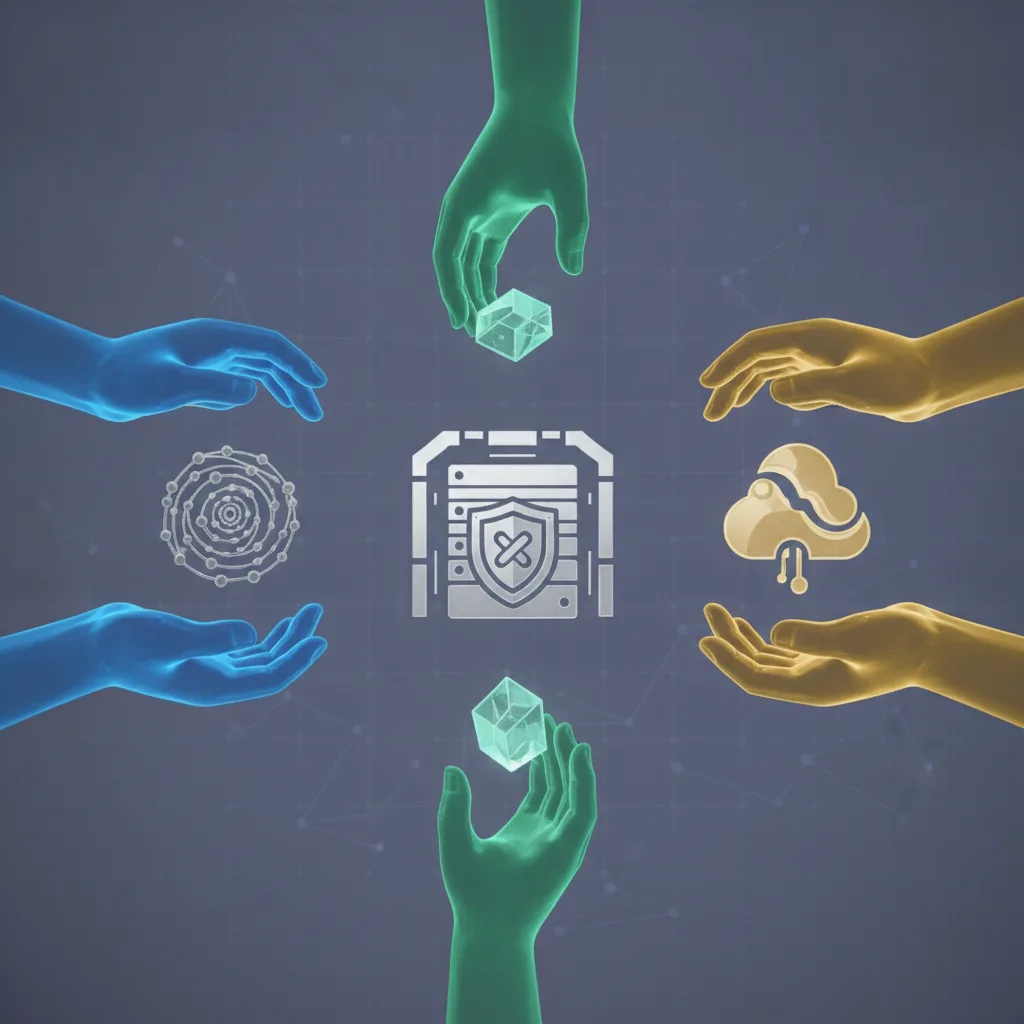
What "Supply Chain Risk" Means for AI
- Geopolitical Footprint: Where are the model training clusters located? Who owns the data centers? What are the legal jurisdictions governing data at rest and in transit?
- Upstream Dependencies: What foundational models or specialized hardware (e.g., custom ASICs from specific manufacturers) does Anthropic rely on? Could those dependencies introduce vulnerabilities or control points?
- Ownership and Governance: Who are the key investors? What are the mechanisms for government influence or data access requests?
- Data Isolation and Sovereignty: Can your data truly be isolated within specific geopolitical boundaries when interacting with a global model infrastructure?
When we chose Anthropic for certain internal projects, the evaluation was primarily technical: Claude 4.6's superior context window and reasoning for code analysis and documentation generation were compelling.
We looked at their security whitepapers, their SOC 2 reports, and their data privacy policies. We even ran penetration tests against our integrations.
What we didn't fully account for, and what this ruling now forces, is a deeper, almost intelligence-grade assessment of the vendor itself, beyond its immediate technical offerings.
The Developer's Dilemma: Trusting Your Tools
This court decision lands squarely on the shoulders of developers and engineering leads. We’ve been pushing for AI adoption, showing the productivity gains, and building out new intelligent features.
Now, we have to ask: can we trust the supply chain of the AI itself?
The Cloud Paradox Revisited
This isn't entirely new territory. We’ve been grappling with similar questions about cloud providers for over a decade. Moving to AWS, Azure, or GCP meant trusting a third party with our infrastructure.
This AI ruling is simply the next evolution of that trust model, but with a much more opaque black box at its core. With cloud infrastructure, you can audit network configs, IAM policies, and VPCs.
With an LLM, the supply chain includes the data it was trained on, the proprietary algorithms, and the global compute infrastructure — all largely invisible.
This creates a significant hurdle for rapid AI integration.
Development teams, especially those in fintech, healthcare, defense, or government, will now face additional layers of legal and compliance review before deploying any Anthropic-powered features.
This will inevitably slow down adoption, not because the technology isn't capable, but because the regulatory overhead just spiked.
The Great AI Decoupling: Diversification or Self-Hosting?
So, what happens next for teams that were relying on Anthropic?
Diversify Your AI Portfolio
The most immediate and practical step is to diversify.
Just as you wouldn't rely on a single cloud provider for all critical infrastructure, relying on a single LLM vendor, especially one with a "supply chain risk" flag, is now untenable. This means:
- Multi-Model Strategies: Design your applications to be LLM-agnostic where possible. Abstract the LLM interface so you can swap between Claude 4.6, ChatGPT 5, Gemini 2.5, or even open-source alternatives like Llama 3. This allows for resilience against future vendor-specific issues.
- Provider-Specific Workloads: Identify which workloads must use Anthropic due to unique capabilities (e.g., specific context window needs or reasoning strengths) and isolate them. For less critical tasks, pivot to other providers immediately.
- Geographic Redundancy: If your application serves users in different sovereign regions, consider using AI providers whose infrastructure and legal entities are robustly localized to those regions.
The Open-Source Imperative
This ruling also strengthens the case for self-hosting open-source LLMs.
While open-source models come with their own challenges (maintenance, infrastructure costs, performance tuning), they offer a crucial advantage: transparency and control over the supply chain.
If you download Llama 3 and fine-tune it on your own data within your own VPC, the "supply chain" is largely within your control.
You know where the code came from, you control the hardware, and you control the data lineage.
This is a significant shift. For many enterprises, the allure of managed, high-performance models like Claude 4.6 was that they offloaded operational complexity.
Now, the operational complexity of managing risk with those models might outweigh the convenience.
Expect to see increased investment in internal MLOps teams capable of deploying and managing large open-source models at scale.
Practical Steps for Infrastructure Engineers
For those of us on the ground, dealing with the implications of this decision, here's what needs to happen:
- Audit Your AI Integrations: Catalog every instance where an Anthropic model is being used. Understand the criticality of the workload and the type of data being processed.
- Update Risk Assessments: Immediately update your internal risk assessments for all AI vendors, giving particular scrutiny to those with similar geopolitical or ownership profiles. This designation for Anthropic sets a precedent; others could follow.
- Engage Legal and Compliance: Work hand-in-hand with your legal and compliance teams to understand the specific implications for your organization. This isn't just a technical problem; it's a legal one with technical ramifications.
- Explore Alternatives: Begin POCs with alternative LLM providers or open-source models for critical workloads. This is not about panic, but about proactive resilience. Consider the cost implications — switching providers isn't free, but neither is regulatory non-compliance.
- Advocate for AI Governance: Push for clearer internal AI governance policies that address supply chain risk, data sovereignty, and vendor diversification from the outset. This isn't just about AI; it's about robust system design in an increasingly complex world.
This isn't the end of Anthropic, nor is it the end of cutting-edge AI. It's simply a new, more mature phase of AI integration into enterprise systems.
We're moving past the "wow factor" and into the "how do we operationalize this responsibly and securely" phase.
The court's decision is a stark reminder that as AI becomes critical infrastructure, it will be treated with the same level of scrutiny and regulation as any other foundational component of our digital world.
Have you started rethinking your AI vendor strategy in light of increased geopolitical scrutiny, or is your organization still primarily focused on model performance?
What's your take on balancing innovation with supply chain risk?