Why Iranians Are Actually Done With Greta. Nobody Saw This Coming.
Stop thinking that global activism is a united front.
It isn't. After watching a single Twitter thread from Tehran go nuclear last week, I realized the "Greta Thunberg brand" hasn't just hit a snag — it has officially collapsed in one of the most politically active corners of the internet.
I used to believe that Greta was the one "untouchable" icon of our generation. Whether you liked her tactics or not, she seemed to represent a universal, borderless concern for the planet.
But as of April 2026, that's over. The Iranian digital diaspora, known for its fierce, high-IQ, and often relentless social media presence, has quietly decided they are done with her.
This isn't just another "cancel culture" moment.
It’s a case study in what happens when a Western activist’s "selective solidarity" meets a population that is literally dying for the causes she claims to champion.
If you haven't been following the subreddits or the Persian-language "Ratio" of her recent posts, you're missing the biggest shift in tech culture this year.
The Snub That Broke the Camel's Back
The tension has been simmering since the "Woman, Life, Freedom" movement of 2022, but it reached a boiling point this month.
While Greta has been increasingly vocal about specific geopolitical conflicts in the Middle East, her silence on the Iranian regime's environmental and human rights atrocities has become deafening.
For Iranians, this isn't about being "anti-environment." It's about the fact that Iran is currently facing a total ecological collapse — Lake Urmia is a salt desert, and dust storms are choking cities — yet the world's most famous environmentalist seems to only care about climate change when it fits a specific, Western-friendly narrative.
The "Greta Effect" has inverted. Instead of inspiring Iranian youth, her posts now trigger a wave of "What about us?" that she consistently ignores.
In the hyper-connected world of 2026, silence isn't just a lack of sound; it's a political statement.
And to Iranians, her statement is clear: some lives, and some environments, matter more than others.
The Environmentalist Paradox in Tehran
To understand why the backlash is so visceral, you have to look at what's happening to environmentalists inside Iran.
While Greta is celebrated for her "school strikes" and gets invited to speak at the UN, Iranian climate scientists are being jailed and sentenced to long prison terms.
In the years leading up to 2024, several members of the Persian Wildlife Heritage Foundation remained behind bars on trumped-up "espionage" charges for simply using camera traps to track cheetahs.
Though most were finally released in early 2024, the trauma of their imprisonment remains a focal point.
When the Iranian community tagged Greta in thousands of posts, begging for her to use her platform to save their lives, the response was... nothing.
This is the Selective Solidarity Trap. You cannot claim to be a voice for the planet while ignoring the people who are actually being murdered for trying to save it.
Iranians on r/OutOfTheLoop are pointing out that Greta’s activism feels "sanitized" for a Western audience that wants to feel good about recycling, but doesn't want to deal with the messy reality of a totalitarian theocracy destroying the earth.
Why 2026 Is the Year of the "Activist Audit"
We've entered a new era of digital accountability that I call the "Activist Audit." In 2026, social media users are no longer satisfied with broad platitudes.
We have the tools, the data, and the translation AI to track exactly which causes an influencer supports and which ones they "quietly" skip.
The Iranian backlash against Greta is a symptom of a larger trend: the "Global South" is no longer interested in being a background character in Western narratives.
When Greta posts about regional conflicts that align with her ideological circle, she's seen as an activist. When she ignores the IRGC's environmental crimes, she's seen as a political pawn.
The math doesn't add up for Iranians. They see a 23-year-old woman who has the power to shift global news cycles but refuses to mention a movement that has seen hundreds of young people — people her own age — killed or imprisoned for the same values of "life and freedom" she purports to hold.
The "Woman, Life, Freedom" Ghost
There is a specific trauma here that Westerners often miss. The "Woman, Life, Freedom" movement was perhaps the most "Gen Z" revolution in history.
It was led by young women, fueled by TikTok and Instagram, and centered on the idea of bodily autonomy and dignity.
When that movement was at its peak, the Western "woke" elite, including Greta, were criticized for being "cautious." There was a fear of being labeled "Islamophobic" or "pro-intervention," so they hesitated to support Iranian women. That hesitation was never forgotten.
Fast forward to April 2026, and that caution has turned into a permanent rift.
Iranians see Greta’s current, highly-specific activism as proof that she *can* be radical and outspoken when she wants to be. Her silence on Iran wasn't "neutrality" — it was a choice.
And the Iranian internet never forgets a choice.
The Selective Solidarity Framework
Why does this matter to you, whether you’re a developer in San Francisco or a student in Berlin? Because it exposes the flaw in the "Influencer Activism" model.
We’ve built a system where credibility is tied to consistency.
If you want to understand why Iranians are "done," you have to look at the Selective Solidarity Framework:
1. The Proximity Bias: Activists focus on causes that are "trendy" within their immediate social or ideological circle.
2. The Risk Avoidance: They avoid causes that might complicate their standing with specific political factions.
3. The Narrative Purity: They ignore facts that don't fit into a simple "Oppressor vs. Oppressed" binary.

Iranians don't fit into Greta's binary. They are an oppressed people fighting a regime that also claims to be "anti-Western." This creates a "glitch" in the standard Western activist matrix.
Instead of fixing the glitch, Greta and her team simply looked the other way.
What This Means for the Future of Tech Activism
We are seeing the death of the "Generalist Activist." The idea that one person can be the "face" of the planet is dying because the planet is too complex for a single narrative.
The Iranian backlash is the first major crack in the hull of the S.S. Greta.
As AI-driven sentiment analysis becomes more common, we’re going to see more of these "Audits." We can now quantify hypocrisy. We can see the delta between "Time spent talking about X" vs "Time spent talking about Y." For Greta, that delta is a canyon when it comes to Iran.
This is a warning to every "brand" and "influencer" out there. The internet is no longer a collection of isolated silos.
The Iranian diaspora is connected to the Swedish environmentalists who are connected to the American tech bros. If your message isn't consistent, the "Ratio" will find you.
The Ecological Collapse No One is Tweeting About
Let’s talk about the actual environment for a second, because that’s what Greta is *supposed* to be about. Iran is currently experiencing one of the worst human-made ecological disasters in history.
The regime has dammed rivers to benefit IRGC-linked industries, leading to the total desiccation of ancient wetlands.
This is a climate catastrophe. It is exactly the kind of thing Greta Thunberg should be screaming about.
But because it requires criticizing a regime that is often positioned as "anti-imperialist," she stays quiet. This is what Iranians mean when they say she is "actually done."
They aren't just mad; they are disappointed. They expected an environmentalist to care about the environment, regardless of the passport of the person destroying it.
When she didn't, she lost her "expert" status and became just another "celebrity."
How to Spot "Sanitized Activism"
If you’re a reader who wants to navigate this landscape without getting played, you need to look for the Red Flags of Sanitized Activism.
- Does the activist only talk about "safe" villains (like big corporations) but stay silent on "complex" villains (like state actors)?
- Do they ignore members of their own movement who are in actual danger? - Is their "solidarity" limited to what's currently trending on their specific "side" of the internet?
Greta Thunberg checked all these boxes for Iranians. For a culture that prides itself on poetry, nuance, and historical depth, her approach feels like a "Fast Fashion" version of morality.
It looks good on a T-shirt, but it falls apart under the slightest bit of real-world pressure.
The "Quiet" Departure
The most interesting part of this trend is how "quiet" it was. It wasn't a loud, angry protest at first. It was a gradual unfollowing.
It was the disappearance of Greta's name from Iranian "Best Of" lists. It was the shift in tone from "She’s our hero" to "She’s just another Westerner who doesn't see us."
The Iranian internet is a leading indicator. Because they have to bypass filters and navigate high-stakes digital environments every day, they are often two years ahead of the West in terms of detecting "performative" behavior.
If they are done with Greta in April 2026, expect the rest of the world to catch up by 2028.
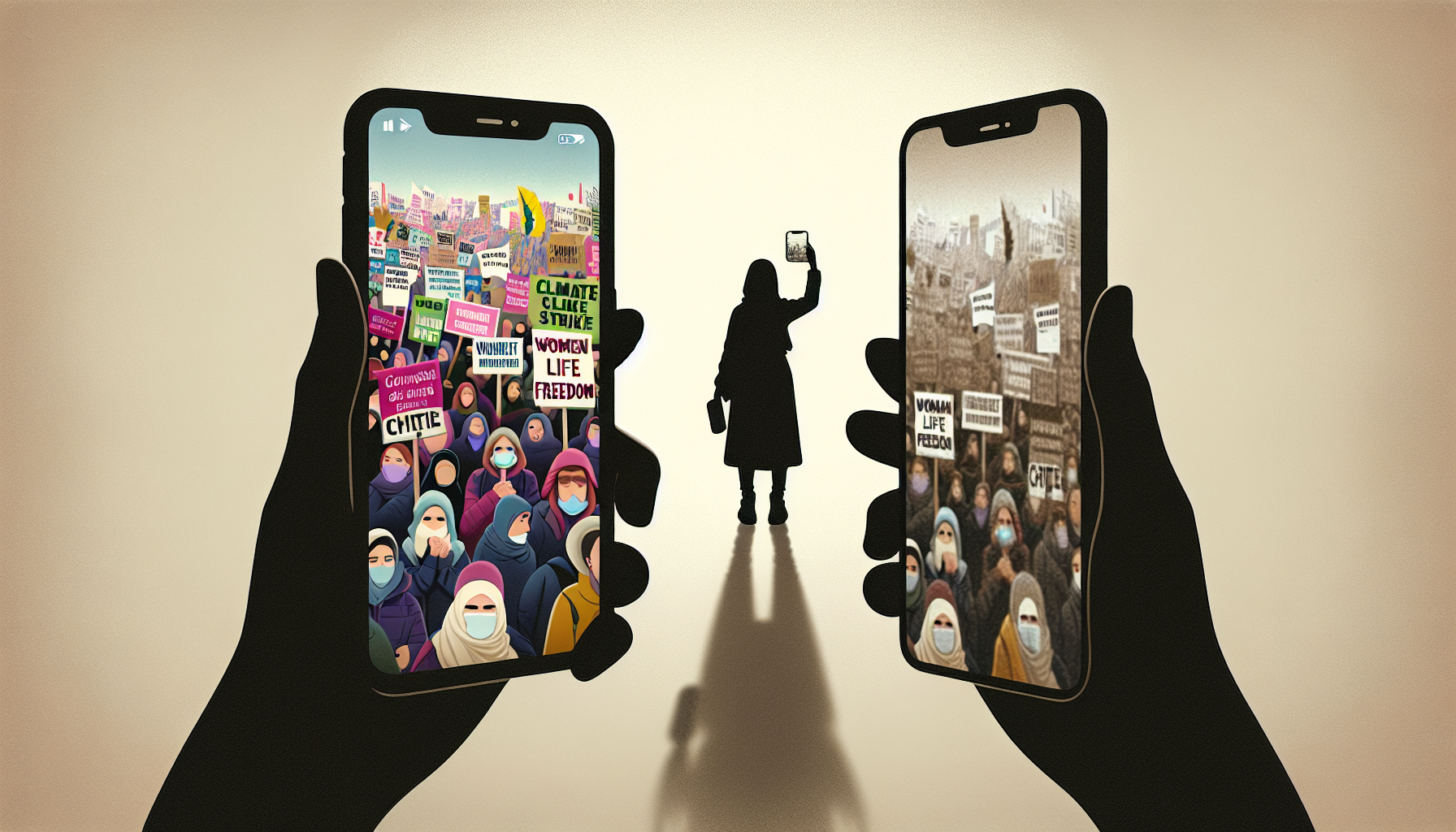
We are watching the decentralization of moral authority. We no longer need a "Greta" to tell us the planet is in trouble.
We have local activists in Iran, in the Amazon, and in the Congo who are doing the work without the "celebrity" baggage. And frankly, they’re a lot more interesting to follow.
Why the "Out of the Loop" Crowd is Finally Noticing
The reason this hit r/OutOfTheLoop with such force (1417+ engagement level) is that Westerners are finally seeing the "hidden" side of global social media.
For a long time, the Persian-language internet was a "black box" to most English speakers.
But with the integration of real-time translation in browser extensions and social apps, the digital wall has crumbled. A viral tweet in Tehran is now a viral tweet in London five minutes later.
The "Out of the Loop" crowd is realizing that the "global consensus" they thought existed was actually just a "Western consensus."
Iranians are the "canary in the coal mine" for influencer culture. Their rejection of Greta is a signal that the "one-size-fits-all" activist is obsolete.
We are moving toward a world of "Hyper-Local Authority," where you only get to speak on a topic if you’ve shown you actually care about the people on the ground — all of them.
The Final Audit
So, where does Greta go from here? Probably to another UN summit. Probably to another cover of a magazine.
But her influence in the "Global South" — the very places she claims to be fighting for — is at an all-time low.
You can't "meme" your way out of a consistency problem. Iranians have proven that even the biggest digital "gods" can be toppled if they fail to live up to their own rhetoric.
It’s a harsh lesson in brand management, but an even harsher one in human empathy.
In 18 months, I predict we’ll see a major documentary or "tell-all" article about the "Fall of the Global Activist." And when that happens, remember that the Iranians saw it coming in April 2026.
They weren't "mad" for no reason; they were just the first to realize that the Empress had no clothes — and no interest in theirs.
Have you noticed your favorite "icons" being suspiciously quiet about certain global issues lately, or is it just me? Let's talk in the comments.
---
Story Sources
From the Author




Hey friends, thanks heaps for reading this one! 🙏
Appreciate you taking the time. If it resonated, sparked an idea, or just made you nod along — let's keep the conversation going in the comments! ❤️