Vibe Coder productivity goals. - A Developer's Story
Why "Vibe-Driven Development" Is the Productivity Framework You Didn't Know You Needed
I spent three years tracking every minute of my coding time. Pomodoros, time blocks, sprint velocities — I had spreadsheets that would make a data analyst weep with joy.
My productivity tanked.
Then I discovered what developers on r/webdev are calling "vibe-driven development," and everything changed.
Not because it's another productivity system — but because it finally acknowledges what we've all known but been afraid to admit: your best code comes when you're in the right headspace, not when you're following the perfect schedule.
The Death of Traditional Developer Productivity
Let me paint you a familiar picture.
It's 9 AM. Your calendar says "Deep Work Block." Your Pomodoro timer is set.
Your IDE is open. You've got your coffee, your noise-canceling headphones, and absolutely zero motivation to tackle that gnarly refactoring task.
Sound familiar?
Traditional productivity metrics assume developers are machines. Input time, output code.
But we're not machines — we're creative problem solvers whose best work happens in unpredictable bursts.
The tech industry has been obsessed with quantifying developer productivity for decades.
We've tried everything: lines of code (laughable), story points (arbitrary), commit frequency (gameable), and time tracking (soul-crushing).
Meanwhile, actual developers know the truth. Sometimes you solve a week's worth of problems during a late-night coding session fueled by energy drinks and electronic music.
Other times, you stare at a simple bug for three hours on a Tuesday afternoon because your brain just won't cooperate.
The vibe-driven development movement emerging from communities like r/webdev isn't just another methodology.
It's a recognition that developer productivity isn't about time management — it's about energy management, context optimization, and working with your natural rhythms instead of against them.
Understanding Vibe-Driven Development
At its core, vibe-driven development (VDD) is beautifully simple: match your work to your mental state, not the other way around.
Instead of forcing yourself to write complex algorithms when you're mentally exhausted, you handle code reviews.
Instead of scheduling creative architecture discussions for drowsy afternoons, you move them to when your team naturally feels energized.
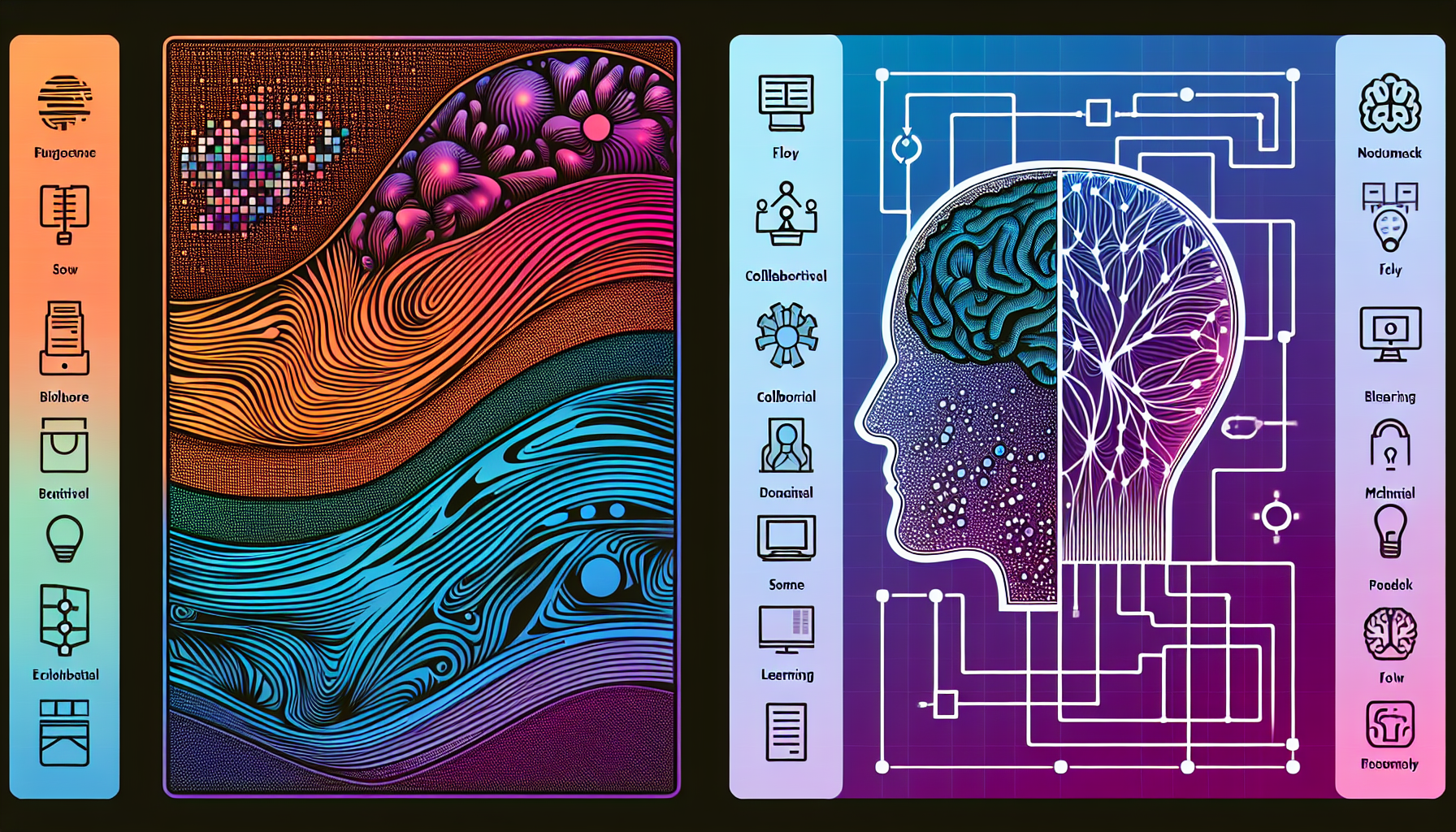
The framework breaks developer work into "vibe categories":
**Flow State Work**: Complex problem-solving, algorithm design, architecture decisions. Requires deep focus and creative thinking.
**Mechanical Work**: Refactoring, writing tests, updating documentation. Important but doesn't require peak mental performance.
**Collaborative Work**: Code reviews, pair programming, technical discussions. Needs social energy and communication skills.
**Learning Work**: Exploring new technologies, reading documentation, watching tutorials. Requires curiosity and openness.
**Administrative Work**: Updating tickets, responding to messages, planning sprints. Necessary but mentally light.
The magic happens when you stop trying to force yourself into the wrong vibe.
Traditional productivity says: "It's 10 AM, time for deep work." Vibe-driven development says: "I'm feeling mechanical today, let's crush that technical debt backlog."
This isn't laziness — it's optimization. By aligning your work with your natural energy, you accomplish more with less friction.
Why Developers Are Embracing the Vibe
The explosion of interest in VDD on r/webdev isn't accidental. It's solving real problems that plague modern development teams.
First, it acknowledges remote work reality.
When you're working from home, the artificial boundaries of office hours become even more meaningless. Some developers do their best work at midnight.
Others peak at dawn. VDD says: lean into it.
One developer shared how they restructured their entire workday around vibes: "Mornings are for code reviews when I'm fresh but not creative yet.
Afternoons for deep coding when my brain kicks into gear.
Evenings for learning when I'm relaxed but curious."
Second, it reduces burnout.
Forcing yourself to maintain peak performance for eight straight hours is a recipe for exhaustion. VDD builds in natural recovery periods.
When you're not feeling the flow state, you're not failing — you're just in a different vibe that's perfect for different work.
Third, it actually improves code quality.
When you write complex code in the right mental state, you make fewer mistakes. When you review code with fresh eyes instead of forcing it at the end of an exhausting day, you catch more bugs.
The data backs this up. Studies on circadian rhythms and cognitive performance show that forcing complex cognitive tasks during low-energy periods results in more errors and lower quality output.
The Science Behind the Vibe
This isn't just developer feelgood philosophy — there's hard neuroscience supporting the vibe-driven approach.
Our brains operate on ultradian rhythms — 90-120 minute cycles of high and low alertness. Fighting these rhythms is like swimming against the current.
You might make progress, but you're working harder than necessary.
Additionally, different types of coding activate different neural networks. Creative problem-solving lights up the default mode network — the same system active during daydreaming and shower thoughts.
Debugging uses the task-positive network — focused, analytical, methodical.
Trying to force creative solutions when your brain is in analytical mode is neurologically inefficient.
Research on knowledge workers shows that we have roughly 4-5 hours of peak cognitive performance per day. Not eight.
Not ten. Four to five.
VDD acknowledges this reality and optimizes for it.
Instead of pretending we can maintain peak performance all day, VDD says: "Use those peak hours for your hardest problems, and fill the rest with work that matches your reduced capacity."
Implementing Vibe-Driven Development
So how do you actually implement VDD in a world of standup meetings and sprint deadlines?
Start with vibe tracking.
For one week, note your energy and mental state every few hours. When do you feel creative?
When do you feel methodical? When do you want to collaborate?
When do you need isolation?
You'll quickly see patterns emerge.
Next, audit your task backlog through a vibe lens. Which tickets require deep focus?
Which could you handle while half-watching a conference talk? Which need collaboration?
Then, start small with vibe matching.
Don't revolutionize your entire workflow overnight. Pick one day a week where you consciously match tasks to vibes.
Notice the difference in both your output and how you feel at the end of the day.
The key is communication with your team.
VDD works best when everyone's on board. Share your peak hours with teammates.
Respect others' flow states. Schedule collaborative work when multiple people are in social mode.
One team reported remarkable results: "We moved our architecture discussions from 9 AM (when half the team was still waking up) to 2 PM (post-lunch energy).
The quality of our technical decisions noticeably improved."
What This Means for the Industry
The rise of vibe-driven development signals a broader shift in how we think about developer productivity.
We're moving from industrial-age time management to creative-age energy management. From measuring inputs to optimizing outcomes.
From fighting human nature to working with it.
This has massive implications for how companies structure work.
Imagine if instead of fixed working hours, teams organized around energy cycles. Morning people handle critical production issues.
Night owls tackle complex refactoring. Everyone contributes their best work when they're naturally primed for it.
Some companies are already experimenting. GitLab's async-first culture naturally enables vibe-driven work.
Spotify's autonomous squads can optimize their schedules around collective energy. Even traditional companies are recognizing that forcing developers into 9-5 boxes limits their potential.
The tooling is evolving too.
We're seeing the emergence of "context-aware" development environments that adapt to your current vibe. IDEs that suggest simpler tasks when they detect you're struggling.
Project management tools that match work to team members based on their current capacity, not just availability.
The Future of Developer Productivity
Vibe-driven development isn't the end goal — it's the beginning of a more human-centric approach to software development.
As we move forward, expect to see more frameworks that acknowledge developers as complete humans, not just code-producing resources.
Productivity metrics that factor in sustainability, not just velocity.
Work cultures that optimize for long-term creativity, not short-term output.
The most successful teams of the next decade won't be the ones who squeeze the most hours from their developers.
They'll be the ones who create environments where developers can consistently operate at their natural best.
This isn't about working less — it's about working smarter by working more naturally.
The vibe-driven development movement shows we're finally ready to admit what we've always known: the best code comes from developers who are energized, engaged, and working in alignment with their natural rhythms.
Your IDE doesn't care if you code at 3 AM or 3 PM. Neither should your productivity system.
The vibe revolution isn't coming — it's here. And honestly?
It's about time.
---
Story Sources
From the Author



Hey friends, thanks heaps for reading this one! 🙏
If it resonated, sparked an idea, or just made you nod along — I'd be genuinely stoked if you'd show some love. A clap on Medium or a like on Substack helps these pieces reach more people (and keeps this little writing habit going).
→ Pythonpom on Medium ← follow, clap, or just browse more!
→ Pominaus on Substack ← like, restack, or subscribe!
Zero pressure, but if you're in a generous mood and fancy buying me a virtual coffee to fuel the next late-night draft ☕, you can do that here: Buy Me a Coffee — your support (big or tiny) means the world.
Appreciate you taking the time. Let's keep chatting about tech, life hacks, and whatever comes next! ❤️