Updates for ChatGPT - A Developer's Story
Updates for ChatGPT
A Developer's Story

The ChatGPT Evolution: Why OpenAI's Latest Updates Signal a Fundamental Shift in AI Development Strategy
The Hook That Changes Everything
ChatGPT isn't just getting updates anymore—it's becoming something fundamentally different from what we launched two years ago. While most users celebrate new features and capabilities, there's a deeper transformation happening beneath the surface that reveals OpenAI's strategic pivot toward creating an AI operating system rather than just a chatbot. The recent wave of updates, from Canvas to real-time voice conversations, aren't random feature drops. They're chess moves in a larger game where the stakes are nothing less than defining how humans will interact with computers for the next decade.
Project visualization
What we're witnessing isn't iteration—it's metamorphosis. And if you're a developer, product manager, or anyone building in the AI space, these changes aren't just interesting; they're reshaping the entire landscape you're operating in.
From Chatbot to Platform: The Strategic Evolution
When ChatGPT burst onto the scene in November 2022, it was essentially a very sophisticated text completion engine wrapped in a chat interface. The model was impressive, sure, but the product was straightforward: type a message, get a response. Fast forward to today, and that simple interface has evolved into something far more ambitious—a multi-modal, multi-functional platform that's increasingly looking like the foundation for a new kind of computing paradigm.
The journey from GPT-3.5 to GPT-4, and now to GPT-4o (omni), tells a story of deliberate expansion. Initially, OpenAI focused on raw capability—making the model smarter, more accurate, less prone to hallucinations. But somewhere around mid-2023, the strategy shifted. The introduction of Code Interpreter (now Advanced Data Analysis), custom GPTs, and plugin support marked a turning point. OpenAI wasn't just making ChatGPT better at conversation; they were transforming it into a platform where third-party developers could build and where complex, multi-step workflows could live.
The recent Canvas feature exemplifies this shift perfectly. Instead of forcing users to iterate through conversation, Canvas provides a dedicated workspace for writing and coding—a tacit admission that chat isn't always the optimal interface for AI interaction. It's OpenAI saying, "We're not just a chatbot company anymore."
This transformation mirrors the evolution we've seen in other tech platforms. Think about how the iPhone started as a phone that could run apps and became a platform that occasionally makes calls. Or how Amazon Web Services began as infrastructure for an online bookstore and became the backbone of the internet. ChatGPT is following a similar trajectory, evolving from a single-purpose tool into an ecosystem.
The Technical Revolution Hidden in Plain Sight
Let's dig into what's actually changing under the hood, because the technical implications of recent updates are far more significant than most coverage suggests. The shift to GPT-4o isn't just about being "more capable"—it's about fundamental architectural changes that enable real-time, multi-modal processing.
The voice conversation feature that dropped recently isn't just text-to-speech bolted onto a language model. It's native audio processing, where the model understands tone, emotion, and even background sounds. This represents a massive technical leap from the previous approach of transcribe-process-synthesize to direct audio-to-audio understanding. For developers, this means we're moving toward models that don't just process information sequentially but can handle multiple input streams simultaneously.
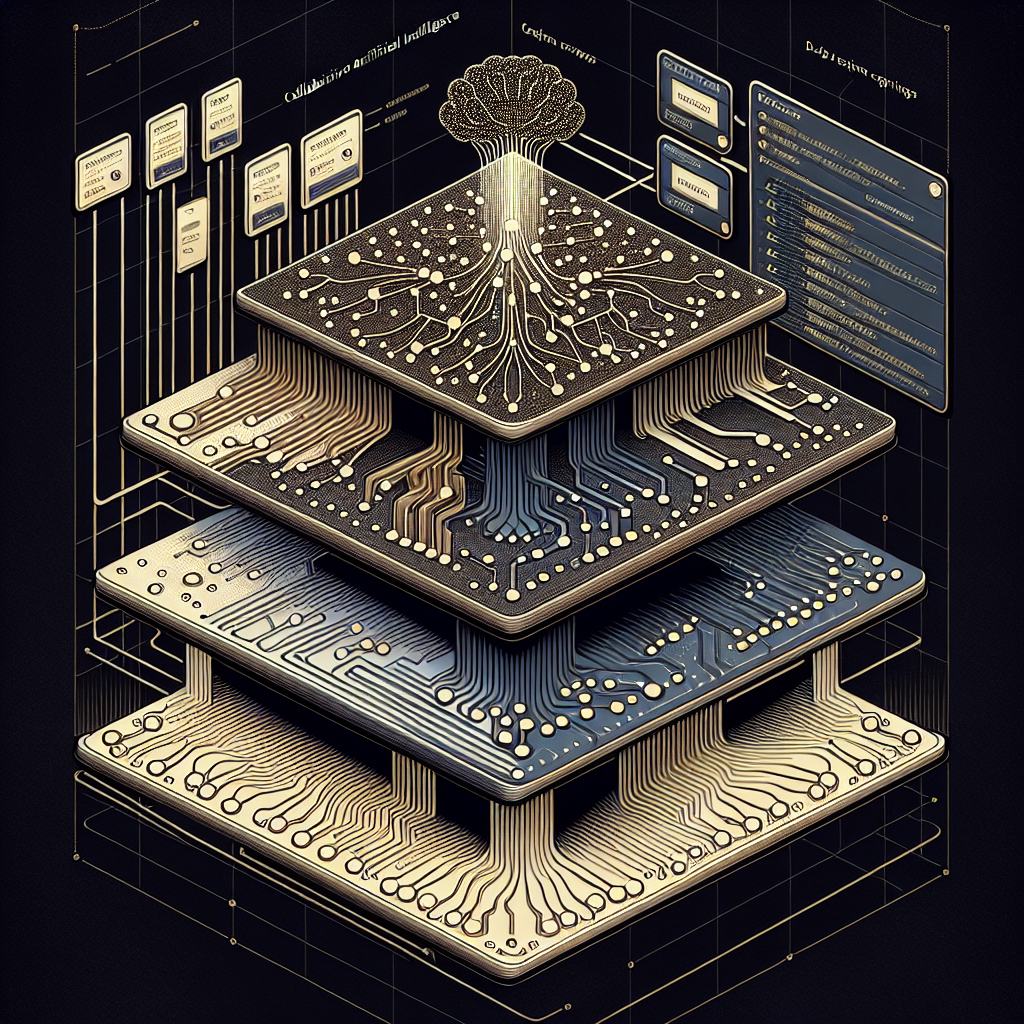
Project visualization
Canvas, meanwhile, reveals OpenAI's solution to one of ChatGPT's biggest limitations: context management. By creating a persistent workspace separate from the conversation flow, OpenAI is essentially admitting that the pure chat paradigm has limits. When you're editing code or refining a document, you don't want to regenerate everything from scratch each time—you want granular control. Canvas provides that, but more importantly, it shows OpenAI is willing to break from the chat-only orthodoxy when the use case demands it.
The integration of real-time web browsing and the improved Advanced Data Analysis capabilities point to another crucial development: ChatGPT is becoming increasingly autonomous. It can now fetch information, process it, and take actions based on that processing—all within a single conversation flow. This isn't just convenient; it's architecturally significant. We're watching the emergence of AI agents that can operate with minimal human supervision.
Memory and personalization features, while less flashy, might be the most important updates for long-term adoption. ChatGPT can now remember preferences, past conversations, and user-specific context across sessions. This transforms it from a stateless tool into something more akin to a personal assistant that actually knows you. For enterprise applications, this opens up entirely new use cases around workflow automation and knowledge management.

Project visualization
Why Developers Should Pay Attention
If you're building applications today, these ChatGPT updates aren't just about a competitor getting better—they're about the fundamental assumptions of software development changing. The traditional paradigm of deterministic, explicitly programmed applications is giving way to probabilistic, AI-mediated experiences. And ChatGPT's evolution is showing us what that future looks like.
Consider the implications for user interface design. Canvas suggests that the future isn't purely conversational—it's multi-modal interfaces where AI assists across different interaction paradigms. Developers who are betting everything on chat interfaces might want to reconsider. The winning formula appears to be AI enhancement of existing workflows, not wholesale replacement.
The API updates OpenAI has been shipping alongside consumer features are equally telling. Function calling, JSON mode, and assistant APIs aren't just quality-of-life improvements—they're OpenAI saying, "build your applications on top of our platform." The strategic goal is clear: make ChatGPT the default AI layer for every application, much like AWS became the default infrastructure layer.
For security professionals, these updates raise important questions. As ChatGPT becomes more capable and autonomous, the attack surface expands. Prompt injection, data leakage, and model manipulation become not just theoretical concerns but practical vulnerabilities that need addressing. The memory feature, while useful, introduces new privacy challenges. How do we ensure AI assistants remember what they should and forget what they shouldn't?
The competitive landscape is shifting too. Google's Gemini, Anthropic's Claude, and Meta's Llama are all racing to match or exceed ChatGPT's capabilities. But OpenAI's updates suggest they're not trying to win on model performance alone—they're trying to win on ecosystem. Custom GPTs, plugins, and now Canvas create lock-in through workflow integration, not just model superiority.
The Platform Play and Its Implications
What we're really watching is OpenAI executing a classic platform strategy, and they're doing it brilliantly. By making ChatGPT indispensable for an increasing number of workflows, they're creating a gravity well that pulls in users, developers, and eventually, entire businesses.
The custom GPT marketplace, while still nascent, hints at an app store model for AI. Imagine a future where specialized AI agents for every conceivable task are just a click away, all running on ChatGPT's infrastructure. The revenue implications are staggering—OpenAI wouldn't just be selling subscriptions; they'd be taking a cut of an entire AI economy.
This platform ambition explains why OpenAI is investing heavily in reliability and uptime. You can't be critical infrastructure if you go down every time there's heavy usage. The recent improvements in availability and response time aren't just about user experience—they're about meeting enterprise SLAs.
For startups building in the AI space, this creates a complex strategic decision. Do you build on top of ChatGPT and benefit from its capabilities but risk platform dependence? Or do you try to compete, knowing that OpenAI has a massive head start and virtually unlimited resources? The smart money seems to be on finding niches that ChatGPT doesn't serve well—specialized vertical applications where domain expertise matters more than raw capability.
Where This All Leads
Looking forward, the trajectory seems clear: ChatGPT is evolving toward becoming an AI operating system. Not in the traditional sense of managing hardware resources, but as the layer through which we interact with compute power and information. The updates we're seeing today are building blocks for this vision.
In the next 12-18 months, expect to see ChatGPT integrate more deeply with productivity tools, development environments, and enterprise systems. The goal isn't to replace these tools but to enhance them with AI capabilities. Canvas is just the beginning—imagine AI-assisted interfaces for everything from video editing to 3D modeling, all powered by ChatGPT.
The competitive response will intensify. Google, with its massive compute infrastructure and data advantages, won't cede this ground easily. Apple's on-device AI strategy offers a different vision—one focused on privacy and integration with personal devices. The winners won't necessarily be those with the best models, but those who best understand how AI fits into existing workflows and user expectations.
For developers and technologists, the message is clear: the age of AI as a feature is ending, and the age of AI as a platform is beginning. The updates to ChatGPT aren't just incremental improvements—they're the early moves in a transformation that will reshape how we build and interact with software. Whether you're building on top of these platforms or trying to compete with them, understanding this shift isn't optional—it's essential for navigating the next decade of technology development.
---