Updates for ChatGPT - A Developer's Story
The ChatGPT Evolution: Why OpenAI's Latest Updates Signal a Fundamental Shift in AI Development Strategy
The Hook That Changes Everything
ChatGPT isn't just getting updates anymore—it's becoming something fundamentally different from what we signed up for two years ago.
While the tech world obsesses over the next model release or benchmark scores, OpenAI has been quietly reshaping ChatGPT into an AI operating system that learns from 300 million weekly users.
The latest wave of updates reveals something profound: we're watching the real-time evolution of consumer AI, where user behavior drives development more than academic papers ever could.
And if you're a developer, these changes are rewriting the playbook for how AI applications should work.
The r/ChatGPT community's explosive engagement around these updates isn't just hype—it's developers and power users recognizing that the ground is shifting beneath their feet.
What started as a chatbot has morphed into a multi-modal, memory-equipped, tool-wielding platform that's beginning to look less like a language model and more like the foundation for ambient computing.
From Research Project to Production Platform
ChatGPT's journey from research preview to production powerhouse happened faster than anyone anticipated.
When OpenAI released ChatGPT in November 2022, it was essentially a cleaned-up interface for GPT-3.5—a way to make their language model accessible to non-technical users.
The initial product was almost embarrassingly simple: a text box, a submit button, and responses that, while impressive, felt distinctly like talking to a very smart autocomplete.
Fast forward to today, and ChatGPT has accumulated features at a pace that would make most product teams dizzy.
Voice conversations, image generation, code execution, web browsing, custom GPTs, memory systems, and now Canvas for collaborative editing—each addition seems tactical, but together they reveal a strategic masterstroke.
OpenAI isn't just adding features; they're building an AI companion that adapts to how humans actually want to work with artificial intelligence.

Project visualization
The shift became apparent with the introduction of GPT-4 in March 2023, but it's the recent updates that show OpenAI's true ambitions.
The Canvas interface, launched in October 2024, represents a philosophical change: instead of a question-answer paradigm, ChatGPT now offers a collaborative workspace where AI and human can iterate together.
This isn't just a UI update—it's a fundamental rethinking of human-AI interaction patterns.
Consider the memory feature, now rolling out broadly after months of testing. On the surface, it's a convenience feature—ChatGPT remembers your preferences and context across conversations.
But dig deeper, and you'll see it's OpenAI's answer to the personalization problem that's plagued AI assistants since Siri.
By maintaining persistent context, ChatGPT can finally deliver on the promise of an AI that actually knows you, not just your current query.
The Technical Revolution Hidden in Plain Sight
The latest updates reveal three critical technical shifts that developers need to understand. First, the move toward multi-modal by default.
ChatGPT now seamlessly handles text, voice, images, and code not as separate features but as natural parts of a single conversation.
This isn't just about adding input methods—it's about recognizing that human communication is inherently multi-modal, and AI interfaces need to match that reality.
Project visualization
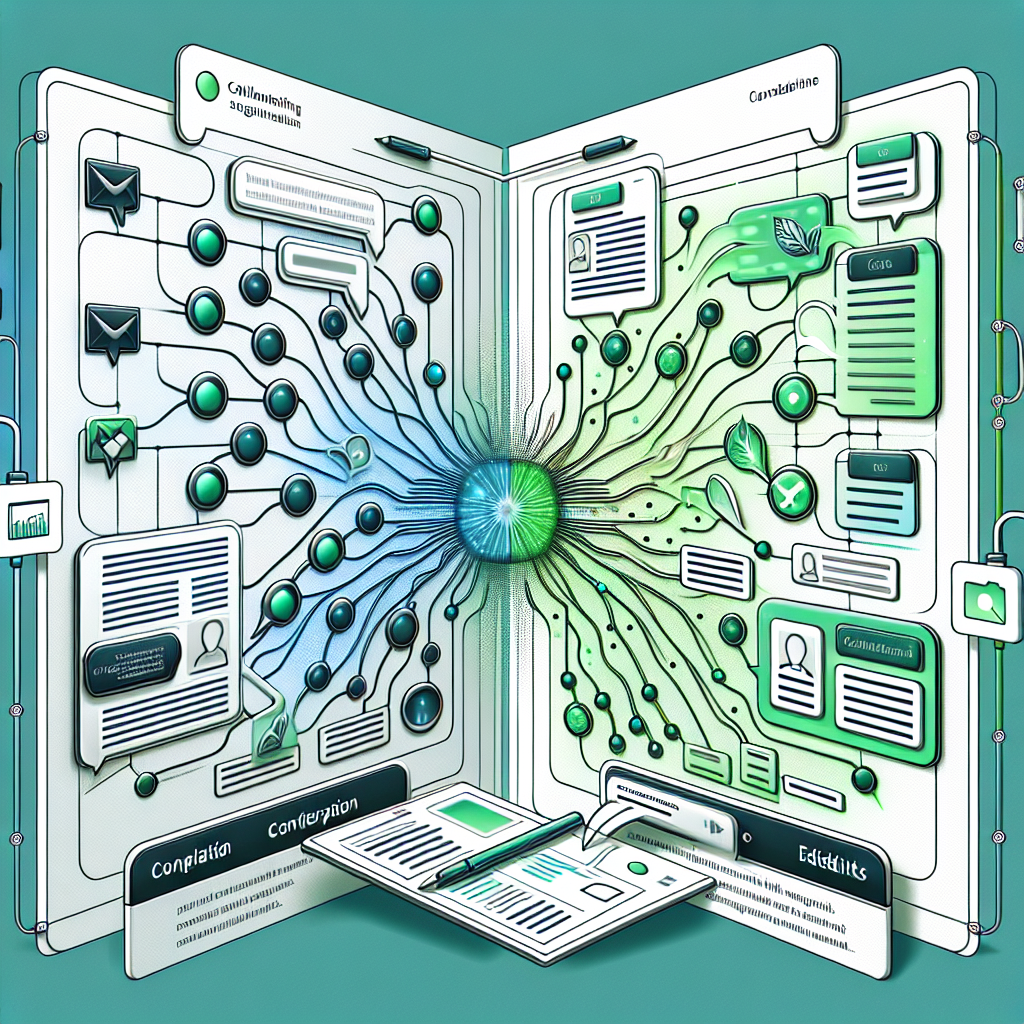
The Canvas feature exemplifies this shift perfectly.
When you're writing code or editing a document with ChatGPT, you're not just getting suggestions—you're getting a collaborative partner that can see your work, understand context, and make inline edits.
The technical achievement here isn't the editing capability itself, but the seamless context switching between conversation and collaboration modes.
ChatGPT maintains understanding across both interfaces, knowing when you're asking for clarification versus when you want direct edits.
Second, the integration of tools and external capabilities has evolved from experimental feature to core functionality.
Web browsing, DALL-E integration, and code execution aren't add-ons anymore—they're fundamental to how ChatGPT operates.
When you ask a question, ChatGPT now makes intelligent decisions about which tools to use, often combining multiple capabilities in a single response.
This orchestration layer is what transforms ChatGPT from a language model into an AI agent.
The Python code interpreter, in particular, has become surprisingly sophisticated.
It's not just running code—it's maintaining state across conversations, handling file uploads and downloads, and even debugging its own errors.
For developers, this means ChatGPT can now handle complex data analysis tasks that would have required switching between multiple tools just months ago.
Third, and perhaps most importantly, is the shift toward adaptive behavior based on user patterns. The memory system isn't just storing facts—it's learning interaction patterns.
Regular users report that ChatGPT has begun anticipating their needs, adjusting response styles, and even preemptively offering relevant tools.
This isn't AGI, but it's something arguably more useful: an AI that molds itself to individual users rather than forcing users to adapt to it.
Why Developers Should Pay Attention
For the developer community, these updates carry implications that extend far beyond ChatGPT itself.
We're witnessing the establishment of design patterns that will define AI applications for the next decade.
The Canvas interface, for instance, solves a problem every developer building AI tools faces: how do you maintain context while allowing iterative refinement?
OpenAI's solution—a persistent workspace with inline AI collaboration—is already being copied across the industry.

Project visualization
The memory system presents both opportunities and challenges. On one hand, it demonstrates that personalization at scale is possible without explicit user configuration.
On the other, it raises questions about data governance, privacy, and the right to be forgotten that every AI application will need to address.
OpenAI's implementation, with its user-controlled memory management and clear data boundaries, provides a template that balances functionality with user control.
But perhaps the most significant implication is what these updates reveal about the future of AI development.
OpenAI is essentially running the world's largest A/B test, with hundreds of millions of users providing real-time feedback on AI interaction patterns.
Every feature rollout teaches them something about how humans want to work with AI, and that learning is being encoded into the product at an unprecedented pace.
This creates a formidable moat. It's not just about having the best model anymore—it's about having the best understanding of how humans actually use AI in practice.
Competitors can match GPT-4's capabilities, but matching the accumulated product wisdom from 300 million users' daily interactions is a different challenge entirely.
For developers building on top of ChatGPT or competing platforms, the message is clear: static AI interfaces are dead.
Users now expect AI that adapts, remembers, and collaborates rather than simply responds.
The prompt-response paradigm that defined early LLM applications is giving way to persistent, stateful, multi-modal interactions.
The Road Ahead: Beyond Chat
The trajectory of these updates points toward a future where ChatGPT isn't just an application but a platform—potentially even an operating system for AI interactions.
The custom GPTs feature, which allows users to create specialized versions of ChatGPT, was the first hint.
But combined with memory, Canvas, and tool integration, we're seeing the emergence of something more ambitious: a general-purpose AI interface that can adapt to any task.
OpenAI's recent hiring of former Apple designers and engineers isn't coincidental. They're building for a future where ChatGPT is as fundamental to computing as the web browser.
The updates we're seeing now—Canvas for collaboration, memory for personalization, tools for capability—are the primitives of this new computing paradigm.
The next wave of updates will likely focus on agency and automation. ChatGPT can already browse the web and execute code, but it still requires human initiation.
The logical next step is proactive assistance—ChatGPT that can act on your behalf, manage tasks, and integrate with external services.
The technical groundwork is already there; what's needed is the interface and safety mechanisms to make it trustworthy.
For the broader industry, ChatGPT's evolution forces a reckoning. The rapid pace of updates has created a moving target that competitors struggle to match.
More importantly, it's setting user expectations that every AI product will need to meet.
Memory, multi-modality, and collaborative interfaces are quickly becoming table stakes rather than differentiators.
Story Sources
From the Author


Hey friends, thanks heaps for reading this one! 🙏
If it resonated, sparked an idea, or just made you nod along — I'd be genuinely stoked if you'd show some love. A clap on Medium or a like on Substack helps these pieces reach more people (and keeps this little writing habit going).
→ Pythonpom on Medium ← follow, clap, or just browse more!
→ Pominaus on Substack ← like, restack, or subscribe!
Zero pressure, but if you're in a generous mood and fancy buying me a virtual coffee to fuel the next late-night draft ☕, you can do that here: Buy Me a Coffee — your support (big or tiny) means the world.
Appreciate you taking the time. Let's keep chatting about tech, life hacks, and whatever comes next! ❤️