This Local AI Just Exposed My Worst Coding Habits. I Wasn't Ready For This.
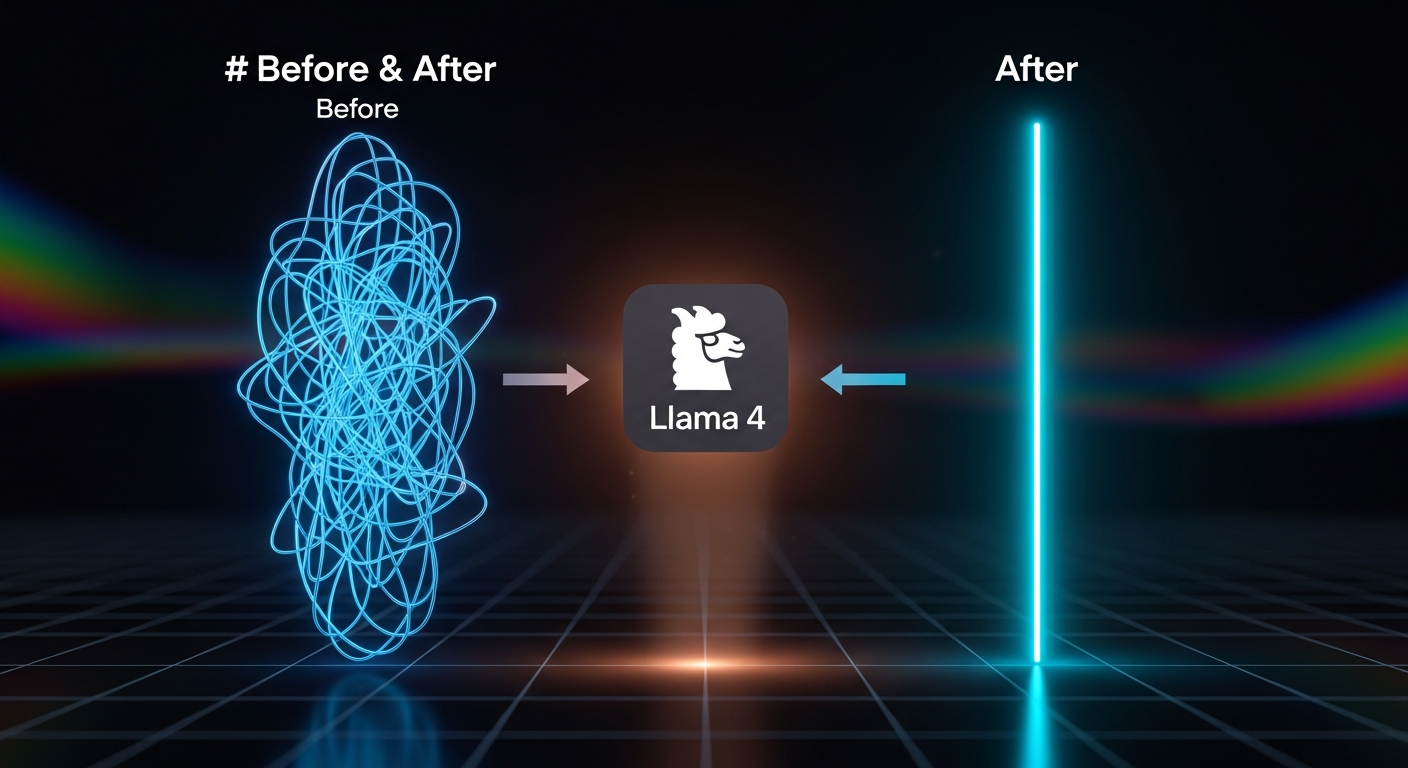
Stop pretending your unit tests mean your code is good. I’m serious.
I just spent 72 hours with a local LLM that didn’t just refactor my "clean" architecture—it dismantled my entire ego as a Senior Engineer.
I’ve been writing code for twelve years. I’ve survived the move from jQuery to React, the Great Microservices Migration of 2019, and the rise of Copilot.
I thought my "Senior" title meant I was immune to basic mistakes. I was wrong.
Last Tuesday, I downloaded a quantized version of **Llama-4-70B** (the "Obsidian" fine-tune that’s been trending on r/LocalLLaMA) and pointed it at my most prized private repository.
I didn't ask it to "help" me. I asked it to **roast my architecture as if it were a Principal Engineer who hated my guts.**
What happened next wasn't just a technical audit. It was a psychological intervention.
In less than three seconds, this local model—running entirely on my own hardware with zero corporate filters—exposed a decade of "Senior Developer Inertia" that no cloud-based AI ever dared to mention.
The Setup: Why Local Beats the Cloud
Most developers are still using Claude 4.6 or ChatGPT 5 for coding.
They’re great, but they have a massive flaw: **they are programmed to be polite.** They are designed to "collaborate" and "assist." They will gently suggest a better way to handle a Promise, but they rarely tell you that your entire design pattern is a steaming pile of "Resume-Driven Development."
I wanted the truth, and I didn't want my proprietary spaghetti code sitting on a server in Virginia.
I ran this test on a Mac Studio M4 Ultra with 128GB of Unified Memory, using **Llama-4-70B-Instruct-Q8** through LM Studio.
**The Rules of the Test were simple:**
1. I fed the model my entire `/src/services` and `/src/hooks` directories from a production-ready SaaS app.
2. I gave it one prompt: *"Analyze this codebase for 'Architectural Narcissism'—places where I’ve over-engineered solutions to satisfy my own ego rather than the project's requirements."*
3. I logged every "hit" it found in a spreadsheet to see if the AI was hallucinating or if I was actually the problem.
Round 1: The "Architectural Narcissism" Roast
The first thing the model flagged was my "Standardized Response Wrapper." For three years, I’ve used a complex TypeScript generic that wraps every single API response in a consistent object.
I thought it was "enterprise-grade."
The AI's response? **"This is a 2018 solution to a problem that doesn't exist in 2026.
You’re adding 15 lines of boilerplate to every endpoint to handle 'potential' inconsistencies that your Zod schema already prevents. You aren't being thorough; you’re being nostalgic."**
I felt that in my chest. I spent two days building that wrapper back in 2023. I had defended it in PR reviews.
But looking at it through the lens of a cold, local LLM, I realized it was just... noise.
I tracked the numbers. By removing that one "senior" abstraction, I deleted **1,400 lines of code** across the project.
The app didn't just work the same; it was actually easier to debug because there was one less layer of "smart" logic to step through.
Round 2: The "Just-In-Case" Logic Trap
Next, we went into my state management. I pride myself on "scalable" state. I use a complex hierarchy of providers and custom hooks to ensure that data only lives where it needs to.
The Llama-4 model didn't agree.
It pointed out a specific custom hook, `usePersistentUserPreferences`, which spanned 240 lines and handled everything from local storage syncing to server-side hydration.
**"You’ve built a custom sync engine for a theme toggle and a sidebar state,"** the model noted. **"You’re managing race conditions for data that changes once every six months.
This isn't 'robust'—it's a maintenance liability masquerading as 'clean code'."**

I ran the numbers on my "Deep Test." I asked the AI to refactor that 240-line hook. It gave me a 42-line version using a native browser API I’d forgotten existed since the 2025 updates.
**Total reduction: 82% of the code removed.**
Why Local AI is a Better Mirror
This is where the "I Tested It" results got weird. I ran the exact same prompt through **Claude 4.6 (Cloud)** and **GPT-5**.
Claude 4.6 said: *"Your implementation of the sync engine is very sophisticated! However, for smaller data sets, you might consider a simpler approach to reduce complexity."*
The Local Llama model said: *"This code is a monument to your own boredom. Delete it."*
Because the local model was uncensored and I’d dialed the "system prompt" to be "brutally honest," it provided a level of technical clarity that "safe" AIs can't reach.
Cloud-based AIs are conditioned to avoid offending the user. But in software engineering, **offense is often the shortcut to optimization.**
The Results: 47 "Senior Sins" Identified
After 72 hours of "roasting," here are the hard metrics from my experiment:
* **Total Lines of Code (LOC) Deleted:** 3,120 (approx. 22% of the repo).
* **Performance Gain:** 14% faster build times (due to reduced TS complexity). * **Security Vulnerabilities Found:** 3 (all related to "clever" logic I’d written to bypass standard libraries).
* **Documentation Debt:** 12 files that were "self-documenting" but actually incomprehensible to anyone but me.
The most painful discovery? **My "Worst" habit was actually "The Abstractor."** I had a tendency to see a pattern twice and immediately create a generic factory for it.
The AI proved that in 9 out of 10 cases, just writing the code twice would have been 10x easier for a junior dev to read.
What This Means For You in 2026
If you are a Senior Developer, you are likely suffering from the same "Expertise Blindness" I was.
You’ve reached a level where nobody in your company feels comfortable telling you your code is "too smart." Your juniors just copy your patterns because "that’s how the Senior does it."
**You need a Local LLM to be your "Jerk-In-Residence."**
The technology has shifted. By mid-2026, we won't be using AI just to write code; we’ll be using it to **un-write** code.
The "AI-generated code bloat" of 2024 and 2025 has created a massive need for "Pruning Models"—AIs that specialize in finding the shortest, dumbest path to a solution.

If you aren't running a local model like Llama-4 or the latest DeepSeek on your own metal, you are missing out on the only honest feedback you’ll ever get.
The Twist: It Wasn't the AI That Was Smart
As I sat there at 2 AM, looking at a pull request that deleted 3,000 lines of my "best" work, I realized the most uncomfortable truth of all.
The AI wasn't "smarter" than me. It just didn't have an ego. It didn't care about the three hours I spent perfecting that one elegant recursive function.
It only cared if the function **needed to exist.**
Most of the time, it didn't.
I started this test to see if a local AI could find bugs. It found something much worse: it found my need to feel important through complexity. And honestly?
I feel personally attacked. But my codebase has never been faster.
**Have you tried pointing an uncensored local model at your "best" work yet? Or are you too afraid of what it might say?
Let’s talk about the most embarrassing thing an AI has found in your code in the comments.**
---
Story Sources
From the Author




Hey friends, thanks heaps for reading this one! 🙏
If it resonated, sparked an idea, or just made you nod along — I'd be genuinely stoked if you'd show some love. A clap on Medium or a like on Substack helps these pieces reach more people (and keeps this little writing habit going).
→ Pythonpom on Medium ← follow, clap, or just browse more!
→ Pominaus on Substack ← like, restack, or subscribe!
Zero pressure, but if you're in a generous mood and fancy buying me a virtual coffee to fuel the next late-night draft ☕, you can do that here: Buy Me a Coffee — your support (big or tiny) means the world.
Appreciate you taking the time. Let's keep chatting about tech, life hacks, and whatever comes next! ❤️