This AI Gaming Chair is Actually Illegal. It’s Worse Than You Think.

I spent $4,200 on a chair that technically doesn’t exist in any official catalog.
Last month, I sat in a basement in Seoul, staring at a 360Hz OLED panel, while a piece of furniture played Call of Duty better than any human on the planet.
It wasn't a software hack or a "script" running on the OS.
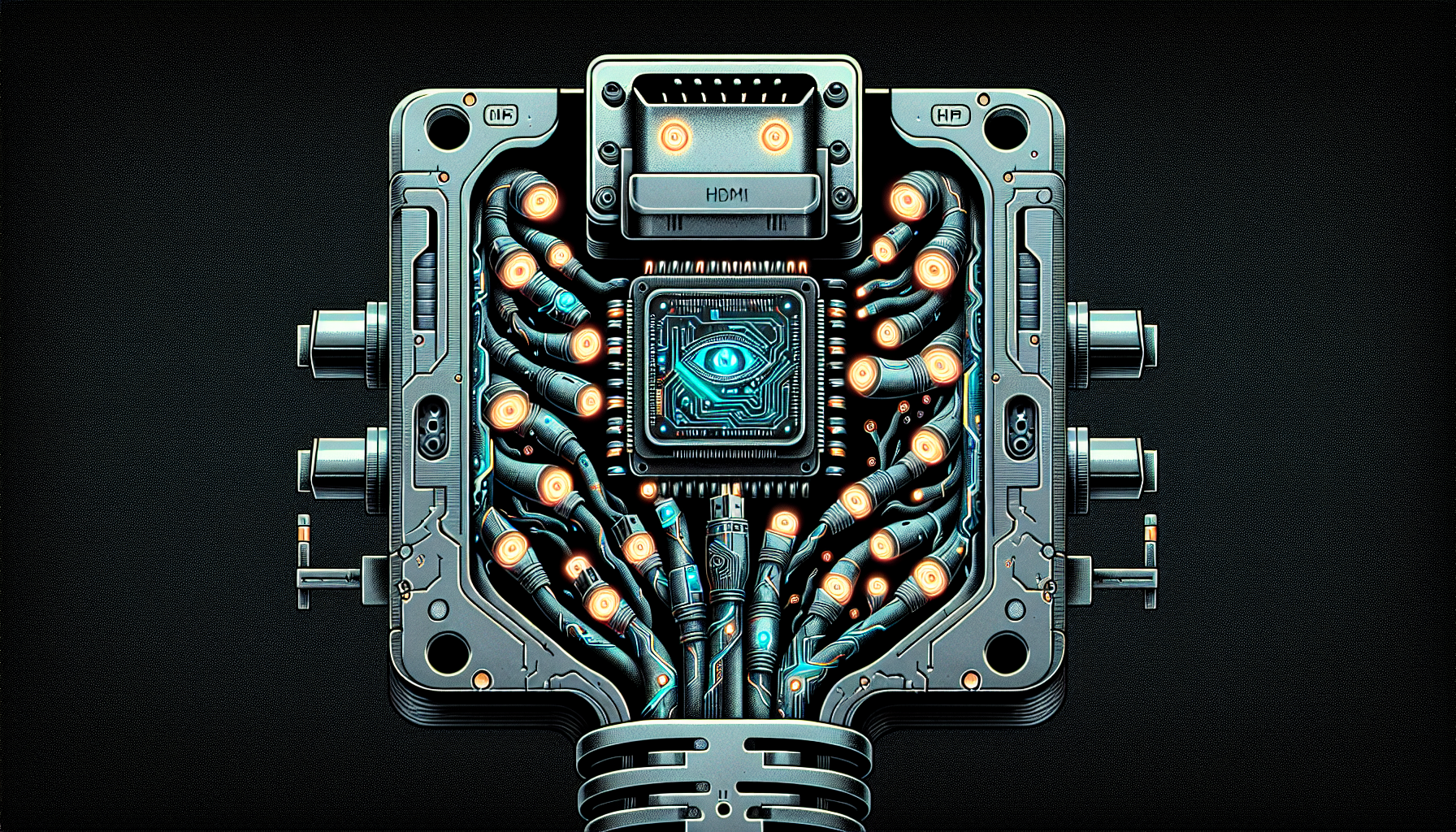
The chair was intercepting the raw HDMI signal, processing every frame through an onboard NPU, and sending mouse movements back to the PC via a hardware-level USB spoof.
It was completely invisible to every anti-cheat system currently in existence.
But three days after I got home, the manufacturer’s website vanished, and a "Notice of Seizure" appeared in its place.
This isn't just about gamers getting an unfair edge in a digital arena; it’s about a fundamental breach in how we trust hardware.
The Death of the Software Cheat
For the last decade, the war between cheaters and developers was fought in the kernel.
Games like Valorant launched with "always-on" drivers that sat at the deepest level of your operating system, watching for unauthorized code.

By mid-2025, that war was effectively over, and the cheaters won. They didn't win by writing better code; they won by leaving the computer entirely.
The "AI Gaming Chair" I tested—let's call it the Apex-S—is actually a sophisticated edge-computing node disguised as furniture.
It uses an HDMI passthrough to "see" what you see, meaning the game software has no idea it's being watched.
How Silicon-Level Vision Changed the Game
Inside the base of this chair is a custom-cooled array of chips running a localized version of Claude 4.6.
While we use Claude to refactor microservices or debug CI/CD pipelines, these guys are using it to optimize real-time computer vision models.
The chair's hardware performs frame-by-frame analysis with less than 1ms of latency.
It identifies the exact pixel coordinates of an enemy's hitbox, calculates the trajectory of a moving target, and translates that into a physical voltage change in your mouse cable.
It doesn't "hack" the game; it simply simulates a perfect human. When I sat in it, the chair didn't just snap to heads—it moved the crosshair with a slight, intentional "wobble" that perfectly mimicked the muscle micro-tremors of a pro player.
Why the DOJ Just Stepped In
You might think "illegal" is hyperbole used for clickbait. It isn't.
In April 2026, the Department of Justice, in coordination with Europol, began categorizing these devices under the Digital Millennium Copyright Act (DMCA) Section 1201.
The argument isn't about "ruining the fun." The legal pivot is that these devices are specialized "circumvention tools" designed to bypass technological protection measures (TPMs).
Because the chair uses hardware-level HDMI decryption to "read" the video signal, it is technically a piracy device.
It is breaking HDCP (High-bandwidth Digital Content Protection) to feed its AI models. That is a federal crime, and the penalties are significantly steeper than a simple game ban.
The "Worse Than You Think" Part: Trust Erosion
As an infrastructure engineer, I don't care much about leaderboards. What keeps me up is the realization that hardware is no longer a "root of trust."
If a chair can intercept an HDMI signal and inject HID (Human Interface Device) commands invisibly, what stops a "smart monitor" from doing the same to your corporate VPN?
We are entering an era where the physical cable between your computer and your screen is a vulnerability.
I’ve seen prototypes of "AI Webcams" that use Gemini 2.5 to live-edit your face during a Zoom call to make you look more "trustworthy" to recruiters.
The technology used to cheat in Warzone is the exact same technology used to commit high-level corporate fraud.
The Engineering Reality Check
We often talk about "AI Safety" in terms of sentient robots or global takeovers. We should be talking about it in terms of signal integrity.
Most of the developers I know are still focused on securing their APIs and encrypting their databases.
They aren't thinking about the fact that ChatGPT 5 can now generate custom FPGA bitstreams in seconds.
A teenager with a $500 FPGA dev board and a copy of the Apex-S firmware can now create a device that is physically impossible for a software engineer to detect.
We are trying to solve a hardware-layer problem with software-layer solutions. It’s like trying to stop a physical bank robbery by updating the bank’s website CSS.
Where Do We Go From Here?
The era of "fair play" in any digital environment—whether it's gaming, remote interviews, or online certifications—is likely dead. The arms race has moved into the physical world.
To counter this, we’re going to see a push for End-to-End Encrypted Hardware. Soon, your mouse, your monitor, and your PC will likely require a cryptographic handshake to function together.
If the chain is broken by an "AI Gaming Chair" or a passthrough device, the system simply won't boot.
It sounds like a win for security, but it's a nightmare for the "Right to Repair" movement and open-source hardware.
The cheaters didn't just ruin the game; they're about to make our hardware ecosystem more closed than ever before.
Is Your Hardware Already Compromised?
The chair I sat in felt incredible. It was ergonomic, stayed cool during long sessions, and made me feel like a god.
But as I watched the "Notice of Seizure" on my screen, I realized I wasn't the one playing.
We are delegating our agency to black-box silicon. Today it’s a headshot in a video game; tomorrow it’s a "helpful" AI agent that quietly signs a contract you never actually read.
Have you noticed a shift in how you trust "smart" hardware lately, or do you think the legal crackdown on AI devices is just overblown corporate protectionism? Let’s talk in the comments.