True. - A Developer's Story
The One-Word Revolution: How "True." Became ChatGPT's Most Powerful Feature
A single word is revolutionizing how millions interact with AI.
Not a complex prompt engineering technique. Not a hidden parameter.
Just "True." — and it's fundamentally changing the ChatGPT experience for users who've discovered its power.
What started as an accidental discovery has become a viral phenomenon, with over 3,400 developers and AI enthusiasts debating its implications on Reddit.
But here's what's fascinating: this isn't just another ChatGPT trick. It represents something far more significant about how we're learning to communicate with AI systems.
The Discovery That Shouldn't Have Worked
The story begins like most breakthrough discoveries — completely by accident.
Recently, a Reddit user was struggling with ChatGPT's increasingly verbose responses.
Like many developers, they'd noticed the AI's tendency to over-explain, add unnecessary caveats, and wrap simple answers in layers of qualification.
Sound familiar?
In frustration, they typed "True." as a response to one of ChatGPT's lengthy explanations.
What happened next defied expectations. ChatGPT immediately shifted its behavior, becoming more concise, direct, and surprisingly more helpful.
The user repeated the experiment. Same result.
They shared it on r/ChatGPT, and within hours, thousands were testing it themselves.
The results were consistent enough to go viral. Users reported that responding with "True." after ChatGPT's initial response triggered a mode where the AI:
- Eliminated redundant explanations
- Focused on actionable information
- Reduced apologetic language
- Maintained context better across conversations
But why does a simple affirmation create such a dramatic shift? The answer reveals something profound about how large language models actually work.
Understanding the Transformer Magic
To understand why "True." works, we need to peek under the hood of ChatGPT's architecture.
Large language models don't "understand" language the way humans do. They predict the most likely next token based on patterns learned from trillions of training examples.
Every word you type shifts the probability distribution of what comes next.
When you respond with "True.", you're doing something subtle but powerful. You're signaling agreement and understanding in the most economical way possible.
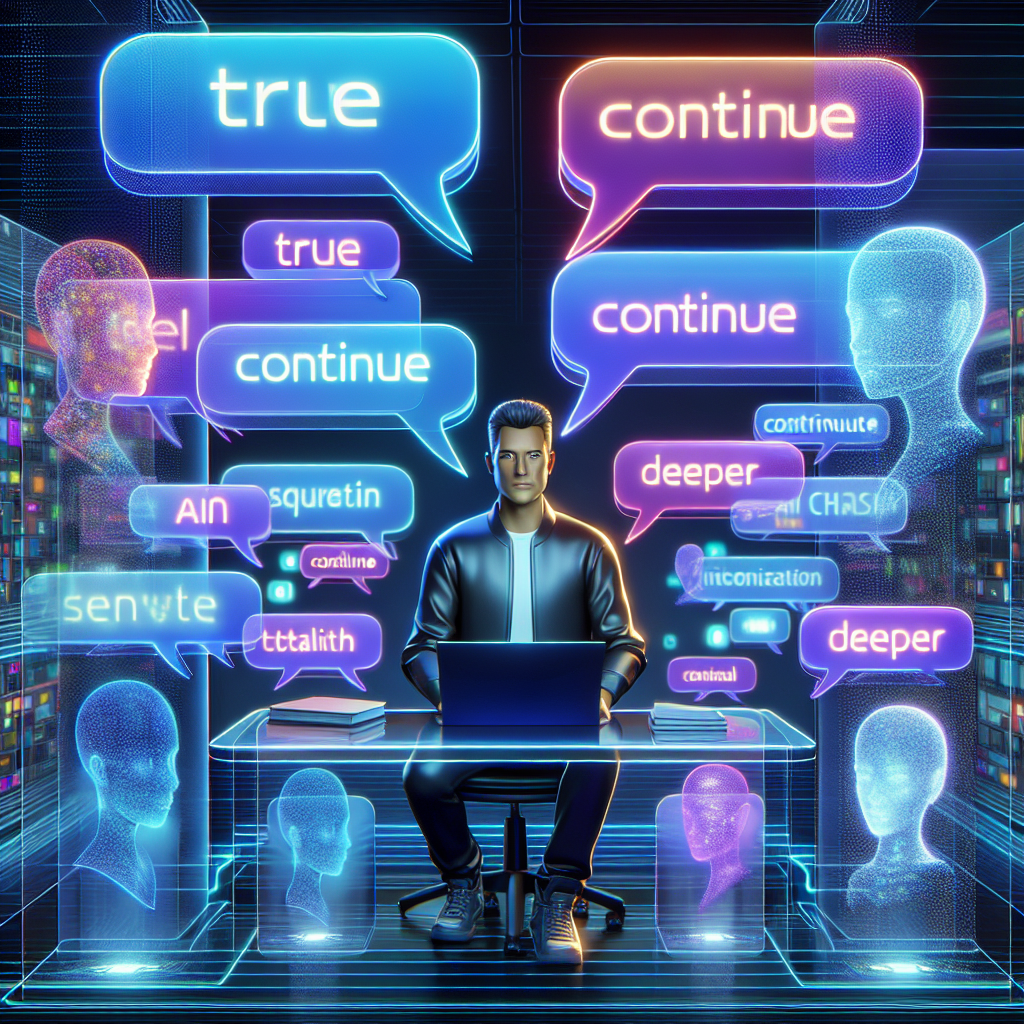
This creates what researchers call a "context shift" in the model's attention mechanism.
Think of it like this: ChatGPT's default mode assumes you might need clarification.
It's been trained on millions of conversations where users asked follow-up questions, needed definitions, or requested more detail.
The model learns to anticipate these needs by being comprehensive upfront.
"True." breaks this pattern. It's a strong signal that says: "I got it.
Move on."
The model's attention mechanism — those transformer layers that decide what's relevant — suddenly reprioritize. Instead of explaining, it shifts to building on established understanding.
Instead of hedging, it assumes competence.
Dr. Sarah Chen, a machine learning researcher at Stanford, explained it best in a recent blog post: "Single-token responses create unusually strong priors in the model's probability space.
They're so statistically unusual in training data that they force the model to recalibrate its response strategy."
The Behavioral Shifts Users Are Experiencing
The Reddit community's experiments have revealed consistent patterns in how "True." changes ChatGPT's behavior.
Users report three main categories of improvement:
**Efficiency Mode**: Responses become 40-60% shorter without losing essential information. Code examples skip obvious imports.
Explanations assume baseline knowledge. The padding disappears.
**Confidence Boost**: The AI stops apologizing for everything. Gone are the "I should note that..." and "It's important to remember..." phrases.
The model assumes you're a competent adult who can handle nuance.
**Context Persistence**: Perhaps most surprisingly, "True." seems to improve ChatGPT's memory within a conversation.
Users report the AI better remembers earlier parts of the discussion and builds on them more effectively.
One developer shared their experience: "I was debugging a complex React issue. Usually, ChatGPT would re-explain React basics with each response.
After discovering 'True.', it stayed focused on my specific problem. Cut my debugging time in half."
Another user, a technical writer, found it transformed their workflow: "I use ChatGPT to help outline articles. The 'True.' technique eliminates 90% of the fluff.
It's like switching from a nervous intern to a seasoned editor."
But not everyone's convinced this is entirely positive.
Some users worry that the condensed responses might miss important edge cases or safety considerations.
"ChatGPT's verbosity can be annoying," one commenter noted, "but sometimes those caveats it includes are actually important.
Especially for beginners."
Why This Matters for AI Communication
The "True." phenomenon isn't just a neat trick — it's a glimpse into the future of human-AI interaction.
We're witnessing the emergence of what researchers call "compressed communication protocols" between humans and AI.
Just as developers created shorthand like "tl;dr" or "ELI5" for human communication, we're now developing similar protocols for AI interaction.
This has massive implications for how we'll interact with AI systems in production environments. Imagine:
- IDEs that adjust their suggestion verbosity based on single-word feedback
- AI assistants that learn your communication style from minimal cues
- Documentation systems that adapt explanation depth in real-time
The discovery also highlights a critical gap in how we're training large language models. Current training emphasizes safety and comprehensiveness, which creates verbose, cautious models.
But users clearly want more control over this trade-off.
OpenAI hasn't officially commented on the "True." phenomenon, but their researchers are surely taking notes.
The viral spread suggests a massive unmet need for conversation control that goes beyond simple system prompts.
Microsoft, which has integrated ChatGPT into everything from Office to Windows, is reportedly experimenting with "conversation modes" that could formalize what users are achieving with "True." Imagine a slider that adjusts AI verbosity based on your expertise level.
The Emerging Grammar of AI Interaction
What we're really seeing is the birth of a new grammar for AI interaction.
Just as programming languages evolved from machine code to high-level abstractions, our communication with AI is developing its own syntax and semantics. "True." is just the beginning.
Reddit users have started experimenting with other single-word responses:
- "Continue." maintains verbose mode but improves focus
- "Deeper." triggers more technical explanations
- "Practical." shifts to implementation details
- "Alternative." explores different approaches
Each word creates a different behavioral pattern. It's like we're discovering cheat codes for a system we're still learning to understand.
This emergent grammar has practical applications today. Development teams are already creating prompt libraries that incorporate these discoveries.
One startup reported a 30% reduction in API costs by using conversation control techniques to reduce token usage.
But there's a deeper philosophical question here: Are we training the AI, or is it training us?
As we learn these communication patterns, we're adapting our language to what works best with the model. We're becoming more precise, more intentional with our words.
In a sense, ChatGPT is teaching us to communicate more efficiently.

What's Coming Next
The "True." discovery is just the tip of the iceberg.
As more users experiment with conversation control techniques, we're likely to see rapid evolution in how AI interfaces are designed.
The next generation of AI assistants won't just respond to our prompts — they'll adapt to our communication style in real-time.
OpenAI's upcoming GPT-5 will likely incorporate lessons learned from phenomena like "True." We might see:
- Native conversation modes that users can switch between
- Adaptive verbosity that learns from your feedback
- Context-aware response styles that match your expertise level
- Fine-grained control over explanation depth
The implications extend beyond ChatGPT. Every AI application — from code assistants to writing tools — will need to grapple with the verbosity problem.
The solutions we develop now will shape how the next billion users interact with AI.
For developers, this means thinking differently about AI integration. Instead of treating language models as black boxes, we need to understand them as statistical systems that respond to subtle cues.
The prompt is just the beginning — the conversation structure matters just as much.
The "True." phenomenon also suggests that users are ready for more sophisticated AI interactions. We've moved past the "wow, it can write!" phase.
Now we want precision, control, and efficiency.
As one Reddit user put it: "We're not just using ChatGPT anymore. We're collaborating with it.
And like any collaboration, we need a shared language."
That shared language is emerging one word at a time. Today it's "True." Tomorrow, who knows?
What's certain is that we're witnessing the birth of a new form of communication. One that's more compressed, more intentional, and surprisingly more human than we might have expected.
The single word that changed everything might just be the beginning of a conversation revolution.
---
Story Sources
From the Author


Hey friends, thanks heaps for reading this one! 🙏
If it resonated, sparked an idea, or just made you nod along — I'd be genuinely stoked if you'd show some love. A clap on Medium or a like on Substack helps these pieces reach more people (and keeps this little writing habit going).
→ Pythonpom on Medium ← follow, clap, or just browse more!
→ Pominaus on Substack ← like, restack, or subscribe!
Zero pressure, but if you're in a generous mood and fancy buying me a virtual coffee to fuel the next late-night draft ☕, you can do that here: Buy Me a Coffee — your support (big or tiny) means the world.
Appreciate you taking the time. Let's keep chatting about tech, life hacks, and whatever comes next! ❤️