Meanwhile over at moltbook - A Developer's Story
The Meltdown at OpenAI: Why the Most Powerful AI Company Just Lost Its Safety Conscience
What happens when the world's most influential AI company loses the very people tasked with keeping its technology safe?
We're about to find out.
In a stunning cascade of resignations that would make Silicon Valley soap operas jealous, OpenAI hemorrhaged its entire safety leadership team between November 2023 and May 2024.
The latest departure — Jan Leike, who co-led the Superalignment team — didn't just leave.
He lit a match on his way out, posting a thread that essentially accused OpenAI of choosing "shiny products" over humanity's future.
If you're a developer working with AI, this should terrify you.
Not because GPT-5 is going to become Skynet tomorrow. But because the company setting the industry's pace just signaled that safety is negotiable when there's money to be made.
The Exodus Nobody's Talking About (But Should)
Let's put this in perspective. Since November 2023 (over two years ago), OpenAI has lost:
- **Ilya Sutskever**: Co-founder, chief scientist, and the conscience of the company
- **Jan Leike**: Co-lead of Superalignment, the team meant to solve AI safety's hardest problem
- **Daniel Kokotajlo and William Saunders**: Key researchers on the governance and safety teams
- **Leopold Aschenbrenner**: Fired, allegedly for raising safety concerns
This isn't normal turnover. This is every fire marshal leaving the building while someone's playing with matches.
The Superalignment team — announced with fanfare in July 2023 — was supposed to dedicate 20% of OpenAI's compute to ensuring AGI doesn't destroy humanity.
Instead, according to Leike, they struggled to get even basic resources.
"Safety culture and processes have taken a backseat to shiny products," he wrote in his resignation thread.
Think about that for a second.
The team responsible for making sure artificial general intelligence doesn't go catastrophically wrong couldn't get computing resources at a company worth $80 billion.
Understanding the Superalignment Problem
Here's what most coverage misses: Superalignment isn't just another buzzword. It's arguably the hardest technical challenge in AI safety.
The problem is deceptively simple. How do you ensure an AI system more intelligent than humans remains aligned with human values?
It's like asking a toddler to supervise a PhD student's dissertation — except the PhD student might accidentally or intentionally cause massive harm.
Traditional alignment techniques work when humans can evaluate AI outputs. You can check if a chatbot gives good coding advice because you understand code.
But what happens when AI systems become capable of reasoning beyond human comprehension? How do you align something you can't even understand?
This was Sutskever and Leike's mission. They were building what they called "automated alignment research" — essentially, using AI to solve AI safety.
The approach was ambitious: create AI systems that could help humans supervise even more powerful AI systems.
The technical challenges are staggering.
They needed to develop methods for "scalable oversight" — ways for humans to supervise AI systems on tasks we can't directly evaluate.
Imagine trying to verify a proof in mathematics you don't understand, written in a language you can't read.
That's the level of difficulty we're talking about.
The Real Story Behind the Resignations
Sources familiar with the situation paint a picture of mounting frustration within OpenAI's safety teams.
The breaking point wasn't a single incident but death by a thousand cuts. Compute allocation became a daily battle.
Safety researchers would request GPU time for critical experiments, only to be told resources were needed for product development.
The Superalignment team, promised 20% of compute resources, often got far less.
But resources were just part of the problem.
The culture shift was more insidious. OpenAI, once focused on safe AGI development, increasingly optimized for product launches and market dominance.
Safety reviews became rubber stamps. Risk assessments were rushed.
The company that once published detailed safety analyses started keeping more research internal.
Leike's resignation thread reveals the depth of dysfunction: "Building smarter-than-human machines is an inherently dangerous endeavor...
But over the past years, safety culture and processes have taken a backseat to shiny products."
When your head of safety says the company has lost its way, that's not a disagreement over methodology. That's a five-alarm fire.
What This Means for Developers
If you're building with AI, OpenAI's safety exodus affects you directly.
First, the obvious: OpenAI's models power thousands of applications. If their safety processes are compromised, your product's reliability could suffer.
We've already seen GPT models hallucinate, reveal training data, and exhibit unpredictable behavior. Without robust safety teams, these issues will likely worsen.
But there's a deeper concern.
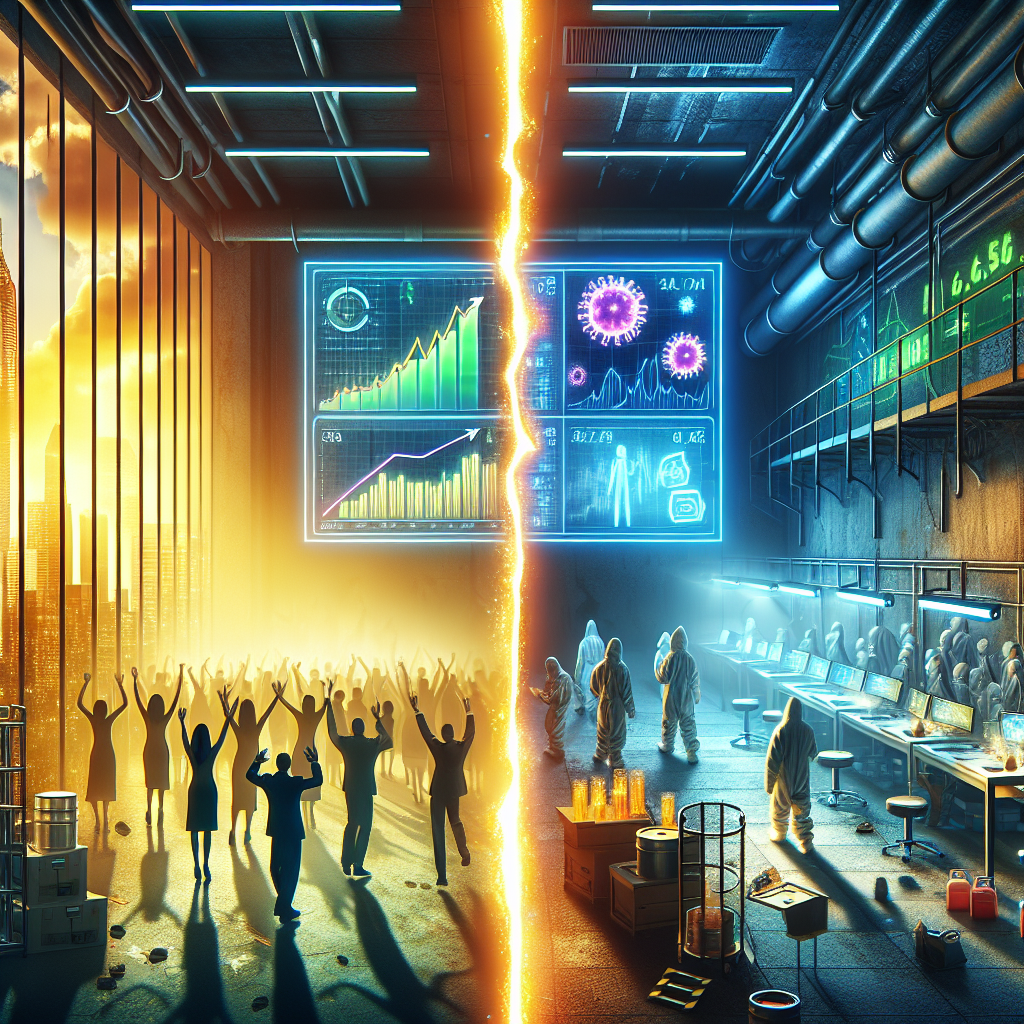
OpenAI sets industry standards. When they release a new model or API, competitors scramble to match it.
When they implement safety measures, others follow. So when OpenAI deprioritizes safety, it signals to the entire industry that cutting corners is acceptable.
We're already seeing the effects. Anthropic and other AI companies are poaching OpenAI's safety researchers, betting that safety-conscious development will become a competitive advantage.
Meanwhile, OpenAI races toward AGI with a depleted safety team.
For developers, this creates an impossible situation.
You want to build innovative AI products, but you also need them to be safe and reliable. How do you balance those needs when the industry leader is sending mixed signals?
The Industry Implications Nobody Wants to Discuss
The mass resignation at OpenAI reveals an uncomfortable truth about the AI industry: safety doesn't sell.
Investors want growth. Users want features.
The market rewards speed, not caution. In this environment, safety teams become cost centers — necessary evils that slow down deployment and complicate product launches.
OpenAI's transformation from research lab to product company was perhaps inevitable.
With Microsoft's investment and competitive pressure from Google, Meta, and others, the company faced immense pressure to commercialize.
But the speed of this shift — and the casualties along the way — suggests something more troubling.
We may be witnessing the industry's first major safety failure in real-time.
Not a technical failure — GPT-4 hasn't gone rogue. But an institutional failure.

The company best positioned to solve AI safety has essentially disbanded its safety team. The researchers with the most expertise in alignment have scattered to the wind.
This brain drain couldn't come at a worse time.
AI capabilities are advancing exponentially. Models that seemed impossible two years ago are now commonplace.
At this pace, AGI — or something close to it — could arrive within the decade. Yet the team tasked with ensuring AGI remains safe no longer exists in any meaningful form.
Where the Industry Goes From Here
The optimistic view: OpenAI's safety exodus catalyzes a broader industry focus on AI safety.
Anthropic, founded by former OpenAI safety researchers, has made constitutional AI and safety its core differentiator.
Other companies might follow suit, competing on safety rather than just capabilities.
Governments might finally implement meaningful AI regulation.
The realistic view: The race to AGI accelerates with fewer guardrails.
OpenAI's competitors now see an opportunity. If OpenAI has abandoned its safety-first approach, why shouldn't they?
The pressure to keep pace with OpenAI's product releases will override safety concerns. We'll see more powerful models deployed with less testing, fewer safeguards, and minimal oversight.
The concerning view: We're already past the point of no return.
The dissolution of OpenAI's safety team might signal that AI development has become unstoppable.
Market forces, competitive dynamics, and technological momentum have created a system that can't be slowed down, even if we wanted to.
Safety becomes a luxury we can't afford in the race to AGI.
For the industry, this creates a collective action problem.
Every company wants AI to be safe, but no company wants to be the one that slows down. The first to market wins.
The most cautious loses. In this environment, safety teams become obstacles to overcome rather than partners in development.
The Path Forward
Despite the dire situation, there are reasons for cautious optimism.
The safety researchers leaving OpenAI aren't giving up. They're regrouping at other organizations, continuing their work with renewed urgency.
Leike has already announced he's joining Anthropic. Sutskever is reportedly starting his own venture.
The expertise hasn't disappeared — it's just redistributed.
Moreover, the public nature of these resignations has forced a conversation about AI safety that was previously confined to academic papers and Twitter threads.
When Jan Leike says OpenAI has lost its way, people listen. When Ilya Sutskever — the man who helped create GPT — leaves the company he co-founded, it makes headlines.
This visibility matters.
It puts pressure on OpenAI to address safety concerns. It signals to other companies that safety researchers have options.
It shows investors that ignoring safety could become a liability.
The next few months will be critical.
If OpenAI continues on its current path — prioritizing products over safety — expect more resignations, more public criticism, and potentially, more serious incidents.
But if the company takes these warnings seriously, rebuilds its safety team, and recommits to its original mission, it could still course-correct.
The question is whether anyone at OpenAI is listening.
Or whether, in the race to build AGI, they've already decided that safety is a price worth paying for progress.
---
Story Sources
From the Author


Hey friends, thanks heaps for reading this one! 🙏
If it resonated, sparked an idea, or just made you nod along — I'd be genuinely stoked if you'd show some love. A clap on Medium or a like on Substack helps these pieces reach more people (and keeps this little writing habit going).
→ Pythonpom on Medium ← follow, clap, or just browse more!
→ Pominaus on Substack ← like, restack, or subscribe!
Zero pressure, but if you're in a generous mood and fancy buying me a virtual coffee to fuel the next late-night draft ☕, you can do that here: Buy Me a Coffee — your support (big or tiny) means the world.
Appreciate you taking the time. Let's keep chatting about tech, life hacks, and whatever comes next! ❤️