The FBI Just Quietly Warned California. Nobody Is Actually Prepared for This.
The FBI Just Quietly Warned California. Nobody Is Actually Prepared for This.
I woke up at 5:15 AM yesterday, not because of an alarm, but because of a vibration on my nightstand that felt different. It wasn’t a Slack ping or a calendar reminder.
It was a notification from a colleague in cybersecurity with a link to a quiet, terrifying FBI alert: **Iran had "aspired" to attack California with drones** in retaliation for ongoing conflicts.
The air in my San Francisco apartment suddenly felt thinner.
For those of us in tech, we’ve spent years building the very systems that make this possible—autonomous navigation, edge computing, and low-latency communication.
We’ve treated "disruption" as a badge of honor, but as I sat there in the dark, I realized **we are not prepared for the disruption of our physical safety.**
This isn't just another headline to scroll past while you wait for your build to finish. It is a fundamental shift in the "Security Contract" we’ve signed with the modern world.
We’ve spent so much time securing our databases and hardening our APIs that we forgot to harden our own lives against the technologies we created.
The Alert That No One Wanted to See
The FBI’s warning wasn’t just a "maybe." It was a detailed assessment that foreign actors are looking at the West Coast—specifically California’s tech hubs—as viable targets for **unmanned aerial systems (UAS).** This isn't science fiction anymore.
It’s a 2026 reality where a $500 drone from a hobby shop can be weaponized with the same AI models we use to optimize our marketing funnels.
Most of us have a "normalcy bias." We assume that because the Golden Gate Bridge was there yesterday, it will be there tomorrow.
But the FBI's alert highlights a terrifying asymmetry: **it costs millions to defend a city, but only a few thousand dollars to threaten it.** For developers and engineers living in the "Blast Zone" of Silicon Valley or Los Angeles, this isn't just a political issue.
It’s a technical one that is starting to bleed into our mental health.
The anxiety isn't coming from the threat itself; it's coming from the **realization of fragility.** We understand how these systems work.
We know that "geo-fencing" is just a software check that can be bypassed by anyone with a GitHub account and a soldering iron.
That knowledge makes the FBI's warning hit different for us than it does for the general public.
The Problem: We’re Optimizing for the Wrong Kind of Security
We live in a culture of "Digital Fortress" building. We use Claude 4.6 to audit our code and Gemini 2.5 to simulate penetration tests.
We feel safe because our 2FA is turned on and our data is encrypted at rest. But the FBI’s California warning exposes a massive **"Physical Latency"** in our lives.
The problem is that we’ve outsourced our physical safety to agencies that are currently struggling to keep up with the pace of Moore’s Law.
While the FBI is issuing alerts, the tech they are warning about is evolving every two weeks.
**While 91% of organizations experience an unexpected network outage every single quarter, only about 20% of companies describe themselves as "fully prepared"—and almost none of us are ready for a localized infrastructure disruption.**
This creates a state of "Chronic Hyper-Vigilance." You find yourself looking up when you hear a buzzing sound in a park. You wonder if that delivery drone is actually carrying a package.
This isn't paranoia—it’s the natural result of **understanding the capabilities of the tools we’ve built** without having a framework to manage the risk.
The Reframe: Resilience Over "Prepping"
When people hear "FBI Alert" and "Attack," they usually go to one of two extremes: total denial or "Doomsday Prepping." Neither is helpful for a high-functioning tech professional.
Denial makes you a victim of the first minor disruption, and prepping—buying five years of canned beans and a bunker—is a full-time job that destroys your current quality of life.
The reframe we need is **Systemic Resilience.** In engineering, we don't try to build a system that never fails; we build a system that fails gracefully.
We need to apply that same logic to our lives in California. The goal isn't to be "safe" (a binary that no longer exists); the goal is to be **robust.**
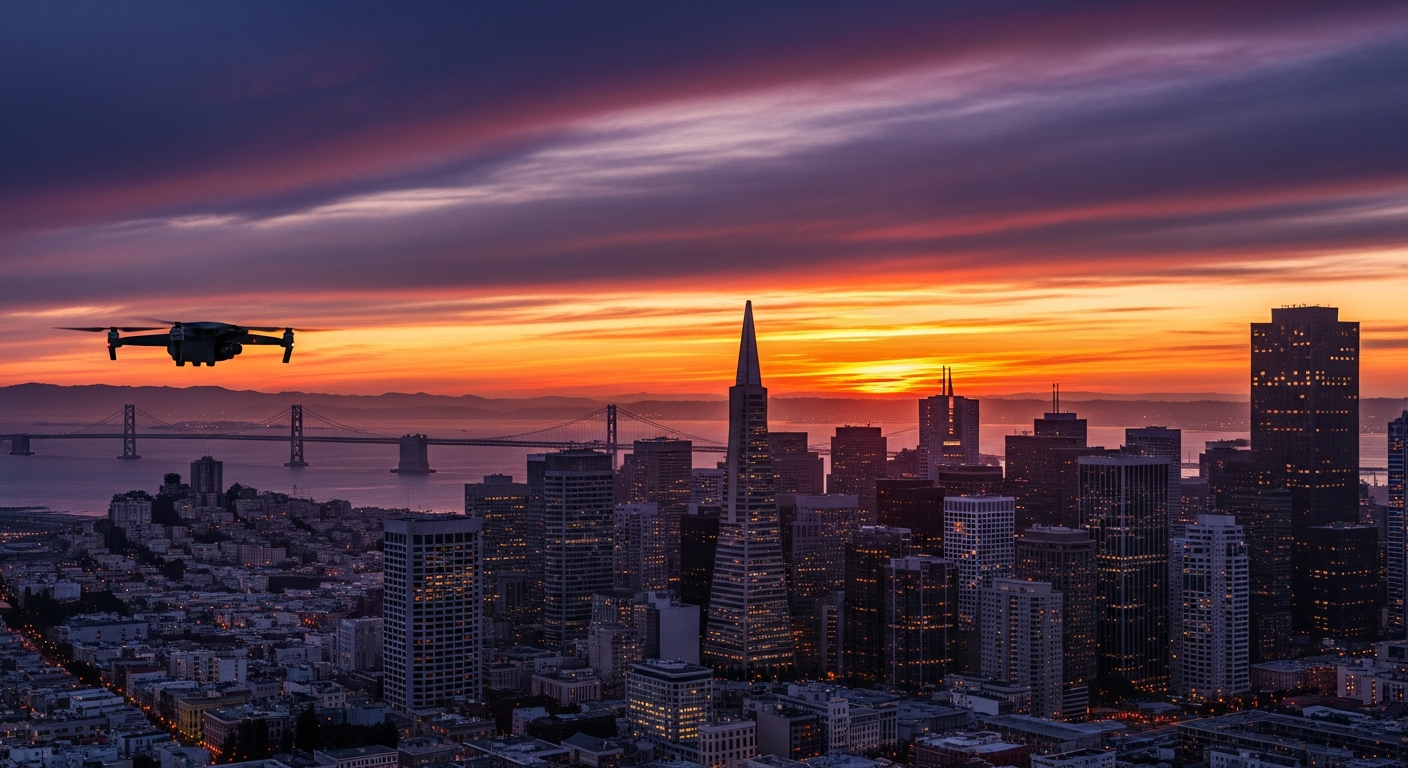
The "Security Paradox" of 2026 is that the more connected we are, the more vulnerable we become.
By shifting our mindset from "Everything is fine" to "I have a protocol for when things aren't fine," we actually **reduce our daily anxiety.** We stop worrying about the "if" because we’ve already solved the "then."
The 3-Signal System for Modern Preparedness
To manage this new reality without losing your mind, I’ve developed what I call the **"3-Signal System."** It’s a framework for maintaining mental and physical readiness without becoming a hermit.
1. The Digital Signal (Hardening the Edge)
In 2026, information is your first line of defense. But "doomscrolling" Reddit at 3 AM is not information—it’s digital self-harm.
You need a **curated intake.** Set up automated alerts for localized physical threats using tools that bypass the "outrage algorithm."
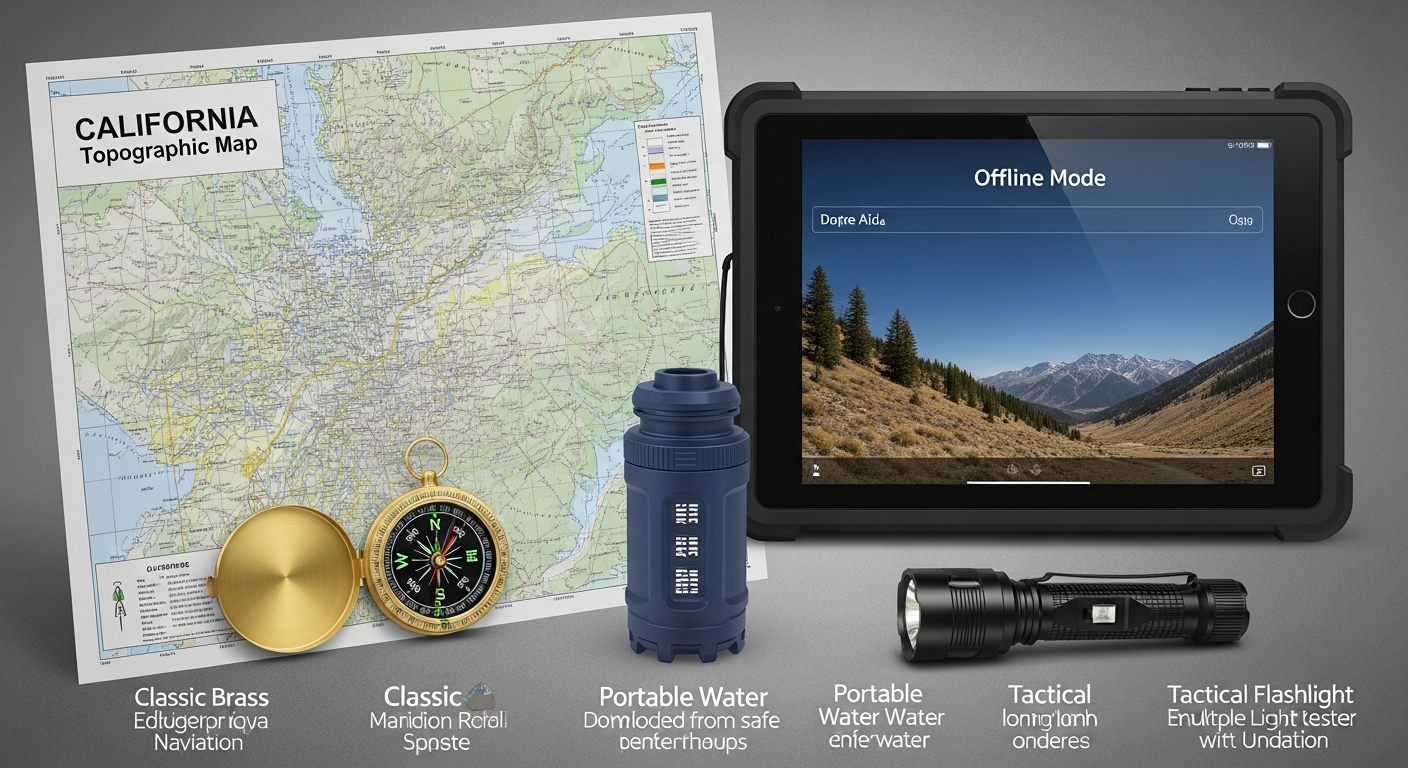
If an event happens, your internet might be the first thing to go. Do you have a **local-first knowledge base?** I’ve started keeping an offline copy of essential docs and maps on a hardened tablet.
If ChatGPT 5 goes down because of a regional power hit, you shouldn't be left wondering where the nearest manual water source is.
2. The Physical Signal (The "72-Hour Moat")
The FBI's warning about California drones suggests potential hits on infrastructure—power, water, or transport.
You don't need a bunker; you need a **72-hour moat.** This is the time it typically takes for large-scale emergency services to stabilize a "chaotic" zone.
This means having a "Go-Bag" that isn't just for earthquakes. It needs to include **analog communication tools.** In a drone-saturated conflict zone, GPS might be jammed or spoofed.
Do you know how to navigate your city with a paper map and a compass? It sounds "retro," but in a high-tech threat environment, **low-tech is the ultimate redundancy.**
3. The Psychological Signal (The Anxiety Firewall)
This is the most important part. You must build a **firewall against the "fear-ware"** being pushed by the media. The FBI alert is a data point, not a destiny.
Practice "Threshold Awareness." Acknowledge the threat, verify your preparations, and then **close the process.** Don't let the "threat thread" run in the background of your mind all day.
It consumes your "mental CPU" and leads to burnout. If you’ve done your 72-hour prep, you’ve earned the right to focus on your work and your family.
Real-World Application: Building Your Moat Today
If you live in California, or any major tech hub, you can start building your resilience protocol this weekend. It doesn't take much money—it takes **intentionality.**
First, audit your **"Analog Survival Skillset."** Most developers I know can solve a complex recursion problem but can't start a fire without a lighter or filter a gallon of water.
Take one Saturday to learn a "primitive" skill. It’s surprisingly grounding and acts as a powerful antidote to the "tech-fragility" anxiety.
Second, establish a **"Neighborhood Mesh."** The FBI warns that we aren't prepared because we are isolated. Talk to your neighbors. Not about "the drones," but about a plan.
"Hey, if the power goes out for more than six hours, let’s check on each other." This simple human connection is more effective than any AI-driven security system.
Finally, update your **emergency contact protocol.** If cell towers are congested or down, how will you reach your partner or kids? Establish a "Rendezvous Point" that is fixed and non-negotiable.
Having this "Hard-Coded" in your family’s brain reduces panic by 80% when a real alert hits.
Living in the Shadow of the Drone
The FBI’s quiet warning to California is a wake-up call that the "Digital Utopia" we’ve been building has some very real, very physical shadows.
We can’t go back to 1995, and we can’t stop the march of technology. But we can stop being **passive consumers of our own vulnerability.**
By the time 2027 rolls around, these kinds of alerts might be weekly occurrences. If we don't build our resilience now, we will spend the next decade in a state of constant, low-grade terror.
**Preparation is the only cure for panic.**
We are the ones who understand the tech. We are the ones who can see the vulnerabilities. Therefore, we have a responsibility—to ourselves and our communities—to be the most prepared people in the room.
Not because we’re afraid, but because we’re engineers. And we know how to fix a broken system.

**Have you started adjusting your personal "security stack" after these recent alerts, or are you still betting on the "Normalcy Bias"? Let’s talk about how you’re staying prepared in the comments.**
---
Story Sources
From the Author




Hey friends, thanks heaps for reading this one! 🙏
If it resonated, sparked an idea, or just made you nod along — I'd be genuinely stoked if you'd show some love. A clap on Medium or a like on Substack helps these pieces reach more people (and keeps this little writing habit going).
→ Pythonpom on Medium ← follow, clap, or just browse more!
→ Pominaus on Substack ← like, restack, or subscribe!
Zero pressure, but if you're in a generous mood and fancy buying me a virtual coffee to fuel the next late-night draft ☕, you can do that here: Buy Me a Coffee — your support (big or tiny) means the world.
Appreciate you taking the time. Let's keep chatting about tech, life hacks, and whatever comes next! ❤️