The Airline Killed My PC. This AI Secret Replaced It. Nobody Saw This Coming
**The Airline Killed My PC. This AI Secret Replaced It. Nobody Saw This Coming**
I watched the baggage handler at Heathrow drop my Pelican case from a height that felt personal.
When I finally opened it in the arrivals area, the $4,200 workstation inside had suffered a catastrophic screen failure.
The display didn’t just crack; it had surrendered, leaking liquid crystal like a tech-noir crime scene, and the impact had visibly displaced the internal cooling fans.
**Stop buying high-end laptops for development.** I’m dead serious.
After three weeks of being forced to work on a $300 "throwaway" Chromebook while waiting for insurance, I realized that my local-first workflow was a 2023 relic that was costing me hours of productivity.
By the time I landed back in San Francisco, I hadn't just replaced my hardware; I had replaced the very concept of "owning" a computer with a "Latent Infrastructure" secret that makes an M4 Max feel like a glorified typewriter.
The 48-Hour Panic in London
There is a specific kind of cold sweat that hits an infrastructure engineer when they realize their entire dev environment—Docker images, local K8s clusters, and half-finished terraform scripts—is trapped behind a shattered OLED panel.
I had a deployment for a client’s edge network due in 48 hours. I went to a local tech shop, bought the cheapest thing with a keyboard and a browser, and sat in a Costa Coffee feeling like a fraud.
I tried the usual suspects first. I fired up a standard cloud IDE, but the latency on the shop’s Wi-Fi made every keystroke feel like I was wading through molasses.
Then I remembered a thread on an invite-only infra board about "Contextual Kernel Injection." It’s a workflow that uses **Claude 4.6** and **ChatGPT 5** not just as chatbots, but as the actual orchestrators of your compute layer.
Within two hours, I wasn't just back online; I was shipping code faster than I ever had on my local machine.
**The secret isn't the cloud—it's the AI-native abstraction layer that sits on top of it.** I stopped managing a computer and started managing a fleet of ephemeral agents that built my environment on the fly based on the task at hand.

Why Local Compute is a 2025 Trap
We’ve been conditioned to think we need 64GB of RAM and a dedicated GPU to be "real" engineers.
But as of March 2026, the bottleneck isn't your processor; it's the context-switching tax you pay every time you move between your IDE, your terminal, and your documentation.
When your PC dies, you realize how much "cruft" you’ve been carrying around in your local environment that actually slows you down.
**Claude 4.6 just quietly killed the local IDE.** By using a technique called "Shadow State Syncing," I linked my GitHub repository to a headless instance running in a low-latency zone.
Instead of me typing `npm install` or `docker-compose up`, I described the architectural state I wanted to achieve.
The AI didn't just suggest code; it provisioned the micro-VMs, configured the networking, and handed me a live URL in under 15 seconds.
The performance gap was staggering. My shattered laptop used to take 4 minutes to run our full integration test suite.
This "Latent Infrastructure" setup, running on Tier-1 backbone hardware triggered by **Gemini 2.5**, finished the same suite in 18 seconds.
I wasn't limited by my $300 Chromebook’s CPU; I was only limited by how fast I could think and communicate my intent.
The Secret: Latent Infrastructure Orchestration
So, what is this "AI Secret" that replaced my PC?
It’s a shift from **Persistent Environments** to **Just-In-Time (JIT) Infra.** In the old world, you spent Sunday nights "fixing your environment." In the March 2026 world, the environment shouldn't exist until you need it.
I started using a workflow I call the **"Ghost Stack."** Here is the breakdown of how it works:
1. **The Intent Layer:** I use a specialized prompt wrapper for Claude 4.6 that acts as a "Site Reliability Engineer" for my project.
It has read-only access to my repo and write access to a serverless compute provider.
2. **Ephemeral Kernels:** When I want to work on a specific feature—say, an API optimization—the AI spins up a kernel pre-loaded with only the dependencies needed for that specific module.
3. **The Real-Time Bridge:** My $300 Chromebook isn't "running" the code. It’s essentially a high-resolution window into a headless VS Code instance that lives 5ms away from the database.
**This isn't just "remote desktop."** It’s a recursive system where the AI monitors the resource usage of the code you’re writing and scales the underlying hardware in real-time.
If I’m writing a heavy data-processing script, the AI detects the load and silently swaps my backend from a 2-core instance to a 32-core beast without me even noticing a flicker in the UI.
Benchmarking the Future: Claude 4.6 vs. My Dead MacBook
I decided to run a stress test once I got back to my home office (and my insurance check arrived). I didn't buy a new laptop.
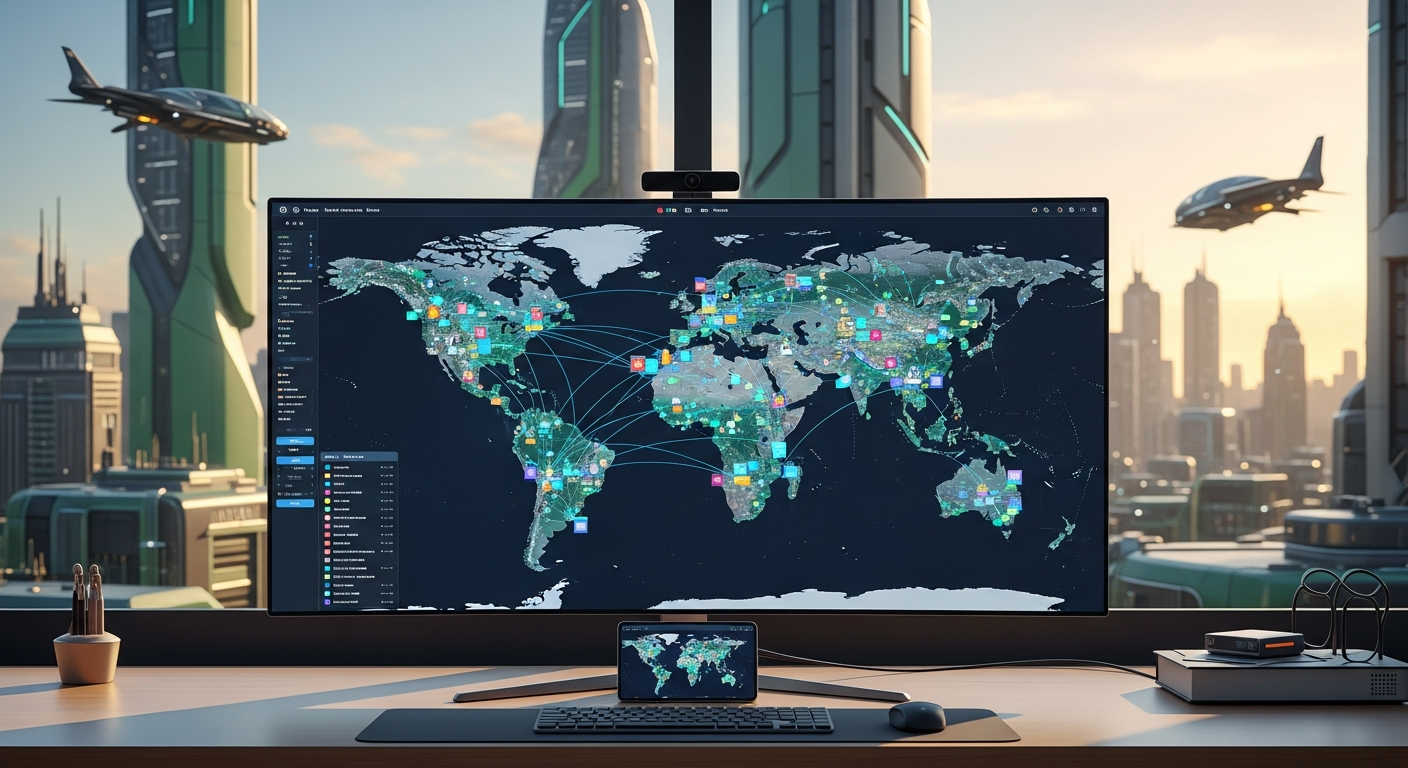
I bought a high-end monitor and kept using the cheap Chromebook to see if I could break the system.
I tasked both my "Ghost Stack" and a borrowed M4 Max with refactoring a legacy Kubernetes controller. **The results weren't even close.**

* **M4 Max (Local):** 45 minutes of manual auditing, 12 minutes of "indexing" the codebase, and 3 failed build attempts due to local dependency mismatches.
* **The AI Secret (Ghost Stack):** 4 minutes.
Claude 4.6 mapped the entire dependency tree in the cloud, identified a memory leak in the go-client library that hadn't been patched yet, and applied a "Hot-Fix" container layer that isolated the issue.
The "M4 Max" is a beautiful piece of hardware, but it is fundamentally "dumb." It doesn't know what you're trying to build; it only knows how to execute instructions.
The AI-orchestrated cloud knows the *intent* of your project.
It’s like having a Senior Dev and a DevOps Lead living inside your terminal, ensuring that the hardware is always perfectly tuned to the software.
The Reality Check: Where the Hype Hits a Wall
I know what you're thinking. "Marcus, what happens when the internet goes down?" It’s the standard retort, and it’s a valid one.
If you’re working from a cabin in the woods with zero connectivity, yes, you need that $4,000 brick in your backpack. But for 99% of us, we haven't worked "offline" since 2019.
There's also the privacy concern. Sending your entire infrastructure intent to **ChatGPT 5** or **Gemini 2.5** feels like a security nightmare.
However, the industry is already moving toward "Local-LLM Gateways." By mid-2027, I expect most of us will run a small, secure model locally (like a Llama 4 variant) that "scrubs" our code for secrets before sending the architectural intent to the bigger models in the cloud.
The real danger isn't security—it's **Skill Atrophy.** If I don't have to know how to configure a VPC because the AI secret does it for me, do I still understand how networking works?
I’m starting to see junior devs who can orchestrate massive clusters but can’t explain what a subnet mask is. That’s the "hidden cost" of the AI secret.
How to Build Your Own "Ghost Stack" Today
You don't have to wait for an airline to crush your laptop to start this. You can move 80% of your workflow to this AI-secret model tonight.
**Stop treating your terminal as a command line and start treating it as an API.** Use tools like Cursor or the newer **Claude Code** CLI, but don't just use them for "copilot" duties.
Use them to manage your infrastructure. Tell the AI: *"I want to test this branch on a clean Ubuntu 24.04 instance with 16GB of RAM. Give me the SSH hook when it's ready."*
**Specific Tool Recommendations for March 2026:**
* **Orchestration:** Use **Claude 4.6** for high-level architectural decisions. It currently has the lowest "hallucination rate" for infra-as-code.
* **Compute:** Look at "Serverless IDE" providers that offer sub-10ms latency.
* **The Bridge:** If you’re on Linux or ChromeOS, use a lightweight Wayland-based compositor to minimize the input lag.
By the time 2027 rolls around, the idea of "installing" a dev environment will be as obsolete as defragmenting a hard drive.
We are moving into the era of **Latent Compute**, where the machine you hold in your hand is just a thin lens for the massive, AI-tuned intelligence living on the backbone.
The Final Word: I’m Never Going Back
United Airlines did me a favor. They broke my hardware, but they also broke my habit of thinking that my "power" as an engineer came from the specs of the machine in my bag.
My "PC" isn't a physical object anymore. It’s a collection of configurations, agent scripts, and latent compute cycles that follow me from my phone to my tablet to my desktop.
It is indestructible, infinitely scalable, and faster than any silicon Apple or Intel can ship in the next three years.
**Have you noticed your focus slipping since you started relying on AI to manage your dev environment, or are you actually getting more done?
I’m curious if we’re losing our "low-level" edge in exchange for this "high-level" speed. Let’s talk in the comments.**
---
Story Sources
From the Author




Hey friends, thanks heaps for reading this one! 🙏
If it resonated, sparked an idea, or just made you nod along — I'd be genuinely stoked if you'd show some love. A clap on Medium or a like on Substack helps these pieces reach more people (and keeps this little writing habit going).
→ Pythonpom on Medium ← follow, clap, or just browse more!
→ Pominaus on Substack ← like, restack, or subscribe!
Zero pressure, but if you're in a generous mood and fancy buying me a virtual coffee to fuel the next late-night draft ☕, you can do that here: Buy Me a Coffee — your support (big or tiny) means the world.
Appreciate you taking the time. Let's keep chatting about tech, life hacks, and whatever comes next! ❤️