Tailscale Peer Relays is now generally available - A Developer's Story
**Stop Blaming Your AI Models. Tailscale's New Peer Relays Just Fixed the Real Problem.**
Last week, I almost threw my laptop across the room. My distributed AI training job, critical for our Q2 2027 product launch, kept failing. Not because of a bug in the model, or a bad dataset.
It was my network. Again.
I’d spent countless hours debugging code, optimizing hyperparameters, and even rewriting entire sections of our data pipeline, all while silently battling the ghost in the machine: inconsistent connectivity.
Then, Tailscale announced Peer Relays were generally available, and what I thought was just another networking update turned out to be the silent fix for a problem costing us thousands in lost GPU time and developer sanity.
I know what you're thinking. "Networking? What does that have to do with AI?" As an AI engineer, my focus has always been on the algorithms, the data, the sheer computational power.
I’ve spent years deep in Python, PyTorch, and the nuances of transformer architectures, believing that if the code was clean and the GPUs were fast, success was inevitable.
This tunnel vision, I now realize, was my biggest blind spot.
My confession: I’ve cheated myself and my team out of precious time and resources by consistently underestimating the foundational layer that makes all our AI ambitions possible.

The Invisible Chains: How Network Friction Cripples AI Development
For too long, I treated networking like plumbing — something that just *works* in the background.
If it didn't, I'd restart my router, blame the ISP, or just accept the latency as an unavoidable fact of remote work.
This mindset is a silent killer for AI teams, especially as we push the boundaries of distributed training, remote model deployment, and collaborative development.
Imagine trying to coordinate a symphony when half the musicians are experiencing intermittent signal drops. That's what AI development feels like when your network is unreliable.
Our team, like many in 2026, is distributed. We've got engineers in different cities, some working from home, others accessing cloud instances, and a few managing on-prem GPU clusters.
We rely heavily on tools like Cursor for collaborative coding, and we’re constantly pushing massive datasets to and from cloud storage, orchestrating distributed training runs with frameworks like Ray, and deploying models to various endpoints.
Every single one of these operations is utterly dependent on a stable, performant, and secure network connection.
The problem wasn't always obvious. Sometimes, a training job would mysteriously stall or fail without a clear error message. Other times, pushing a 50GB dataset would take hours instead of minutes.
Accessing a Jupyter notebook running on a remote server felt like wading through treacle. My initial reaction was always to blame the cloud provider, the framework, or even my own code.
I’d waste hours, sometimes days, trying to optimize things that were already optimal, while the real bottleneck lurked in the shadows: our network setup.
We’d even started to consider scaling back on distributed training, thinking it was too complex, when in reality, our network wasn't complex enough to handle the modern demands of AI.
The Peer Relay Revelation: Unlocking Direct AI Connections
The announcement from Tailscale about Peer Relays being generally available in February 2026 finally forced me to confront my networking ignorance.
I’d been using Tailscale for years to simplify secure access to our internal resources – a virtual private network that just *worked* without the usual VPN headaches.
But I hadn't fully appreciated the underlying magic of how it establishes direct peer-to-peer connections wherever possible.
**What Peer Relays actually solve:** In simple terms, many networks today use something called NAT (Network Address Translation).
Think of it like a big apartment building (your router) where all residents (your devices) share one public postal address.
When someone outside wants to send a letter to a specific resident, the building manager (NAT) needs to know exactly which apartment to forward it to.
This works fine for outgoing traffic, but for incoming direct connections, it gets complicated, leading to what's known as "NAT traversal" issues.
Peer Relays are a clever solution to these issues.
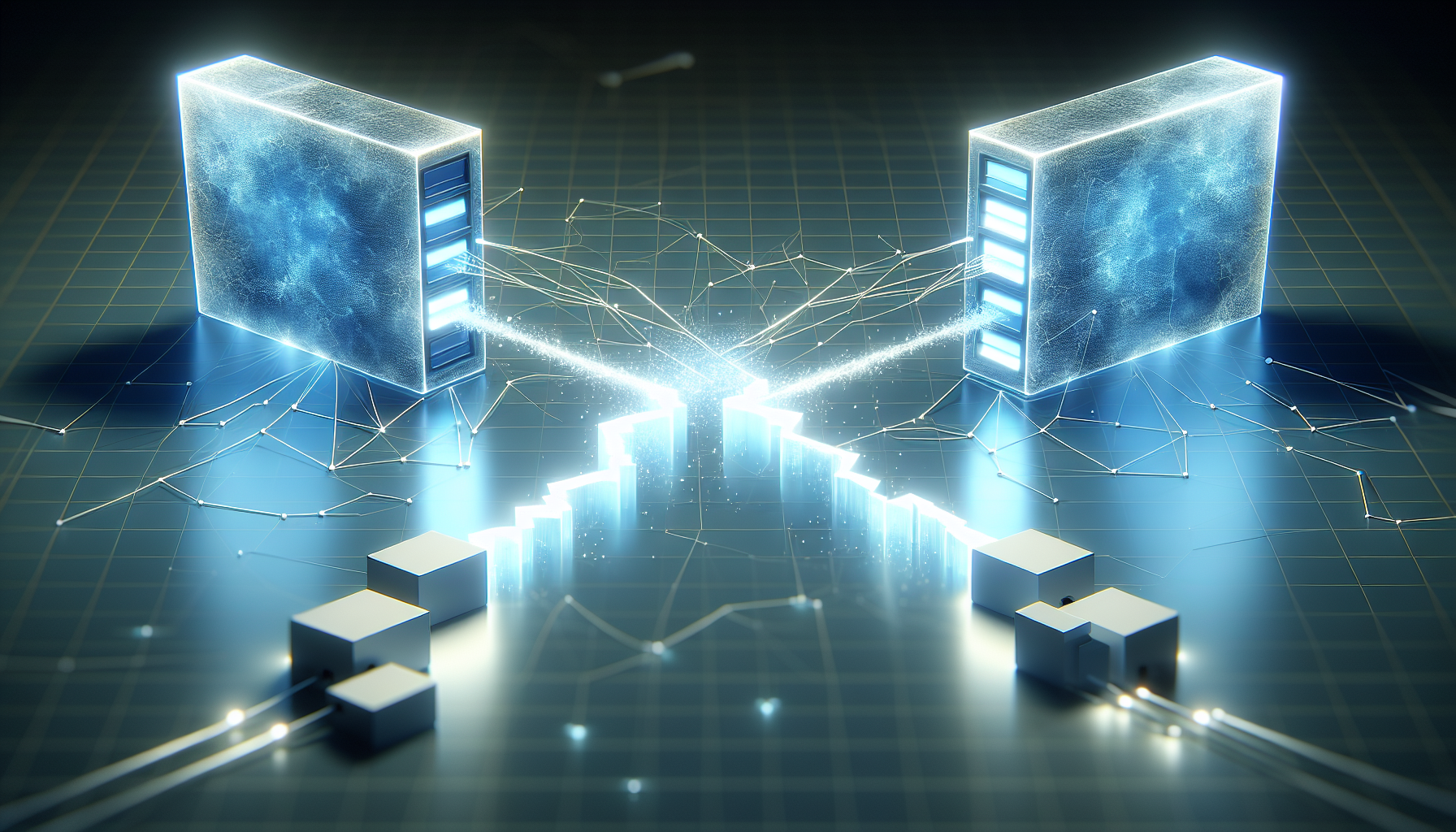
When two Tailscale devices can't establish a direct connection because of restrictive NATs or firewalls (often the case in corporate networks, home networks with strict configurations, or cellular data), a Peer Relay steps in.
It acts as an intermediary, securely relaying traffic between the two devices.
It’s not a full proxy that routes *all* your traffic, but a smart fallback that ensures your devices can *always* talk directly, even when the network tries to prevent it.
For an AI engineer working with distributed systems, this is a game-changer. My frustration wasn't just about speed; it was about **reliability**.
The intermittent failures in our distributed training jobs often stemmed from one node losing its direct connection to another, or to the central data store.
Peer Relays dramatically increase the chances of maintaining these direct, low-latency connections, or at least ensuring a reliable fallback when direct isn't possible.
It's the difference between your distributed AI framework seeing a clear path or a constantly flickering signal.
The Cost of Connectivity Blindness in AI
I began to see how this seemingly minor networking detail had profound implications for our AI roadmap.
#### The "Silent Failure" Cascade
When a distributed training job fails due to network instability, it's rarely attributed to the network itself. The logs often point to timeouts, communication errors, or even data corruption.
This leads to:
1. **Wasted GPU Hours:** Every minute a job is stalled or failing is a minute of expensive GPU time going nowhere.
If you're running on cloud instances, this directly translates to hundreds or thousands of dollars in wasted compute.
2. **Developer Burnout:** Debugging these "silent failures" is soul-crushing. You chase ghosts in the code, question your models, and lose faith in your infrastructure.
This impacts morale and productivity far more than a clear bug.
3. **Delayed Innovation:** If distributed training is unreliable, teams revert to single-node setups, limiting the scale and complexity of models they can develop.
This slows down research, experimentation, and ultimately, product delivery.
Our Q2 2027 launch was already feeling the pressure, and I now realize a significant portion of that pressure was self-inflicted by ignoring the network.
#### The Remote Work Dilemma
With the rise of remote and hybrid work, AI teams are more geographically dispersed than ever.
Accessing on-prem GPU servers, internal model registries, or secure data lakes from a home office behind a double-NAT router used to be a constant battle. Peer Relays make these connections robust.
It means I can reliably access our internal Kubernetes cluster from my home office, orchestrate complex training jobs, and share large model checkpoints with colleagues, all without fearing a sudden disconnect that invalidates hours of work.
It eliminates the need for complex firewall rules or clunky, less secure VPN setups that often introduced their own latency.
The Reality Check: Not a Magic Bullet, But a Fundamental Enabler
While Peer Relays are a significant leap forward, they aren't a panacea for all network woes. They won't magically give you a gigabit connection if your ISP only provides 10 Mbps.
They won't fix misconfigured DNS or application-level bugs.
What they *do* fix is the fundamental problem of connectivity in complex network environments.
They ensure that when two Tailscale devices *want* to talk directly, they almost always can, or at least have a robust fallback.
This distinction is crucial. We, as AI engineers, often seek the "magic bullet" in new model architectures or cutting-edge frameworks.
But the reality is that the most impactful improvements often come from solidifying the foundational layers.
Peer Relays are not about making your AI run faster *per se*, but about ensuring your AI *can run reliably at all* across a modern, distributed infrastructure.
It removes a layer of unpredictable friction, allowing us to focus on the actual AI challenges.
The Practical Takeaway: Prioritizing Network Resilience in AI Workflows
So, what should you, as an AI professional, do about this?
1. **Embrace Network Awareness:** Stop treating networking as an afterthought. Understand the basic principles of how your devices connect, especially in distributed AI setups.
If you're using Tailscale, verify your nodes are using Peer Relays when direct connections aren't possible (you can often see this in Tailscale's connection details).
2.
**Leverage Tailscale for Distributed AI:** If you're running distributed training jobs across various cloud providers, on-prem hardware, or remote machines, Tailscale can dramatically simplify and secure your network layer.
Peer Relays ensure that Ray clusters, Dask workers, or custom MPI jobs can reliably communicate, even when nodes are behind different firewalls.
3. **Secure Your AI Data & Models:** Tailscale's WireGuard-based encryption ensures all traffic between your AI nodes is secure.
Peer Relays uphold this security even when direct connections are challenging, ensuring sensitive training data and proprietary model weights remain protected during transfer.
4. **Simplify Collaboration:** For AI teams, easy access to shared development environments (JupyterHub, VS Code Remote), data lakes, and internal APIs is crucial.
Peer Relays ensure that every team member, regardless of their network setup, can connect seamlessly and securely, fostering true collaboration.
I used to think of network problems as an unfortunate, unfixable part of the job. But watching how Tailscale’s Peer Relays have quietly stabilized our AI infrastructure has been a profound lesson.
It's not about optimizing a single model anymore; it's about optimizing the entire ecosystem around it.
The future of AI is distributed, collaborative, and increasingly remote. And that future demands a network that just works.
Have you noticed your distributed AI training jobs failing due to mysterious network issues, or is it just me? What's the one networking challenge that consistently frustrates your AI workflow?
Let's talk in the comments.
---
Story Sources
From the Author



Hey friends, thanks heaps for reading this one! 🙏
If it resonated, sparked an idea, or just made you nod along — I'd be genuinely stoked if you'd show some love. A clap on Medium or a like on Substack helps these pieces reach more people (and keeps this little writing habit going).
→ Pythonpom on Medium ← follow, clap, or just browse more!
→ Pominaus on Substack ← like, restack, or subscribe!
Zero pressure, but if you're in a generous mood and fancy buying me a virtual coffee to fuel the next late-night draft ☕, you can do that here: Buy Me a Coffee — your support (big or tiny) means the world.
Appreciate you taking the time. Let's keep chatting about tech, life hacks, and whatever comes next! ❤️