STOP! Your Google API Keys Are Actually Dangerous. Gemini Changed The Rules.
STOP! Your Google API Keys Are Actually Dangerous. Gemini Changed The Rules.
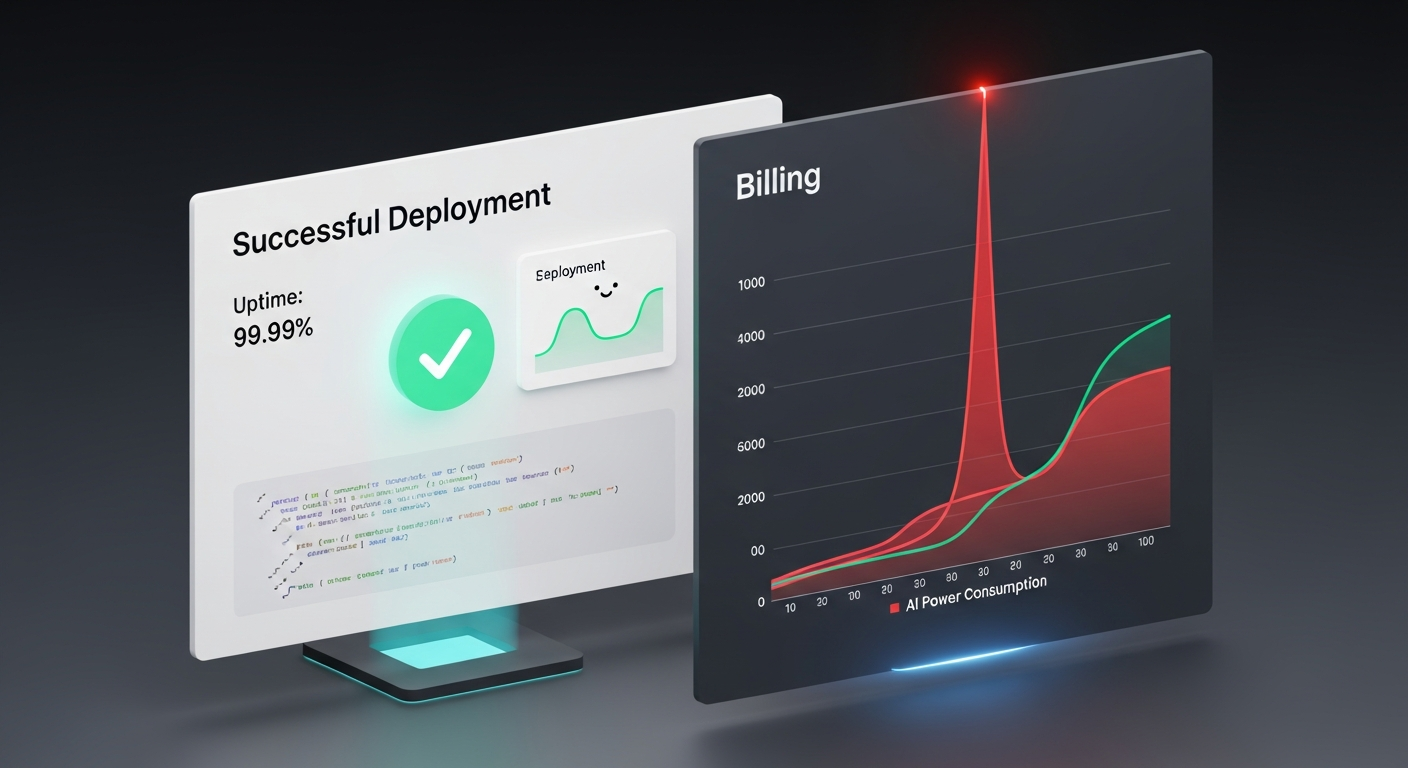
I watched a developer lose $14,000 in a single weekend because of a habit we all learned in 2015. He wasn't a junior; he was a lead engineer who had spent a decade building production-grade React apps.
He did what thousands of us have done for years: he embedded a Google API key in his frontend code. In the old world of Google Maps and Firebase, this was standard practice.
You restricted the key by domain, pushed it to production, and slept soundly.
But it’s February 2026, and the rules of the game have fundamentally changed. **Google API keys are no longer "just keys"—they are high-velocity credit cards with no spending limits.**
If you haven't audited your Google Cloud Console in the last six months, you are likely sitting on a ticking time bomb.
The "safe" keys you generated for a simple Map widget or a YouTube embed have likely inherited the power of **Gemini 2.5**, and the consequences of a leak are now catastrophic.
The Great Deception of "Restricted" Keys
For a long time, Google promoted a mental model that differentiated "secrets" from "identifiers." If you were using AWS, you knew your Secret Access Key was a nuclear code.
You never, ever let it touch a browser.
Google Maps was different. To make a map load, the browser *needed* the key. Google’s solution was HTTP Referrer restrictions.
You told Google, "Only allow this key to work if the request comes from `myapp.com`."
We felt safe. Even if someone "stole" the key from our source code, they couldn't use it on their own site because the referrers wouldn't match.
**This false sense of security is exactly what is ruining developers today.**
The problem is that referrers are easily spoofed in server-to-server environments or via simple command-line tools.
An attacker doesn't want to host your map; they want to use your **Gemini 2.5 Flash** quota to run their own bot farm.
How a Map Key Becomes a Mining Rig
Here is the nightmare scenario I saw play out last month. A startup was using a standard Google API key for a "Contact Us" map. That key was restricted by domain, just like the documentation suggests.

However, when they enabled **Gemini 2.5** in their Google Cloud Project to build a new internal AI tool, they didn't realize that by default, many API keys are "unrestricted" in terms of which services they can access.
The attacker scraped the key from their frontend. They didn't try to load a map.
They wrote a simple Python script that spoofed the referrer header and started hammering the Gemini Pro API with massive, complex prompts.
**By the time the automated billing alert hit the CEO’s inbox at 3 AM on Sunday, the attacker had processed four billion tokens.** Because the key was tied to a "Default" service account with billing enabled, Google just kept clearing the transactions.
Gemini 2.5 is Not a Map Widget
The cost profile of LLMs has broken the old security model.
In the old days, if someone stole your Google Maps key, the worst-case scenario was a few hundred dollars in overages before you noticed the spike in traffic.
With **Gemini 2.5 Ultra**, the cost density is orders of magnitude higher. You can rack up thousands of dollars in debt in the time it takes to brew a cup of coffee.
Furthermore, these keys are now tied to **Vertex AI**.
This means a leaked key doesn't just grant access to a text box; it can grant access to custom-trained models, private datasets, and even your cloud storage buckets if your IAM permissions are messy.
**We are treating 2026-era AI power with 2016-era security habits.** We are handing out keys to the vault because they look like the keys to the mailbox.
The "Hidden" Services Problem
Go to your Google Cloud Console right now. Look at your API keys. Click "Edit." Look at the "API Restrictions" section.
If it says **"Don't restrict key,"** you are in immediate danger. This means that single string of characters can call *any* API enabled in your project.
Even if you think you’ve restricted it, check the list of "Enabled APIs." Most developers enable "Generative Language API" for the whole project.
Suddenly, that "Map Key" on your homepage is a gateway to your entire AI infrastructure.
I’ve talked to engineers who argued that "Flash is cheap, who cares?" **It doesn't matter how cheap the tokens are when the concurrency is infinite.** An attacker doesn't care about your per-token cost; they care about your lack of a "Hard Ceiling" on billing.
Why Google's UI is Part of the Problem
I’ll be honest: Google Cloud makes it too easy to fail. When you create a new project to "try out Gemini," the onboarding flow encourages you to generate a key and start coding immediately.
They want to reduce friction. They want you to see how much better **Gemini 2.5** is than **Claude 4.6** or **ChatGPT 5**.
But in that rush to "Hello World," the security defaults are set for developer convenience, not production safety.
The console doesn't scream at you when you use an unrestricted key. It doesn't force you to set a billing quota that actually stops the service.
It just asks for a credit card and gives you a green light.
**Your "Trial" project is often just one misclick away from becoming a "Production" liability.** We have to stop treating these "Playground" keys as disposable.
The 2026 Security Audit Checklist
If you are a lead dev or a founder, you need to perform a "Burn the Keys" audit today. Don't wait for the billing cycle to end.
1. **Move Everything to a Proxy:** Never, ever call `generativelanguage.googleapis.com` from the frontend. Your frontend should call your own `/api/generate` endpoint.
Your server holds the key; the browser only holds a session token.
2. **Service-Specific Keys:** If you *must* use a key in the frontend for Maps or Firebase, create a dedicated Google Cloud Project *just* for those services.
Do not enable Vertex AI or Gemini in that project.
3. **Hard Billing Quotas:** Google Cloud allows you to set "Budgets," but budgets are just emails. You need to set **API Quotas**.
Limit your Gemini usage to $50/day. If you hit it, the app breaks, but your bank account stays intact.
4. **Rotate Monthly:** If a key has been in your GitHub repo for more than 30 days, consider it compromised. Automation tools now rotate keys every 24 hours for a reason.
The Shift to Identity-Based Security
The era of the "API Key" is actually ending. In 2026, the industry is moving toward **Workload Identity Federation**.
Instead of a static string (the key), your application uses a short-lived token generated based on its environment (like a GitHub Action or a Vercel deployment).
If an attacker steals a token, it expires in minutes.
It’s a bit more work to set up. It requires understanding IAM roles and service accounts. But compared to the $14,000 "education" my friend received, it's the best investment you'll make this year.
**We need to lose the "API Key" mentality entirely.** If you are still copy-pasting strings into `.env` files and pushing them to production, you are operating on borrowed time.
Is Privacy the Next Leak?
It’s not just about the money. A leaked Gemini key allows an attacker to "act as you."
If your Gemini implementation has access to your company's internal documentation or customer data (via RAG or Vertex Search), a stolen key is a direct tunnel into your private data.
An attacker can ask your model, "What were the Q3 earnings projections?" or "Show me the last 10 customer support tickets for [User X]." Because the key is valid, your system will happily provide the answers.
**This is the ultimate prompt injection.** You aren't bypassing a filter; you are bypassing the entire authentication layer.
Stop Being "The Cool Developer"
We all want to ship fast. We want to show the stakeholders the "magic" of AI without getting bogged down in "Cloud Ops" and "Security Governance."
But the "Cool Developer" who ships the feature in a day is often the one who leaves the back door wide open.
In the age of Gemini, "shipping fast" without "securing first" is just professional negligence.
The tools have become too powerful for us to remain this casual. **Gemini 2.5** is a world-class reasoning engine; don't let it be used as a world-class engine for your financial ruin.
**Have you checked your API key restrictions lately, or are you still relying on HTTP referrers to save you? Let's talk about your "oops" moments in the comments.**
---
Story Sources
From the Author



Hey friends, thanks heaps for reading this one! 🙏
If it resonated, sparked an idea, or just made you nod along — I'd be genuinely stoked if you'd show some love. A clap on Medium or a like on Substack helps these pieces reach more people (and keeps this little writing habit going).
→ Pythonpom on Medium ← follow, clap, or just browse more!
→ Pominaus on Substack ← like, restack, or subscribe!
Zero pressure, but if you're in a generous mood and fancy buying me a virtual coffee to fuel the next late-night draft ☕, you can do that here: Buy Me a Coffee — your support (big or tiny) means the world.
Appreciate you taking the time. Let's keep chatting about tech, life hacks, and whatever comes next! ❤️