Stop Writing Code. "Vibe Coding" Actually Just Replaced Your Entire Career.
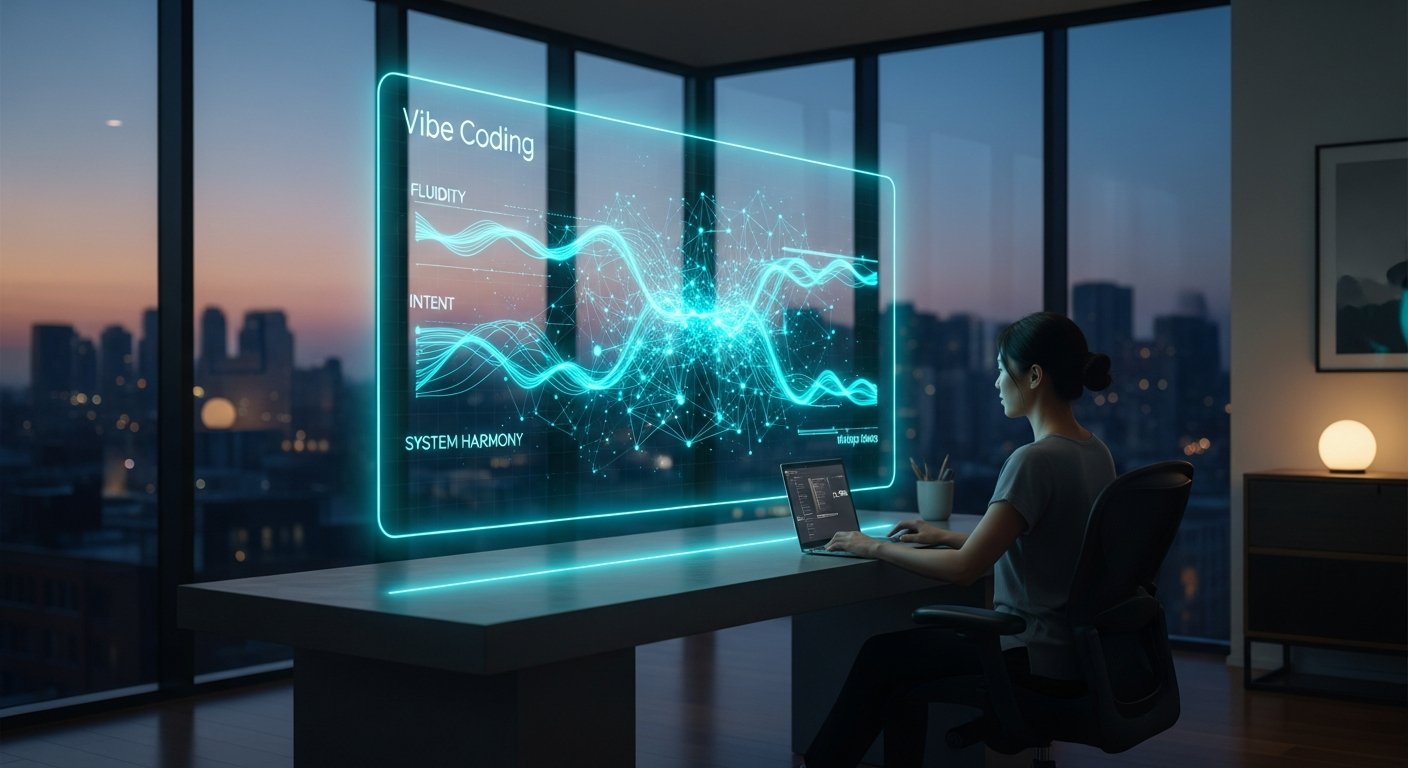
Stop Writing Code. “Vibe Coding” Actually Just Replaced Your Entire Career.
I deleted my favorite VS Code snippets last Tuesday. All of them.
After twelve years of obsessing over clean architecture, DRY principles, and the perfect folder structure, I realized that **knowing how to write a Redux reducer is now about as valuable as knowing how to shoe a horse in 1950.**
The shift happened faster than any of us predicted. We thought we had until 2028 or 2030 before the "manual labor" of software engineering became obsolete.
But looking at the explosion of "Vibe Coding" on r/webdev this week—with over 1,800 developers essentially admitting they’ve stopped typing and started "vibing"—it’s clear the tipping point is already behind us.
If you’re still pridefully hand-rolling your CSS modules or manually debugging race conditions in your Node.js streams, you aren't being "thorough." **You are being a bottleneck.** We have officially entered the era of the Vibe, and if you don't change how you work by the end of 2026, you’re going to be a legacy artifact in your own company.
The Morning I Realized I Was a Fossil
I spent four hours last month trying to optimize a complex React-based data visualization for a client.
I was doing it "the right way"—profiling components, checking for unnecessary re-renders, and manually memoizing expensive calculations. It was a masterpiece of "Senior Engineer" craftsmanship.
While I was taking a coffee break, my junior dev, who has exactly eight months of experience, pushed a PR that solved the entire performance issue and added three features I hadn't even started on yet.
He didn't use a profiler. He didn't even look at the source code of the visualization library we were using.
**He just "vibed" it out with Claude 4.6.** He fed the agent the entire component tree, described the "laggy feel" he wanted to eliminate, and asked it to "make it feel like a buttery-smooth MacOS interface." The agent didn't just fix the code; it refactored the entire state management strategy into something I hadn't even considered.
I felt a mix of ego-bruising embarrassment and intense curiosity. I asked him how he knew the refactor would work. He shrugged and said, "I didn't.
But the vibe felt right after the third iteration, and the benchmarks confirmed it." That was the moment I realized **the syntax-to-salary pipeline is officially broken.**
What is "Vibe Coding" Really?
For the uninitiated, "Vibe Coding" sounds like a lazy joke from a TikTok influencer. In reality, it is the most significant architectural shift since the invention of the high-level language.
It is the process of **coding via high-level intent and iterative feedback loops** rather than manual instruction.
In 2024, we used AI as a "Copilot" to autocomplete our lines. In early 2026, we are using agents like ChatGPT 5 and Gemini 2.5 as the primary pilots.
We are no longer the ones holding the yoke; we are the air traffic controllers.
**Vibe Coding is about managing the "feel," "intent," and "systemic flow" of an application.** You aren't telling the computer *how* to loop through an array.
You are telling the computer that the user needs to feel a sense of "instant gratification" when they click the search button, and then you're vetting the three different architectural approaches the AI proposes to achieve that "vibe."
The Death of the "Syntax Wizard"
The reason this is causing such a firestorm on Reddit is that it attacks the core identity of the professional developer.
We’ve spent decades building our value on our ability to remember obscure API signatures and weird JavaScript quirks. **We turned our brains into expensive compilers.**
But in a world where Claude 4.6 can write a bug-free, optimized Rust backend in four seconds, "knowing the syntax" has a market value of exactly zero dollars.
The "Syntax Wizard" is being replaced by the "System Architect of Intent."
If you’re a mid-level developer, this should terrify you if your only skill is "shipping tickets." If your job is taking a Jira task and turning it into code, **you are currently being automated out of existence.** The machine can do that faster, cheaper, and without needing a lunch break or a 401k.

The Vibe-Logic Synthesis: A 3-Part Framework
To survive this, you have to stop thinking like a coder and start thinking like a Director.
You need a framework to manage these agents, or you’ll just end up with a "vibe" that looks great on the surface but collapses under 10,000 concurrent users.
Here is the **Vibe-Logic Synthesis**—the mental model I’ve been using to keep my career relevant in this new landscape.
1. High-Fidelity Intent (The Vision)
Instead of writing a technical spec, you write a **Vision Document.** You aren't defining the database schema; you're defining the user's emotional journey and the business constraints.
You tell the agent, "I need a checkout flow that feels 'invisible' to the user but 'unbreakable' to the accounting department."
2. The Agentic Sandbox (The Iteration)
You don't just take the first output. You set up a "Sandbox" where ChatGPT 5 and Claude 4.6 compete. You give them the same "vibe" and see which one handles the edge cases better.
**Your job is to be the judge of the output, not the creator of the input.** You iterate until the "vibe" of the code matches the "vibe" of the requirement.
3. Architectural Veto (The Guardrails)
This is where your seniority actually matters. The AI will give you a "vibe" that works, but it might use a library that's about to be deprecated or a pattern that won't scale.
**You are the one with the "Veto Power."** You aren't writing the code, but you are setting the boundaries.
You say, "I love the vibe of this UI, but refactor the backend to use a serverless architecture because our traffic is spiky."
Why "Taste" is the New Hard Skill
In the old world, the best engineers were the ones who were the most logical. In the Vibe Coding world, **the best engineers are the ones with the best taste.**
When anyone can generate a functional app in ten minutes, the only thing that differentiates a $50 million product from a weekend project is the "taste" of the person directing the AI.
Do you understand typography? Do you understand the subtle psychology of latency? Do you know when a system is "over-engineered" for its current scale?
**We are moving from an era of "Construction" to an era of "Curation."** If you don't have a strong opinion on what "good" software feels like, you won't be able to "vibe" effectively.
You’ll just be a person hitting the "randomize" button on a machine you don't understand.
The 18-Month Career Pivot
Let's talk about the next 18 months. By late 2027, the "Vibe" will be the industry standard.
Companies won't be hiring "React Developers." They will be hiring "Product Engineers who can drive Agentic Workflows."
If you want to still have a high-paying job in 2027, you need to start doing three things immediately:
1. **Stop "solving" bugs manually.** When you see an error, don't fix it.
Describe the error to your agent, explain why it shouldn't happen, and have the agent refactor the system so the error becomes *impossible*.
2. **Learn the "Why," not the "How."** Don't spend time learning a new framework's syntax. Spend time learning *why* that framework exists.
What problem does it solve? What are its trade-offs? This is the knowledge you’ll use to "veto" AI hallucinations.
3. **Develop a "Creative Voice."** Start building projects where the technical implementation is handled 100% by AI. Force yourself to focus entirely on the UX, the business logic, and the "vibe."
The Ethical Elephant in the Room
I know what some of you are thinking. "Sarah, isn't this just making us dumber? If we stop writing code, won't we lose the ability to understand it?"
It’s a valid fear. I worried about it too.
But then I realized that **architects don't need to know how to lay every single brick to design a skyscraper.** They need to understand the physics of the building, the properties of the materials, and the needs of the people who will live in it.
We are finally being elevated from "bricklayers" to "architects." Yes, we might lose our calloused "syntax fingers," but we are gaining the ability to build systems of a complexity and beauty that were literally impossible for a human team to hand-code three years ago.
The Bigger Picture: Meaning in the Machine
Ultimately, "Vibe Coding" isn't about being lazy. It’s about **removing the friction between human imagination and digital reality.**
For the last forty years, we’ve been limited by how fast we can type and how much syntax we can cram into our biological brains. We’ve spent 90% of our energy on the "How" and only 10% on the "What."
**Vibe Coding flips that ratio.** It allows us to spend our energy on the problems that actually matter: How do we make software that helps people?
How do we build systems that are ethical and equitable? How do we create things that have never existed before?
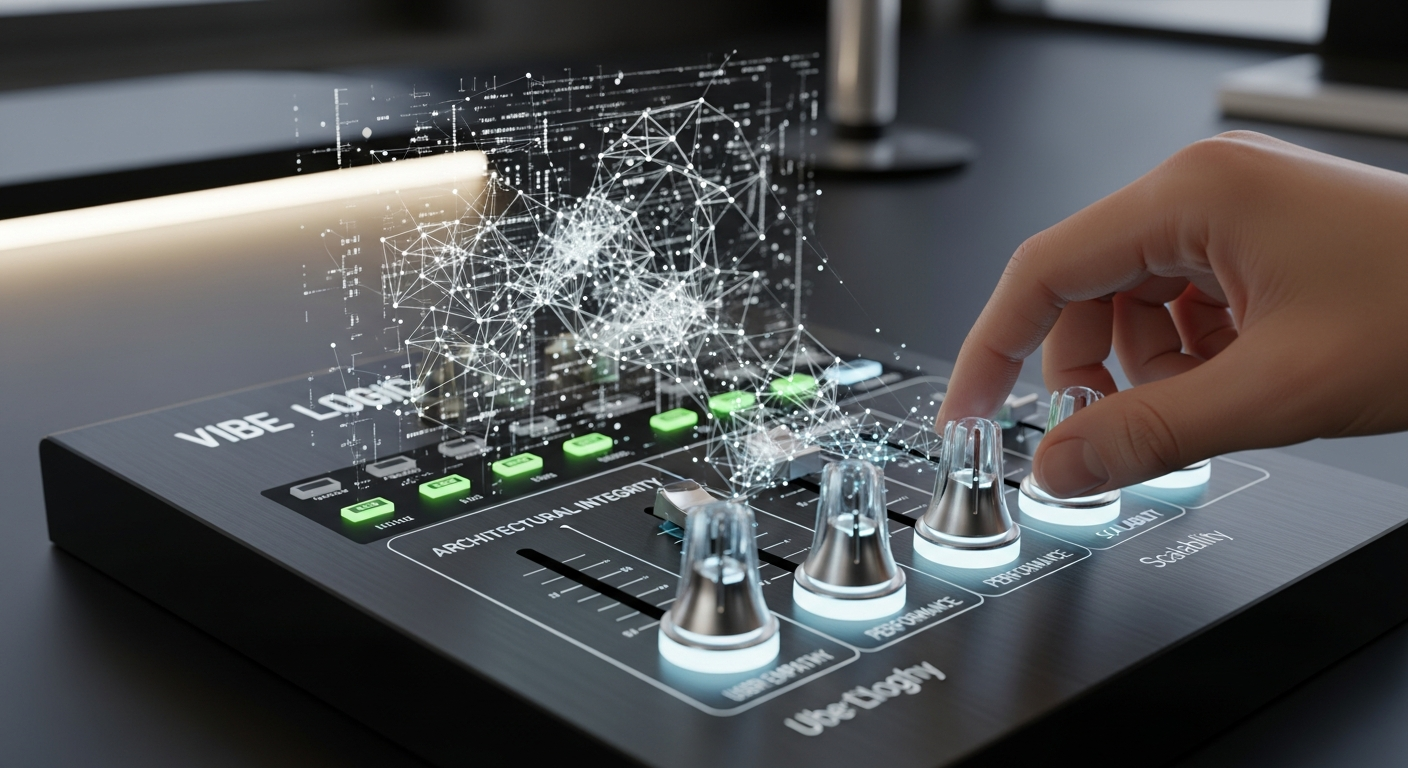
The "Vibe" is just the interface. The "Soul" of the software still has to come from us.
**Are you still clinging to your manual syntax skills like a security blanket, or have you actually tried "vibing" a full-stack app from scratch?
I’d love to hear if you think this is the end of the craft or the beginning of a better one in the comments.**
---
Story Sources
From the Author




Hey friends, thanks heaps for reading this one! 🙏
If it resonated, sparked an idea, or just made you nod along — I'd be genuinely stoked if you'd show some love. A clap on Medium or a like on Substack helps these pieces reach more people (and keeps this little writing habit going).
→ Pythonpom on Medium ← follow, clap, or just browse more!
→ Pominaus on Substack ← like, restack, or subscribe!
Zero pressure, but if you're in a generous mood and fancy buying me a virtual coffee to fuel the next late-night draft ☕, you can do that here: Buy Me a Coffee — your support (big or tiny) means the world.
Appreciate you taking the time. Let's keep chatting about tech, life hacks, and whatever comes next! ❤️