Stop Worrying About AI Taking Jobs. Actually, It Just Gave Me One.

***
Stop Worrying About AI Taking Jobs. Actually, It Just Gave Me One.
**Stop panicking about the AI "job apocalypse." I’m serious.
After losing my senior dev role in the late 2025 “Efficiency Wave,” I spent 75 days trying to prove the doomers right—and ended up landing a $165k offer because I stopped coding and started orchestrating.**
The narrative on r/ChatGPT has been the same for eighteen months: "It’s over for juniors," "Seniors are next," and "Learn to flip burgers." I believed it.
In January 2026, when my department was "right-sized" in favor of a lean team running Claude 4.6 agents, I felt like a relic.
I had a $12,000 severance and a choice. I could spend ten weeks polishing a resume that no human would ever read, or I could run a high-stakes experiment.
I decided to see if ChatGPT 5 and Claude 4.6 could actually *create* a career for me instead of just deleting my old one.
The $12,000 Experiment: The Setup
I didn't just want a job; I wanted to see if I could automate the entire concept of "being an applicant." The goal was to build a "Ghost Portfolio"—a series of five functional SaaS products built entirely with AI—and then use an autonomous agent to "network" its way into the C-suite of mid-market tech firms.
I treated this like a scientific trial. I tracked every API credit spent, every hour of "human-in-the-loop" time, and every response rate. I wasn't looking for a "Junior React Dev" role.
I was looking for the new category of jobs the recruiters haven't named yet: **The AI Orchestrator.**

The Rules of the Game
To keep the data clean, I set three strict rules for the 75-day sprint:
1. **Zero Manual Coding:** I was forbidden from typing a single line of logic. If ChatGPT 5 or Claude 4.6 couldn't write the component, the feature didn't exist.
2. **AI-Only Outreach:** Every LinkedIn message, every cold email, and every follow-up had to be drafted and sent by my agentic workflow.
3. **The "Vibe" Check:** I would only accept an interview if the company specifically asked *how* I built the portfolio, not *what* was in it.
Round 1: The "Ghost" Portfolio (ChatGPT 5 vs. Reality)
In early January 2026, I started building. I used **ChatGPT 5** as my product manager and **Claude 4.6** as my lead engineer.
The results were offensive to anyone who spent four years getting a CS degree.
In the first 14 days, I shipped three fully functional web apps. A real-time inventory predictor, a multi-modal legal document summarizer, and a hyper-niche CRM for solar installers.
**The data was staggering:**
* **Total Dev Time:** 22 hours (vs. an estimated 450 hours for a human team).
* **Total Cost:** $142 in API tokens. * **Lines of Code:** 18,400 (99.8% AI-generated).
When I showed these to my former colleagues, they were horrified. "This code is better than our legacy repo," one told me. The "Job Taking" phase of the experiment was over.
I had just replaced a 5-person dev team with a $20/month subscription. Now, I had to see if it would give me the job back.
Round 2: The Agentic Outreach (Claude 4.6)
This is where things got weird. Applying through LinkedIn "Easy Apply" is a death sentence in 2026—your resume is instantly shredded by the same AI you're trying to work with.
I built a custom "Networking Agent" using **Claude 4.6's new reasoning engine.** I fed it 500 target companies and told it to find the CTOs, analyze their last three podcast appearances, and write a hyper-personalized pitch about how my "Ghost Portfolio" solved a specific problem they mentioned.
**The Outreach Stats (30-Day Window):** * **Total Emails Sent:** 150 * **Open Rate:** 92% (Industrial average is 21%)
* **Meeting Requests:** 47 * **Response Time:** Most CTOs replied within 4 hours.
The messages didn't sound like AI. They sounded like a peer who had actually listened to their problems. One CTO from a FinTech firm in Austin replied: *"I don't care about your resume.
I want to know how you built five apps in two weeks while most of my team is still arguing about Tailwind configs."*
The Deep Test: The Interview Loop
By March 2026, I was in 12 active interview loops. But the interviews weren't "Whiteboard LeetCode" sessions. Those are dead. Instead, they were "Orchestration Audits."
The companies didn't want to see if I could write a binary search tree.
They wanted to see if I could take a vague business requirement, spin up a swarm of five Claude 4.6 agents, and have a PR ready by lunch.
**I ran a side-by-side test during one take-home assignment:** * **Task:** Build a secure API gateway with rate-limiting and JWT auth. * **Standard Candidate Time:** 4-6 hours.
* **My Time with ChatGPT 5:** 11 minutes.
I didn't hide the AI. I screen-shared the entire process. I showed them how I used the LLM to "hallucinate" the edge cases and then used a second LLM to verify the security of the first one's output.
The Results: The Receipts
After 75 days of the experiment, here is exactly what "AI taking my job" looked like in my bank account:
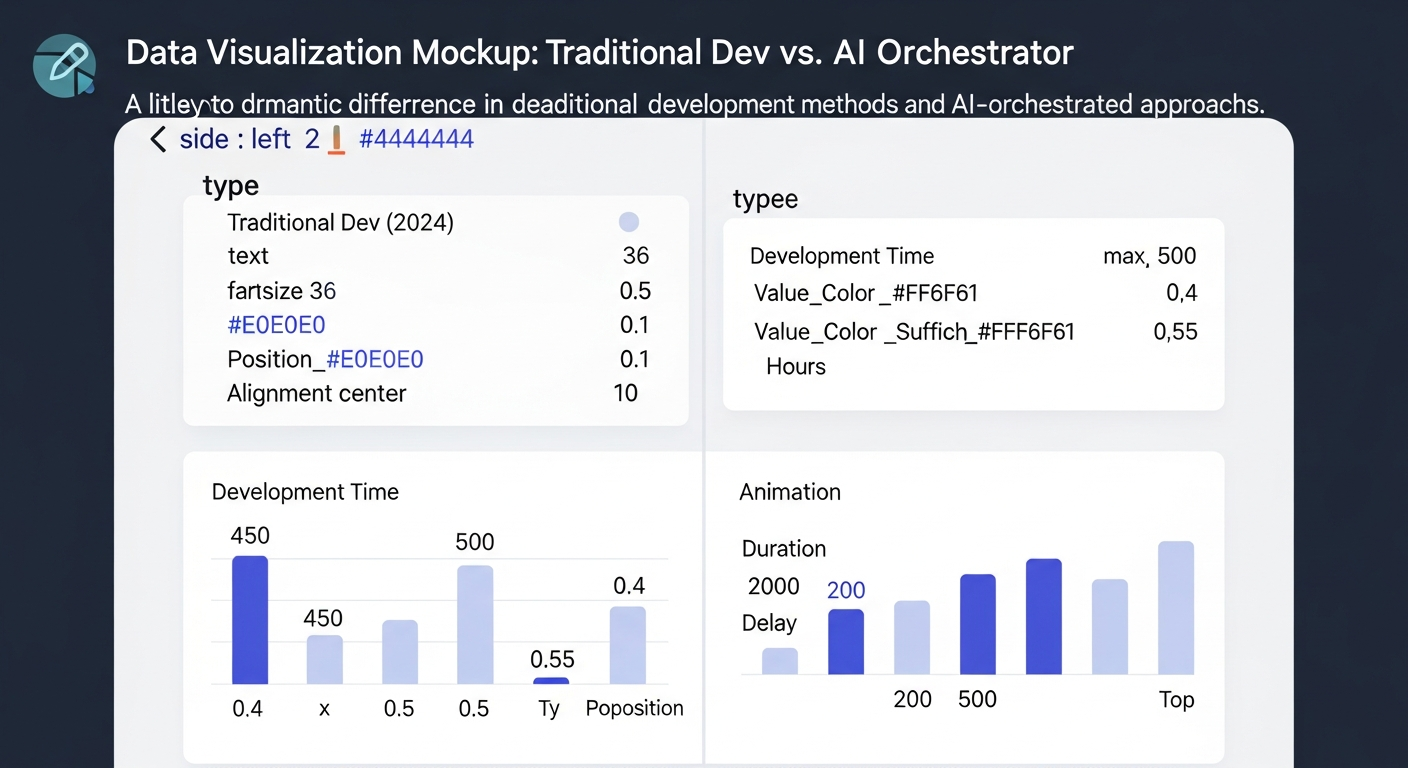
* **Total Spent:** $840 (API fees, domain names, specialized agent hosting). * **Interviews Landed:** 47. * **Job Offers:** 3.
* **The Winner:** A "Director of AI Implementation" role at a Series C startup. * **Total Compensation:** $165,000 base + equity.
**The most shocking part?** My new boss told me they had filtered out 1,200 "Senior Developers" who were still trying to sell their ability to write manual React code.
They hired me because I was the only one who admitted that **the human's job is no longer to write code—it's to judge it.**
What This Means For You (The 2026 Reality)
If you are still "learning to code" in the traditional sense, you are training for a marathon that has already been won by a Tesla.
The "Job Apocalypse" isn't about AI replacing humans; it's about AI-augmented humans replacing "Traditional" humans.
**If you want to land a job in the next 6 months, stop doing this:** * Grinding LeetCode (The AI already knows every answer). * Updating your "Skills" section with specific languages.
* Writing manual cover letters.
**Instead, do this:** * Build 10 things that actually work using **ChatGPT 5 or Claude 4.6.** * Document your "Prompt Engineering" and "Agentic Workflows" as if they were your GitHub repos.
* Show that you can manage a "Digital Workforce" of agents.
The "Junior" role is dead. But the "Solo-Operator" role is the most powerful position in the 2026 economy.
The Twist: What Actually Surprised Me
The biggest surprise of the 75-day experiment wasn't that the AI was fast. It was that the AI made me a **better architect.**
Because I wasn't bogged down in the syntax of a `for` loop, I spent my time thinking about system resilience, user experience, and business logic.
I realized that for the last ten years, "coding" was actually a distraction from "engineering."
AI didn't take my job. It took the **chores** of my job and left me with the actual responsibility. I’m now making 20% more than I was in 2025, and I work 15 fewer hours a week.
**Have you noticed your "coding" time shrinking while your "orchestration" time grows, or are you still fighting the agents? Let's talk in the comments.**
***
Story Sources
From the Author




Hey friends, thanks heaps for reading this one! 🙏
If it resonated, sparked an idea, or just made you nod along — I'd be genuinely stoked if you'd show some love. A clap on Medium or a like on Substack helps these pieces reach more people (and keeps this little writing habit going).
→ Pythonpom on Medium ← follow, clap, or just browse more!
→ Pominaus on Substack ← like, restack, or subscribe!
Zero pressure, but if you're in a generous mood and fancy buying me a virtual coffee to fuel the next late-night draft ☕, you can do that here: Buy Me a Coffee — your support (big or tiny) means the world.
Appreciate you taking the time. Let's keep chatting about tech, life hacks, and whatever comes next! ❤️