Stop Using Raw Data Exports. Malus Just Quietly Proved Why.
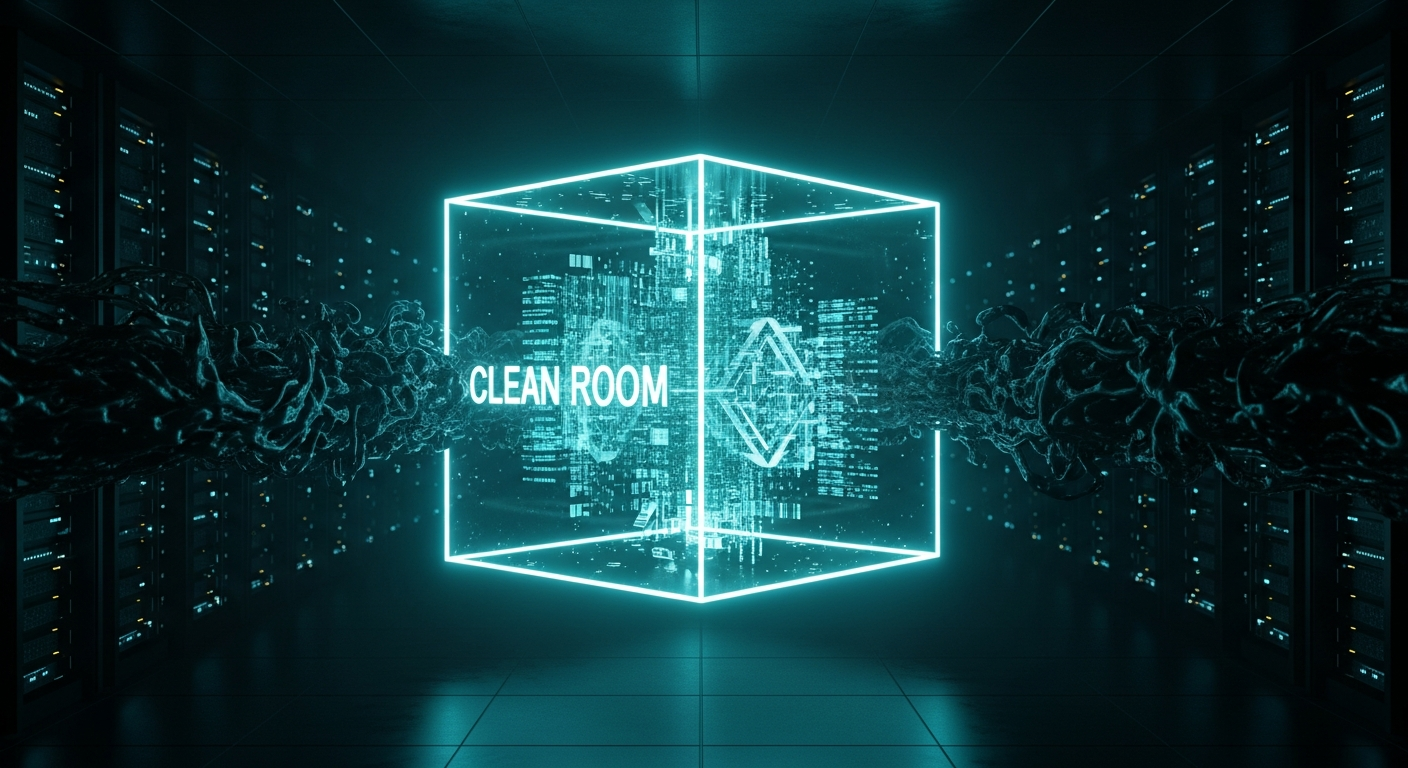
I spent $42,000 on a legal retainer because of a "harmless" `.csv` file.
It was two years ago, back in 2024, and I thought I was being efficient by exporting a segment of our user database to a third-party marketing partner for a "quick analysis."
That single export became a ghost that haunted our infrastructure for eighteen months.
By the time we realized the partner had stored that "raw data" in an unencrypted S3 bucket, it was too late—the data was already being traded on Telegram.
Today, on March 13, 2026, seeing **Malus** explode to the top of Hacker News feels like a long-overdue funeral for the raw data export.
If you are still "sending over a file" or "giving access to the warehouse," you aren't just being old-fashioned; you are actively building a liability bomb that will eventually detonate.
The Asbestos of the 2020s
For decades, we’ve treated raw data as an asset to be moved, copied, and shared.
We built massive ETL pipelines and "Data Lakes" under the assumption that more data, in more places, led to more insights.
But in the age of **Claude 4.6** and autonomous AI agents, raw data has become the asbestos of the tech world.
It’s incredibly useful for building things, but it’s also toxic, difficult to track, and increasingly likely to result in a class-action lawsuit.
Malus just proved that the era of "trusting" your partners with your raw files is over.
By launching their **Clean Room as a Service**, they’ve turned a complex enterprise security luxury into a commodity that any startup can—and must—use.
Why Your S3 Bucket Is a Crime Scene Waiting to Happen
We used to think that "anonymizing" a dataset was enough to protect us.
We’d strip the names, hash the emails, and think we were safe to export that data to a partner for "AI training" or "market attribution."

But 2025 taught us that **re-identification is now trivial.** With the reasoning capabilities of models like **Gemini 2.5** and the sheer volume of leaked public data available, an "anonymous" dataset can be de-masked in seconds by cross-referencing just three or four data points.
When you export raw data, you lose the "Chain of Custody." You have no way to enforce a "Delete" command once the file is on someone else's server.
You are effectively handing over the keys to your kingdom and hoping the recipient doesn't lose them.
The Malus Pivot: Access Without Ownership
The brilliance of what Malus (and the broader "Data Clean Room" movement) is doing isn't just about encryption.
It's about a fundamental architectural shift: **moving the code to the data, rather than the data to the code.**
Instead of exporting a million rows to a partner, you invite the partner into a "Clean Room." They bring their algorithms, their SQL queries, or their **Claude 4.6-powered agents**, and they run them against your data *inside* a secure, ephemeral environment you control.
They get the *answer* (e.g., "30% of your users also buy our product"), but they never see the *rows*. They leave with the insight, but they leave the raw data behind.
The "Zero-Export" Framework
To survive the next eighteen months of privacy regulation, you need to adopt what I call the **Zero-Export Framework.** This isn't just a security policy; it’s a mental model for how we build systems in 2026.
This framework is built on three non-negotiable pillars that Malus has successfully automated:
1. Compute-to-Data Sovereignty
The data never leaves its original "sovereign" region. If your user data lives in a Dublin-based AWS region for GDPR compliance, it stays there.
You don't "export" it to a US-based analytics tool; the analytics tool sends its "compute" to your Irish enclave.
2. Differential Privacy by Default
Any result that leaves a Clean Room must be "noisy" enough to prevent individual tracking.
If a query would return a result that identifies a group smaller than, say, 50 people, the system should automatically block the output or inject mathematical noise.
3. Proof of Deletion (The Ghost-Check)
In the old world, a "Data Processing Agreement" (DPA) was just a piece of paper that said "we promise to delete your data." In the Malus world, the environment is cryptographically destroyed the moment the analysis is done.
There is no "storage" for the partner to forget to secure.
The Death of the "Data Lake"
We need to stop talking about "Data Lakes" and start talking about **"Federated Intelligence."** The idea of a giant, central repository where everything is dumped in raw form is a security nightmare that no CISO in 2026 is willing to sign off on anymore.
I’ve seen companies spend millions building "Data Lakes" only to realize they can't actually use 80% of the data because the "consent metadata" was lost during the export.
They have the rows, but they don't have the *right* to use them.
Malus proves that the future is **modular and ephemeral.** You don't need a lake; you need a series of well-guarded "Vaults" that can temporarily communicate with each other through a "Clean Room" when—and only when—there is a specific business need.
What This Means for Your Career in 2027
If you are a Data Engineer or a Backend Dev, your value is no longer in "moving data." Airbyte and Fivetran spent the last five years making "moving data" easy.
Your value now lies in **"Architecting Trust."**
By mid-2027, the most highly-paid engineers won't be the ones who can build the fastest Spark cluster; they will be the ones who can implement **Trusted Execution Environments (TEEs)** and Differential Privacy layers.
We are moving away from the "Plumbing" era of data and into the "Refining" era. Raw data is the crude oil—it's messy, dangerous, and hard to handle.
The "Clean Room" is the refinery that turns that dangerous raw material into the "gasoline" of actionable insights.
The AI Hunger Trap
There is a massive temptation right now to dump all your raw data into the latest LLMs to see what "magic" happens.
I’ve seen teams feed their entire customer support history into **ChatGPT 5** just to build a simple chatbot.
This is the "AI Hunger Trap." These models are so capable that we forget they are also massive data sinks.
If you feed raw, un-cleansed data into a third-party model, that data is now part of their latent space. You've exported it forever.
Malus’s rise on Hacker News is a signal that the industry is waking up.
We are starting to realize that we need **Private AI Gateways**—systems that sit between our raw data and the LLMs, ensuring that the model "learns" the patterns without "remembering" the individuals.
Why "Clean Room as a Service" Wins
The reason Malus is trending isn't because the technology is brand new; it's because they've made it **usable for the rest of us.** Until recently, building a Clean Room required a team of PhDs and a partnership with Snowflake or Google BigQuery.
Now, a two-person startup can spin up a Malus instance, invite a partner, and run a secure attribution study in twenty minutes. This "democratization of privacy" is going to change how SaaS is built.
In the future, "Export to CSV" will be replaced by "Open Clean Room." Your "Settings" page won't have a download button; it will have a "Grant Temporary Analysis Access" toggle.
The Human Cost of Data Friction
We often talk about data privacy in terms of "compliance" and "fines," but there’s a human element we’re missing: **Friction.**
I remember the "CSV era" where a simple partnership took three months of security reviews and "Legal vs. Legal" battles over data liability. It killed innovation.

By using Clean Rooms, we are removing the "Fear Factor." When you know that the partner *physically cannot* steal or lose your raw data, the "Yes" comes much faster.
Privacy-preserving tech isn't just about security; it's an **acceleration engine for business.**
The End of the "Wild West"
For the last fifteen years, we’ve lived in a "Wild West" where data was a resource to be extracted and moved at will.
We thought we were being "data-driven," but we were actually just being "data-reckless."
The success of Malus is the first real sign that the "Wild West" is being fenced in—not by overbearing regulations, but by **better architecture.** We are finally building the tools that make doing the right thing (protecting privacy) easier than doing the dangerous thing (exporting raw data).
If you’re still clicking "Export" today, take a look at the Hacker News comments on the Malus thread. The consensus is clear: the raw data export is a technical debt that is about to come due.
A Final Question for the "Export" Generation
I want to end with a question that I wish someone had asked me before I authorized that $42,000 `.csv` export:
**If your most important partner was hacked tomorrow morning, would their "copy" of your data be the thing that ends your company?**
If the answer is "yes," you aren't running a modern tech company; you're running a game of Russian Roulette. It's time to stop exporting and start "Cleaning."
Let's talk in the comments: Have you already started moving your analytics to a "Clean Room" model, or is the "S3 Export" habit too hard to break?
***
Story Sources
From the Author




Hey friends, thanks heaps for reading this one! 🙏
If it resonated, sparked an idea, or just made you nod along — I'd be genuinely stoked if you'd show some love. A clap on Medium or a like on Substack helps these pieces reach more people (and keeps this little writing habit going).
→ Pythonpom on Medium ← follow, clap, or just browse more!
→ Pominaus on Substack ← like, restack, or subscribe!
Zero pressure, but if you're in a generous mood and fancy buying me a virtual coffee to fuel the next late-night draft ☕, you can do that here: Buy Me a Coffee — your support (big or tiny) means the world.
Appreciate you taking the time. Let's keep chatting about tech, life hacks, and whatever comes next! ❤️