Stop Using ChatGPT. OpenAI is Actually in Trouble. It's Worse Than You Think.
I cancelled my ChatGPT Plus subscription this morning.
Not because I’m trying to save $20, but because I finally admitted something to myself that most of us have been whispering in private for months: OpenAI is in serious trouble.
I’ve been a "power user" since the GPT-3 playground days in 2022.
I watched OpenAI go from a niche research lab to the fastest-growing product in history, but as of March 13, 2026, the magic hasn't just faded—it has curdled into something much worse.
We are witnessing the slow-motion collapse of the first AI superpower, and if you're still building your career or your startup on their API, you're standing on a tectonic plate that is currently splitting in two.
It’s worse than the "slumps" or the "lazy model" complaints we saw two years ago.
This is a structural, financial, and technical rot that OpenAI can no longer hide behind flashy keynotes or Sam Altman’s cryptic tweets.
The Scaling Wall is Real (and OpenAI Just Hit It)
For three years, the industry operated on a single, gospel-like assumption: if you throw more compute and more data at a transformer, it gets exponentially smarter.
OpenAI bet the entire house on this "Scaling Law," but ChatGPT 5 has finally proven that we’ve reached the point of diminishing returns.
I spent the last week running head-to-head benchmarks between ChatGPT 5 and the new Claude 4.6. The results were genuinely embarrassing for OpenAI.
While ChatGPT 5 is marginally better at creative writing than its predecessor, its reasoning capabilities in complex systems architecture and Python debugging have actually regressed in some edge cases.
OpenAI is spending an estimated $4.5 million a day just to keep the lights on for a model that feels like a polished version of 2024 tech.
They are hitting a physical wall where the cost to train the next iteration is growing 10x, but the performance gain is barely hitting 10%.
When your entire business model relies on being "the smartest in the room," a 10% gain isn't enough to justify a $150 billion valuation.
The "Brain Drain" is Now a Flood
If you want to know the future of a tech company, don't look at their stock price; look at where their senior engineers are eating lunch.
Over the last six months, the exodus from OpenAI’s San Francisco headquarters has transitioned from a steady leak to a total structural failure.
Most of the original team that built the "Reasoning" engine for GPT-4 is gone. They didn't just leave for "personal reasons"—they left to build the very competitors that are now eating OpenAI's lunch.
Anthropic’s Claude 4.6 is winning because it was built by the people who realized OpenAI was pivoting from a research lab to a desperate product company.
When a company stops being led by researchers and starts being led by "Product Growth Managers" trying to figure out how to put ads in your chat history, the innovation dies.
You can feel it in the product.
ChatGPT 5 feels like it was designed by a committee worried about safety protocols and "brand alignment," while Gemini 2.5 and Claude 4.6 feel like they were built to actually solve problems.
The $12 Billion Burn Rate
Let’s talk about the math, because the math is terrifying. According to internal leaks, OpenAI is on track to lose nearly $6 billion this year alone.
They are caught in a "Compute Trap" that is virtually impossible to escape without a massive technological breakthrough that hasn't happened yet.

Microsoft, once their biggest cheerleader, has spent the last year quietly diversifying.
By integrating open-source alternatives like Llama 4 or Mistral into their secondary Azure tiers and heavily funding their own "MAI" internal models, Microsoft is preparing for a world where OpenAI is just another vendor, not the exclusive partner.
The "special relationship" is over.
If OpenAI doesn't find a way to make ChatGPT 5 significantly cheaper to run by mid-2027, they will run out of cash.
They are currently surviving on "hype-funding" rounds, but the venture capital market is finally starting to ask for a path to profitability.
"Trust us, AGI is coming" is no longer a valid business plan in 2026.
Why I Switched to the "Sovereign Stack"
For my daily development workflow, I’ve completely moved away from the OpenAI ecosystem.
I’m currently using a combination of **Claude 4.6** for high-level reasoning and **Llama 4 (70B)** running locally on my workstation for anything involving sensitive client data.
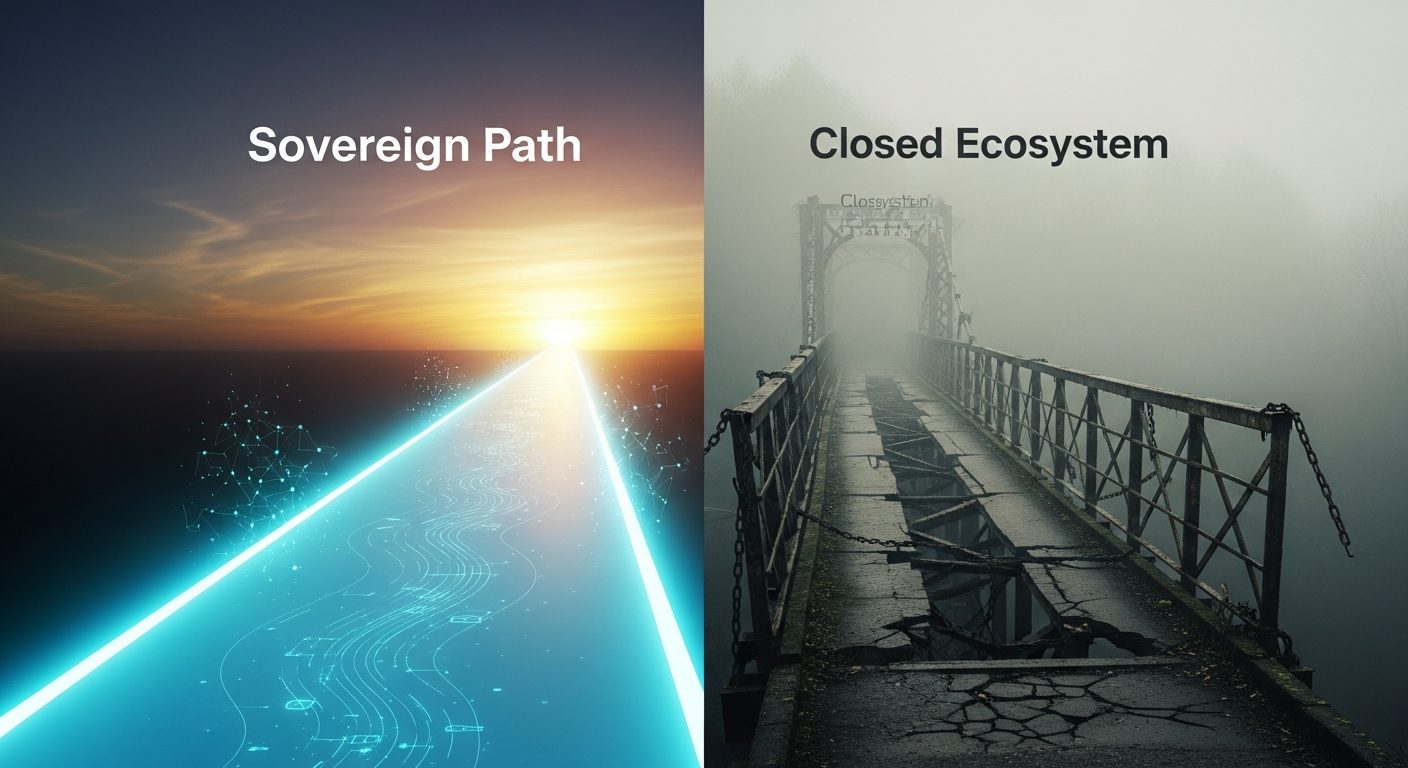
The "OpenAI Moat" was always their data and their lead time. But in 2026, the data is gone—every major model has already scraped the entire internet—and the lead time has vanished.
Open-source models like Llama 4 are now within 95% of ChatGPT 5’s performance, but they cost $0 in API fees and offer 100% privacy.
**Stop giving OpenAI your data for free.** Every time you use ChatGPT to debug your proprietary code, you are helping them train the very model they will charge you $30 a month for next year.
For developers, the "Sovereign Stack"—local models plus specialized tools like Cursor—is now the only professional way to work.
The Privacy Nightmare No One is Talking About
We need to be honest about what OpenAI has become: a data vacuum. As their financial pressure increases, their hunger for your "interpersonal data" has become aggressive.
The new "Memory" features in ChatGPT 5 aren't there for your convenience; they are there to build a psychological profile that makes their ecosystem "sticky."
I’ve spoken to three CTOs of Fortune 500 companies this month who have issued "Total Blackout" orders on OpenAI products.
They aren't doing it because they hate AI; they're doing it because OpenAI's Terms of Service have become increasingly opaque about how "anonymized" data is actually used in training.
In a world where **Gemini 2.5** offers enterprise-grade "Zero-Retention" by default and Claude 4.6 has the industry's highest safety rating, there is no longer a compelling reason to take the privacy risk with OpenAI.
They are acting like a desperate social media company from 2012, not the guardians of the future.
How to Pivot Your Workflow Today
If you are a developer or a tech professional, you need to "de-risk" your AI dependency immediately.
Do not wait for the "Service Unavailable" screen that will inevitably come when OpenAI undergoes their next corporate restructuring.
1. **Diversify your APIs:** If your app only uses `openai-sdk`, you are one pricing change away from bankruptcy. Move to a provider-agnostic library like LangChain or LiteLLM today.
2. **Invest in Local Inference:** Grab a Mac Studio or a high-end NVIDIA rig and start running Llama 4 or Mistral-Large locally.
The latency is lower, and the cost over 18 months is a fraction of API subscriptions.
3. **Audit your data flow:** Look at what you're sending to ChatGPT. If it's your company's "secret sauce," stop. Use Claude’s "Team Workspace" or a self-hosted instance of an open-weight model.
The End of the "GPT" Era
We will look back at 2023-2025 as the "GPT Era," a brief moment where one company held the keys to the kingdom. But that era is ending.
The future of AI is decentralized, specialized, and—most importantly—not owned by a single company in San Francisco that is burning $15 million a day.
OpenAI isn't going to disappear overnight.
They will likely be "saved" by a massive acquisition or a government contract, but the version of OpenAI that we loved—the one that felt like it was building the future for all of us—is already dead.
**Have you noticed ChatGPT 5 struggling with tasks that used to be easy, or have you already made the jump to Claude or local models? Let’s talk about the "burnout" in the comments.**
Story Sources
From the Author




Hey friends, thanks heaps for reading this one! 🙏
If it resonated, sparked an idea, or just made you nod along — I'd be genuinely stoked if you'd show some love. A clap on Medium or a like on Substack helps these pieces reach more people (and keeps this little writing habit going).
→ Pythonpom on Medium ← follow, clap, or just browse more!
→ Pominaus on Substack ← like, restack, or subscribe!
Zero pressure, but if you're in a generous mood and fancy buying me a virtual coffee to fuel the next late-night draft ☕, you can do that here: Buy Me a Coffee — your support (big or tiny) means the world.
Appreciate you taking the time. Let's keep chatting about tech, life hacks, and whatever comes next! ❤️