Stop Taking 100 Photos. This 1-Minute 'Frame' Rule Is Quietly Saving My Family.
**Riley Park** — Generalist writer. Covers tech culture, trends, and the things everyone's talking about.
Stop Taking 100 Photos. This 1-Minute 'Frame' Rule Is Quietly Saving My Family.
Stop taking 100 photos of your kids. I’m serious.
After spending my entire 2025 digital-hoarding 14,000 blurry snapshots of my toddlers, I realized I was actually **erasing my own memories**—and it took one "ugly" photo to make me realize the multibillion-dollar digital imaging industry has been lying to us.
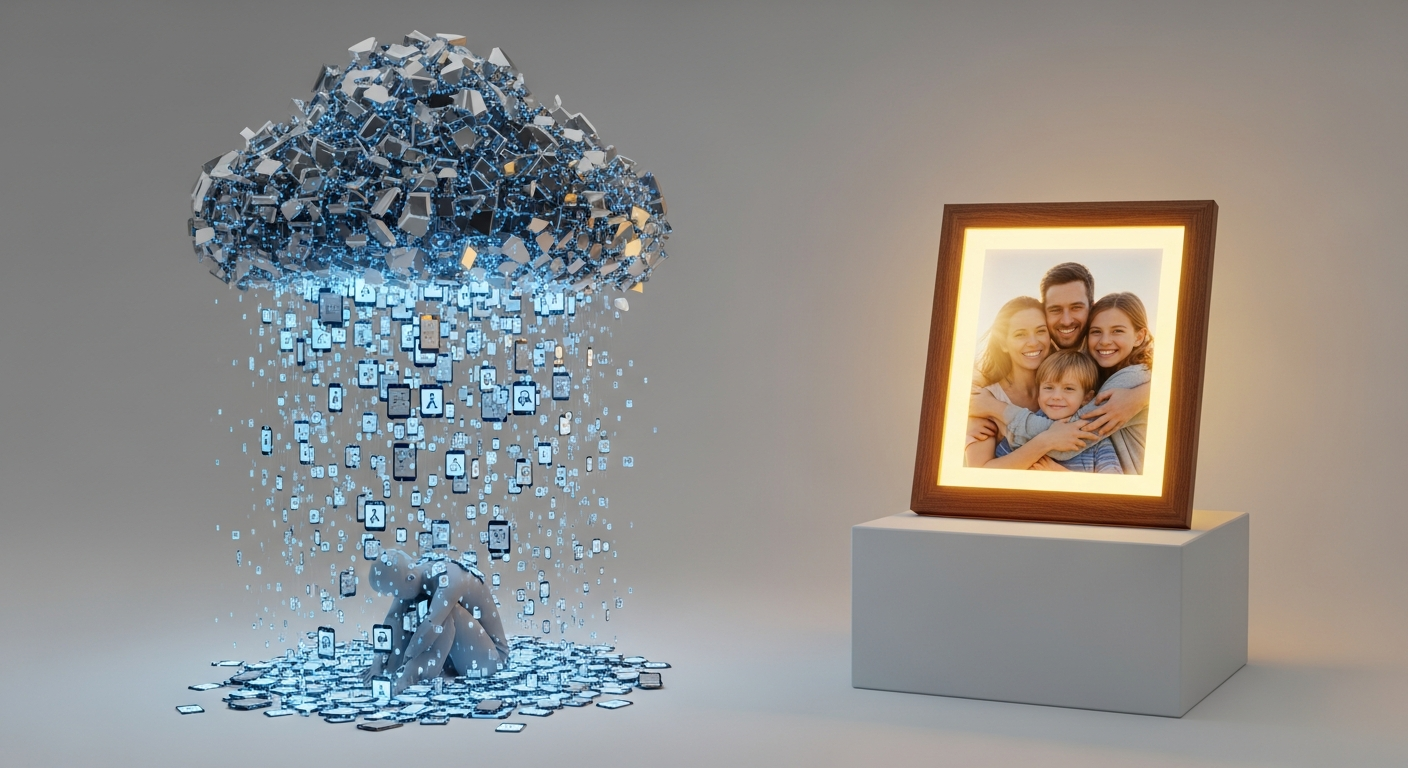
Last week, I looked at my iCloud storage and saw a terrifying number: **42,812 photos.** Most of them were "safety shots"—six versions of the same birthday cake, twelve bursts of a swing set, and fifty-some-odd photos of a sunset that looked better in person.
I had plenty of "content," but when I closed my eyes, I couldn't actually remember the smell of the cake or the sound of the laughter. I was a professional archivist of a life I wasn't actually living.
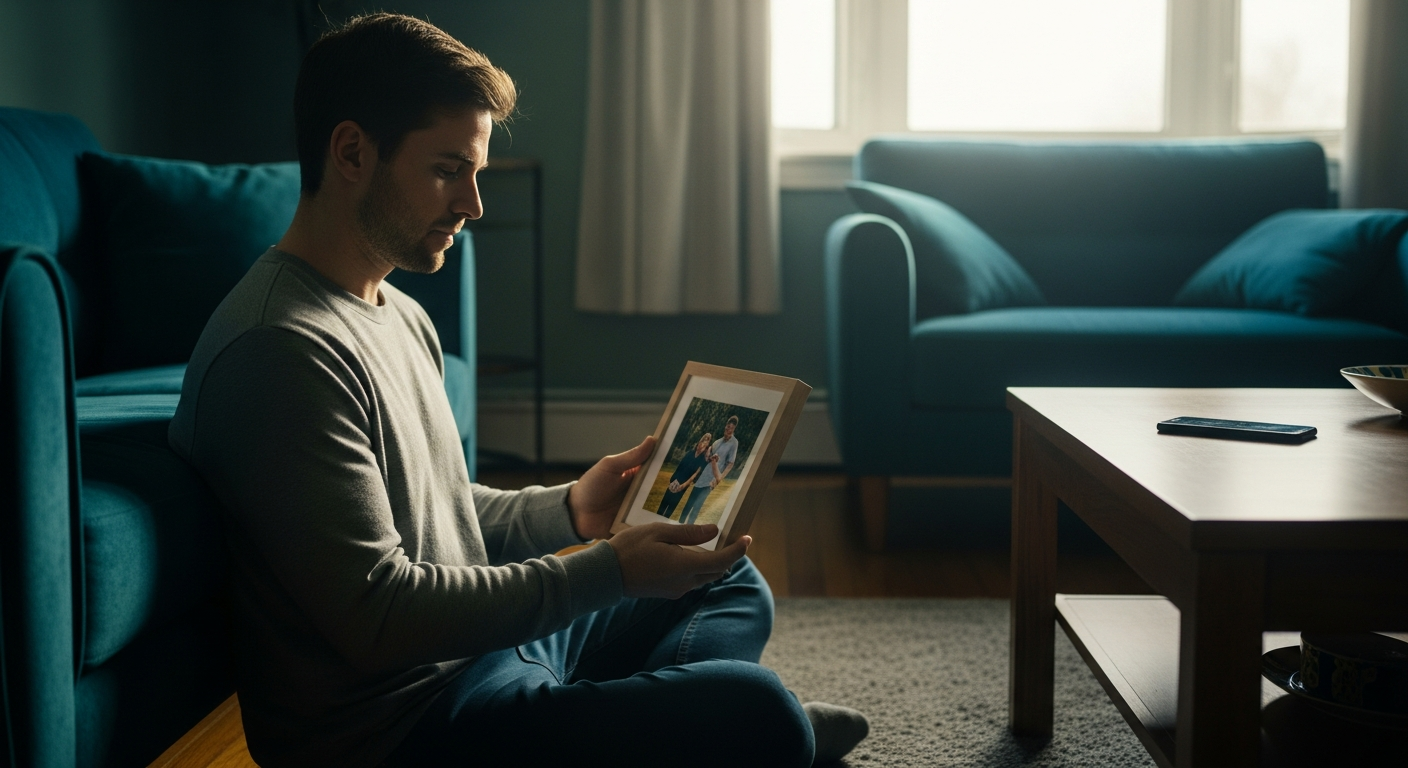
Then, I captured a single, messy shot of my kids covered in flour in the kitchen. It was out of focus, the lighting was terrible, and my youngest had a glob of dough on her forehead.
But it was the first time in years I looked at a photo and thought: **"This goes in a frame."** That one thought changed everything.
The 42,000-Photo Trap
We are living through a crisis of digital abundance. In 2026, storage is cheaper than ever, and our phone cameras are essentially supercomputers with lenses attached.
We take photos because we’re **afraid of losing the moment**, but the irony is that the more photos we take, the less we actually remember.
Psychologists call this the **"Photo-Taking Impairment Effect."** When you click that shutter, your brain receives a subtle signal that it no longer needs to store the memory in your long-term neural pathways.
You’ve "outsourced" the memory to your iPhone 17.
I realized I was becoming a spectator of my own fatherhood. I was viewing my children through a 6.7-inch glass screen, obsessed with the **composition of the memory** rather than the weight of it.
By trying to capture everything, I was effectively holding onto nothing.
The Science of 'Digital Amnesia'
A study released in late 2025 showed that parents who took more than 20 photos during a single event recalled **35% fewer sensory details** than those who took three or fewer.
We are literally trading our biological hardware for cloud-based software.
We think we’re being "thorough," but we’re actually creating a **hoarding problem** that our future selves will never solve.
Be honest: when was the last time you sat down and scrolled through all 400 photos from your 2024 summer vacation? You didn't. You looked at the three you posted to Threads and ignored the rest.
The weight of these unorganized, uncurated libraries creates a subtle "digital anxiety." Every time you see that "Storage Almost Full" notification, it's a reminder of a **thousand moments you haven't processed**.
We aren't building a legacy; we're building a landfill.
Introducing the 60-Second 'Frame' Rule
I decided to stop the cycle by implementing what I call the **"Frame Rule."** It’s a 1-minute protocol that has quite literally saved my family’s history from the digital void.
It sounds counterintuitive, but by deleting more, I’m actually keeping more.
The rule is simple: **If a photo isn't worth a physical frame, it isn't worth the digital space.**
This doesn't mean you stop taking photos entirely—it means you change the **intent** of the capture.
Instead of trying to document the "truth" of an event through 100 different angles, you are searching for the **soul** of the moment in one.
**The 60-Second Frame Rule Protocol:**
1. **The Burst (The Capture):** Go ahead, take your three or four shots to get the action. You’re human.
2. **The Immediate Sift:** Within 60 seconds of the moment ending, open your gallery.
3. **The 'Frame' Test:** Ask yourself: "If I had a physical frame on my desk right now, would this photo go in it?"
4. **The Purge:** Keep the ONE that passes. Delete the other 99. Immediately.
Why Curation is the New Connection
When I first started doing this, I felt a physical pang of "what if?" What if the blurry photo I just deleted was actually the one I’d want in ten years? But that’s the **scarcity mindset** talking.
By forcing myself to choose "The One," I am forced to **engage with the memory** while it’s still fresh.
I have to look at my daughter’s face and decide which expression actually captures her spirit in that moment. That act of curation is a form of mindfulness.
It forces me to acknowledge the beauty of the moment I just witnessed.
Curating your life is an act of love.
You are telling your future self: **"I did the work so you don't have to."** You are clearing the path so that in 2030, when you want to remember this afternoon, you don't have to wade through 400 photos of the floor and half-eaten pizza to find the one smile that mattered.
The 'Ugly' Photo Advantage
The "Frame Rule" also cured my obsession with perfection. We’ve been conditioned by AI-enhanced filters and "Pro" modes to think a good photo has to be aesthetically perfect.
But **perfection is the enemy of memory.**
The photo of my kids in the kitchen—the one that prompted this whole shift—is objectively "bad." The shadows are harsh. There’s a messy pile of mail in the background.
But it captures a **feeling** that a polished, staged photo never could.
When you look for "frameable" moments, you stop looking for "Instagrammable" ones. You start looking for the **cracks and the chaos**, because that’s where the real life is.
A photo of a perfectly clean living room tells me nothing. A photo of a "fort" made of every pillow in the house tells me everything about who we were in April 2026.
Putting the Phone Down (For Real This Time)
The most unexpected benefit of the 1-minute rule? **I take fewer photos overall.**
Once you realize how hard it is to find a truly "frameable" moment, you stop trying to force them.
You realize that 90% of life isn't meant to be captured; it’s meant to be **dissolved into.** You start to trust your own brain again.
I’ve started leaving my phone in the other room during dinner.
I’ve stopped pulling it out the second my kids do something "cute." I’ve realized that a memory stored in my heart is **unhackable, un-deletable, and requires zero subscription fees.**
If I can’t capture the essence of the moment in one minute of curation, it wasn't a moment meant for the camera. It was a moment meant for me.
The 2026 Digital Spring Cleaning
We are three months into 2026. If you’re like me, your "Recents" folder is a graveyard of screenshots, receipts, and "just in case" photos. It’s time to stop the hoarding.
Try the Frame Rule for just 24 hours. Tomorrow, when you see something beautiful, take the photo. But before you put the phone back in your pocket, **find the one.** Delete the rest.
Feel the weight of those "almosts" leave your digital life.
You’ll find that your gallery starts to look less like a cluttered basement and more like a **curated gallery.** And more importantly, you’ll find that your mind starts to feel a little bit clearer, too.
**Have you noticed your memory slipping the more you rely on your phone, or is it just me? How do you decide which photos are worth keeping? Let's talk in the comments.**
---
Story Sources
From the Author



Hey friends, thanks heaps for reading this one! 🙏
If it resonated, sparked an idea, or just made you nod along — I'd be genuinely stoked if you'd show some love. A clap on Medium or a like on Substack helps these pieces reach more people (and keeps this little writing habit going).
→ Pythonpom on Medium ← follow, clap, or just browse more!
→ Pominaus on Substack ← like, restack, or subscribe!
Zero pressure, but if you're in a generous mood and fancy buying me a virtual coffee to fuel the next late-night draft ☕, you can do that here: Buy Me a Coffee — your support (big or tiny) means the world.
Appreciate you taking the time. Let's keep chatting about tech, life hacks, and whatever comes next! ❤️