Stop Planning Your Life At 2 AM. The Secret Reason Is Worse Than You Think
**Stop trusting your 2 AM brain. I’m serious.
After a decade in clinical practice and hundreds of sessions with burnt-out high achievers, I’ve realized that late-night motivation isn’t "inspiration"—it’s a neurological glitch that’s quietly sabotaging your career and your mental health.**
It’s 2:14 AM on a Tuesday. You’re lying in bed, the blue light of your phone illuminating a rabbit hole of "how to optimize your deep work" videos or a Reddit thread on r/productivity.
Suddenly, it hits you: a wave of absolute, crystalline clarity.
You decide that **tomorrow is the day everything changes.** You’re going to wake up at 5:00 AM, master Rust by June 2026, and finally start that SaaS side hustle you’ve been talking about for three years.
You feel like a god. You feel invincible. You feel like you’ve finally cracked the code to your own potential.
Then, 8:00 AM arrives.
The alarm screams, your head feels like it’s filled with wet cement, and that "limitless" version of you has vanished, replaced by someone who just wants to crawl under the desk and hide from their Inbox.
**The 2 AM version of you lied to you, and the cost of believing that lie is higher than you think.**

The Neurological "Glitch" of Late-Night Optimism
As a therapist, I spent years listening to patients describe this exact cycle. They felt like failures because they couldn't "keep the promise" they made to themselves in the middle of the night.
But here’s the clinical truth: **your 2 AM brain is essentially intoxicated.** It’s not enlightened; it’s just disinhibited.
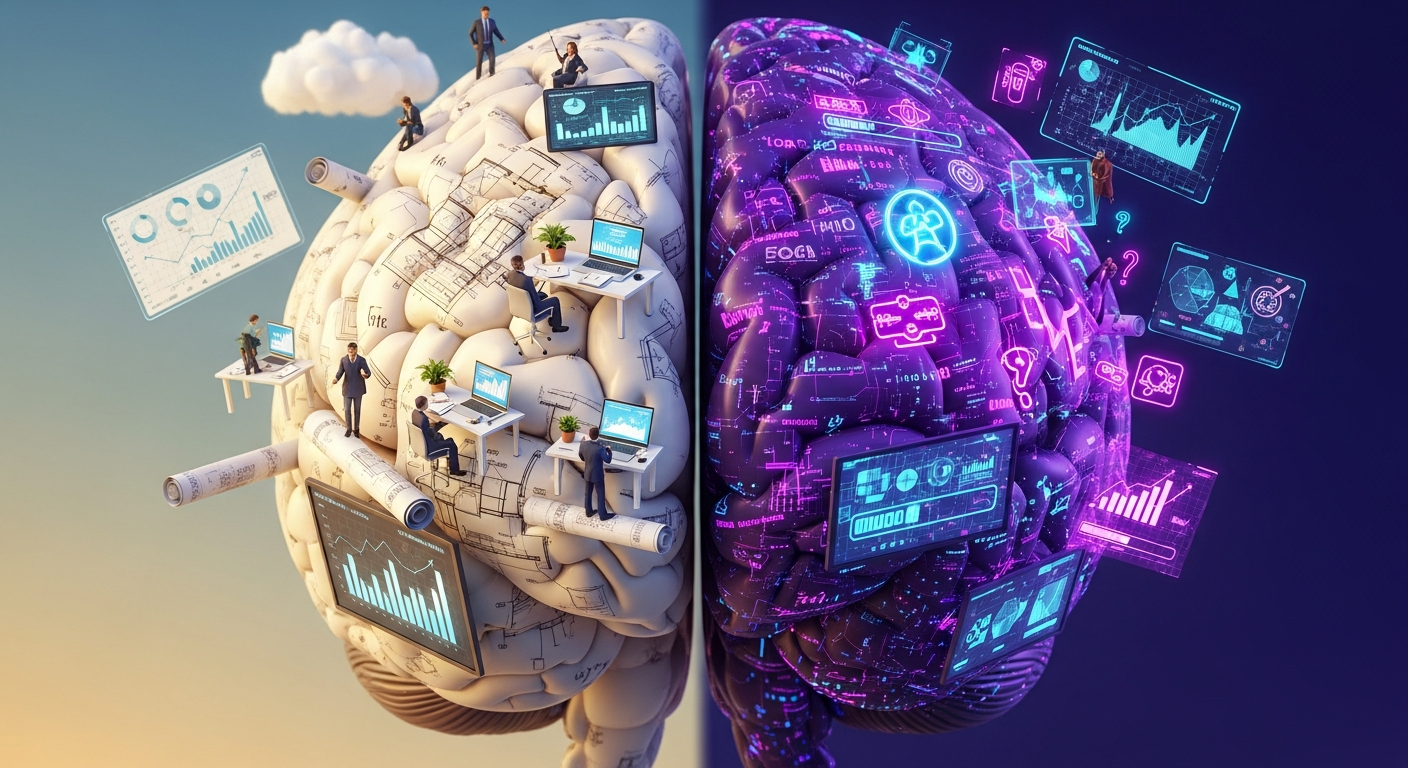
When you stay up past your biological prime, your **Prefrontal Cortex (PFC)—the "CEO" of your brain responsible for logic, impulse control, and realistic planning—is the first part of the system to shut down.** It’s exhausted from a day of making decisions, debugging code, or navigating Slack politics.
When the PFC goes offline, the Limbic System (the emotional, impulsive part of your brain) takes the wheel.
This creates a dangerous "biological bait-and-switch." **Without the PFC to provide a reality check, your brain begins to "borrow" dopamine from tomorrow.** You get a massive hit of feel-good neurochemicals by *imagining* a better version of yourself, without actually having to do the hard work of being that person.
You’re getting high on your own supply of potential, while your actual capacity for action is at its lowest point in the 24-hour cycle.
Why Your Brain Prefers "Future You" to "Present You"
In psychology, we call this **temporal discounting**, but with a twist. Usually, we value immediate rewards over future ones.
However, at 2 AM, the "immediate reward" is the emotional relief of planning a perfect life.
By telling yourself you’ll be a productivity machine tomorrow, you excuse yourself from the reality of being an exhausted person today.
Research into sleep deprivation shows that **low-level exhaustion actually increases optimism in the short term, but specifically regarding tasks we don't have to do right now.** It’s a cognitive bias that makes the impossible seem easy because the "execution" is abstract.
It’s easy to plan a marathon when you’re horizontal; it’s much harder when you’re standing at the starting line in the rain.
**This isn't just a harmless quirk of the human mind.** If you do this repeatedly, you’re training your brain to associate "productivity" with "fantasy." You’re building a neural pathway where "planning" feels better than "doing." Over time, this erodes your self-trust.
Every time you fail to meet the 2 AM version of yourself, you’re telling your subconscious that your word means nothing. That is how chronic burnout begins.
The Secret Reason It’s Worse Than You Think: "Revenge Bedtime Procrastination"
If you find yourself planning your life at 2 AM, you’re likely suffering from **Revenge Bedtime Procrastination.** This is a phenomenon where people who don't have much control over their daytime lives (due to demanding jobs or high-stress environments) refuse to sleep as a way to "reclaim" their freedom.
In the tech world, this is rampant. You spent eight hours in meetings or staring at a Jira board that isn't yours.
**Staying up late feels like the only time you actually belong to yourself.** But by using that time to "plan your life," you’re actually extending the work day into your recovery period.
You aren't reclaiming your freedom; you’re just stealing your own fuel for the next day.
By mid-2026, the stakes of this cycle are even higher. With AI tools like **Claude 4.6 and ChatGPT 5** making it possible to work faster and harder, the "always-on" pressure has intensified.
We feel like we *should* be doing more because the tools are there.
But your biology hasn't upgraded as fast as your software. **Your brain still needs the same 8 hours of shutdown time it needed in 1995.**
The "Lockdown Protocol": A Framework for Real Change
To break this cycle, you need more than "willpower." You need a system that protects you from your own late-night impulses.
I call this **The Sun-Sync Protocol.** It’s a three-step framework designed to shift the power back to your "CEO" brain during the hours when it’s actually functional.
1. The 8 PM Planning Lockdown
The first rule is simple but brutal: **No life-altering decisions or major planning can happen after 8:00 PM.** If a "genius" idea strikes you at midnight, you are not allowed to build a spreadsheet for it.
You are not allowed to research it. You are not allowed to "just quickly check" if the domain name is available.
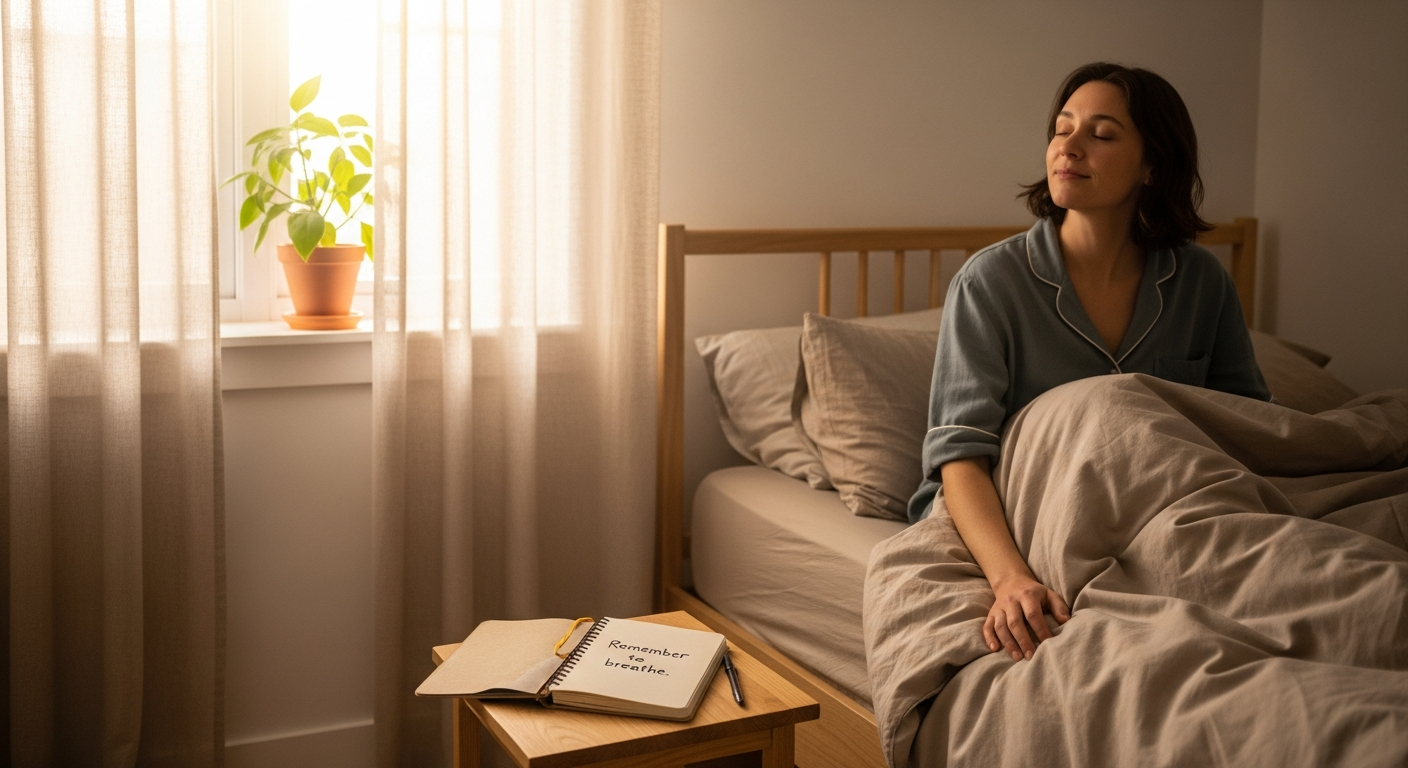
Instead, keep a "Brain Dump" notebook (physical, not digital) on your nightstand. Write down the idea in one sentence. **"Start a blog about AI ethics."** That’s it.
Tell yourself: "If this is still a good idea at 10 AM tomorrow, I will look at it then." 90% of the time, you’ll look at that note the next morning and realize it was either nonsensical or completely unrealistic given your current workload.
2. The "Tomorrow Me" Contract
We often treat our "Future Self" like a superhero who doesn't need sleep, food, or breaks. To fix this, you need to sign a contract with your "Morning Self" while your brain is still rational.
**Set your "Must-Do" list for tomorrow at 5:00 PM, not 11:00 PM.**
When you plan at the end of the work day, you still have a visceral memory of how long things actually take. You know that a "quick bug fix" actually takes two hours.
**Use tools like Gemini 2.5 or a simple calendar to time-block your day before you leave your desk.** By the time 2 AM rolls around, the plan is already set.
If you try to change it at night, you’re "breaching the contract."
3. The Digital Blackout and Cortisol Reset
The "2 AM Motivation" is often just a **cortisol spike disguised as inspiration.** When you stare at screens late at night, the blue light suppresses melatonin and tricks your body into thinking it’s dawn.
Your body releases cortisol to wake you up, which creates that "wired but tired" feeling.
**At 9:00 PM, initiate a total digital blackout.** No phone, no laptop, no Kindle. This forces your brain to sit with the boredom it’s been trying to avoid. Boredom is the precursor to genuine recovery.
If you can’t sleep, read a physical book or listen to a non-educational podcast. **The goal is to lower your heart rate, not raise your aspirations.**
What Real Change Looks Like in Practice
I once worked with a Senior Dev named Mark who was convinced he was "just a night owl." He would spend every night from midnight to 3 AM "architecting" a new app.
By 10 AM, he was so caffeinated and sleep-deprived that he couldn't even handle a simple code review without getting irritable.
We implemented the **Sun-Sync Protocol.** For the first week, he felt like he was losing his "creative edge." He felt anxious sitting in the dark at 10 PM. But by the second week, something shifted.
Because he was actually sleeping, his **11 AM brain became twice as fast as his 2 AM brain ever was.**
He realized that his "nightly inspirations" were mostly just his brain’s way of avoiding the reality of his burnout.
Once he started planning during the day, he realized he didn't actually *want* to build three different apps. He wanted to be good at his job and then go for a walk.
**His 2 AM brain was a liar; his 8 AM brain was a realist.**
Stop Being a "Potential" Person
There is a specific kind of grief that comes from living your life as a "Potential Person." A Potential Person is someone who is always *about* to change, always *about* to start, always *about* to become the hero of their own story.
**2 AM planning is the fuel that keeps the "Potential Person" alive while the "Real Person" withers away.**
The next time you feel that surge of midnight motivation, I want you to recognize it for what it is: **a neurological hallucination.** It is your brain trying to give you a "win" without you having to earn it.
Do not open your laptop. Do not start a new Note. Do not buy that Udemy course.
**The most productive thing you can do at 2 AM is nothing.** Close your eyes. Accept that you are a limited, tired, wonderful human being who needs rest.
Your "perfect life" doesn't exist in the 2 AM shadows; it exists in the small, boring, disciplined choices you make when the sun is up and the "Adult" in your brain is finally awake.
**Have you ever felt that 2 AM surge only to wake up feeling like a different person? Why do you think we're so addicted to planning the "perfect life" in the dark?
Let’s talk about it in the comments.**
---
Story Sources
From the Author




Hey friends, thanks heaps for reading this one! 🙏
If it resonated, sparked an idea, or just made you nod along — I'd be genuinely stoked if you'd show some love. A clap on Medium or a like on Substack helps these pieces reach more people (and keeps this little writing habit going).
→ Pythonpom on Medium ← follow, clap, or just browse more!
→ Pominaus on Substack ← like, restack, or subscribe!
Zero pressure, but if you're in a generous mood and fancy buying me a virtual coffee to fuel the next late-night draft ☕, you can do that here: Buy Me a Coffee — your support (big or tiny) means the world.
Appreciate you taking the time. Let's keep chatting about tech, life hacks, and whatever comes next! ❤️