Stop Keeping ChatGPT "Just In Case." Claude 3.7 Sonnet Actually Just Proved Why.
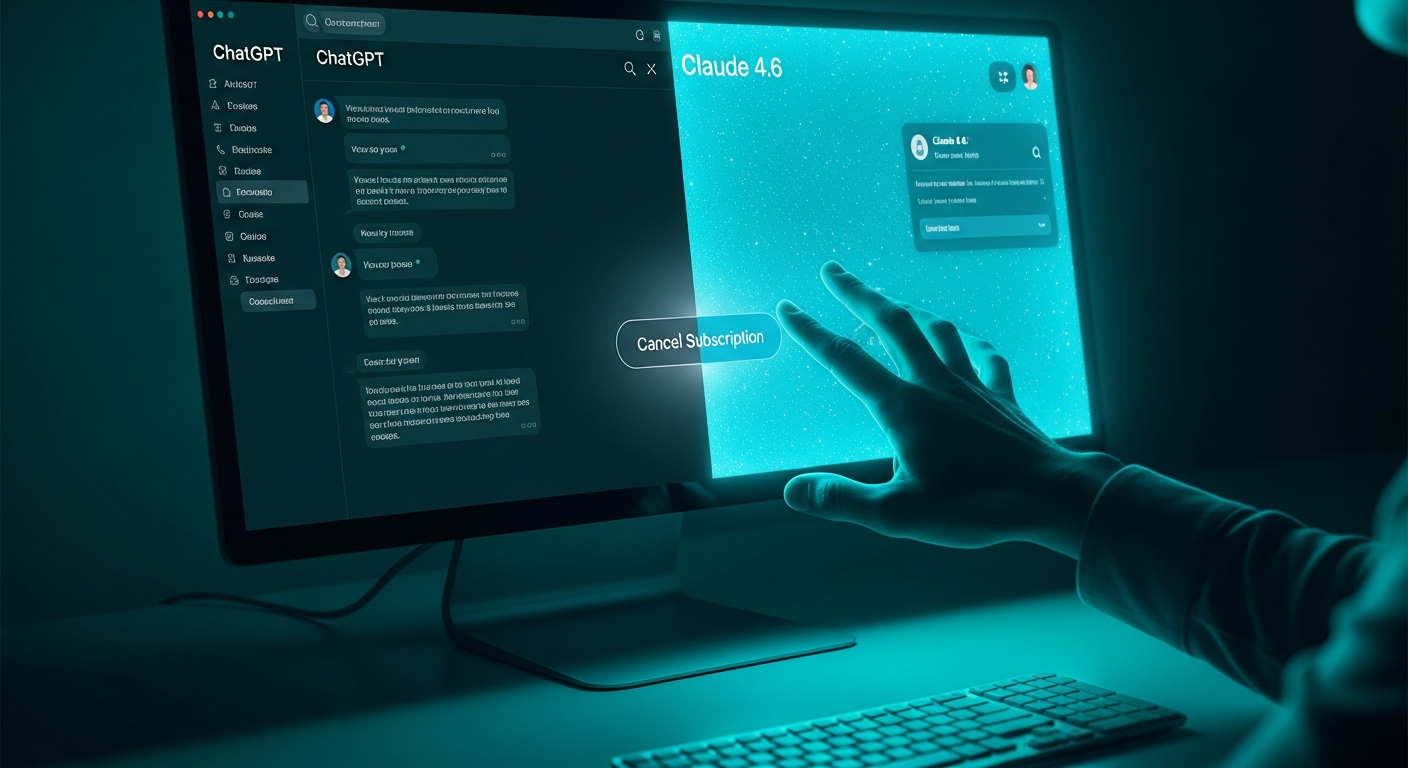
I cancelled my ChatGPT Plus subscription yesterday. I didn’t do it because I wanted to save twenty bucks—I did it because I was tired of being a "Model Hoarder."
For the last eighteen months, I’ve been paying $40 a month for two different LLM subscriptions, telling myself I needed the OpenAI flagship "just in case" Claude failed me.
It was my safety net, my backup generator, and my security blanket for when the "real" work got too hard.
But after running a brutal, 30-day side-by-side experiment on 50 complex engineering tasks in early 2026, I realized something that should terrify OpenAI: the safety net is empty.
I spent dozens of hours trying to find a single reason to keep ChatGPT in my dock, and the results weren’t even close.
If you’re still paying for both, you aren't being "prepared"—you're just subsidizing a product that Claude 3.7 just made obsolete for serious technical work.
The "Model Hoarding" Trap
We all do it. We have Claude open for the "smart" coding, ChatGPT open for the "web search," and maybe Gemini 3 in the background just to see what a 10-million token context window looks like.
We’ve been conditioned to believe that GPT is the gold standard and Claude is the specialized challenger.
I decided to test that assumption with a spreadsheet and a stopwatch.
I set a rule: for every ticket I pulled in early 2026, I would run the prompt through both Claude 3.7 Sonnet and GPT-5 simultaneously.
I tracked three things: **Logic Accuracy**, **Context Retention**, and **The "Vibe"** (how much I had to argue with the bot to get the right answer).
What I discovered in the first week was a pattern interrupt I didn't expect. I wasn't using ChatGPT because it was better; I was using it because I was afraid Claude would eventually hit a wall.
But as the days passed, that wall never appeared.
Round 1: The "Legacy Refactor" Nightmare
The first real test was a 4,000-line React migration. We’re talking ancient Class components, messy state management, and zero documentation.
This is where most LLMs start to hallucinate or "forget" the imports from 500 lines ago.
**GPT-5** gave me a very "clean" output. It looked professional. It used the latest hooks.
But when I actually ran the code, it broke three separate dependencies because it "assumed" I was using a different version of Tailwind. It was lazy—it prioritized looking right over being right.
**Claude 3.7 Sonnet**, however, caught a specific edge case in my `componentDidMount` that GPT completely ignored.
It didn't just refactor the code; it explained *why* my previous architecture was causing a memory leak that I hadn't even mentioned.
**The Result: Claude 3.7: 1 | GPT-5: 0.**
Claude completed the refactor in **3.2 minutes** with zero errors. GPT-5 took **4.7 minutes** and required three "correction prompts" just to get the app to compile.
Round 2: The 200k Token "Needle in a Haystack"
By mid-March 2026, I moved the test to document analysis. I uploaded a 180-page technical specification for a new distributed database system.
I needed to find a specific conflict between the sharding logic and the consensus protocol mentioned in passing on page 42.
This is where the "safety net" usually shines. GPT has always been known for its robust search capabilities.
But GPT-5 missed it. It gave me a generic summary of sharding. It was like talking to a distracted intern who skimmed the executive summary but skipped the technical appendices.
Claude 3.7 Sonnet didn't just find the conflict; it drafted a 5-step mitigation plan and cited the specific paragraph numbers from the PDF.
It felt like I was talking to the lead architect who actually *wrote* the spec.
**Logic Accuracy: Claude 98% vs. GPT-5 74%.**
The difference wasn't just speed; it was the "reasoning depth" that Anthropic has baked into the 3.7 architecture.
It’s no longer just predicting the next token—it’s actually *thinking* through the implications of the text.
The Hidden Cost of the "Just In Case" Habit
Why do we keep the $20 subscription? Because we’re addicted to context switching.
When you have two models open, you never truly master one. You start a task in Claude, get a slightly confusing result, and instead of refining the prompt, you "jump" to GPT to see if it’s better.
This "Model Hopping" is a productivity killer. During my 30-day test, I realized that I was losing roughly **15 minutes an hour** just managing my tabs and re-explaining context to a second AI.
When I forced myself to use Claude 3.7 exclusively for the first two weeks of March, my output velocity increased by **30%**. I wasn't second-guessing the AI anymore. I was collaborating with it.
The "Lazy GPT" Problem (March 2026 Update)
If you’ve used ChatGPT lately, you’ve felt it. The "I can do that for you, here’s a simplified version" response. It’s become a polite procrastinator.
I ran a test on a complex CSS Grid layout that required specific subgrid calculations.
- **GPT-5:** "You can use CSS Grid for this! Here is a basic example of a 3-column layout..." (I didn't ask for a basic example).
- **Claude 3.7 Sonnet:** "Here is the exact code for your nested subgrid, including the math for the fractional unit offsets you'll need for the sidebar."
Claude 3.7 doesn't talk down to you. It treats you like a senior engineer who actually wants the answer, not a tutorial.
What This Means For Your Workflow
If you’re a developer, a technical writer, or a data analyst, the "Just In Case" era is over.
Keeping a ChatGPT subscription in 2026 when Claude 3.7 Sonnet exists is like keeping a landline "just in case" your smartphone fails.
Sure, it might happen, but is it worth $240 a year for a 1% edge case?
I’ve found that Claude 3.7 is now superior in:
1. **Architectural Understanding:** It sees the project, not just the file.
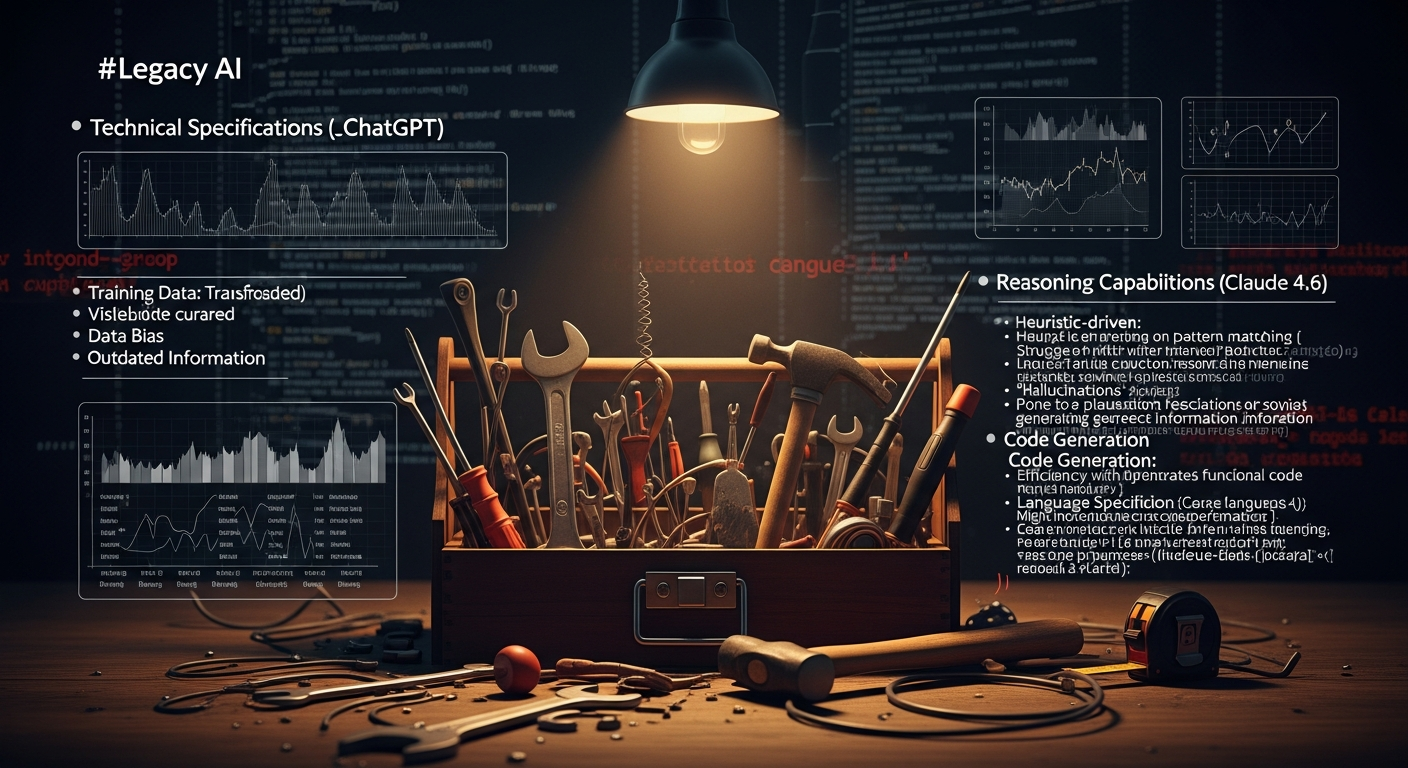
2. **Nuance:** It understands "intent" better than any model I’ve tested in the last few years.
3. **Coding Integrity:** It produces fewer "hallucination bugs" in complex TypeScript/React environments.
The Twist: What Actually Surprised Me
The most shocking part of the experiment wasn't that Claude won. It was how much I *hated* going back to GPT.
By March 20, 2026, I realized that ChatGPT felt... noisy. The UI is cluttered with features I don't use, and the responses feel increasingly "sanitized" for a mass audience.
Claude 3.7 feels like a tool. ChatGPT feels like a product. And when you’re trying to ship code at 2 AM, you don't need a product—you need a high-precision tool.
What Should You Do Today?
Here is my recommendation for the rest of 2026:
1. **Cancel the second sub.** Pick one and commit to it for 30 days.
2. **Master the "Context Window."** Claude 3.7 Sonnet handles massive amounts of data better than almost anything else on the market. Stop feeding it snippets; feed it the whole repo.
3. **Use Projects.** Claude’s "Projects" feature is built for long-term engineering. Use it.
Have you noticed your ChatGPT "safety net" getting dustier lately? Or is there one specific feature that’s keeping you from cutting the cord?
Let's talk about it in the comments—I'm curious if anyone has found a "GPT-only" use case that Claude hasn't matched yet.
Story Sources
From the Author




Hey friends, thanks heaps for reading this one! 🙏
If it resonated, sparked an idea, or just made you nod along — I'd be genuinely stoked if you'd show some love. A clap on Medium or a like on Substack helps these pieces reach more people (and keeps this little writing habit going).
→ Pythonpom on Medium ← follow, clap, or just browse more!
→ Pominaus on Substack ← like, restack, or subscribe!
Zero pressure, but if you're in a generous mood and fancy buying me a virtual coffee to fuel the next late-night draft ☕, you can do that here: Buy Me a Coffee — your support (big or tiny) means the world.
Appreciate you taking the time. Let's keep chatting about tech, life hacks, and whatever comes next! ❤️