Stop Ignoring Kharg Island. This Unexpected Secret Changes Everything.
Stop Ignoring Kharg Island. This Unexpected Secret Changes Everything.
I didn't know where Kharg Island was three weeks ago.
Now, I can’t stop thinking about it because it represents the **single most dangerous bottleneck** in our global infrastructure—and it’s about to hit your cloud hosting bill.
As developers, we’re taught to obsess over high availability and "no single point of failure" (SPOF) in our clusters.
We build multi-region failovers and redundant load balancers, yet we’ve been ignoring a physical SPOF that handles **90% of a major nation's exports.**
I spent the last 48 hours diving into the r/OutOfTheLoop threads and satellite data from March 2026.
What I found isn't just about geopolitics; it's a masterclass in **systemic fragility** that every tech professional needs to understand before the "Energy Reset" of 2027.
The Physical "Single Point of Failure"
Kharg Island is a small patch of rock in the Persian Gulf. For decades, it has served as Iran's primary oil terminal, a massive industrial hub where the country’s economic lifeblood meets the sea.
If Kharg Island goes offline, the global energy grid doesn't just "glitch"—it experiences a **hard kernel panic.** We often think of "the cloud" as an abstract layer of code, but that code runs on servers that require cooling, and that cooling requires a stable, affordable energy market.
When a single terminal controls nearly an entire country's export capacity, you aren't looking at a "node." You are looking at a **critical dependency** that hasn't been updated or patched in years, sitting in the middle of a high-latency conflict zone.
Why Is r/OutOfTheLoop Exploding Right Now?
The reason this is trending today, March 16, 2026, is a series of "anomalies" in the Strait of Hormuz.
Satellite imagery recently analyzed by **Claude 4.6 and Gemini 2.5** has shown a massive shift in tanker movement patterns around the island.
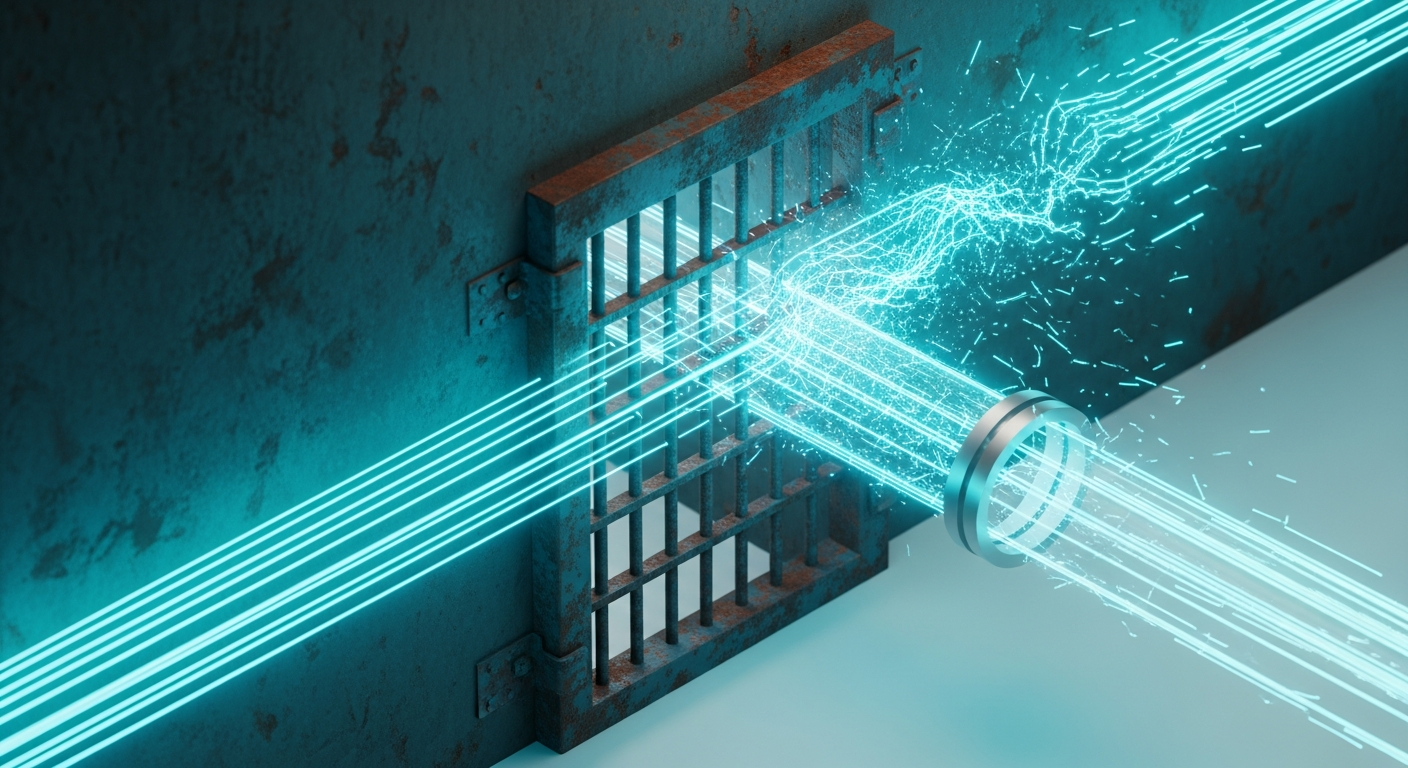
The "Unexpected Secret" isn't just that the island is vulnerable; it's that the **USA has quietly shifted its defensive posture** toward the island's digital infrastructure.
We aren't just talking about physical blockades anymore; we are talking about the first "Cyber-Physical Siege" of the mid-2020s.
Social media is buzzing because the price of Brent Crude just spiked 12% in six hours.
For the average dev, that means the "Green Energy" credits your company buys to stay carbon neutral are about to **triple in price** by the end of the month.
The Digital-Physical Bridge
We often live in a world of abstractions, where "latency" is measured in milliseconds and "bandwidth" is something we buy from an ISP.
But Kharg Island reminds us that **geopolitics is the ultimate hardware layer.**
The secret that changes everything is the realization that our "serverless" futures are tethered to 20th-century pipelines.
If the island's SCADA systems (the software that controls the valves and pumps) are compromised, the physical ripple effect hits the **global supply chain** faster than a breaking change in a popular NPM package.
I’ve spent years building "resilient" systems, but I realized I was only looking at the top of the stack.
**Stop ignoring the hardware.** If the energy inputs to our data centers become volatile, your "five nines" of uptime won't matter because the cost to keep the lights on will exceed your ARR.
The "Chokepoint Paradox" Framework
To understand why this matters for your career and your company, I’ve developed what I call the **Chokepoint Paradox.** It’s a 3-part framework for identifying hidden dependencies in any system—whether it’s a Persian Gulf island or your CI/CD pipeline.
1. The 90/10 Dependency Trap
If 90% of your output (or energy, or traffic) flows through 10% of your infrastructure, you don't have a system; you have a **liability.** Kharg Island is the 10% that controls the 90%.
In your codebase, this might be that one "legacy" auth module that no one has touched since 2021.
2. The Geographic Latency Factor
Physical distance still matters.
The proximity of Kharg Island to the Strait of Hormuz means that a **local event has global latency.** When you choose a cloud region, you aren't just choosing a ping time; you are choosing a geopolitical risk profile.
3. The Automation Feedback Loop
In 2026, we’ve automated our response to market fluctuations. When satellite AI detects a slowdown at Kharg, high-frequency trading bots react in microseconds.
This creates a **volatile feedback loop** where the "news" of a problem causes the economic damage before the physical event even finishes.
How This Hits the Tech Industry
By late 2026, we are going to see a massive shift in how "Cloud Economics" are calculated.
We’ve been living in an era of **cheap energy and invisible logistics.** That era is ending with the Kharg Island crisis.
If you are a CTO, you need to start asking: "What happens to our margins if our compute costs double because of a regional conflict 8,000 miles away?" The answer usually involves **aggressive optimization** and moving away from "compute-heavy" AI models that haven't been pruned for efficiency.
We are seeing a move toward "Edge Geopolitics," where companies are diversifying their physical server locations not just for speed, but for **political redundancy.** Kharg Island is the wake-up call that "The Cloud" is actually a series of warehouses connected by cables that run through very dangerous waters.
Building "Anti-Fragile" Systems
So, what do we do? We can’t move an island, but we can change how we build. I failed at this for years, thinking that **redundancy was the same as resilience.** It isn't.
Resilience is the ability to absorb a shock and keep functioning, even at a diminished capacity. We need to start building **"Graceful Degradation"** into our business models.
If the energy market spikes, can your app run in a "Low Power Mode" that disables non-essential features?
This isn't just a technical challenge; it's a **mindset shift.** We have to stop assuming that the underlying layers of the world (energy, shipping, peace) are "constant" variables.
They are dynamic, and right now, they are trending toward "high volatility."
The "Unexpected Secret" revealed
The secret that everyone is missing is that **Kharg Island is a mirror.** It reflects the fragility of our own technical architectures.
We’ve built a world where "efficiency" has replaced "safety," and now we are seeing the bill.
The reason the USA is suddenly obsessed with this island isn't just about oil; it's about **defending the global status quo** of the energy-tech pipeline.
If that pipeline breaks, the transition to the next generation of tech—quantum, fusion, and AGI—gets delayed by a decade.
We are at a tipping point.
On March 16, 2026, we are looking at the possibility of a **synchronized global slowdown.** But within that crisis lies an opportunity for the developers who can build more efficient, less dependent systems.
What’s Your "Single Point of Failure"?
I want you to take a look at your current project. Don't look at the code—look at the **infrastructure beneath the infrastructure.** Who provides your power? Where are your backups physically located?
What happens if a "Kharg Island event" hits your specific niche?
We’ve spent too long ignoring the physical world in favor of the digital one. It’s time to bridge that gap.
The "Energy Reset" is coming, and the people who survive it will be the ones who **audited their dependencies** before the valves were closed.
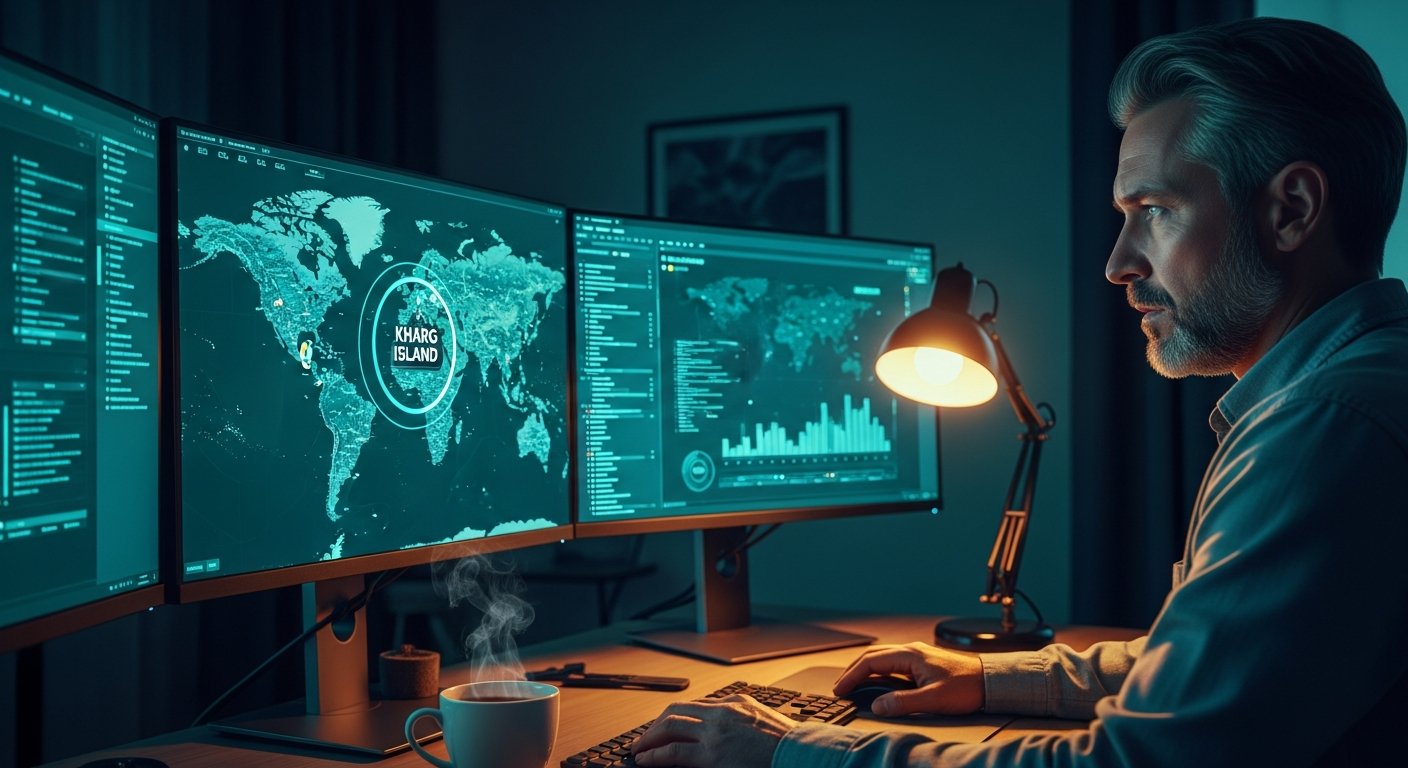
Have you noticed your company's cloud costs creeping up lately, or are you still focused purely on the "five nines"?
Let's talk about the hidden costs of our infrastructure in the comments—I'd love to hear your "SPOF" horror stories.
Story Sources
From the Author


Hey friends, thanks heaps for reading this one! 🙏
If it resonated, sparked an idea, or just made you nod along — I'd be genuinely stoked if you'd show some love. A clap on Medium or a like on Substack helps these pieces reach more people (and keeps this little writing habit going).
→ Pythonpom on Medium ← follow, clap, or just browse more!
→ Pominaus on Substack ← like, restack, or subscribe!
Zero pressure, but if you're in a generous mood and fancy buying me a virtual coffee to fuel the next late-night draft ☕, you can do that here: Buy Me a Coffee — your support (big or tiny) means the world.
Appreciate you taking the time. Let's keep chatting about tech, life hacks, and whatever comes next! ❤️