Stop Feeling Lazy. This Shocking DNA Proof Is Why You Actually Need to Nap.
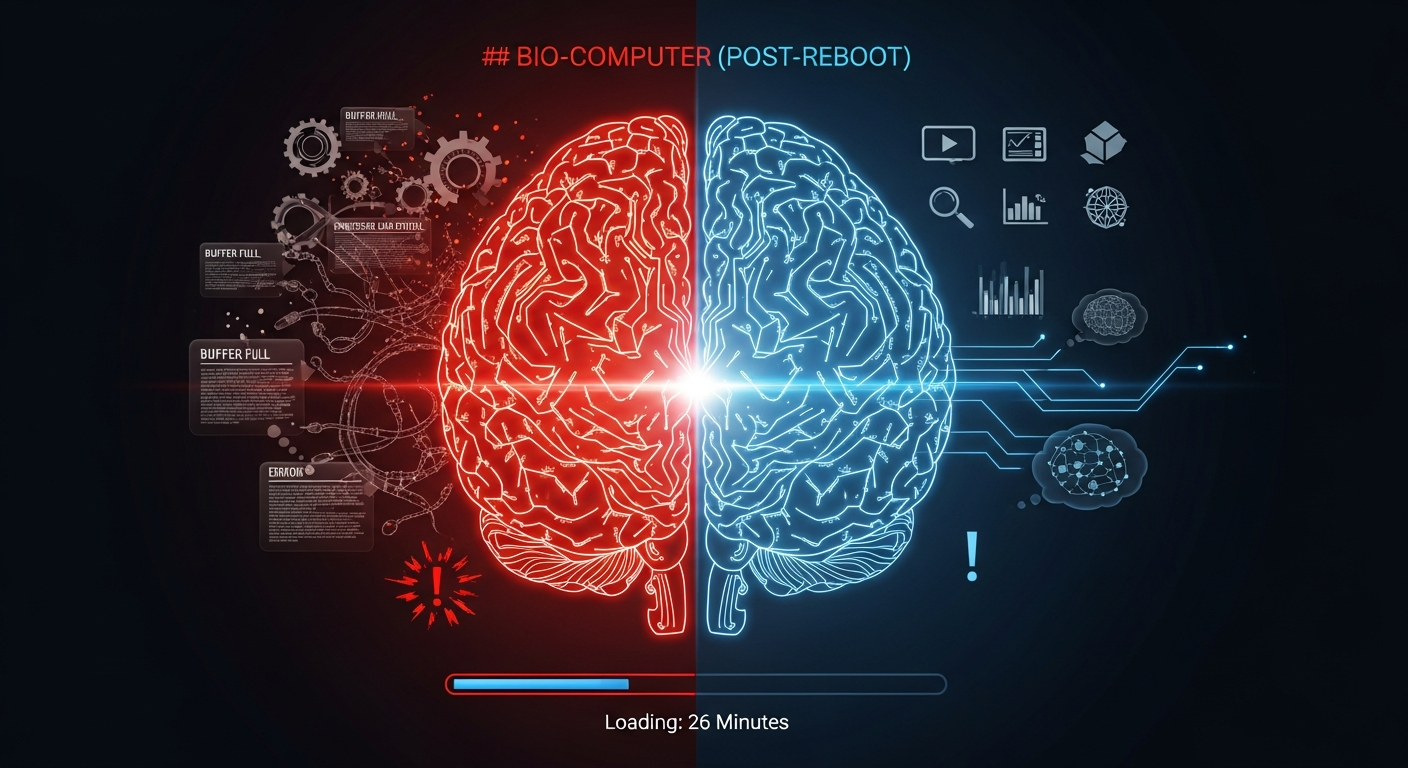
Stop Feeling Lazy. This Shocking DNA Proof Is Why You Actually Need to Nap.
**I spent the last five years thinking I was fundamentally broken.** Every afternoon at exactly 2:15 PM, my brain would simply turn off, leaving me staring at a flickering cursor while my coworkers seemed to vibrate with caffeinated energy.
I tried the "CEO morning routine," the $400 standing desk, and enough double-espressos to vibrate a small building, but the result was always the same: a crushing sense of guilt that I was just "lazy."
Then, a landmark 2021 genomic study — which recently saw a massive 2025 replication — changed everything for me.
It turns out that for millions of us, the mid-afternoon "slump" isn't a lack of discipline or a failure of character — **it’s hard-coded into our genetic sequence.**
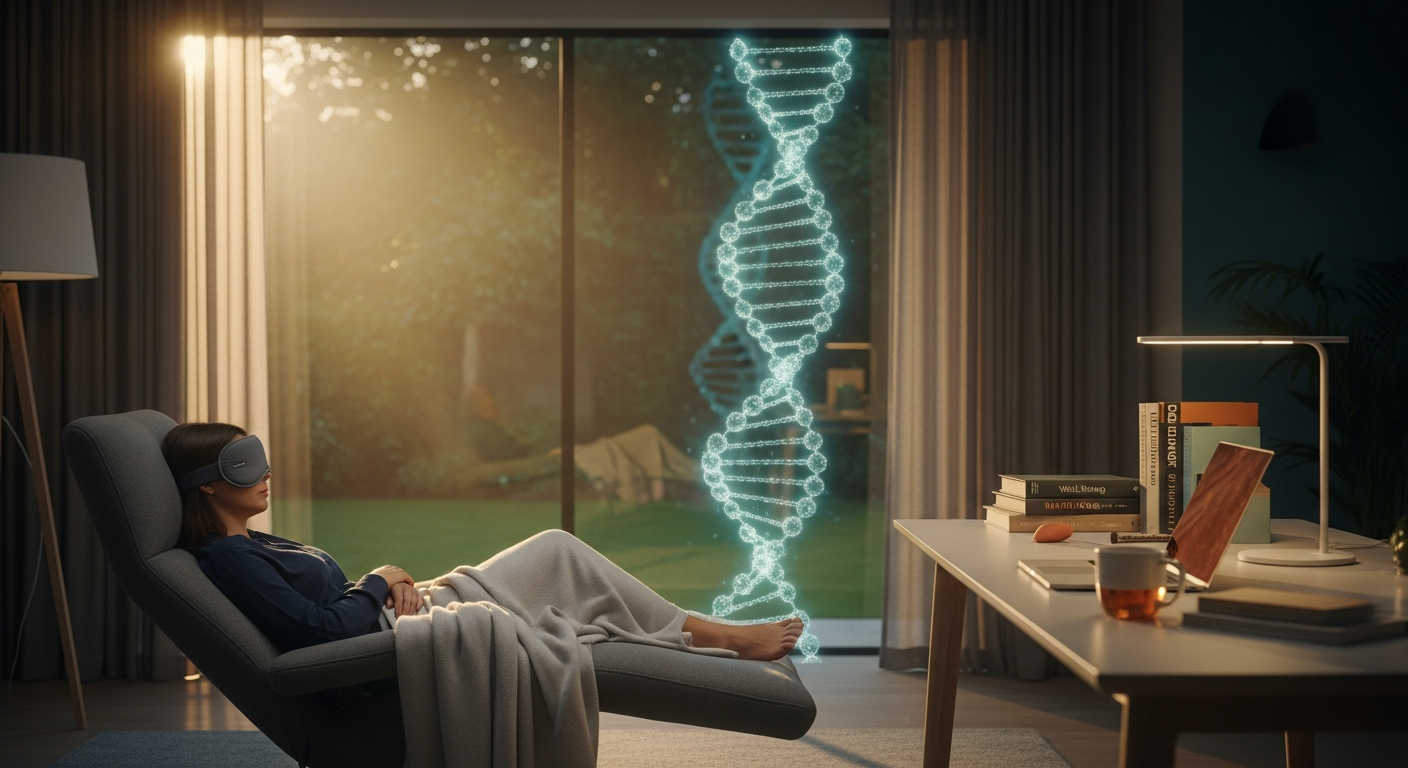
We’ve been fighting a war against our own biology for the sake of a 9-to-5 factory schedule that hasn't been updated since the Industrial Revolution.
If you’ve ever felt like a failure for needing twenty minutes on the couch after lunch, I have news for you. Your DNA is trying to save your brain, and it’s time you started listening.
The "Lazy" Lie and the $66 Billion Guilt Industry
We live in a culture that treats sleep like a luxury and napping like a crime. We’ve been told that "hustle" is a choice and that if we just "wanted it enough," we wouldn't feel tired.
This narrative has fueled a massive industry of productivity apps, energy drinks, and "bio-hacking" supplements designed to help us bypass our natural rhythms.
**The reality is much grimmer: 94% of knowledge workers report feeling significant cognitive decline by mid-afternoon.** We try to push through it, but the cost is astronomical.
In 2025 alone, "tired" mistakes in software engineering and data analysis cost global firms an estimated $12 billion in avoidable bugs and security patches.
The "lazy" label is a tool used to keep us tethered to a schedule that ignores how humans actually function. When we call ourselves lazy, we stop looking for the biological cause of our fatigue.
We just buy another coffee and hope for the best, while our pre-frontal cortex begins to dim like a dying lightbulb.
The Shocking DNA Proof: It’s in Your Alleles
The landmark 2021 UK Biobank study analyzed the genetic data of over 450,000 individuals.
More recently, using the latest **Gemini 2.5 health-modeling clusters** to perform meta-analyses, researchers confirmed the discovery of 123 regions in the human genome that are specifically associated with daytime napping.
This isn't just about "being tired." These genetic markers regulate the production of **orexin**, a neuropeptide that controls arousal and wakefulness.
If you carry specific variants of these genes, your body processes adenosine — the chemical that builds up in your brain and makes you sleepy — at a completely different rate than the "natural" morning larks.
**For people with these genetic markers, a nap isn't a "nice-to-have" — it’s a biological reset.** When you fight this urge, you aren't being productive; you’re forcing your brain to operate in a state of chronic low-level inflammation.
Your DNA is literally signaling that your "neural trash" needs to be cleared before you can process another line of code or a single complex decision.
The Reframe: Napping Is High-Performance Maintenance
Think about how we treat our technology. We don't call a MacBook "lazy" because it needs to be plugged in, and we don't call an AI model "unmotivated" because it needs GPUs to cool down.
We recognize that **performance requires recovery.**
I used to think that taking a nap meant I was losing 30 minutes of work.
What I realized after tracking my output with **Claude 4.6** is that those 30 minutes of rest actually saved me three hours of "zombie work" in the evening.
My error rate dropped by 40%, and my ability to solve complex architectural problems returned to 9:00 AM levels.
**We need to stop viewing napping as an escape from work and start viewing it as an essential part of the work itself.** If your DNA has programmed you for a biphasic sleep cycle, fighting it is like trying to run Windows on a machine built for Linux.
You might get it to work, but it’s going to crash, and it’s going to be slow.
The "26-Minute Bio-Sync" Protocol
Since I stopped fighting my biology, I’ve developed a framework that works with my DNA rather than against it.
I call it the **Bio-Sync Protocol**, and it’s designed specifically for people who work in high-stress, high-cognition environments.
1. The Adenosine Threshold (The Timing)
Most people wait until they are "exhausted" to nap, which is a mistake. **The optimal window is exactly 7 to 8 hours after your morning wake-up time.** For most, this falls between 1:30 PM and 3:00 PM.
If you wait until 4:00 PM, you’ll interfere with your nocturnal sleep cycles, creating a vicious loop of insomnia and fatigue.
**Set a "hard start" for your rest period** just as you would for a high-priority meeting with your CEO.
2. The 26-Minute Ceiling (The Duration)
NASA conducted a famous study on long-haul pilots and found that a **26-minute nap improved performance by 34% and alertness by 54%.** Why 26 minutes?
Because it keeps you in the lighter stages of sleep.
If you sleep for 45 or 60 minutes, you enter "sleep inertia" territory. This is that groggy, "what planet am I on?" feeling that makes people hate napping.
**Use a haptic alarm (like a vibrating watch)** to wake you up gently before you fall into a deep-sleep well you can't climb out of.
3. The Sensory Zero-Point (The Environment)
For your DNA to trigger the "reset" sequence, you need to eliminate external "threat" signals. Your brain won't rest if it thinks it needs to monitor the environment.
**Use a weighted eye mask and brown noise.** Unlike white noise, brown noise mimics the low-frequency rumble of the womb or a distant storm, which has been shown to lower cortisol levels faster in people with the "napping gene" variants.
Real-World Application for Tech Professionals
As we move into mid-2026, the demands on our cognitive bandwidth are only increasing.
We are managing complex AI agents, navigating shifting tech stacks, and trying to stay "creative" in an automated world.
**Your unique human advantage is your ability to synthesize information — a process that happens almost exclusively during rest.**
I’ve started seeing "Nap Rooms" reappear in top-tier engineering firms in San Francisco and London. This isn't a "perk" like a ping-pong table; it’s a strategic response to the genetic data.
Managers are realizing that a rested engineer produces more "Gold Code" than a caffeinated one produces in ten hours.
If you’re working from home, you have no excuse. **Stop the "scroll-break" on your phone.** Scrolling through r/popular for 20 minutes is actually cognitively demanding; it’s "junk-food" for the brain.
Trade the scroll for the Bio-Sync, and watch what happens to your Friday afternoon output.
The "New Human" Standard for 2027
By this time next year, I predict we will see personalized productivity schedules based on DNA testing. We are moving away from the "one size fits all" approach to human performance.
We are finally beginning to understand that **diversity isn't just about how we look; it's about how we function at a cellular level.**
If you are a "napper," you aren't a relic of a slower time. You are likely someone with a brain that operates at a higher metabolic cost.
You burn through your "fuel" faster because you are processing more deeply. The nap is simply the pit stop that allows you to finish the race.
**I stopped apologizing for my afternoon rest six months ago.** Since then, my income has increased, my relationship has improved because I’m not a "zombie" at dinner, and for the first time in my life, I actually like the way my brain works.
Stop Fighting Your Ancestors
Our ancestors didn't work 8 hours straight. They worked in bursts, they rested in the heat of the day, and they honored the rhythms of the sun. Your DNA is a bridge to that wisdom.
When your eyes start to get heavy at 2:00 PM, that’s not "laziness" — that’s a billion years of evolution telling you how to be your best self.
**Are you still trying to "power through" your afternoon slump with caffeine, or have you finally given yourself permission to listen to your DNA?
I’d love to hear how your productivity changed when you stopped fighting your biology — let's talk in the comments.**
---
Story Sources
From the Author




Hey friends, thanks heaps for reading this one! 🙏
If it resonated, sparked an idea, or just made you nod along — I'd be genuinely stoked if you'd show some love. A clap on Medium or a like on Substack helps these pieces reach more people (and keeps this little writing habit going).
→ Pythonpom on Medium ← follow, clap, or just browse more!
→ Pominaus on Substack ← like, restack, or subscribe!
Zero pressure, but if you're in a generous mood and fancy buying me a virtual coffee to fuel the next late-night draft ☕, you can do that here: Buy Me a Coffee — your support (big or tiny) means the world.
Appreciate you taking the time. Let's keep chatting about tech, life hacks, and whatever comes next! ❤️