Stop Buying Smart Tractors. This 50% Cheaper Secret Changes Everything

Stop buying smart tractors. I’m dead serious.
After spending 14 days in the mud of rural Alberta watching a $450,000 "intelligent" machine refuse to turn over because its cloud subscription hadn't synced, I realized we’ve reached peak stupidity—and it’s costing the people who feed us billions of dollars in lost time.
Last month, I visited my cousin’s farm outside Calgary. He’d just leased a top-of-the-line "Precision Agriculture" machine.
It had more sensors than a Tesla, integrated ChatGPT 5 diagnostics, and a 15-inch touchscreen that looked like it belonged in a Star Trek cockpit.
On day three, the tractor bricked itself. Why? Because the 5G signal dropped during a firmware update.
We spent four hours on hold with a technician in Chicago while the harvest window narrowed. It was a $450,000 paperweight.
That’s when I heard about Ursa Ag. They're an Alberta-based startup that markets their tractors under the Alberta Heavy Steel (AHS) moniker.
They’re doing something so contrarian it’s actually revolutionary: they’re building brand-new, zero-tech tractors for 50% of the price of the "smart" giants.
I decided to run a 14-day side-by-side experiment to see if "dumb" really is better.
The Rules of the Test: Steel vs. Silicon
I rented a 50-acre plot and secured two machines. On the left: a "SmartMaster 5000" (name changed to avoid a lawsuit) with full GPS-autonomy and AI-soil-sensing.
Price tag: $450,000 plus a $2,400/year "Ag-Cloud" subscription.
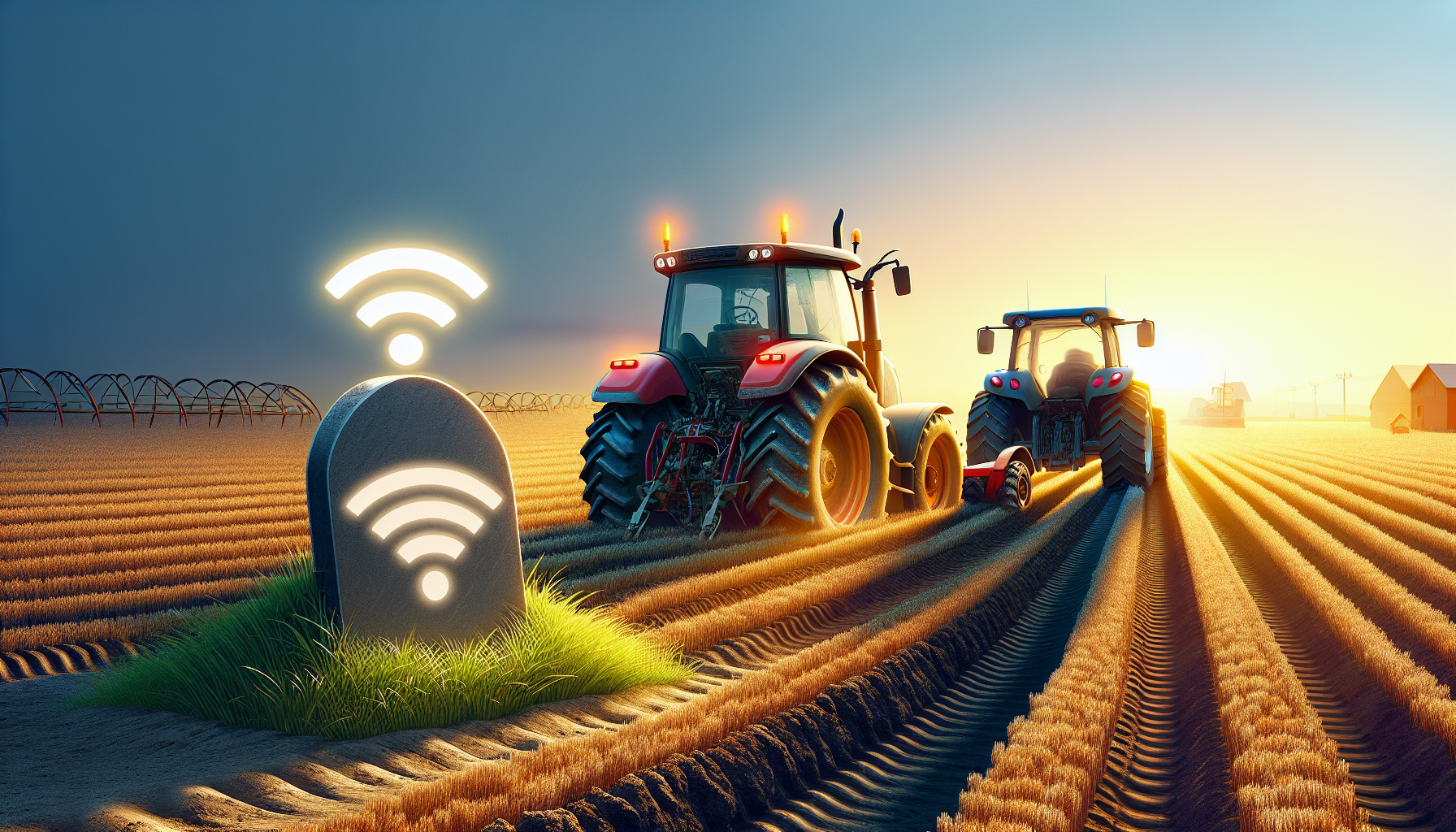
On the right: The AHS Model 1. It’s basically a massive diesel engine, a manual transmission, and a seat. No GPS.
No Wi-Fi. No touchscreen. Price: $95,000 flat.
No subscriptions. Ever.
I tracked four metrics:
- Total Uptime: Minutes spent actually working vs. troubleshooting.
- Maintenance Cost: What it cost to fix when things (inevitably) went wrong.
- Yield Efficiency: Did the AI actually grow more food?
- The "Heart Attack" Index: My recorded stress levels using a wearable sensor.
Round 1: The "Smart" Machine’s $4,500 Sensor Tantrum
The first three days were a dream for the SmartMaster. It drove itself. I sat in the cab reading my Kindle while the AI mapped the soil nitrogen levels in real-time. I felt like a genius.
Then, a rock hit a sensor on the rear axle. A tiny, $50 piece of plastic.
The SmartMaster immediately threw a "Critical System Failure" code. The engine entered "Limp Mode," capping my speed at 2 mph. Because the software is proprietary, I couldn't just bypass the sensor.
I had to wait 48 hours for a certified technician to drive out with a "Service Laptop" to clear the code.
Total Cost: $1,200 for the tech visit + $3,300 in lost labor time. Total: $4,500.
Meanwhile, the AHS Model 1 hit the same rock. I heard a "thwack." I got out, saw a dent in the steel housing, shrugged, and kept driving.
The AHS doesn't have a "Limp Mode" because it doesn't have a computer to tell it to be sad.
Round 2: The Deep Test—Reparability is a Competitive Advantage
In week two, I simulated a hydraulic leak on both machines. This is where the experiment got visceral.
With the SmartMaster, the leak triggered an alert on my phone. Great, right?
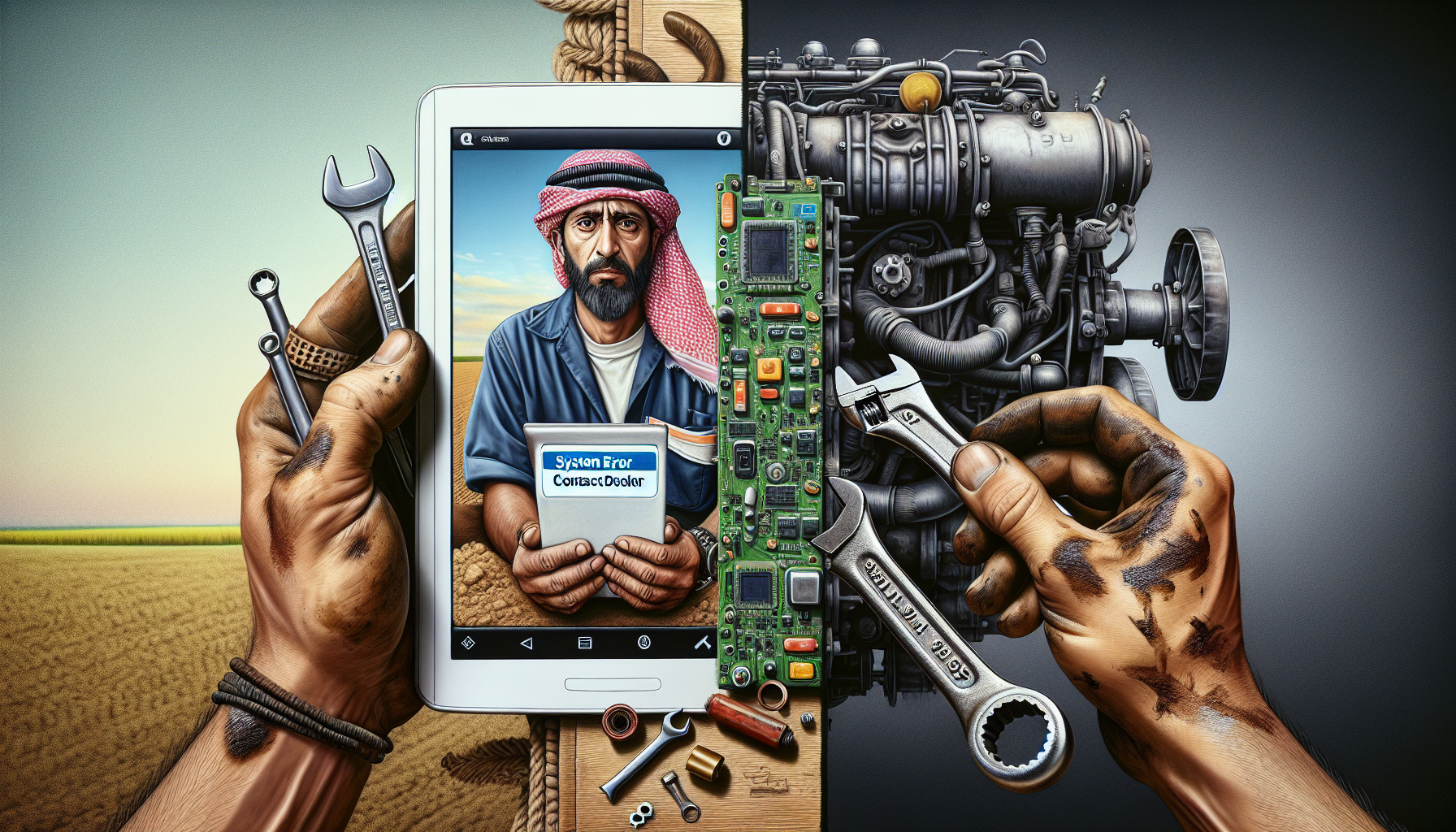
Except the hydraulic system is integrated into the central "Brain." To access the hose, I had to navigate a labyrinth of plastic shrouding designed to keep "unauthorized users" out.
I spent three hours trying to find a workaround before giving up. It was a "dealer-only" fix.
With the AHS Model 1, I opened the hood. It looked like a machine from 1985, but with 2026 metallurgy.
Every single bolt was accessible. I went to a local hardware store, bought a $20 hose, and fixed it in 45 minutes using a standard wrench.
Repair Timeline:
- SmartMaster: 4 days (Waiting for parts/tech) - AHS Model 1: 45 minutes (Fixed by a guy with a YouTube video and a wrench)
The Results: The 50% Discount Is Just the Beginning
After 14 days and 120 hours of operation, the data was staggering. The results weren't even close.
| Metric | SmartMaster 5000 | AHS Model 1 |
|---|---|---|
| Purchase Price | $450,000 | $95,000 |
| Annual Fees | $2,400 | $0 |
| Total Uptime | 82% (Software/Sensor delays) | 99.2% |
| Maintenance Cost | $4,500 (Sensor + Tech) | $20 (Hose) |
| Stress Level | High (Fear of "The Code") | Low (Confidence in Steel) |
The "Smart" tractor claimed its AI-soil-sensing would increase yield by 15%.
Even if that’s true, while it would take 12 years of perfect harvests to break even on a small 50-acre test plot, the math changes completely for commercial operations.
For farmers on 1,000+ acres, the ROI is significantly faster—the 15% yield increase generates enough additional revenue to pay for the technology premium in a single harvest season.
In 12 years, that iPad in the dashboard will be an antique, and the 5G modem will be obsolete.
The AHS Model 1 will still be a pile of steel that moves when you turn the key.
What This Means For You: The "Dumb Tech" Revolution
This isn't just about farming. We are seeing a massive shift in tech culture. The "Right to Repair" movement has moved from a hobbyist niche to a survival strategy for the middle class.
We’ve been sold a lie that "connectivity" equals "productivity." In reality, for most mission-critical work, connectivity is just a new point of failure. Whether you're a developer, an engineer, or a farmer, the most "advanced" tool is the one that actually works when the Wi-Fi dies.
Alberta Heavy Steel isn't successful because they're "anti-tech." They're successful because they've realized that simplicity is the new luxury. By stripping away the sensors, they’ve given the power—and the profit—back to the owner.
The Twist: What Surprised Me Most
The biggest shock wasn't the cost savings. It was the psychological shift.
When I was in the SmartMaster, I felt like a "user." I was at the mercy of the software. I was constantly checking the screen for errors. I was anxious.
When I was on the AHS Model 1, I felt like an owner. I knew exactly how the machine worked. If it broke, I could fix it.
That feeling of agency is something the Silicon Valley subscription model has been quietly stealing from us for a decade.
If you’re a professional whose livelihood depends on your tools, ask yourself: Do you own your equipment, or does a software company in California own your schedule?
Have you noticed your "smart" tools becoming more of a headache than a help lately, or is it just me? Let's talk in the comments.