Stop Buying New Cars. This Secret Paywall Is Actually Worse Than You Think
**Riley Park** — Generalist writer. Covers tech culture, trends, and the things everyone's talking about.
Stop Buying New Cars. This Secret Paywall Is Actually Worse Than You Think
**Stop buying new cars. I’m dead serious.
After replacing my wrecked 2019 Honda with a 2026 model last month, I realized the "new car smell" is actually the scent of a $40,000 cage—and the industry is betting billions that you’re too distracted by the 15-inch touchscreen to notice you no longer own the hardware.**
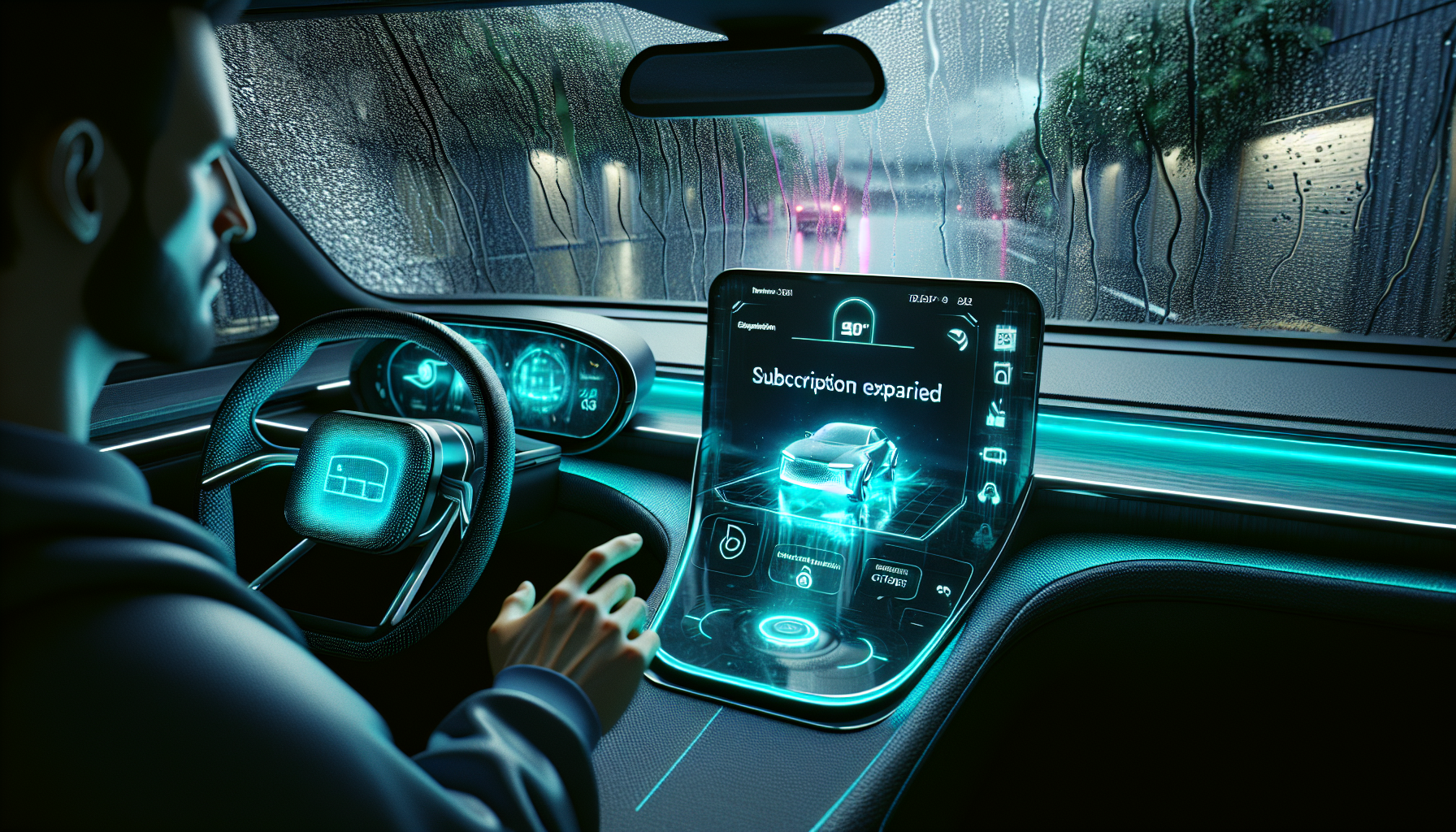
I learned this the hard way at 6:15 PM on a rainy Tuesday.
I pulled into my driveway, reached up to the rearview mirror to hit the garage door opener—a motion I’ve done ten thousand times—and felt nothing but smooth, cold plastic.
My old Honda had a physical button.
My new one? It has a "Software-Defined Experience."
I spent the next three minutes idling in the rain, digging through four layers of touchscreen menus just to find the "HomeLink" digital toggle.
That’s when the notification popped up: **"Your trial of SmartHome Connect has expired. Renew for $15/month to enable remote garage access."**
The Hidden Tax on Your Muscle Memory
We are currently living through the "Digital Enclosure" of the automotive industry. For nearly a century, when you bought a car, you bought a machine.
You owned the pistons, the leather, and yes, the tiny radio frequency transmitter that talked to your garage.
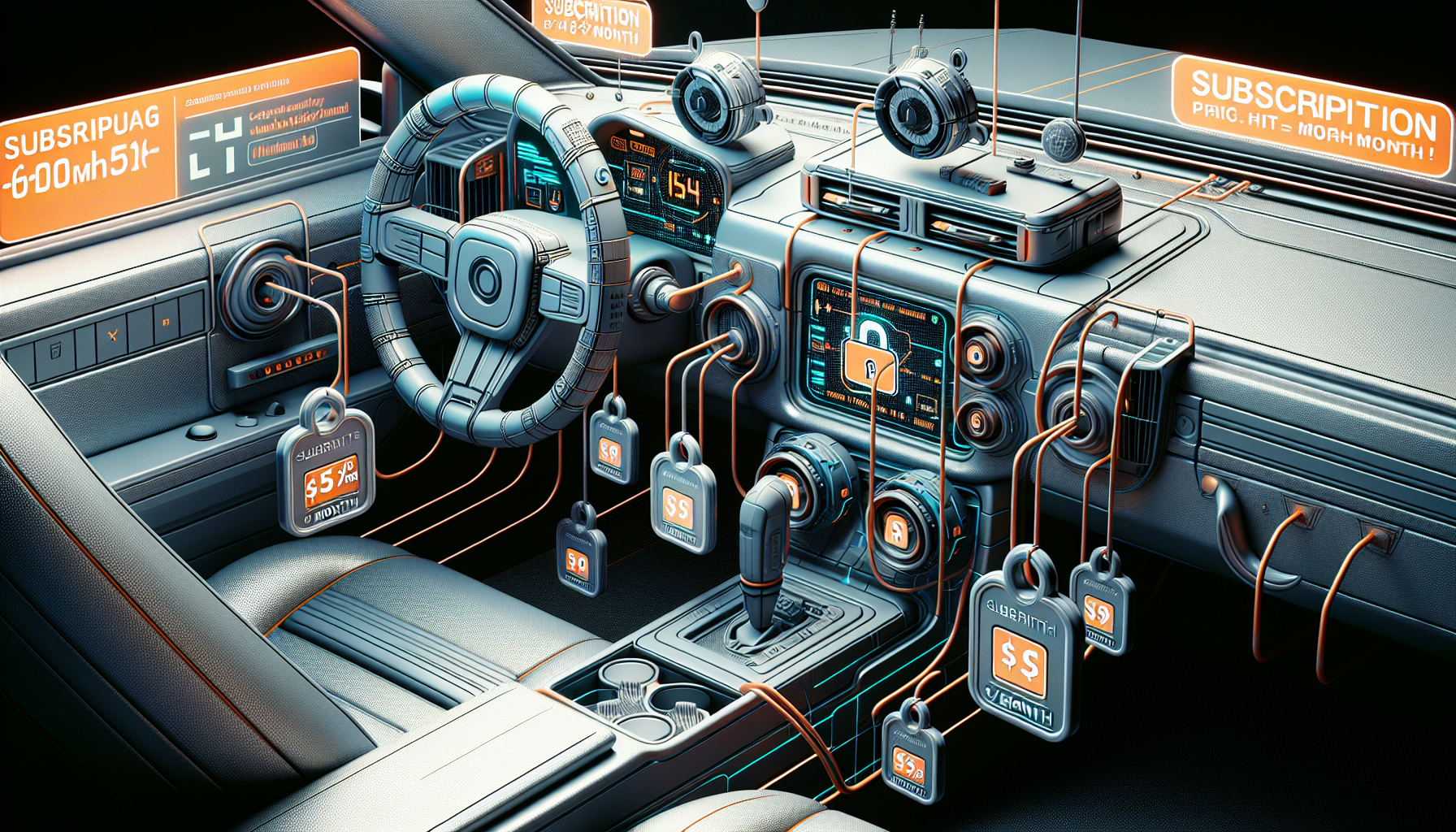
Today, you are buying a rolling iPad with a predatory billing department attached to the chassis.
**The garage door opener hasn't been "upgraded" to a screen; it’s been moved there so it can be held hostage.** By removing a $2 physical button and putting the code behind a paywall, manufacturers have turned a one-time utility into a recurring revenue stream.
This isn't just a Honda problem, and it isn't just about garage doors. It’s a fundamental shift in how we interact with the objects in our lives.
**We are transitioning from owners to permanent renters of our own property.**
Why 2026 Became the Year of the "Software Paywall"
If you feel like this has escalated recently, you’re right. Back in 2022, BMW tried to charge a subscription for heated seats, and the internet nearly burned down the dealership.
We thought we won that battle. **We were wrong; they just got quieter about it.**
Car companies realized that they couldn't charge you for "comfort" without a PR nightmare.
Instead, they started charging for "connectivity." By 2026, almost every major manufacturer has moved basic hardware functions—remote start, GPS, and even safety features like advanced lane-keep—into "Pro" or "Connect" packages.
The logic is simple: hardware margins are shrinking. Electric vehicle (EV) batteries are expensive, and the competition from overseas is fierce.
**To keep shareholders happy, car companies need "Software as a Service" (SaaS) margins.** They want that sweet, monthly $15-50 direct deposit from your bank account for the next ten years.
The Cognitive Load of the "Screen-First" World
Beyond the wallet, there is a literal "safety tax" we are paying for this transition. When I had a physical button for my garage, I didn't have to look at it.
My brain used "proprioception"—the sense of where my limbs are in space—to perform the task.
Now, I have to take my eyes off the road (or my driveway) to navigate a UI that was designed by someone who clearly doesn't live in a place where it rains.
**Every time a physical dial is replaced by a digital slider, your cognitive load increases.**
Studies are already showing that 2026 models with "all-glass" cockpits are seeing a spike in low-speed "distraction bumps." We’ve traded safety and intuition for a sleek aesthetic that serves the manufacturer’s bottom line, not the driver’s experience.
**The screen isn't there for your convenience; it's there for their control.**
The "Analog-First" Audit: A Framework for Your Next Purchase
I failure-tested my 2026 purchase so you don't have to. If you are in the market for a vehicle this year, you need a system to ensure you aren't buying a subscription trap.
I call this **The Analog-First Audit.**
Before you sign the papers, run every vehicle through these three H3-level checks. If the car fails more than one, walk away. Your future self (and your bank account) will thank you.
Step 1: The "Dead-Battery" Physicality Test
Sit in the driver's seat and ask the salesperson to turn the car completely off. Now, try to find the controls for the following: Volume, Climate (Temperature/Fan), and the Garage Opener.
**If any of these require a powered-on screen to operate, you are at the mercy of a software update.** In 2027, when that software version becomes "Legacy," your car will feel like an iPhone 6—sluggish, buggy, and eventually, unsupported.
Seek out cars that prioritize tactile "Hard Keys" for primary functions.
Step 2: The "SIM Card" Sabotage Check
Ask the dealer: "Does this feature work if I pull the SIM card out of the car?" Many "smart" features today don't actually live in your car; they live on a server in Virginia.
If your garage door opener or your navigation requires an active LTE/5G connection to function, you don't own that feature.
**You are leasing a permission slip.** Look for vehicles that offer "Local-First" processing for basic utility.
Step 3: The "Third-Party" Escape Hatch
Check if the car supports Apple CarPlay or Android Auto—but look closer. Some manufacturers (looking at you, GM and Tesla) are actively phasing these out.
Why? Because they want to own the data.
**If you can't bypass the car's native OS, you are trapped in their ecosystem.** A car that allows you to use your phone's interface is a car that gives you an "out" when the native software inevitably becomes a pay-to-play nightmare.
The Rise of the "Dumb Car" Movement
There is a growing counter-culture emerging in mid-2026. People are flocking to the "Sweet Spot" cars—models from roughly 2018 to 2022.
These vehicles have modern safety features (backup cameras, blind-spot monitoring) but still retain physical buttons and lack the intrusive "always-on" subscription architecture.
I’ve seen "Dumb Car" enthusiasts on Reddit sharing tutorials on how to physically bypass HomeLink modules.
They’re buying $20 clickers from Amazon and Velcro-ing them over the sleek, empty plastic where the button used to be. **It’s a low-tech rebellion against a high-tech heist.**
We are realizing that "innovation" in the auto industry has peaked and is now sliding into "exploitation." A car is meant to provide freedom of movement, not a monthly bill for the privilege of entering your own home.
How to Fight Back at the Dealership
If you absolutely must buy a new car today, you have more leverage than you think. The "Subscription Fatigue" of 2026 is real, and dealers are starting to feel the pushback.
**Tell the salesperson explicitly: "I will not buy a car with a subscription-based garage door or remote start."** When enough people say this, the data filters back to the manufacturers.
We saw it happen with the "Save the Manuals" movement; we can do it with "Save the Buttons."
Negotiate for "Lifetime Activations." Some dealers have the power to bake the subscription costs into the purchase price as a one-time fee.
It’s still a tax, but at least it stops the monthly "nickel-and-diming" that erodes your sense of ownership.
The Future We’re Driving Toward
If we don't stop this now, the 2030 models won't just charge for the garage door.
They’ll charge for "Performance Mode" (horsepower you already paid for), "Privacy Mode" (not selling your GPS data to insurance companies), and "Night Vision" (activating the LED high-beams).
We have to draw a line in the grease.
**A car should be a tool that serves you, not a platform that harvests you.** I miss my 2019 Honda every single day—not because it was faster or shinier, but because when I pressed a button, the garage opened.
No trial period.
No login. No "Connect" fee. Just a machine doing exactly what it was built to do.
**Have you noticed your new car "asking" for more money lately, or did you find a way to bypass the paywalls? I'd love to hear your horror stories—or your fixes—in the comments.**

---
Story Sources
From the Author




Hey friends, thanks heaps for reading this one! 🙏
Appreciate you taking the time. If it resonated, sparked an idea, or just made you nod along — let's keep the conversation going in the comments! ❤️