Stop Buying Cheap. This "Offensive" Upgrade Actually Changes Everything
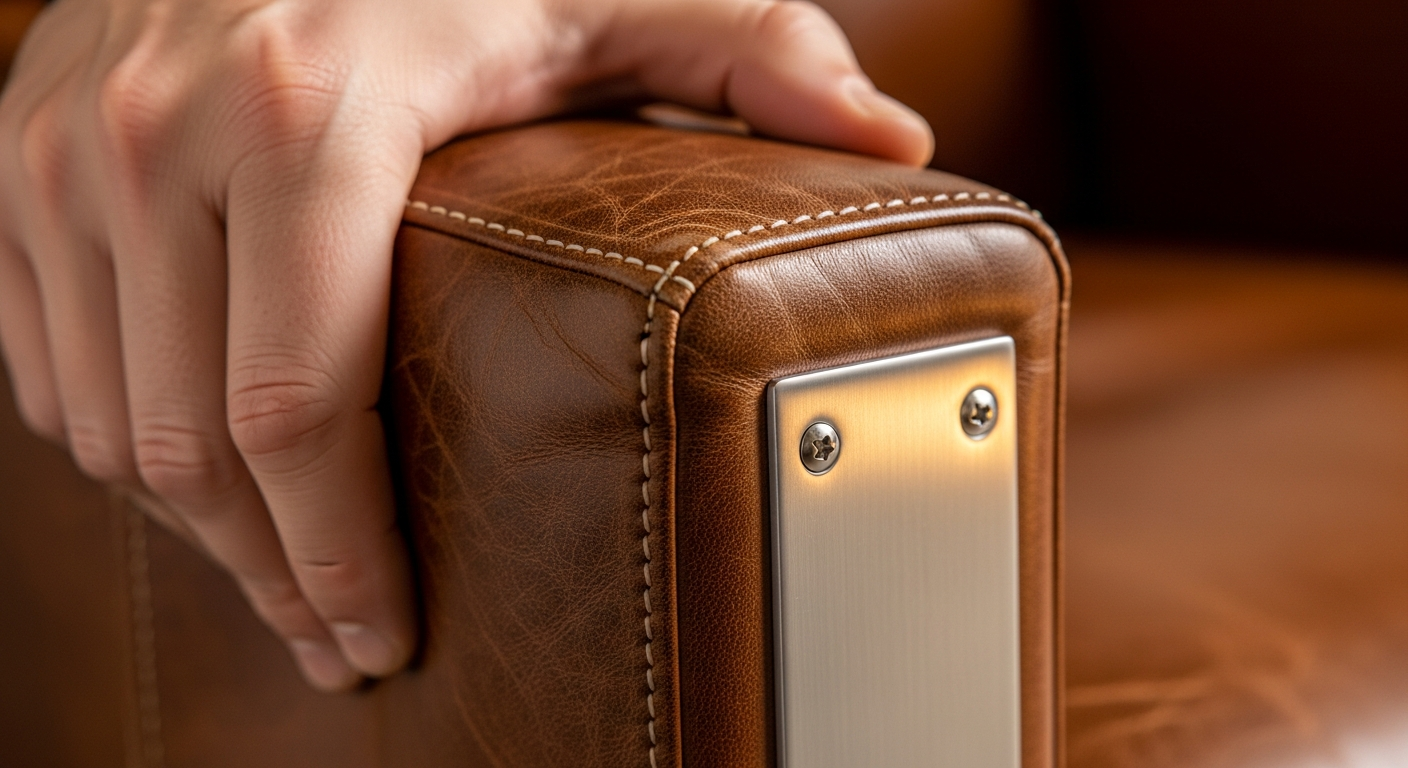
**Stop buying the "good enough" version. I’m serious.
After spending $1,400 on a single piece of office furniture in early 2025, I realized that my "frugal" habit of buying $150 Amazon specials was actually a slow-motion tax on my productivity and my spine — and it’s a trap that is quietly costing you thousands of dollars every year.**
We’ve all been there. You need a new pair of headphones, a kitchen knife, or a work chair.
You look at the "pro" version, see a price tag that feels like a personal insult, and immediately pivot to the mid-tier option that looks 90% as good for 20% of the price.
**You think you’re being smart, but you’re actually participating in a cycle of "planned mediocrity" that drains your bank account and your mental energy.** By the time you’ve replaced that mid-tier item ten times, you’ve spent more than the "offensive" version cost, and you’ve had a worse experience every single day in between.
The "Boots Theory" for the 2026 Digital Nomad
In the late 20th century, author Terry Pratchett famously described the "Vimes 'Boots' Theory of Socioeconomic Unfairness." The gist: a rich man can spend $50 on a pair of boots that last ten years, while a poor man can only afford $10 boots that last a year.
After ten years, the poor man has spent $100 on boots and still has wet feet.
**In 2026, we’ve digitalized the Boots Theory, but we’ve added a layer of "aesthetic deception."** We buy products that *look* like the high-end versions in Instagram ads or TikTok shop carousels, but they lack the structural integrity or the "frictionless" engineering that makes the expensive version worth it.
I spent most of 2024 trying to optimize my home office on a budget. I bought the $200 "ergonomic" chair that had 14,000 five-star reviews.
Within six months, the hydraulic cylinder was sagging, and by early 2025, my lower back felt like it had been through a slow-speed car wreck.
**The "offensive" upgrade wasn't a luxury; it was a corrective measure for a year of bad decisions.**
The Psychology of the "Offensive" Price Tag
Why do we find certain price tags offensive? It’s usually because the price exceeds our internal "utility ceiling." We think, "How can a chair possibly be worth $1,400? It’s just fabric and plastic."
**The offense comes from a misunderstanding of what you’re actually paying for: the absence of friction.** When you buy a $150 chair, you’re paying for the materials.
When you buy a $1,400 Herman Miller or a Steelcase, you’re paying for the ten years of R&D that ensures you never think about your back while you're working.
**The best products are the ones you forget you’re using.** If you’re constantly adjusting your headset, sharpening a dull $20 knife, or rebooting a glitchy $40 smart hub, you are paying a "friction tax." This tax isn't just financial; it’s a drain on your cognitive load.
The "Frictionless Life" Protocol
To break out of the cycle of buying cheap, you need a framework for identifying when an "offensive" upgrade is actually a logical investment.
I call this the **Frictionless Life Protocol.** It’s a three-step audit to determine if you should pull the trigger on that high-priced item.
Step 1: The 1,000-Hour Rule
Look at your daily routine and identify any object you interact with for more than 1,000 hours a year.
**If you work a standard 40-hour week, you are spending roughly 2,000 hours a year in your office chair and at your desk.**
If you sleep eight hours a night, you’re spending nearly 3,000 hours on your mattress. These are the "High-Friction Zones" where "cheap" becomes dangerous.
**Any item that touches your body for 1,000+ hours a year should be the most expensive version you can possibly afford.**
When I upgraded to a high-end OLED monitor last year, the price felt absurd.
But after 2,000 hours of coding and writing, the lack of eye strain and the crispness of the text changed my daily energy levels.
I wasn't paying for "better colors"; I was paying for an extra hour of focus every afternoon.
Step 2: Calculate the "Zero-Day" Replacement Cost
Cheap products are designed to fail just outside the warranty window. High-end products are designed to be repaired.
**An "offensive" price tag often includes a 10- or 12-year warranty that essentially makes your "cost per year" lower than the cheap alternative.**
Take the Vitamix blender, for example. It costs $500, which feels insane for a device that spins blades in a jar. But people routinely use them for 15 years.
Compare that to the $80 blender you replace every two years when the motor smells like burning hair.
**By 2036, you will have spent $500 on blenders either way.** The only difference is whether you spent those years using a professional-grade tool or a struggling plastic toy.
The "Zero-Day" cost of the cheap item is actually much higher when you factor in the inevitable trip back to the store.
Step 3: The "Resale Floor" Audit
One of the most overlooked aspects of BIFL (Buy It For Life) items is their "liquidity." **Cheap junk has zero resale value the moment it leaves the box.** High-end, "offensive" gear often retains 50-70% of its value for years.
If you buy a high-end mechanical keyboard for $400 and realize it’s not for you, you can sell it on a secondary market for $300 in 48 hours.
If you buy a $40 "gaming keyboard" from a big-box store, it’s destined for a landfill.
**The "offensive" upgrade is often just a long-term deposit.** You’re parking your money in a high-quality asset that you get to use for free (or for a small "rental" fee represented by the depreciation) until you decide to move on.
Why Your Brain Hates This (Until You Use It)
The reason we struggle with this is "Loss Aversion." Our brains are hardwired to feel the pain of losing $1,000 today more than the benefit of saving $2,000 over the next decade.
**We are biologically programmed to be short-sighted consumers.**
But there is a specific moment — I call it the "Click" — that happens when you use a truly superior tool for the first time. It happened to me with a Japanese chef’s knife.
I thought my $30 grocery store knife was "sharp." Then I used a $250 hand-forged blade.
**The knife didn't just cut the onion; the onion seemed to simply cease being whole.** The physical effort required dropped by 80%. Suddenly, cooking wasn't a chore; it was a tactile pleasure.
**That is what you are buying: the transformation of a mundane task into a moment of flow.**
Three Categories Where "Cheap" is Most Expensive
If you’re looking to start your "offensive" upgrade journey in 2026, don't try to change everything at once. Focus on these three categories where the gap between "cheap" and "pro" is a literal canyon.
1. The "Human-Interface" Devices
This includes your chair, your mattress, your shoes, and your keyboard. **These are the points where the physical world meets your biology.** If there is friction here, your body absorbs it.
I’ve seen developers spend $5,000 on a laptop but sit in a $100 chair. It’s madness. Your laptop will be obsolete in three years; your spine needs to last eighty.
**Flip the script: buy a refurbished laptop and spend the savings on a chair that will still be comfortable in 2035.**
2. The "Analog" Tools
In a world of "smart" everything, the most "offensive" upgrades are often the ones with the least technology. A high-end wool coat, a cast-iron skillet, or a solid leather bag.
**These items don't have firmware updates or battery degradation.**
I bought a Filson briefcase eighteen months ago. It cost more than my first car. But it’s made of rugged twill and bridle leather that actually looks better as it gets beat up.
**It is the only thing I own that I am certain I will still be using in 2040.**
3. Audio and Visual Clarity
We spend 12 hours a day staring at screens and listening to digital audio.
**The "compression" of cheap speakers and low-end monitors creates a "hidden fatigue" that most people don't recognize until it’s gone.**
Upgrade your audio. Get a pair of open-back headphones and a dedicated DAC. When the "muddiness" of cheap audio disappears, your brain doesn't have to work as hard to process the information.
**It’s like taking off a pair of dirty glasses you didn't know you were wearing.**
The Hidden Cost of "Making Do"
We often pride ourselves on "making do" with inferior tools. We think it shows grit or fiscal responsibility. But there is a point where "making do" becomes a form of self-sabotage.
**If your tools are frustrating you, you aren't working; you’re fighting your equipment.** Every time you have to jiggle a cable or wait for a slow interface, you’re breaking your "Flow State." By the end of 2026, those tiny 10-second interruptions will have added up to days of lost life.
**Stop buying the version that is "fine for now."** "Fine for now" is the most expensive phrase in the English language.
It’s an admission that you’re going to buy the real version eventually, but you’d like to waste some money and time in the meantime.
The 2027 Outlook: Quality is the New Luxury
As we move into next year, the "minimalist" trend is shifting. It’s no longer about having *nothing*; it’s about having *fewer, better* things.
The "aesthetic of the offensive" is becoming a status symbol not because it’s flashy, but because it’s functional.
**When you see someone with a 20-year-old bag or a 15-year-old chair, you’re looking at someone who has opted out of the replacement cycle.** They’ve beaten the system.
They made one "offensive" payment a decade ago and haven't thought about it since.
**What is the one "cheap" item in your life right now that you find yourself complaining about once a week?** That is your target.
Save up, wait for a sale if you must, but don't buy the $50 version again. Buy the $300 version that makes you feel a little bit sick when you hit "order."
Your future self — the one with the healthy back, the sharp knives, and the extra $2,000 in the bank in 2030 — will thank you for being "offensive" today.
**What’s the one "offensively expensive" thing you bought that you now realize was actually a bargain? Or are you still stuck in the "cheap replacement" cycle?
Let's talk about the items that actually changed your daily life in the comments.**
---
Story Sources
From the Author




Hey friends, thanks heaps for reading this one! 🙏
If it resonated, sparked an idea, or just made you nod along — I'd be genuinely stoked if you'd show some love. A clap on Medium or a like on Substack helps these pieces reach more people (and keeps this little writing habit going).
→ Pythonpom on Medium ← follow, clap, or just browse more!
→ Pominaus on Substack ← like, restack, or subscribe!
Zero pressure, but if you're in a generous mood and fancy buying me a virtual coffee to fuel the next late-night draft ☕, you can do that here: Buy Me a Coffee — your support (big or tiny) means the world.
Appreciate you taking the time. Let's keep chatting about tech, life hacks, and whatever comes next! ❤️