Starlink Mini Just Quietly Killed My Fiber Backup. This Changes Everything.
I cancelled my backup fiber line yesterday. It felt like breaking up with a toxic partner who promised "99.9% uptime" but always managed to ghost me right before a major deployment.
I’ve spent the last three years paying $80 a month for a secondary 1Gbps line that sat idle 98% of the time.
But after a week of testing the Starlink Mini as my primary failover, I realized that the era of terrestrial backup is dead.
For those of us building in the AI space, connectivity isn't just a convenience anymore—it’s oxygen.
If you're pushing 128k context windows to Claude 4.6 or running multi-agent orchestrations on ChatGPT 5, a thirty-second "hiccup" in your local ISP’s routing table doesn't just lag your Zoom call.
It breaks your entire development state.
The "High-Availability" Lie
We’ve been sold a dream of redundant infrastructure that doesn't actually exist.
In my neighborhood, "redundancy" meant two different companies (let’s call them Big Blue and Big Red) sharing the same physical utility poles.
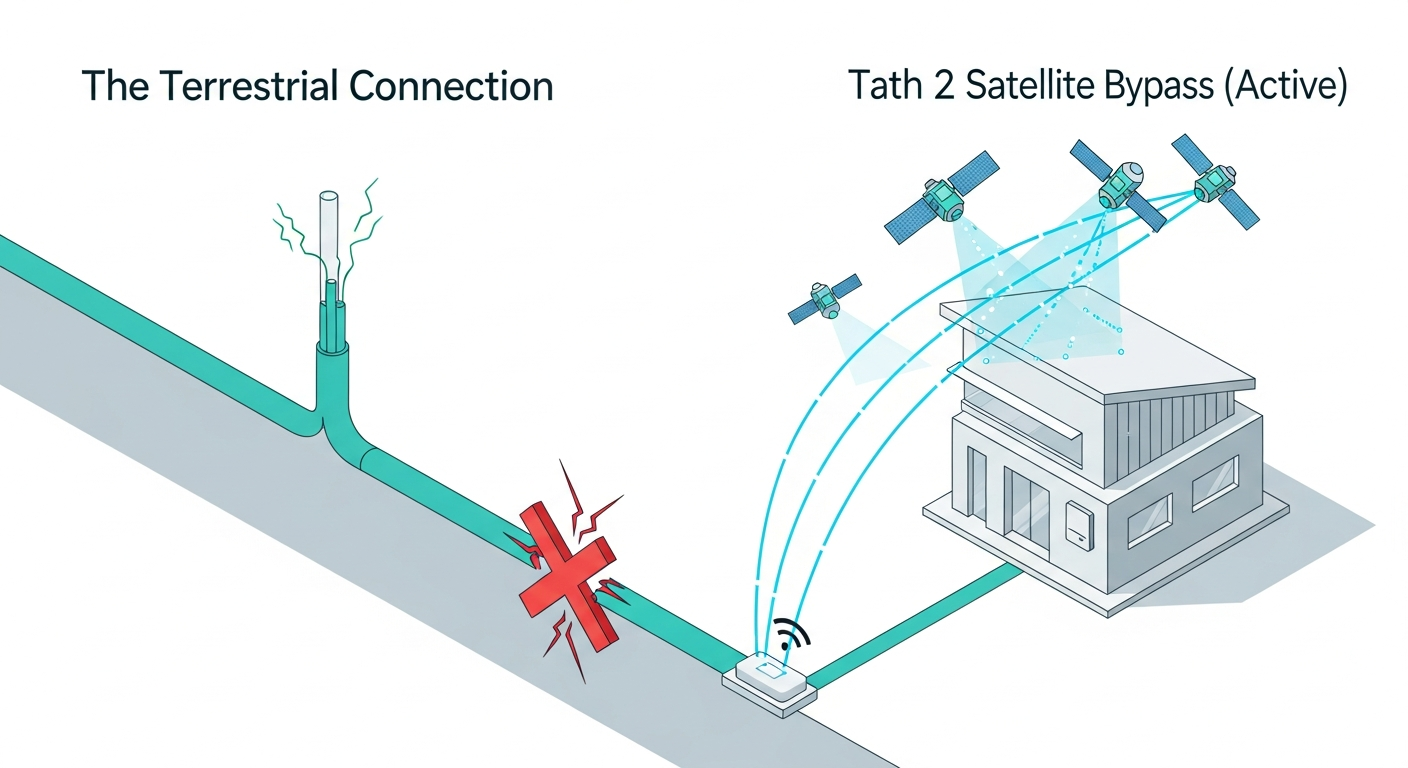
When a storm hit last winter and a branch took out the line, both my "primary" and "backup" went dark.
I was stuck tethering to a 5G signal that was so congested it couldn't even load the documentation for the API I was trying to debug.
That was the moment I realized that if your backup depends on the same physical trench or pole as your primary, you don't actually have a backup. You have a very expensive placebo.
Enter the MacBook-Sized Satellite
When the Starlink Mini first started shipping in volume in 2024, I was skeptical. I thought it was a toy for van-lifers and digital nomads who wanted to post Instagram stories from Yosemite.
I didn't think it was a serious tool for a developer pushing hundreds of gigabytes of data a month. But the specs on the Mini are deceptive.
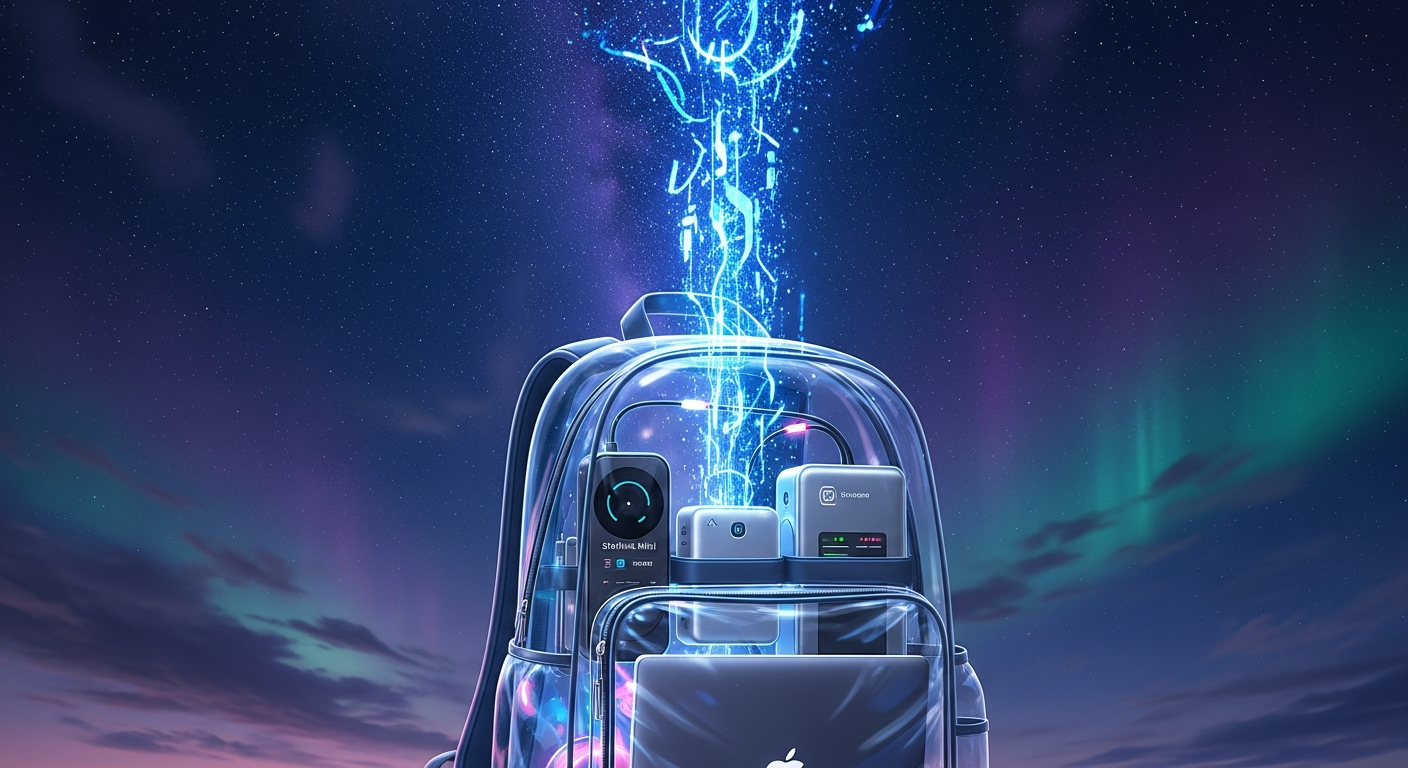
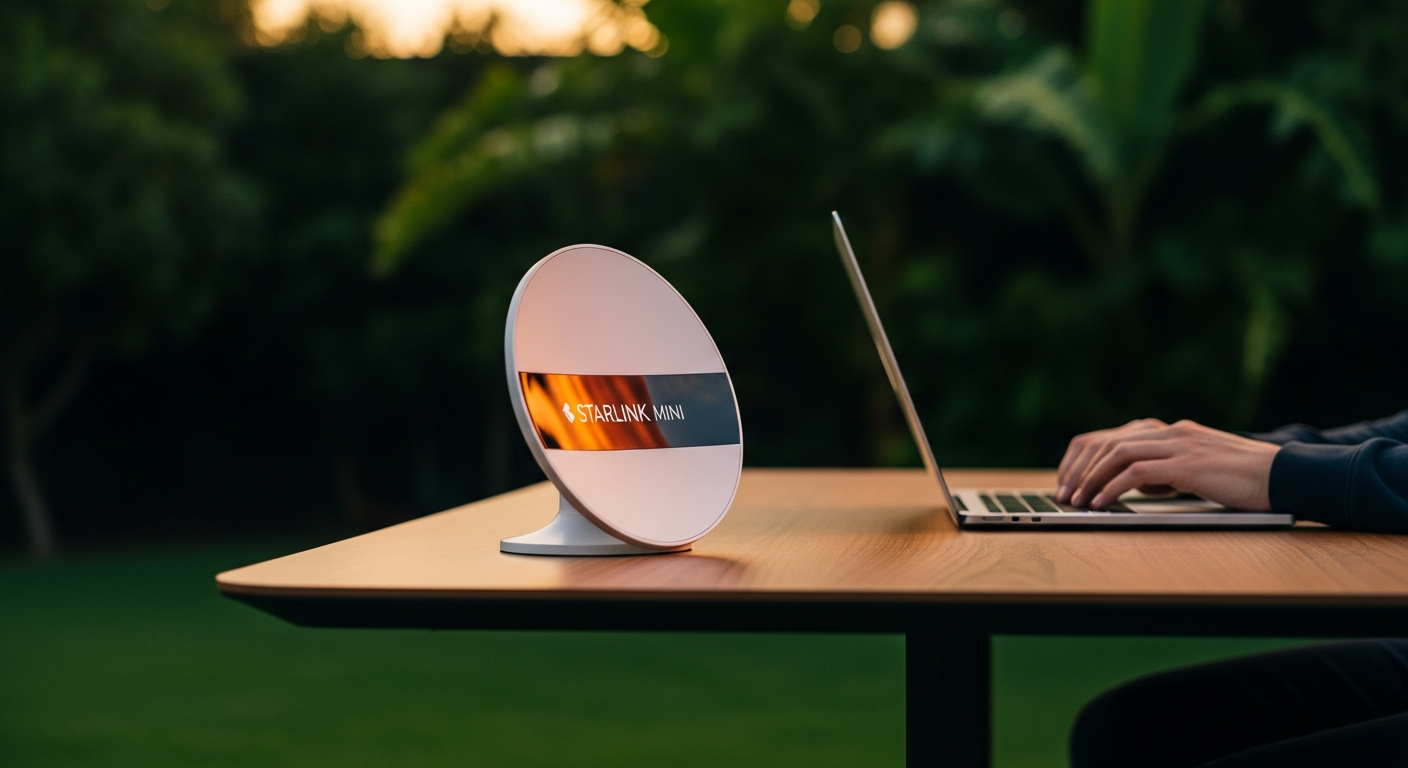
It’s roughly the size of a 14-inch MacBook Pro and fits in a backpack, yet it pulls down 150Mbps with a latency that consistently stays under 35ms.
Last Tuesday, I did the unthinkable. I walked over to my UniFi Dream Machine, unplugged the secondary fiber SFP module, and plugged in the Starlink Mini via a PoE (Power over Ethernet) injector.
The AI Developer’s Connectivity Crisis
Why does a "mini" satellite dish matter so much for AI engineering in 2026? It comes down to how we work now.
We aren't just writing code; we are constantly "talking" to massive models that live in the cloud.
When I’m working with Claude 4.6 on a complex refactor, the "state" of our conversation is massive.
If my connection drops for even two minutes, the WebSocket connection severs, the context often needs to be re-sent, and the creative flow is shattered.
Using the Mini as a failover means my "backup" is literally in space. It doesn't care if a garbage truck hits a pole down the street or if a local construction crew digs through a fiber optic bundle.
As long as I have a 110-degree view of the sky, I am online.
Benchmarking the "Space-Based" Office
I ran a series of stress tests over the weekend to see if the Mini could actually handle a modern AI workflow.
I initiated a 50GB dataset upload to an S3 bucket while simultaneously running a 10-agent autonomous loop using the latest ChatGPT 5 API.
On my old fiber backup, the latency would spike as soon as the upload saturated the upstream. But Starlink’s 2026 constellation seems to handle congestion with a grace I didn't expect.
The latency stayed stable at 32ms. My agents didn't time out. The upload finished faster than it would have on my LTE "hotspot" by a factor of ten.
The Portability Pivot
But the real "quiet killer" of the fiber backup isn't just the reliability—it’s the fact that I can take my office anywhere. Two days ago, I decided to work from a local park just to see if I could.
I powered the Mini off a small 100Wh battery bank. Within 90 seconds, I had a 150Mbps pipe.
I was sitting on a wooden bench, three miles from the nearest high-speed cable, and I was able to prompt-engineer a new UI component as if I were sitting in my home office.
This changes the math for "distributed teams." We used to say you had to live in a tier-1 city to have the bandwidth required for serious dev work. The Mini just made that argument obsolete.
The Reality Check: It’s Not All Sunshine
I know this sounds like a love letter to Elon, but let’s be real—there are trade-offs. The power draw is significant.
You can't just run this off a laptop's USB-C port for eight hours without a serious external battery.
Obstructions are also the ultimate "boss fight" for Starlink. If you live in a dense urban jungle surrounded by 40-story skyscrapers, the Mini is going to struggle to find a gap in the buildings.
And then there's the cost.
At $150 a month for the "Roam" service (or the $30 "Mini" add-on if you're lucky enough to have a residential dish), it’s not exactly "cheap." But compared to the $80 I was paying for a fiber line that was physically tied to the same failure points as my primary?
It’s a bargain.
Why 2026 is the Year of the Satellite
We are moving toward a world of "Ambient Connectivity." By mid-2027, I expect we won't even think about "ISPs" anymore.
Our routers will simply load-balance between terrestrial fiber, 5G-Advanced, and LEO satellite constellations automatically.
The Starlink Mini is just the first device that makes this transition feel "invisible." It doesn't require a professional installer to bolt a giant pizza box to your roof.
You just set it on your deck, point it up, and the internet happens.
For the first time in my career, I don't have "internet anxiety." I know that no matter what happens to the infrastructure on my street, I can stay connected to the models and the repositories I need to do my job.
The Death of the "Offline" Excuse
This has a darker side, too. The "sorry, my internet is down" excuse is officially dead. If you're a high-paid engineer in 2026 and you don't have a space-based backup, you're just being negligent.
We’ve reached a point where "being online" is a professional responsibility, not a technical variable. The tools are here. They are small, they are fast, and they are surprisingly affordable.
I’m curious: how many of you are still paying for a "backup" line that’s physically tied to your primary? Are you waiting for the next backhoe to prove you wrong, or are you ready to look up?
My Failover Configuration (For the Nerds)
If you're looking to replicate this, here is my current stack: 1. **Primary**: 2Gbps Fiber (via local ISP) 2. **Failover**: Starlink Mini (DC-powered via a 24V step-up converter) 3.
**Gateway**: UniFi Dream Machine Max
4. **Logic**: Weighted LB (95/5) with automated failover triggered if latency on WAN1 exceeds 150ms for more than 5 seconds.
It took me about 20 minutes to set up, and I haven't touched it since. It just works.
What’s your "plan B" when the fiber goes dark? Have you tried the Mini for a production workflow yet, or are you worried about the "Elon factor"? Let’s talk in the comments.
***
Story Sources
From the Author




Hey friends, thanks heaps for reading this one! 🙏
If it resonated, sparked an idea, or just made you nod along — I'd be genuinely stoked if you'd show some love. A clap on Medium or a like on Substack helps these pieces reach more people (and keeps this little writing habit going).
→ Pythonpom on Medium ← follow, clap, or just browse more!
→ Pominaus on Substack ← like, restack, or subscribe!
Zero pressure, but if you're in a generous mood and fancy buying me a virtual coffee to fuel the next late-night draft ☕, you can do that here: Buy Me a Coffee — your support (big or tiny) means the world.
Appreciate you taking the time. Let's keep chatting about tech, life hacks, and whatever comes next! ❤️