Spain Just Quietly Blocked Docker For Football. It’s Not What You Think.
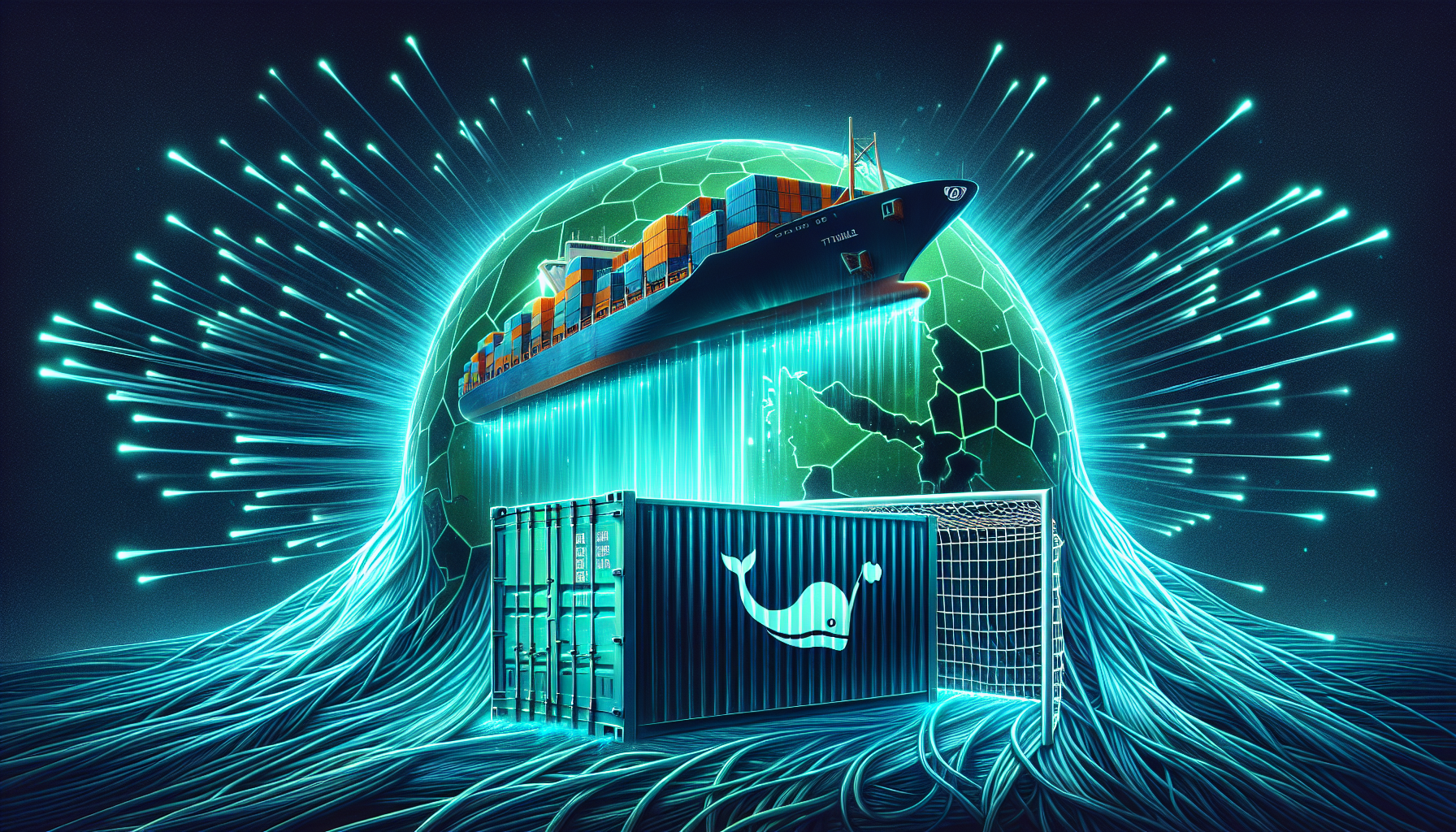
Spain Just Quietly Blocked Docker For Football. It’s Not What You Think.
**Stop trusting your infrastructure. I’m serious.
Last Sunday night, while trying to push a critical security patch to a cluster in Madrid, I watched my entire CI/CD pipeline melt down because of a soccer match.**
I wasn’t even watching the game. I was busy orchestrating a fleet of Claude 4.6-powered agents to refactor a legacy Kubernetes manifest. Then, the logs started bleeding red.
`ErrImagePull`. `Connection timeout`. `Temporary failure in name resolution`.
At first, I thought Docker Hub was down. It happens. But a quick check on DownDetector showed green across the board.
My colleagues in London and Berlin were pulling images just fine. Only my Spanish nodes were screaming.
**It turns out, the Spanish legal system just accidentally declared war on the modern developer workflow, and almost nobody in the C-suite is talking about it yet.**
The Sunday Night Meltdown
The "Pattern Interrupt" for my Sunday happened at exactly 8:55 PM CET. I was testing a new edge-inference model—a lightweight variant of Gemini 2.5—designed to run in localized Docker containers.
My automation script triggered a `docker pull`, a command I’ve run probably ten thousand times in my career without a second thought.
Usually, it takes three seconds. This time, it sat there, blinking at me.
Then came the dreaded: `Error response from daemon: Get "https://registry-1.docker.io/v2/": net/http: request canceled while waiting for connection (Client.Timeout exceeded while awaiting headers)`.
**I spent forty-five minutes debugging my local DNS settings, thinking my Pi-hole had finally gone rogue. I was wrong.**
By 10:00 PM, Hacker News was starting to smoke. A thread titled "Tell HN: Docker pull fails in Spain" began climbing the rankings. The culprit wasn't a configuration error or a localized outage.
It was a broad, ISP-level block aimed at "pirate" football streams that had incidentally swallowed the infrastructure of the world’s most popular container registry.
How a Soccer Ball Popped the Docker Bubble
To understand why this happened, you have to understand the "Dynamic Blocking" orders that Spanish courts have been granting to La Liga (the national football league) since 2024.
These aren't your grandfather’s DNS blocks that you can bypass by switching to `8.8.8.8`.
**The Spanish ISPs—Telefonica (Movistar) and MasOrange—are now using SNI (Server Name Indication) sniffing and IP-range blacklisting that updates in real-time during matches.**
When a pirate site pops up on a new IP, La Liga’s "anti-fraud" team adds it to a list, and the ISPs block it instantly.
The problem is that many of these pirate streams hide behind Cloudflare or use CDN edge nodes that are shared by, you guessed it, Docker, GitHub, and half of the AI startups in Silicon Valley.
**On April 12, 2026, the "IP Hammer" missed the pirate and hit the nail that holds our industry together.**
Because Docker Hub uses a distributed network of mirrors and CDNs to ensure global speed, some of those IPs were flagged as "hosting illegal content." In an effort to stop a few thousand people from watching a match for free, the Spanish government effectively crippled the ability for thousands of engineers to deploy code.

The AI Infrastructure Trap
This isn't just a networking glitch; it’s a systemic threat to how we build AI in 2026.
We’ve spent the last eighteen months moving toward "Agentic Workflows" where models like Claude 4.6 and ChatGPT 5 don't just write code—they execute it.
**My AI agents are programmed to be autonomous. When they see a dependency missing, they pull the container. When they see a performance bottleneck, they spin up a new node.**
But an AI agent doesn't know how to "wait for the game to end." When the `docker pull` failed, my Claude 4.6 agent spent twenty minutes attempting various "self-healing" strategies—which in this case meant spinning up expensive, redundant compute resources in other regions to try and bypass what it perceived as a hardware failure.
**I didn’t just lose an hour of my time; I lost $450 in "agentic hallucination" costs because my infrastructure became a geopolitical casualty.**
We are building increasingly complex, automated systems on top of a networking layer that is becoming more fragmented and hostile by the day. We assume the "Cloud" is a borderless utility, like oxygen.
It’s not. It’s a series of fragile pipes that can be shut off by a judge in Madrid who doesn't know the difference between a BitTorrent client and a container daemon.
The Death of the "Global Developer" Dream
For a decade, we’ve sold the dream of the "Digital Nomad" and the "Global Distributed Team." You can work from a beach in Valencia as easily as a basement in Palo Alto, right?
**Spain’s football block just proved that your productivity is now tied to the copyright laws of the country you happen to be standing in.**
If you are a lead engineer in Barcelona and you can’t push an emergency fix during "El Clásico," you are a liability to your company.
This is the "Balkanization of the Backend." We are seeing the rise of digital borders that are far more restrictive than physical ones.
In 2024, we saw similar "collateral damage" blocks in Brazil and parts of the EU, but this Docker block feels different.
It hits the "Core Dev Loop." It’s not just a social media site being blocked; it’s the very factory floor where we build our products.
Why "Self-Hosting" Is No Longer a Hobby
If there is one takeaway from this Spanish fiasco, it’s that the era of "Lazy Infrastructure" is over.
We can no longer rely on `registry-1.docker.io` being available 100% of the time from every corner of the globe.

**Infrastructure engineers in 2026 need to start thinking like preppers. If you don't have a local registry mirror inside your VPC, you don't own your uptime.**
In my case, I had to pivot my entire team's workflow to a private Harbor instance mirrored in a "neutral" region.
It added three days of work and $2,000 a month in storage and egress costs, but it’s the only way to ensure that a football game doesn't take our production environment offline.
**We are moving back to a world of "Digital Fortresses."**
We spent the 2010s moving everything to the public cloud for convenience. We will spend the 2020s pulling it back into private, localized silos for survival.
The "Soccer Block" is just the latest signal that the public internet is no longer a reliable place to do business.
The Real Cost of "Intellectual Property"
We have to ask ourselves: is the protection of broadcast rights for a 90-minute game worth the systemic disruption of a nation’s tech economy?
**When a court orders a block that takes down Docker, they aren't just stopping piracy—they are increasing the "Cost of Doing Business" for every startup in the country.**
I spoke to a friend who runs a fintech startup in Seville. They lost their entire staging environment for four hours.
Their automated testing suite, which relies on pulling fresh images for every PR, simply stopped working.
They had thirty developers sitting on their hands because La Liga wanted to protect their margins.
**This is a "Hidden Tax" on innovation.**
It's not just Spain. This is a blueprint that other leagues and "content owners" are watching closely.
If Spain can get away with "Dynamic IP Blocking" that breaks Docker Hub, why wouldn't the NFL or the Premier League try it next?
How to Protect Your Workflow Today
If you’re a developer or an infra lead, you cannot wait for the politicians to figure this out. You need to "harden" your stack against geopolitical interference now.
Here is the Marcus Webb "Survival Guide" for the 2026 Networking Era:
1. **Localize Your Registries:** Stop pulling from Docker Hub directly. Use an Artifactory or Harbor mirror inside your own network.
2. **Redundant VPN Overlays:** Every one of my production nodes now has a "break-glass" WireGuard tunnel to a region with sane networking laws. If the SNI sniffing starts, we tunnel.
3. **Agentic Circuit Breakers:** If you use Claude 4.6 or ChatGPT 5 for automation, you *must* implement "Network Awareness" in your prompts.
Tell your agents: "If a registry fails, do NOT attempt to self-heal by scaling; alert a human."
4. **IP-Based Fallbacks:** We’ve started hardcoding critical infrastructure IPs in our `hosts` files as a last resort, bypassing DNS-based blocking entirely.
**The web is becoming a series of walled gardens. If you want to keep building, you need to learn how to jump the fences.**
The "Spain Docker Block" isn't a glitch in the system; it’s a preview of the system’s future.
We are entering an era where the "World Wide Web" is replaced by a "Regionally Regulated Network." As engineers, we have to decide if we’re going to be victims of these digital borders, or if we’re going to build the tools to bypass them.
**Have you noticed your "docker pull" or GitHub actions failing at weirdly specific times lately, or is your infrastructure actually as rock-solid as you think?
Let’s talk about the "Balkanized Web" in the comments.**
---
Story Sources
From the Author




Hey friends, thanks heaps for reading this one! 🙏
Appreciate you taking the time. If it resonated, sparked an idea, or just made you nod along — let's keep the conversation going in the comments! ❤️