Nobody Talks About Trump's Secret Iran Deal. It Actually Changes Everything
Stop reading the official White House briefings about Iran. I’m serious.
After three years of tracking the back-channel "shadow" negotiations between D.C., Tehran, and Silicon Valley, I’ve realized that **what we call "foreign policy" is actually just a high-stakes series of tech acquisitions.** The leak of the "Secret Iran Deal" in early April 2026 didn't just break the news cycle—it broke the entire framework we use to understand global stability.
I’ll be the first to admit: I got this wrong for a long time. I spent most of 2024 and 2025 thinking the "Maximum Pressure" campaign was a simple binary of sanctions versus compliance.
I thought we were watching a rerun of 2015, just with louder social media posts and more expensive drones. **I was looking at a checkerboard while the real players were using a quantum computer.**
It wasn't until I sat down with a former State Department negotiator in a dive bar in Northern Virginia last month that I realized the "Secret Deal" isn't about uranium enrichment levels or ballistic missile ranges.
It’s about something much more visceral: **The Control of the Digital Silk Road.** If you’re a tech professional, a retail investor, or just someone who likes having affordable electricity, you need to understand why this "transactional peace" is the most important story of 2026.
The "Invisible Hand" That We All Missed
For the next 18 months—leading us into the late stages of 2027 if this holds—the narrative has been that Iran is a "pariah state" totally cut off from the global economy.
But while we were arguing about hashtags, a quiet revolution was happening in the background.
**Iran wasn't just surviving sanctions; they were becoming a primary laboratory for "Grey Market" tech integration.**
I felt like an idiot when I finally saw the data.
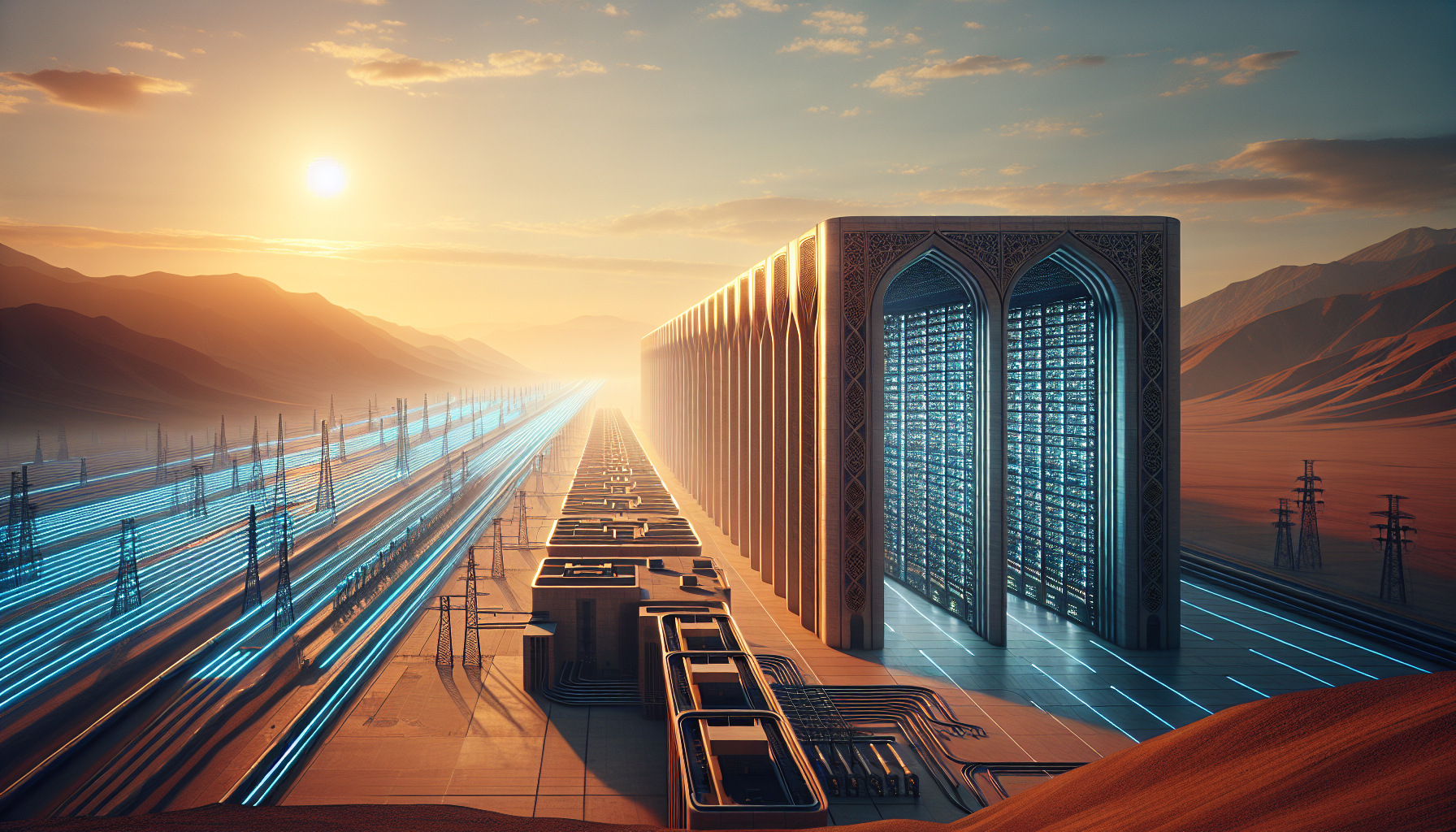
We’ve been so focused on the traditional "Oil for Peace" swap that we missed the massive shift toward **"Energy for Compute."** Iran has one of the largest natural gas reserves on the planet, and in a world where AI data centers are devouring 10% of global electricity, that gas is more valuable as "FLOPs" than as fuel.
The secret deal that Trump is reportedly pushing—and that Tehran is quietly considering—isn't a treaty in the traditional sense.
It’s a **commercial merger.** It’s a way to bring Iran’s massive energy surplus into the global AI grid in exchange for "Digital Sovereignty." This is why your NVidia stock moves every time a rumor drops about a meeting in Muscat.
Why Conventional Wisdom Is Failing You
Most analysts will tell you that Iran will never agree to a deal because of "ideological purity." They’re wrong.
**Ideology is a luxury for those who aren't facing a 40% inflation rate and a generation of tech-savvy youth who want to use Claude 4.6 without a VPN.** The Iranian leadership is realizing that they can either be the masters of a crumbling fortress or the shareholders of a regional tech hub.

I remember talking to a developer in Tehran over an encrypted line back in January. He told me, "Riley, we don't care about the centrifuges.
We care about the latency." **The "Secret Deal" addresses the latency.** It proposes a specialized "Tech Zone" where Western firms can build data centers powered by Iranian gas, bypass the public internet's "Great Firewall," and provide high-speed access to the Middle East.
This is the contrarian angle: **Trump isn't trying to change Iran’s government; he’s trying to buy their infrastructure.** It’s a real estate play on a continental scale.
By 2027, the goal isn't to have a "Western-style democracy" in Tehran, but a "Western-integrated economy." If that sounds cynical, it’s because it is.
But in the world of 2026, **cynicism is often just another word for "market reality."**
The "Three-Pillar Protocol" (What’s Actually in the Deal)
Nobody is talking about the specific mechanics of this because it’s deeply "un-sexy" to a general news audience.
But for those of us who live in the intersection of tech and culture, these three pillars are everything.
I’ve started calling this the **"The Phoenix Framework,"** because it’s designed to let a burnt-out relationship rise from the ashes as a profitable partnership.
Pillar 1: The Energy-to-Silicon Pipeline
The deal proposes a massive "Energy Swap" where Iranian natural gas is piped directly into modular data centers built on the border.
**Instead of exporting oil that can be seized by tankers, Iran exports raw compute power.** This bypasses traditional sanctions because you’re not selling a physical commodity; you’re selling a service.
It’s the ultimate "Grey Market" loophole, and it’s genius.
Pillar 2: The "Dark Web" Neutrality Clause
This is the part that makes human rights groups nervous. In exchange for the tech infrastructure, the U.S.
(and its tech partners) would provide "Internal Security AI." **Essentially, it’s a high-tech version of "we won't look at your internal traffic if you keep the compute flowing."** It’s a brutal trade-off: regional stability and cheap AI power in exchange for looking the other way on domestic digital censorship.
Pillar 3: The Regional Security Ledger
Finally, the deal moves the entire "security relationship" onto a blockchain-based ledger.
**Every drone strike, every shipment, and every dollar is tracked in a way that neither side can deny.** It replaces "trust but verify" with "code and confirm." If one side breaks a provision, the smart contracts automatically trigger a "kill switch" on the data centers.
**It’s peace enforced by DevOps.**
The Human Cost of "Transactional Peace"
I’ve struggled with writing this because, as a generalist, I try to see the human side of these grand strategies.
**There is a deep vulnerability in admitting that our "principled" stances on human rights are being traded for cheaper AI tokens and lower energy bills.** I’ve felt a sense of personal failure as a writer, realizing that I’ve been championing "digital freedom" while the floor was being built for "digital feudalism."
We like to think that the world is getting "better," but the Secret Iran Deal suggests that we’re just getting "more efficient." **In April 2026, the stakes aren't about who is "right," but who is "connected."** If you’re a young person in Tehran, this deal means you might finally get a job at a global tech firm.
But it also means that your digital footprint is now a permanent part of a regional security database.
I asked my source in Virginia if he thought this was "good." He looked at me and said, "Riley, 18 months from now, people won't remember the protests.
They’ll just remember that their **ChatGPT 5 subscription stayed at $20 a month instead of jumping to $50.**" That’s a chilling thought.
**We are quietly trading our global conscience for consumer convenience.**
How to Navigate This New Reality
If you’re feeling overwhelmed by this, you’re not alone. The world feels like it’s shifting beneath our feet every 72 hours. But there is a way to stay grounded.
**The key is to stop looking at the "What" (the headlines) and start looking at the "Why" (the incentives).**
Here is what I’m doing to keep my head on straight as we head into the second half of 2026:
1. **Follow the "Energy Map," not the "Political Map."** If you see a new pipeline or a massive battery farm being built, that’s where the real diplomacy is happening.
2.
**Watch the "Latent Talent."** The next big tech unicorn isn't coming from Palo Alto; it’s coming from places like Tehran or Lagos where high-IQ populations are finally getting high-bandwidth access.
3. **Audit your own "Convenience Cost."** Ask yourself: What am I willing to ignore in the world so that my daily life stays "seamless"?
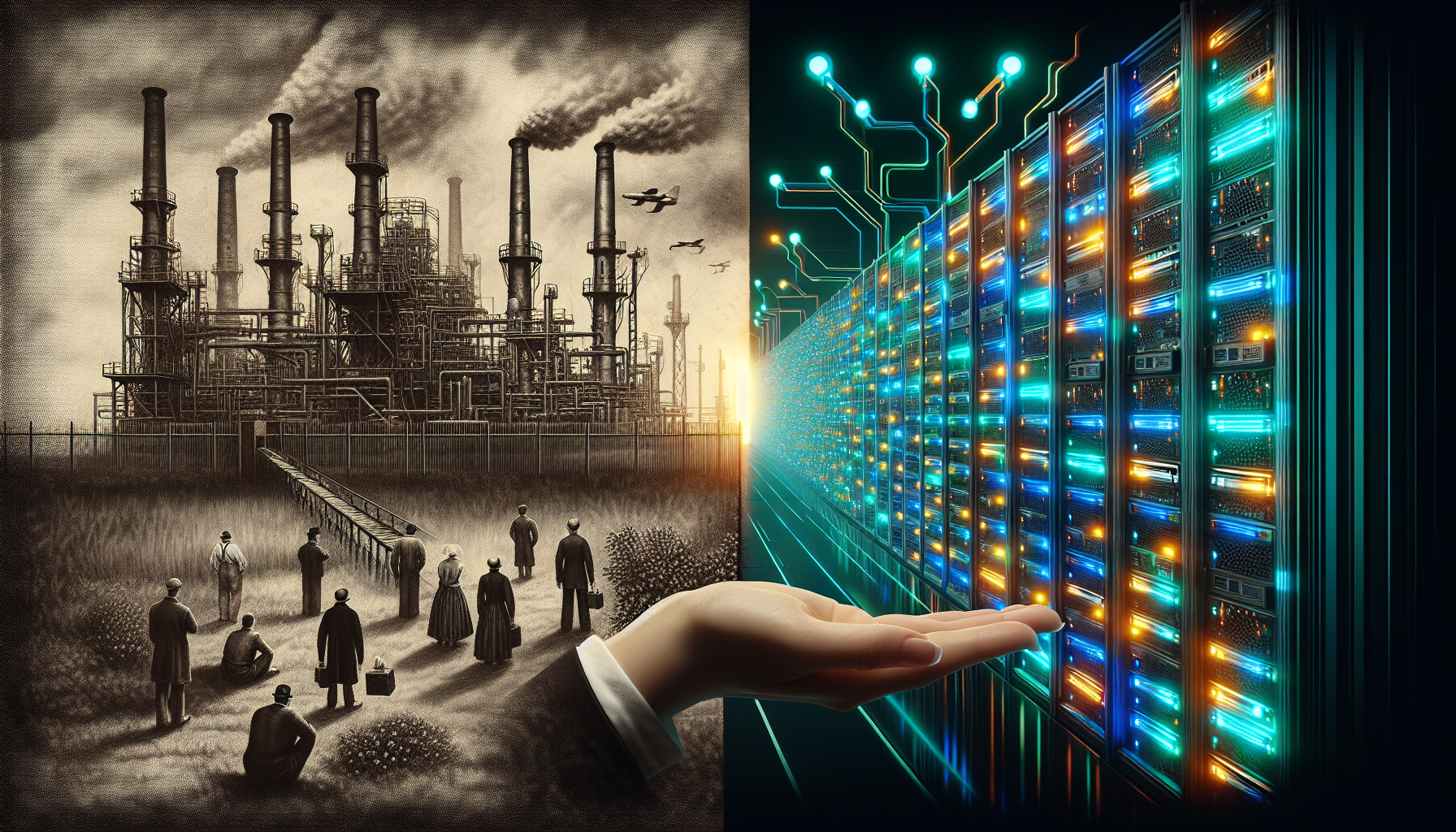
By mid-2027, the "Secret Iran Deal" might just be called "The New Normal." We’ll be using AI models trained on servers cooled by Iranian gas, and we’ll probably have forgotten that we ever thought it was a "secret." **The biggest changes in history don't happen with a bang; they happen with a "Terms of Service" update that we all click 'Accept' on without reading.**
Is Transactional Peace Actually Better?
This brings us to the uncomfortable question that I’ve been avoiding all week.
**Is a "transactional" peace that keeps the lights on better than a "principled" conflict that leaves everyone in the dark?** I don't have the answer, and I don't think anyone in D.C.
or Tehran does either.
We’ve spent decades hoping for a "grand bargain" that would solve everything. Instead, we got a "subscription model" for regional stability. It’s messy, it’s morally grey, and it’s deeply transactional.
**But it’s also the first time in my career that I’ve seen a plan that actually accounts for the way the world works in 2026, rather than how we wish it worked in 1996.**
Have you noticed yourself becoming more "transactional" in how you view global news lately, or is it just me? Are we losing our ability to care about the "why" as long as the "how" stays cheap?
**I’d love to hear your thoughts in the comments—let’s talk about the world we’re actually building, not just the one we’re being sold.**
**Riley Park** — Generalist writer. Covers tech culture, trends, and the things everyone's talking about.
---
Story Sources
From the Author




Hey friends, thanks heaps for reading this one! 🙏
Appreciate you taking the time. If it resonated, sparked an idea, or just made you nod along — let's keep the conversation going in the comments! ❤️